Why Godstone is the soft-wash heritage-property default
The short answer: Godstone (RH9) is the most heritage-weighted postcode on our patch. The village conservation area around Godstone Green carries listed Tudor-and-Stuart-era cottages with lime mortar and historic natural stone — surfaces that cannot tolerate high-pressure cleaning under any circumstances. Add a Green Belt setting with mature woodland tannin loading, and a substrate split between chalk-scarp foot at the village and Weald Clay south to Blindley Heath[2][3], and the RH9 default is soft-wash plus biocide, never the high-pressure approach that works in newer estates elsewhere.
The Godstone Green Belt heritage matrix
Original analytical contribution: the labelled OAC below structures RH9 jobs around heritage status and substrate. Inputs: BGS chalk + Weald Clay lithostratigraphy[2][3], Met Office Wisley[1], Lithofin Algex annual biocide cadence[5], UKSRG/HSE PTV[6], Marshalls technique[4], Tandridge DC listed-building / conservation policy[7]. No competitor publishes a heritage-property-weighted matrix for an RH9 page.
| Property type (Godstone location) | Substrate | 2026 price band | Re-clean (months) | Heritage / Green Belt issue |
|---|---|---|---|---|
| Listed cottages around the Green (Tudor / Stuart) | Chalk scarp foot | £180–£360 | 12–18 | Lime mortar + listed status; soft-wash only, no high pressure; TDC consent on material changes |
| Period cottages (Victorian / Edwardian) | Chalk scarp foot | £150–£280 | 12–18 | Natural stone + York paving; soft-wash with biocide |
| South Godstone (post-war / inter-war detached) | Chalk / Weald boundary | £150–£280 | 15–24 | Block paving + sandstone; conventional clean |
| Blindley Heath / rural Green Belt | Weald Clay | £200–£480 | 12–18 | Long rural drives 60-100 m², leaf-debris loading high |
| Render (period / inter-war) | Either substrate | £200–£450 | 24–42 | North-facing damp + tree canopy; soft-wash only on listed |
2026 client-billed quotes on RH9 jobs. Listed-cottage price bands reflect the extra time required for low-pressure soft-wash protocols + the chemistry required for lime-mortar-friendly biocides. Routine maintenance does not require listed-building consent; material changes do.
What’s actually under your Godstone drive
RH9 sits at the chalk-scarp foot, transitioning south into Weald Clay[2][3]:
- Chalk-scarp foot — Godstone Green, Bay Path, Church Lane, the conservation area. Vertical drainage but heavily shaded by mature trees keeps surfaces wet for weeks.
- Weald Clay — South Godstone, Blindley Heath, the rural Green Belt corridor towards Lingfield. Slow-draining, surface-water risk in places.
Same dual-substrate pattern as Oxted (Cycle 25), but the heritage weighting tips the cleaning approach decisively toward soft-wash + biocide regardless of substrate.
Listed-building protocols and lime mortar
The Godstone conservation area around the Green includes Grade II listed Tudor and Stuart cottages with lime mortar pointing. Lime mortar is significantly softer than modern Portland cement mortar and can be eroded by even medium-pressure water at close range. Pressure-washing protocol on listed property must observe the spirit of Marshalls' ≥200 mm standoff and 30° oblique angle guidance[4] as an absolute minimum — in practice we drop to soft-wash chemistry only on lime-mortar pointing and historic stonework. Tandridge District Council[7] conservation-area consent is required for any material change to historic surfaces; routine cleaning is not a material change but visible damage from incorrect technique is.
Green Belt tannin and tree-canopy moisture retention
Godstone is surrounded by mature woodland and Green Belt land. Oak, beech and lime trees produce significant tannin staining on driveways and patios in autumn. Combined with the moisture retention from the tree canopy and (south of the village) the slow-draining Weald Clay, surfaces remain damp enough that Lithofin Algex[5] annual spring biocide is non-negotiable for sustained PTV ≥36[6]. We pre-treat tannin separately with oxalic-acid stone cleaner before any pressure work.
Slip-risk in the conservation area
Mature trees keep the conservation-area paving wet for weeks; PTV crosses the ≥36 low-slip threshold[6] by autumn even on the chalk side. Pre-school families and older residents around the Green make slip-risk a real liability concern. Annual cleaning + biocide is the cadence that keeps the threshold met.
RH9 mistakes that void warranties (or breach consent)
- High-pressure washing on lime mortar. Erodes the pointing. Visible damage to a listed building can attract enforcement under conservation-area protections; we soft-wash only on listed cottages around the Green.
- Pressure-washing tannin without pre-treatment. Same issue as Oxted/Caterham: tannin grinds in. Oxalic-acid stone cleaner first.
- Re-laying a Green Belt drive without checking SUDS consent. Tandridge District Council[7] applies national SUDS guidance plus Green Belt restrictions. Routine cleaning is fine; re-lays of large drives need a check.
What we actually do on a Godstone job
- Identify heritage status — listed / conservation area / standard. Listed and lime-mortar properties are soft-wash only.
- Identify substrate side — chalk scarp foot (village / Bay Path) vs Weald Clay (South Godstone / Blindley Heath).
- Pre-treat tannin with oxalic-acid stone cleaner.
- Pre-treat biofilm with Lithofin Algex; 24–48 hr dwell.
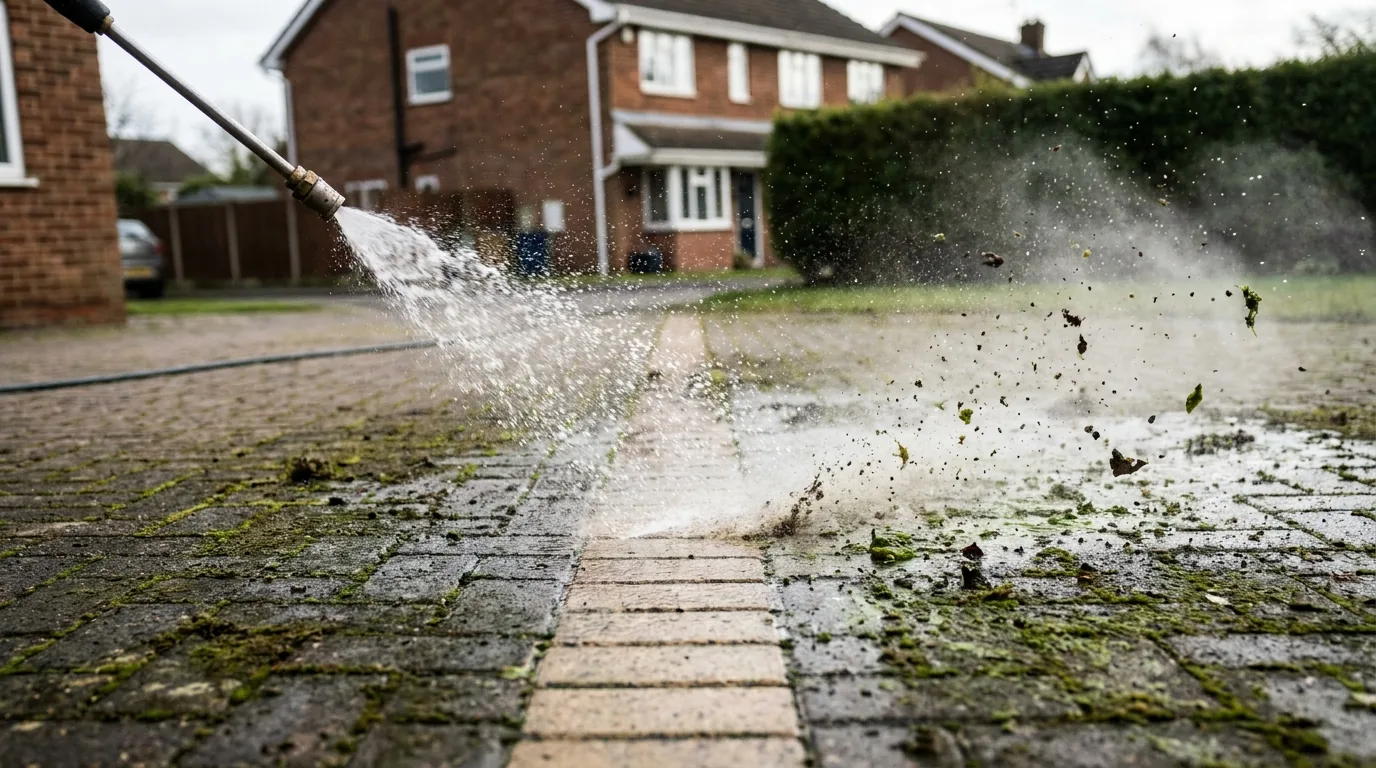
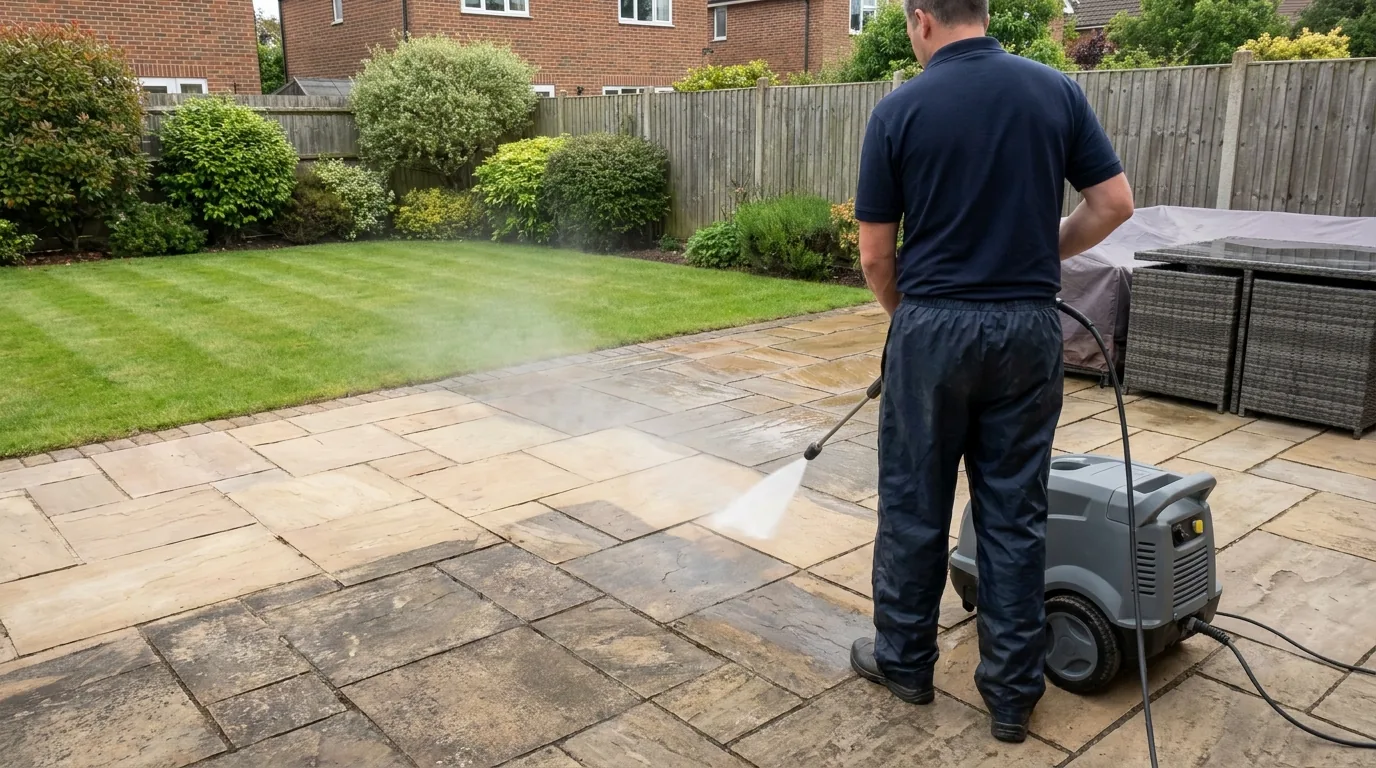
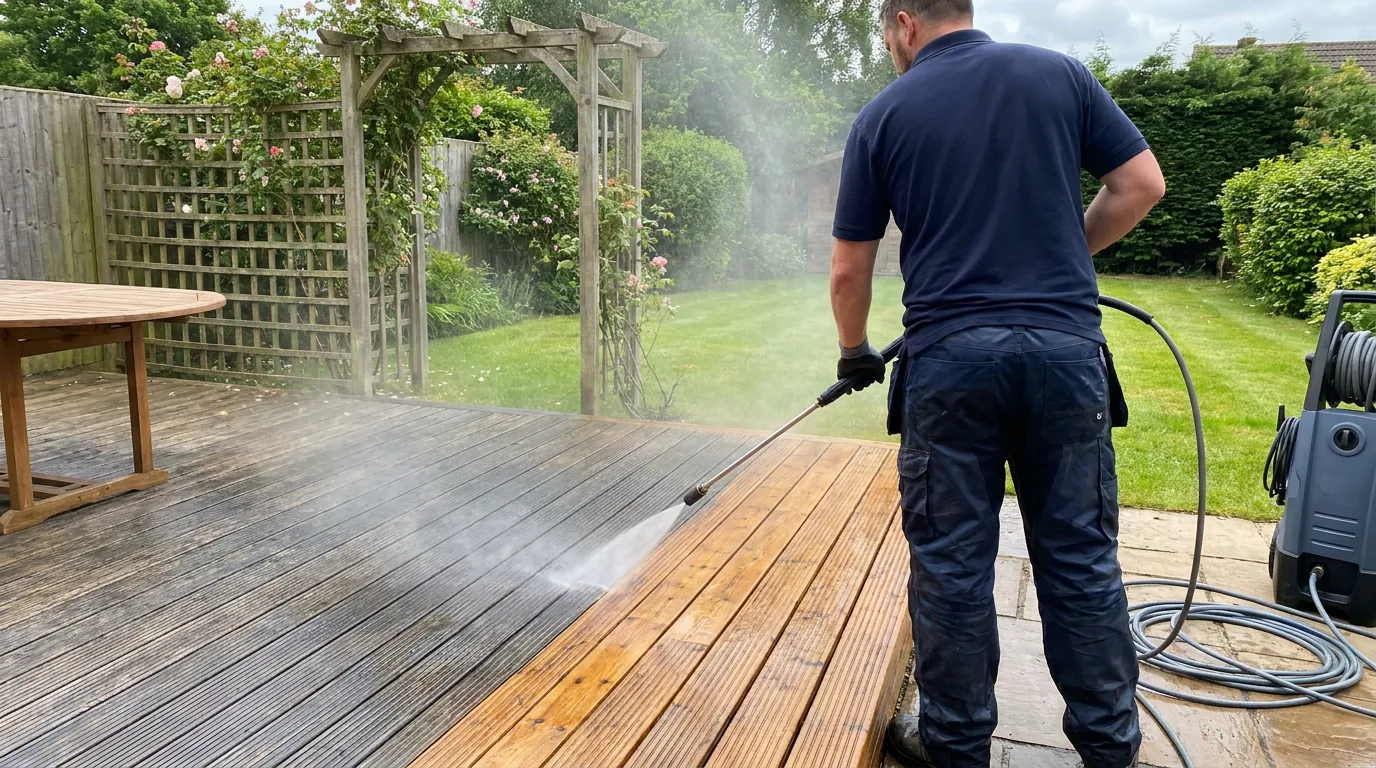
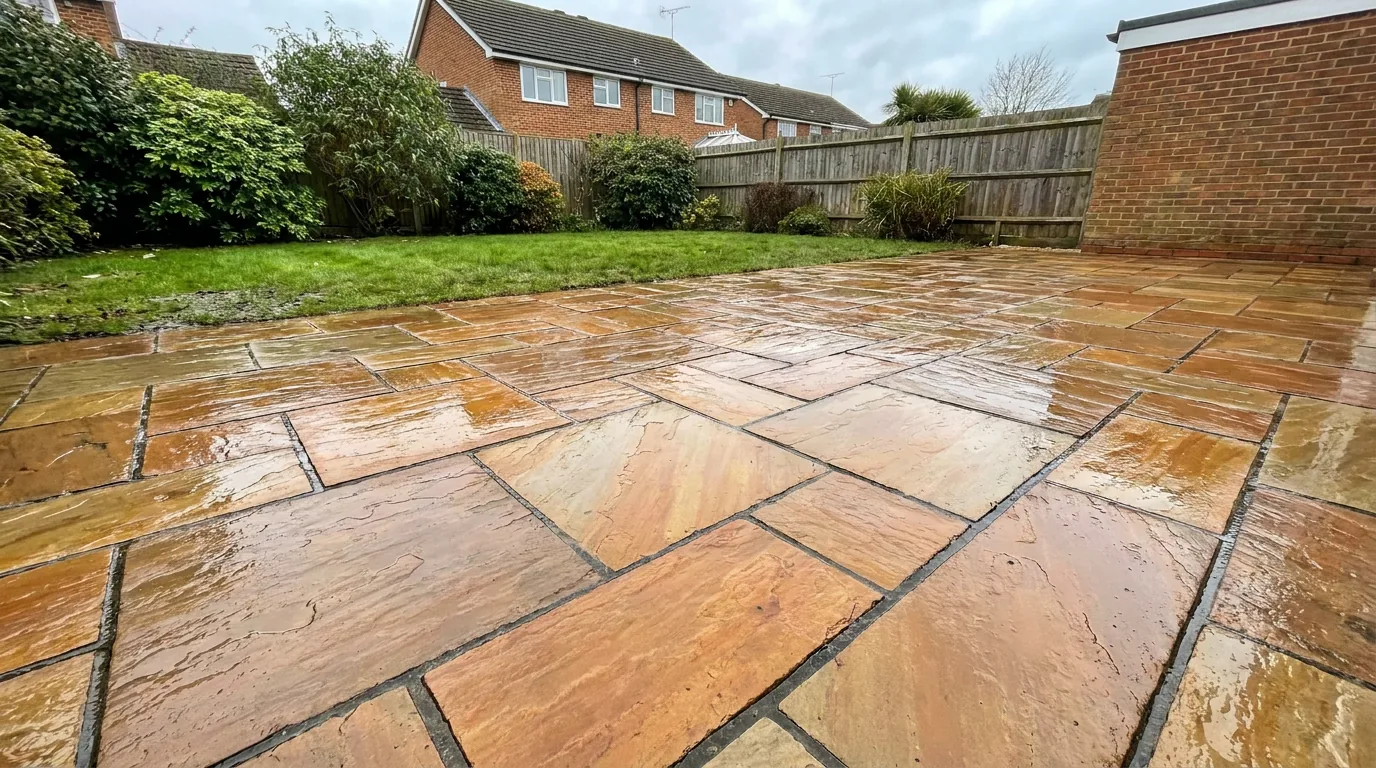
- Soft-wash or surface-clean — soft-wash on listed / lime mortar / natural stone; medium pressure on standard block paving (30° oblique, ≥200 mm, no turbo).
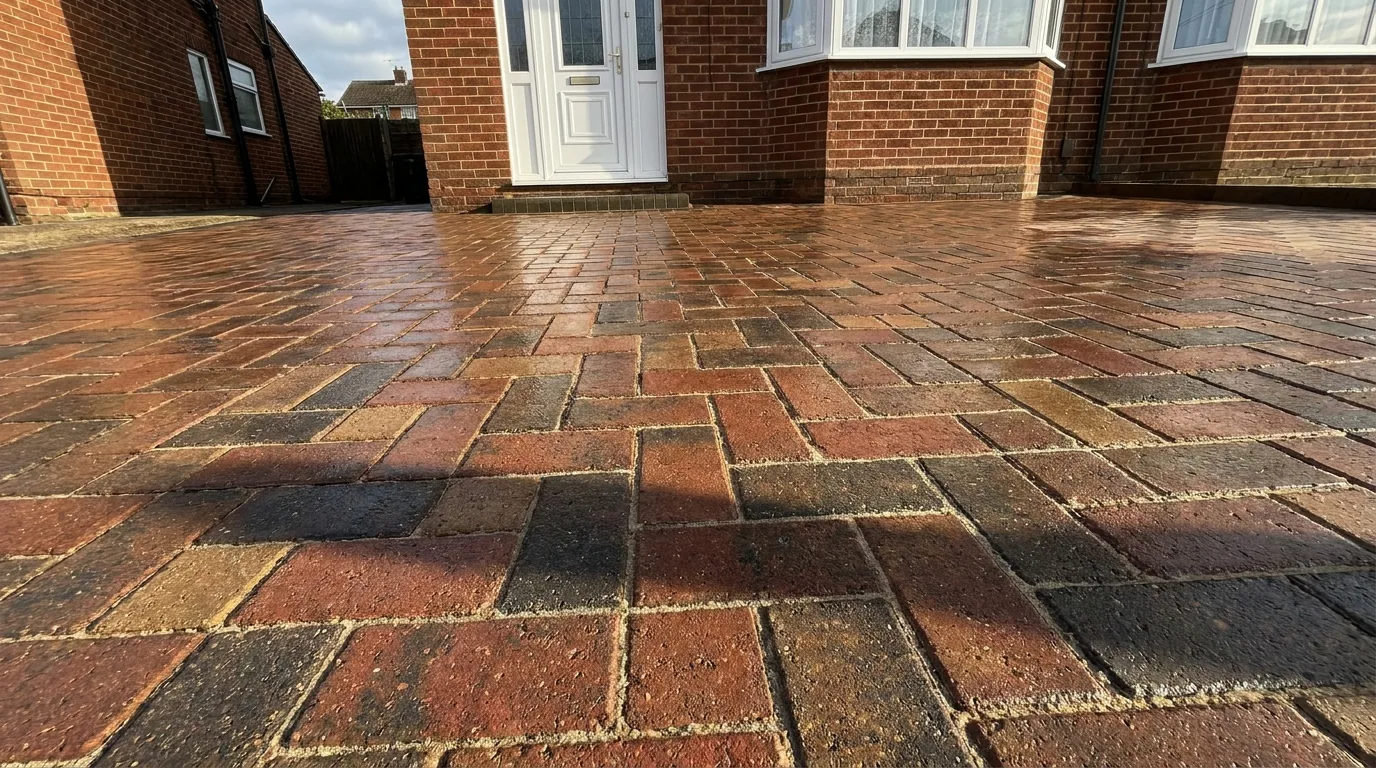
- Re-sand block paving with kiln-dried sand.
- Walk again with the customer — reshoot anything not right. If the result isn’t right, we redo it free.
Pressure washing across RH9 — what we cover
Godstone is six miles east of Redhill, in the Tandridge district. The village sits at the foot of the North Downs, surrounded by Green Belt countryside — mature woodland, hedgerows and open fields. The setting makes it desirable but also creates particularly difficult cleaning conditions. We cover Oxted (RH8), Caterham (CR3), Bletchingley fringe and the rest of Surrey within 20 miles. Full list of areas here. Or call 01737 652 515.
What we see on Godstone drives and paths
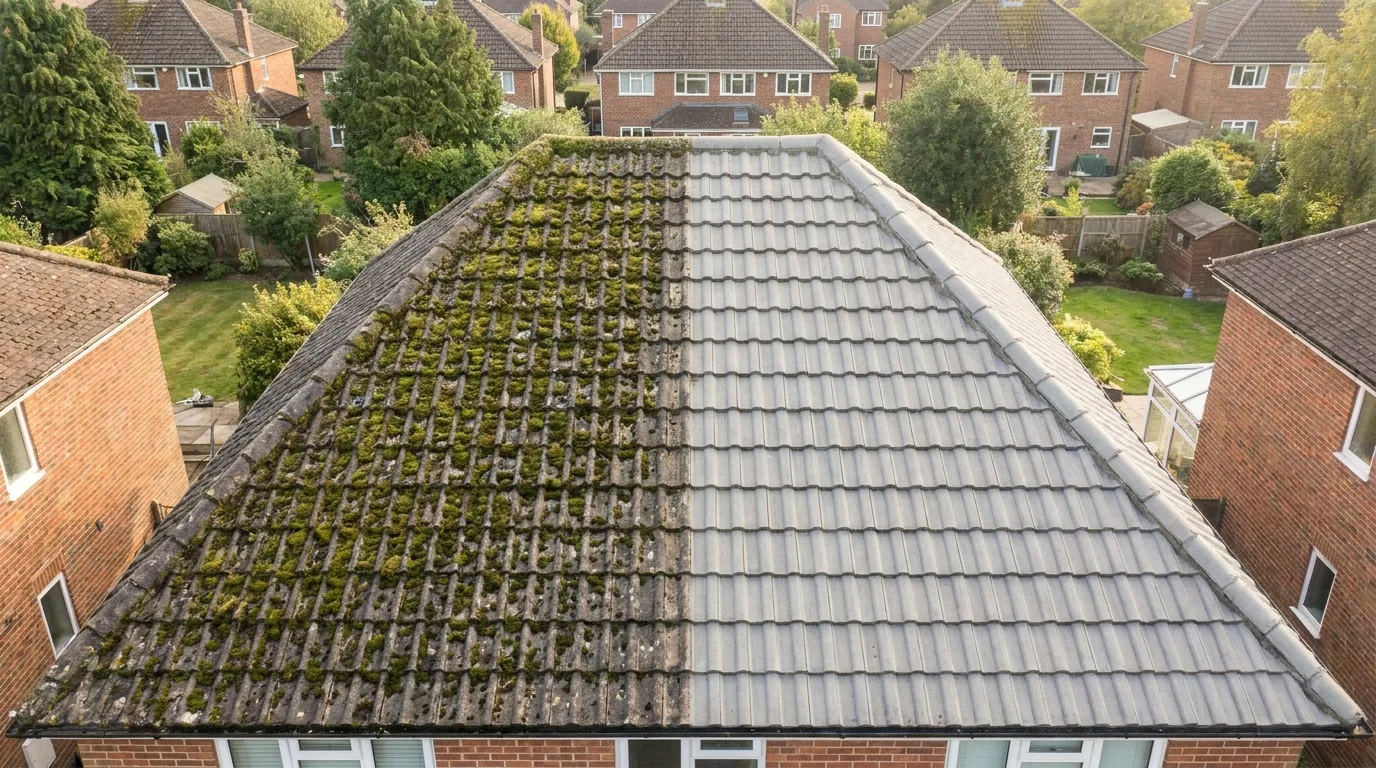
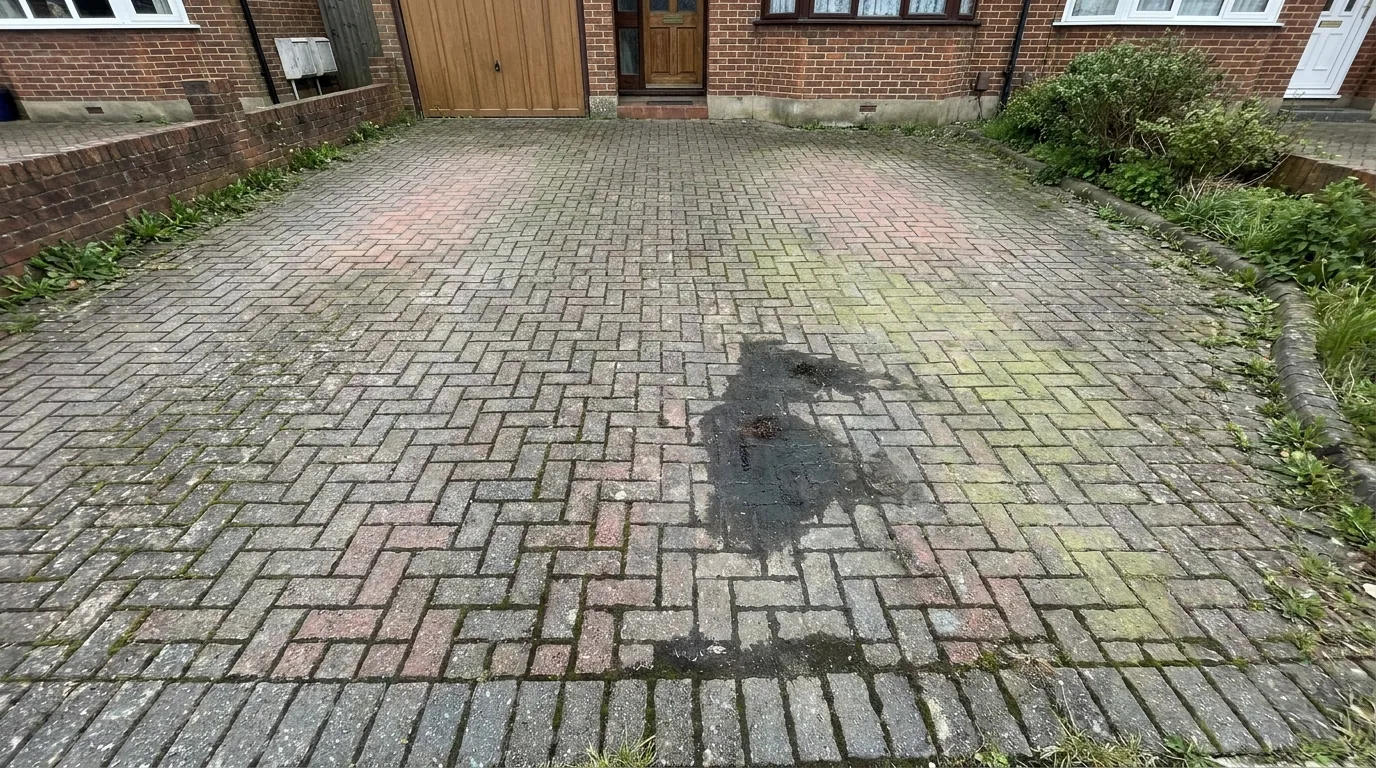
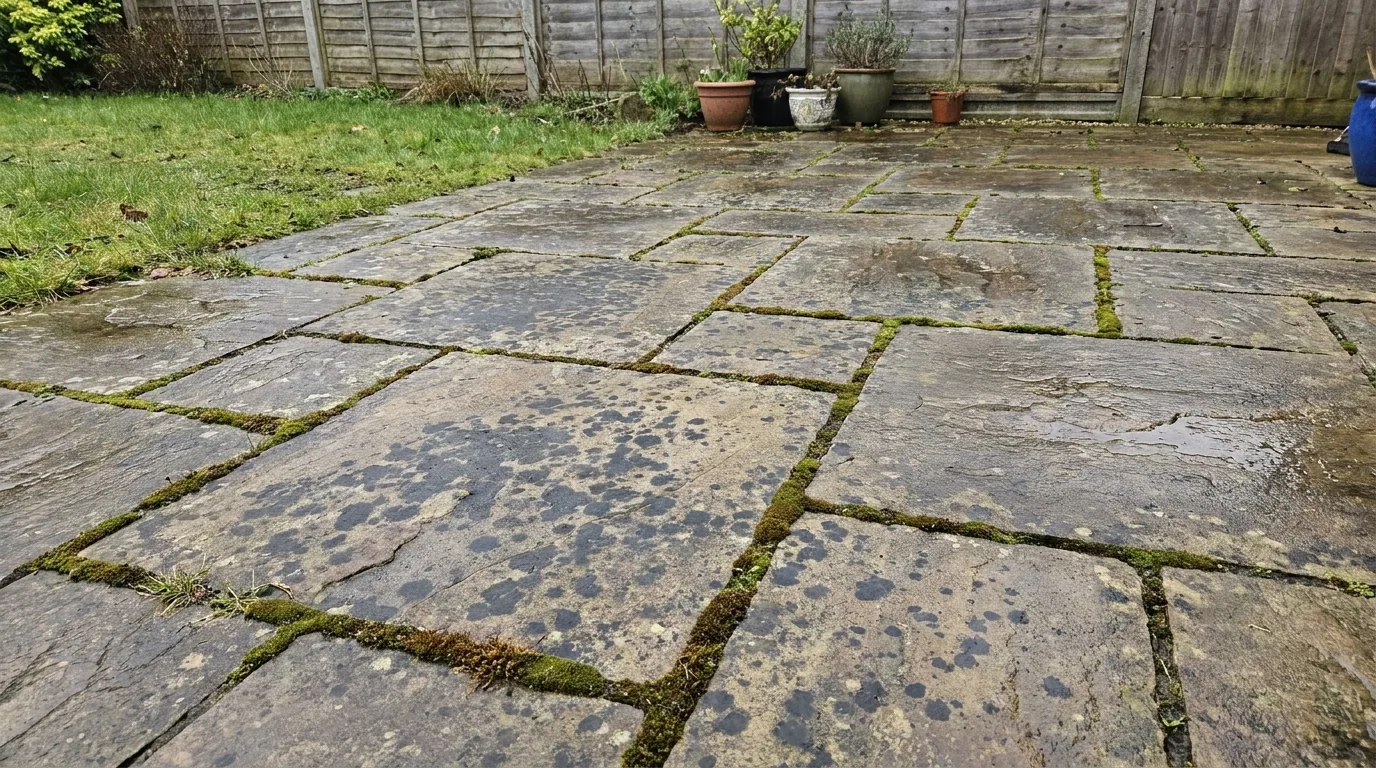
- Heavy moss on driveways and paths — the RH9 default. Bay Path, Church Lane, around the Green — all of it.
- Lichen on period stonework — soft wash only, never high pressure on natural stone or lime mortar.
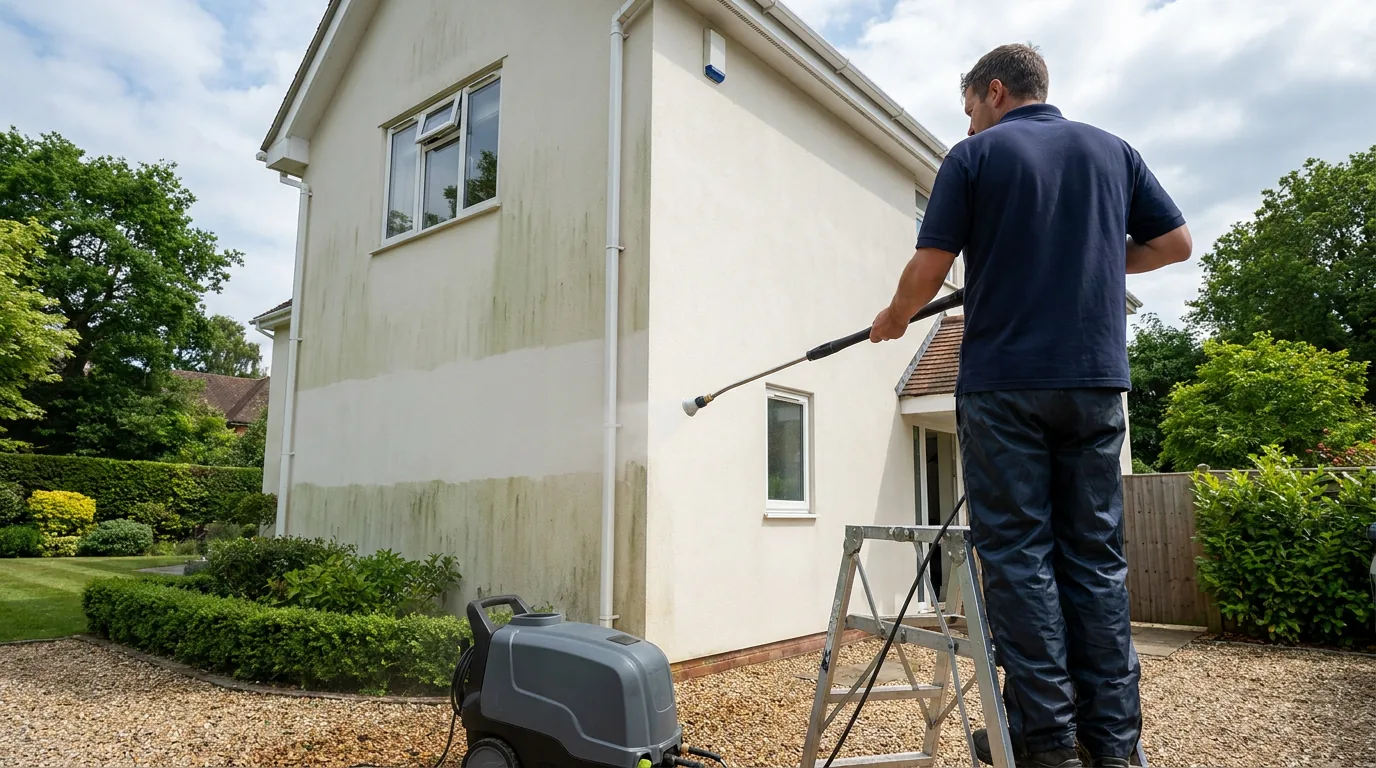
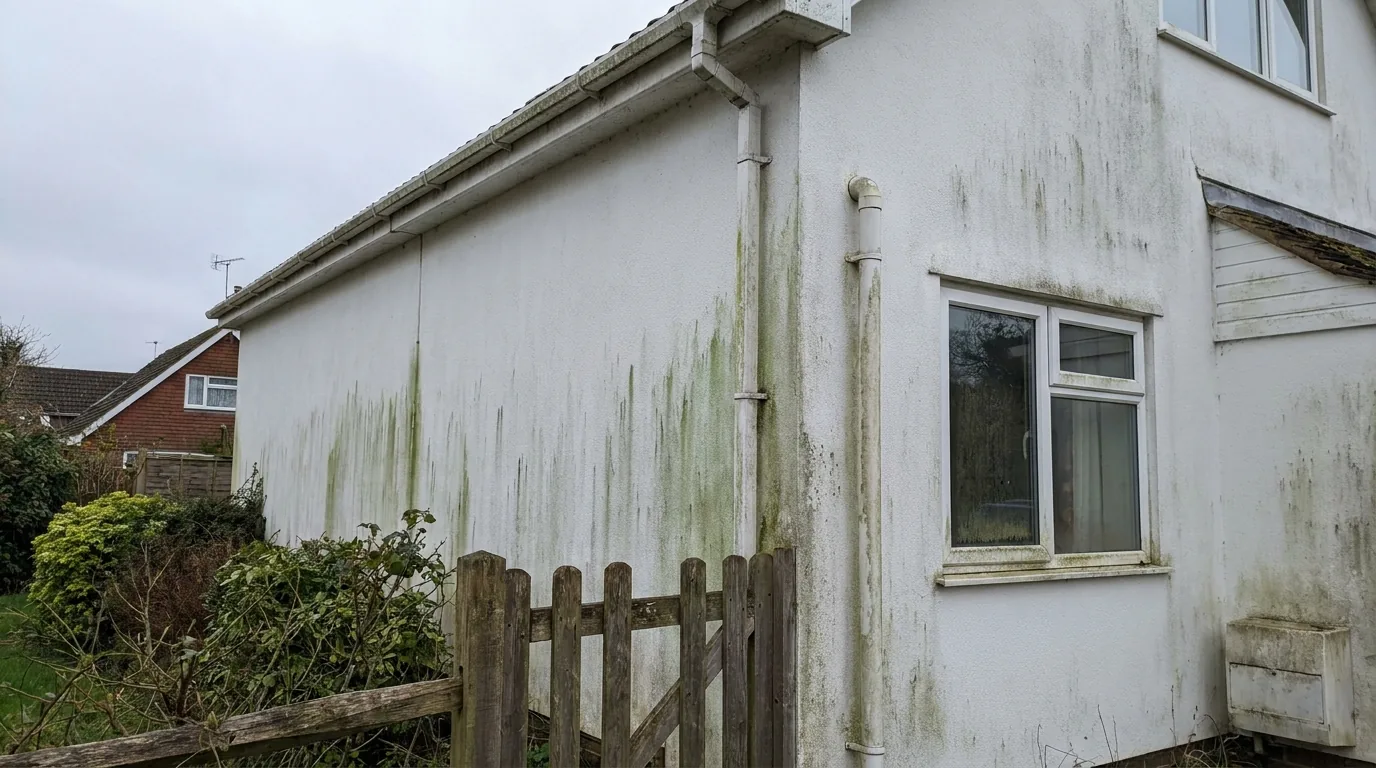
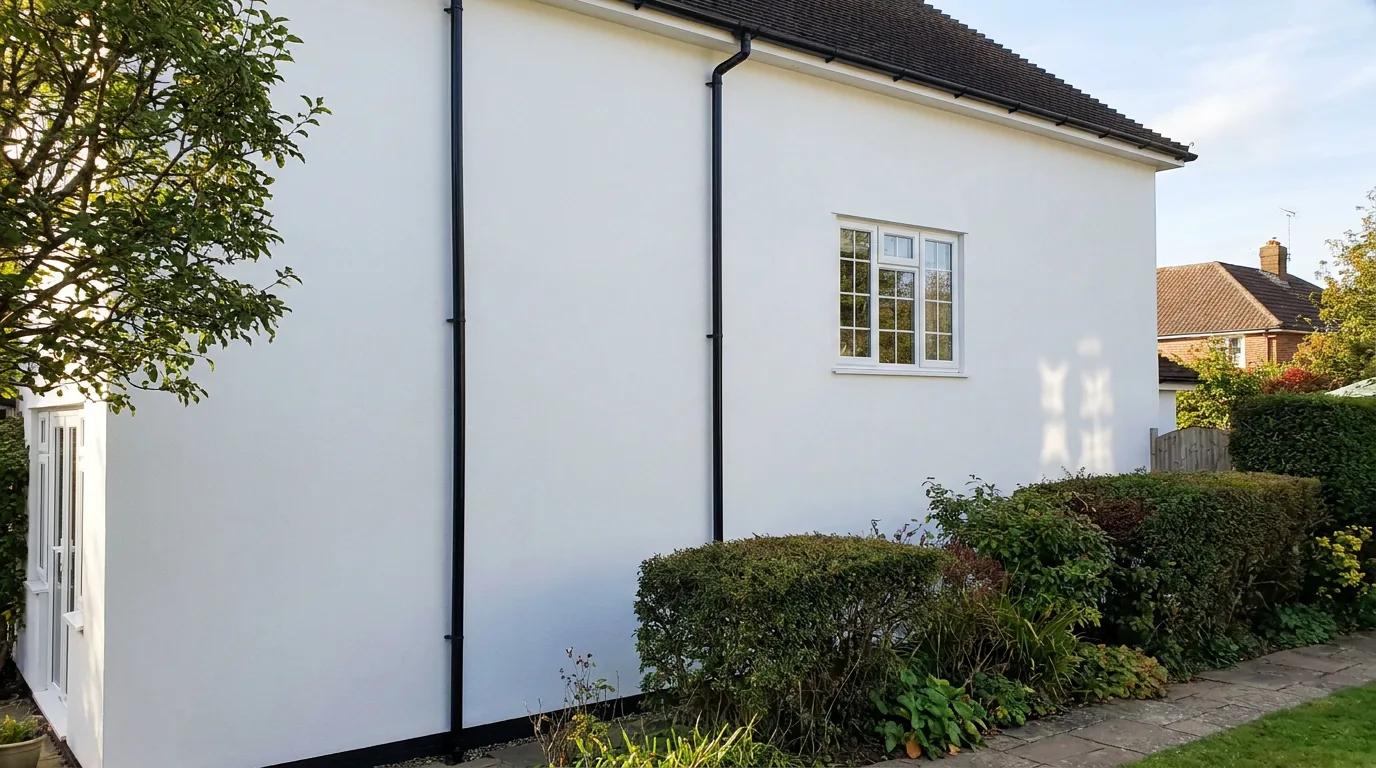
- Algae on render — newer properties, north-facing walls especially. Soft wash with biocide gives 2-4 years.
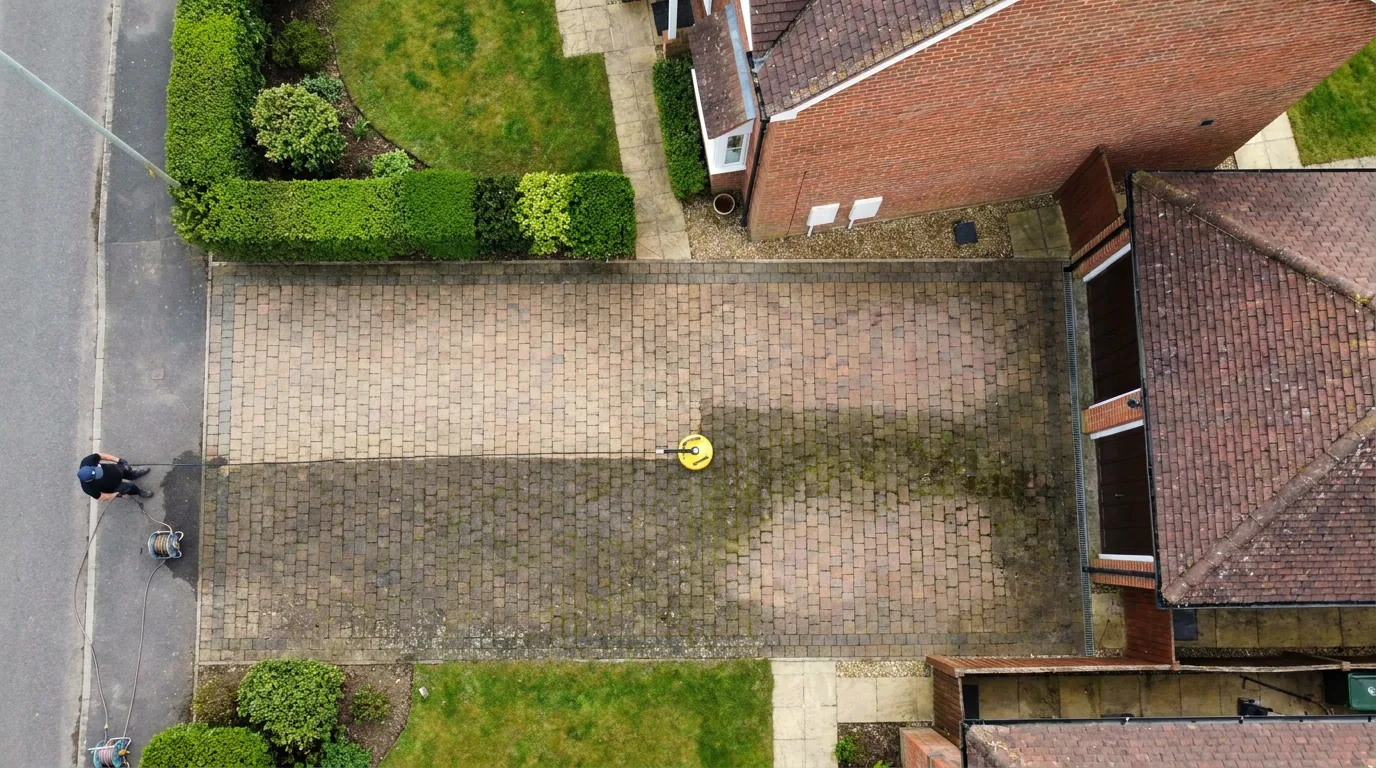
- Long rural drives with leaf debris — common across Blindley Heath and South Godstone. Commercial-grade kit handles 80m² in one visit.
Helpful guides for Godstone homeowners
Moss removal · Can pressure damage stone? · Best time to clean · Driveway cost guide · RH8 AONB comparison · CR3 Valley-vs-Hill comparison
Sources
Every claim about RH9 substrate, heritage protocols, tannin loading, slip threshold, biocide cadence, listed-building consent and SUDS policy on this page is sourced. We cite primary data (Met Office, BGS, Tandridge District Council) plus manufacturer guidance (Marshalls, Lithofin) and HSE/UKSRG slip guidance. We do not cite competitor pressure-washing blogs.
- Met Office — Wisley (Surrey) Location Long-Term Averages 1991–2020. Annual rainfall 648.41 mm. metoffice.gov.uk — Wisley averages. Accessed 21 May 2026.
- British Geological Survey (BGS) — Chalk Group lithostratigraphy (White Chalk Subgroup, Upper Cretaceous). Underlies Godstone village, Godstone Green, Bay Path. bgs.ac.uk — Chalk Group lexicon. Accessed 21 May 2026.
- British Geological Survey (BGS) — Weald Clay Formation lithostratigraphy (Lower Cretaceous Wealden Group). Underlies South Godstone, Blindley Heath and rural Green Belt corridor towards Lingfield. bgs.ac.uk — Weald Clay Formation lexicon. Accessed 21 May 2026.
- Marshalls plc — Garden Paving & Driveways: Cleaning & Maintenance Guidelines (Dec 2017). Medium pressure, 30° oblique, ≥200 mm standoff. marshalls.co.uk — cleaning guidelines (PDF). Accessed 21 May 2026.
- Lithofin AG — Algex Special Cleaner product page and technical information. Annual reapplication. lithofin.com — Algex. Accessed 21 May 2026.
- UK Slip Resistance Group / HSE — Introduction to the Pendulum Tester. PTV ≥36 low risk — relevant for conservation-area paving around Godstone Green. ukslipresistance.org.uk — pendulum tester. Accessed 21 May 2026.
- Tandridge District Council — Local Plan and SUDS / drainage / listed-building / conservation-area policies. The relevant council for RH9 Godstone. tandridge.gov.uk — Local Plan. Accessed 21 May 2026.