Why Caterham splits into two cleaning markets along the chalk scarp
The short answer: Caterham (CR3) is bisected by the North Downs chalk scarp into two geomorphologically distinct halves. Caterham Valley sits at the foot — Victorian and Edwardian streets, shaded, damp, lower-lying. Caterham on the Hill sits on the dip-slope — interwar and post-war housing with steep drives that catch every rainfall runoff. The substrate is the same White Chalk Subgroup as Banstead and Reigate Hill[2], but the aspect, gradient and tree cover materially shift the cleaning economics within the same postcode. Valley drives clean at £120–£220 on a 12–15 month cadence; Hill drives at £140–£260 on an 18–24 month cadence.
The Caterham Valley-vs-Hill cadence matrix
Original analytical contribution: the labelled OAC below splits CR3 into its two halves on the same chalk substrate. Inputs: BGS Chalk Group lithostratigraphy[2], Met Office Wisley[1], Environment Agency surface-water flood map for the Caterham Valley corridor[7], Lithofin Algex annual biocide cadence[4], UKSRG/HSE PTV slip threshold[5], Marshalls technique[3]. No competitor publishes the chalk-dip-slope-vs-scarp-foot split for a CR3 page.
| Surface (typical CR3 area) | Caterham Valley | Caterham on the Hill | Why the split |
|---|---|---|---|
| Block paving (40–70 m²) | £130–£220, re-clean 12–15 mo | £150–£260, re-clean 18–24 mo | Valley shade + lower-lying damp; Hill chalk drains vertically + sun |
| Concrete drive (gradient adjustment) | £100–£200, re-clean 12–15 mo | £120–£220, re-clean 15–20 mo (gradient surcharge) | Hill drives 1-in-5 to 1-in-8 gradients add 10–20% to ticket |
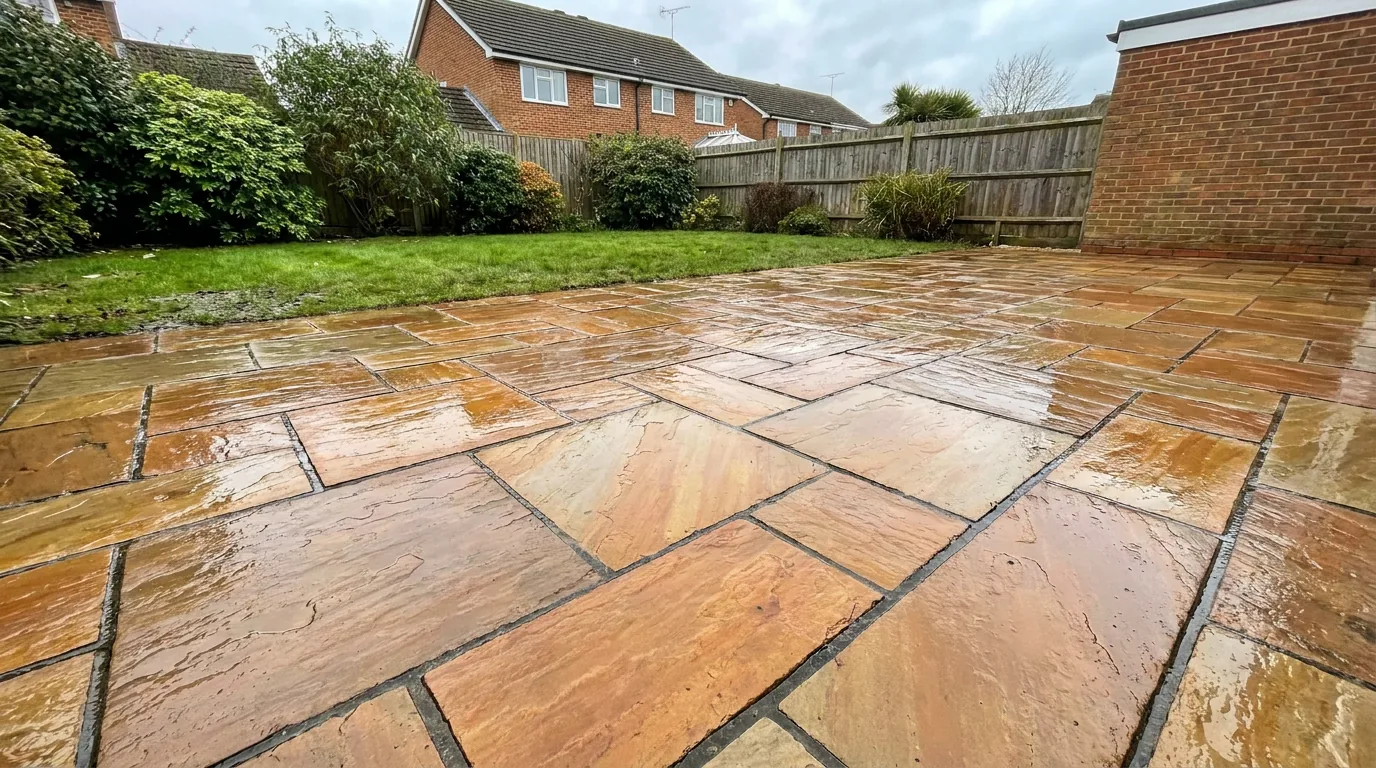
| Sandstone patio (15–30 m²) | £120–£240, re-clean 12–15 mo (tannin) | £140–£260, re-clean 15–20 mo (less tannin, more sun) | Valley beech/oak tannin staining materially shorter cadence |
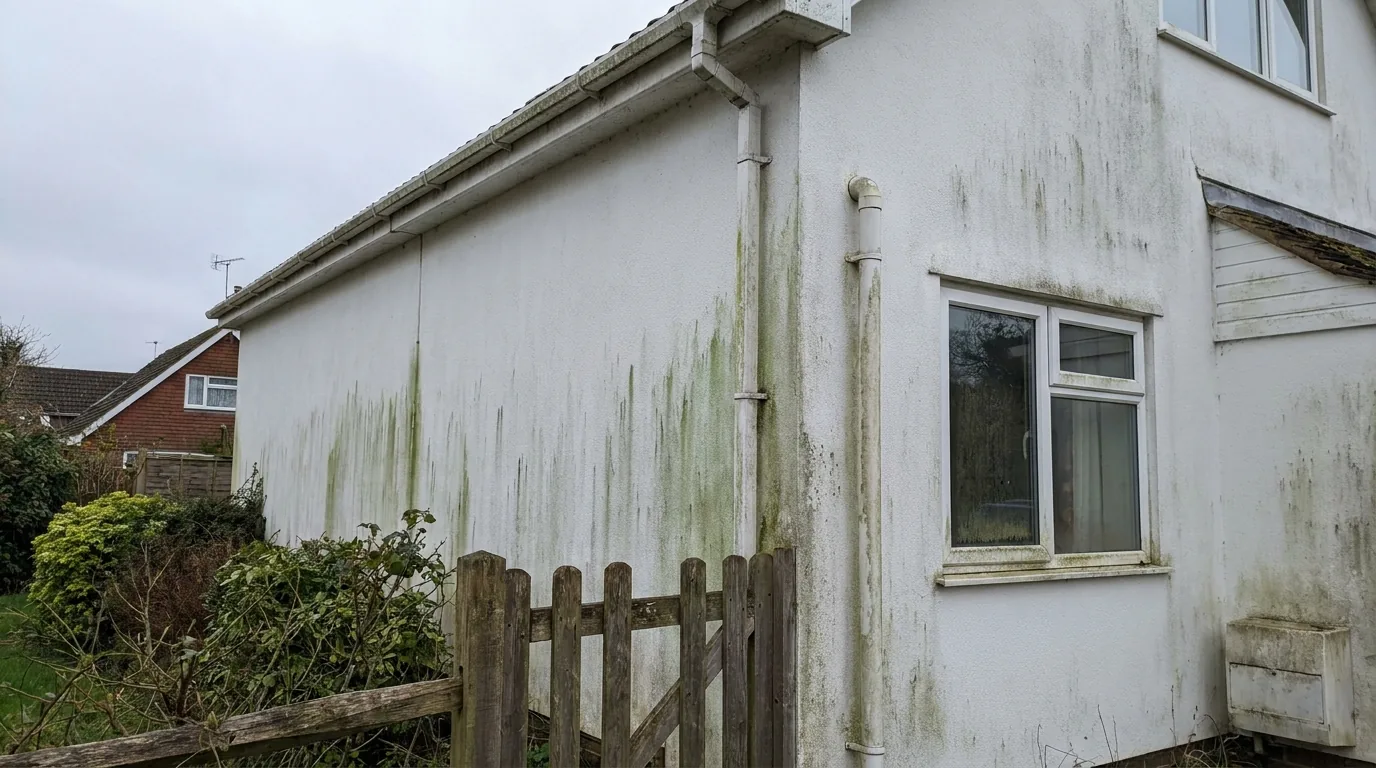
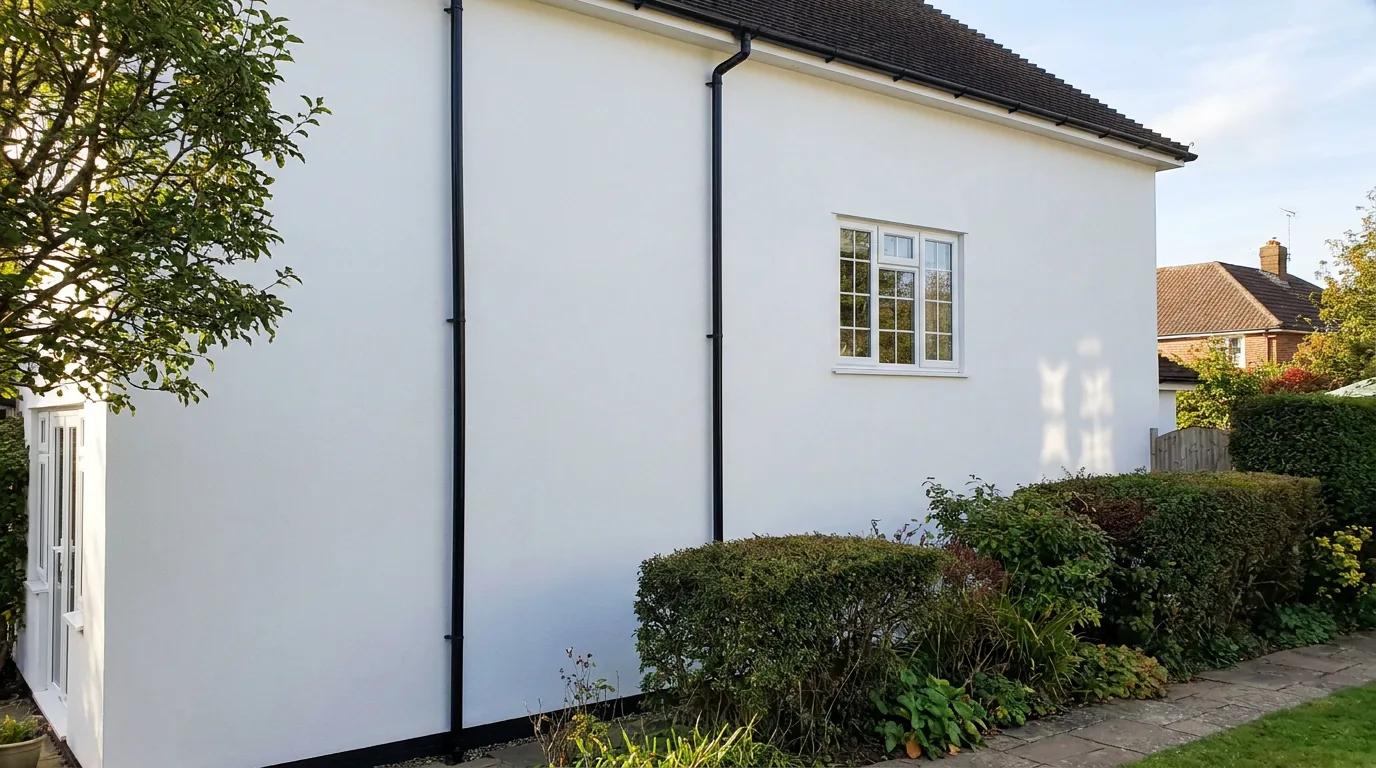
| Render (Victorian gable) | £180–£360, re-clean 36–48 mo | £200–£420, re-clean 48–60 mo | Valley humidity = faster algae-streak re-soiling under gutters |
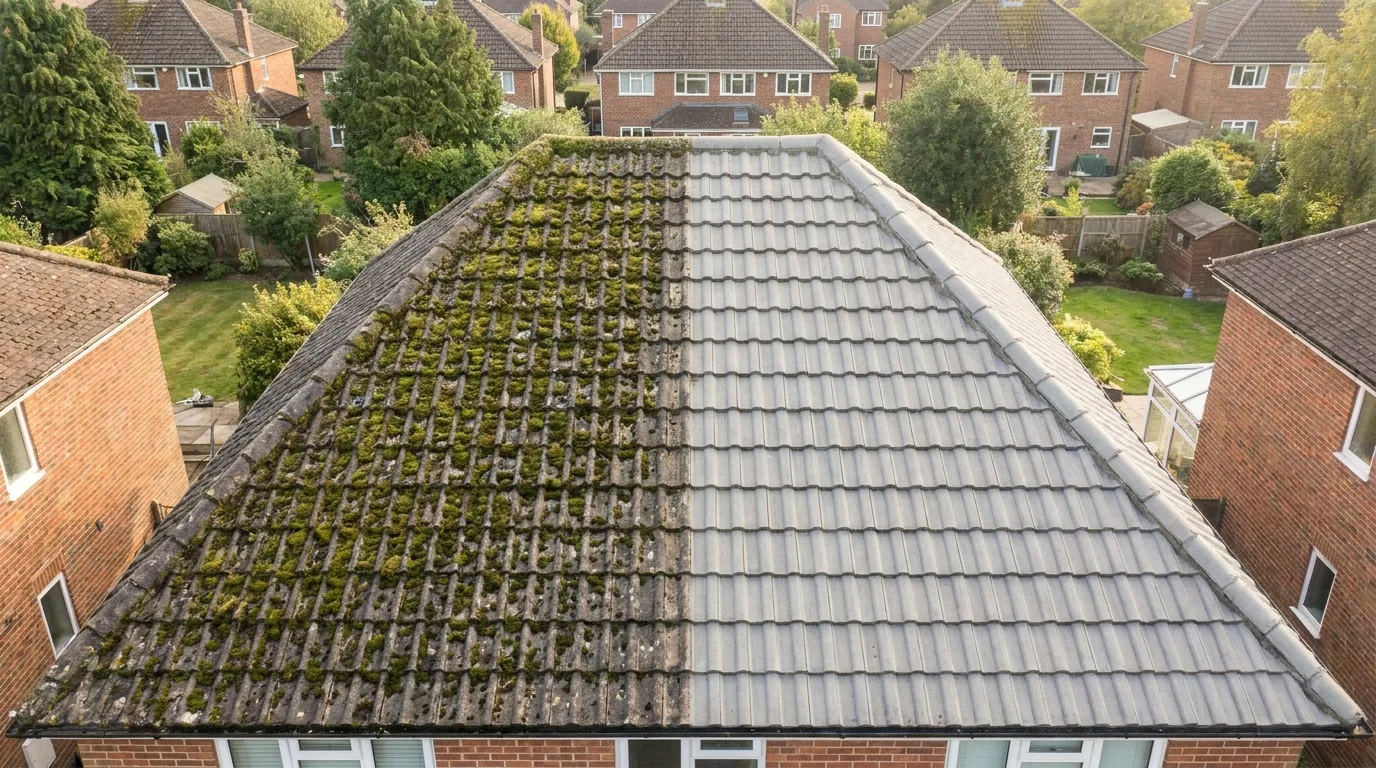
| Roof moss (concrete/clay tile) | £240–£500, re-clean 48–90 mo | £260–£560, re-clean 60–120 mo | Hill pitches catch sun and dry faster than shaded Valley roofs |
2026 client-billed quotes on CR3 jobs. The split is roughly defined by altitude: Caterham Valley extends from the railway station up to about Westway / Harestone Valley Road; Caterham on the Hill starts where the gradient steepens beyond Stafford Road and Coulsdon Road. Hill drives carry a 10–20% gradient surcharge above 1-in-8.
What’s actually under your Caterham drive
Caterham sits on the eastern North Downs chalk dip-slope — the same White Chalk Subgroup (Lewes Nodular Chalk, Seaford Chalk) as Banstead and Reigate Hill[2]. The substrate drains vertically; jointing-sand persistence is excellent. The Valley/Hill distinction is geomorphological (aspect + gradient + tree cover) not lithological — both halves sit on the same chalk. Practical paving consequence: re-sand cadence is similar across CR3, but biocide cadence tightens materially in the Valley because of shade and tannin loading.
Beech/oak woodland tannin staining is the Caterham fingerprint
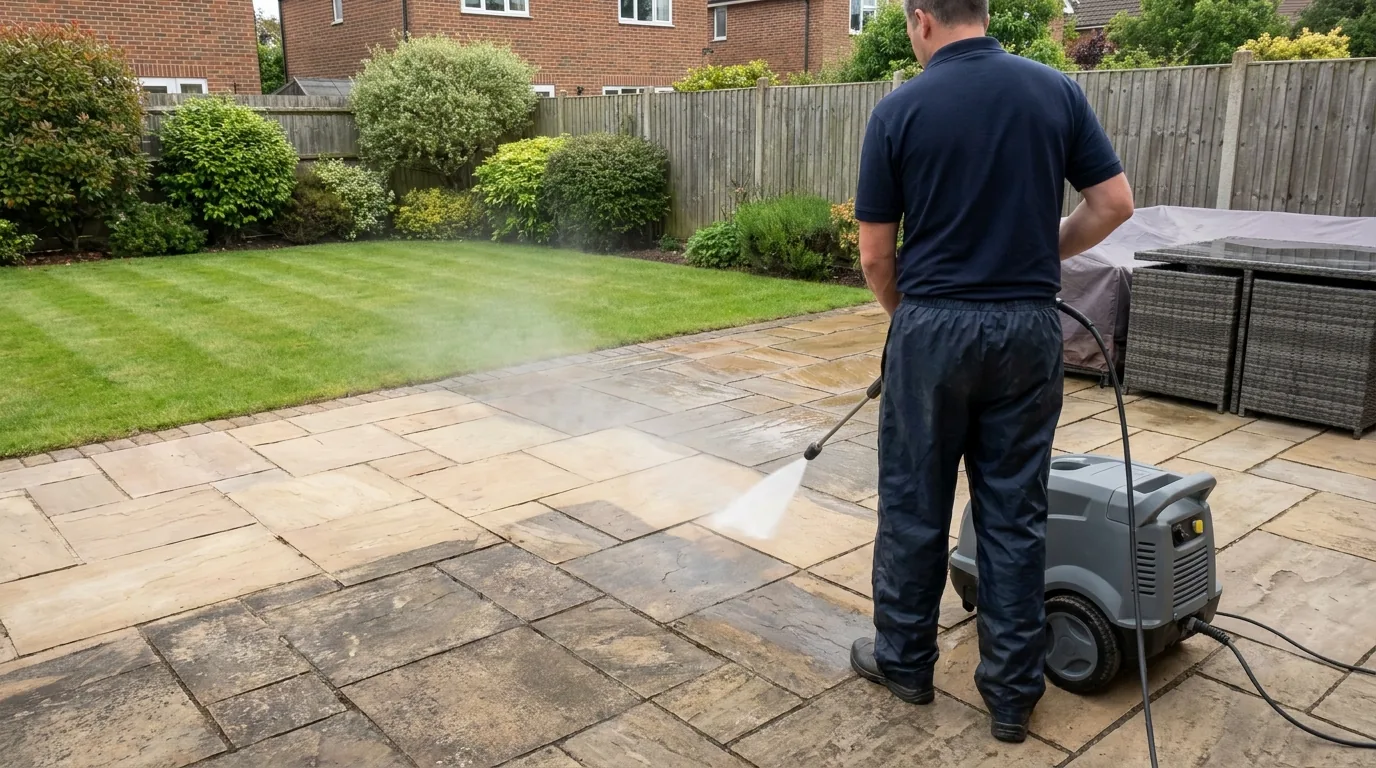
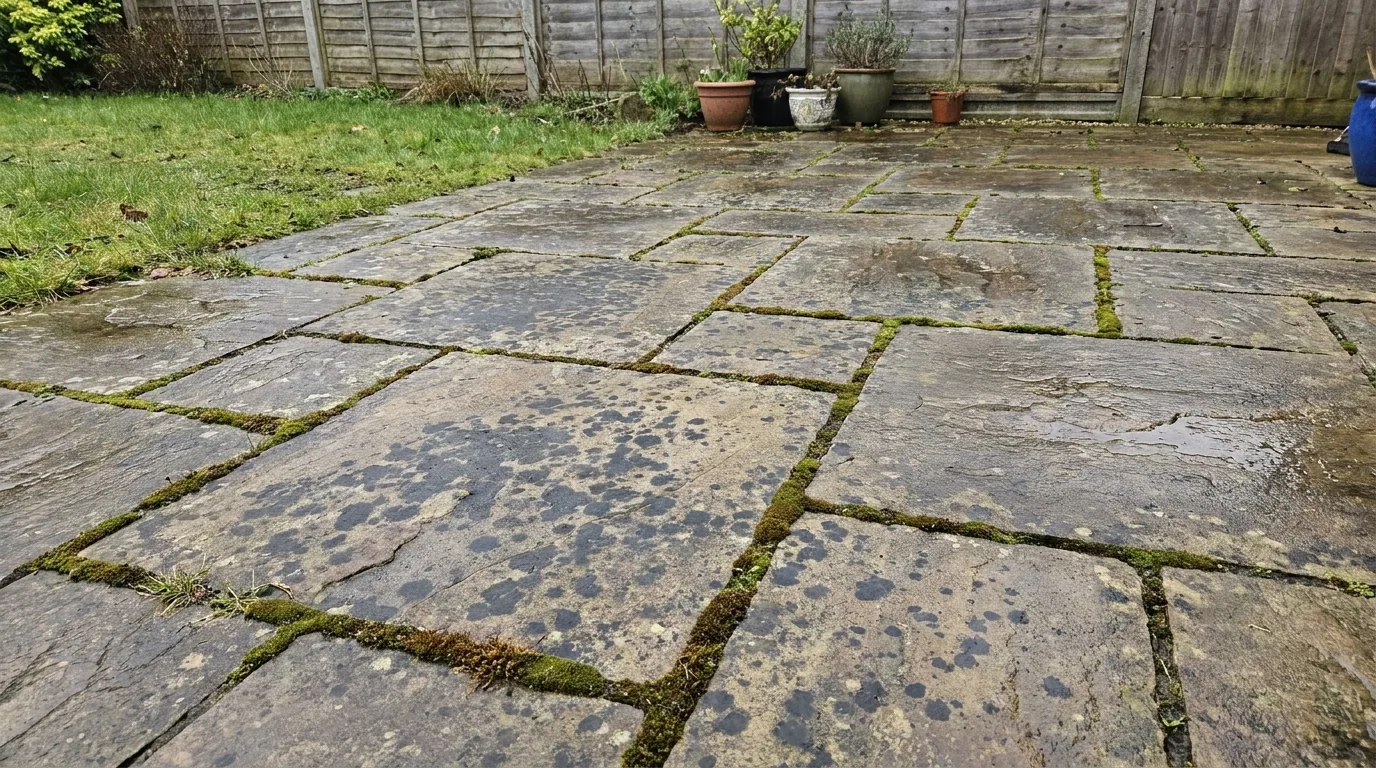
Caterham is surrounded by ancient beech and oak woodland — Hilltop Wood, Marden Park, Foster Down. Autumn leaf fall onto block paving and sandstone patios leaves tannin staining that pressure-washing alone cannot remove; tannins penetrate the surface pores. Lithofin Algex[4] biocide cadence helps prevent biofilm re-colonisation but does not directly remove tannin staining — that needs an oxalic-acid-based stone cleaner. We treat tannin separately as a pre-treat step on every Valley patio job.
Steep-drive runoff and slip-risk on Caterham Hill
1-in-5 to 1-in-8 gradients along the climbs to Caterham on the Hill make wash-water runoff management non-trivial. We use bunded surface cleaning with downstream capture to prevent flooding the neighbouring property. UKSRG / HSE-endorsed pendulum guidance[5] sets PTV ≥36 as the low-slip threshold — doubly important on gradients, because a slip on a 1-in-5 drive has materially worse consequences than on level paving. Annual biocide on north-facing Hill drives keeps PTV above the threshold.
Tandridge District Council planning — the CR3 SUDS gate
Caterham falls under Tandridge District Council, not Reigate & Banstead, Mole Valley, or Crawley[6]. The Local Plan applies national SUDS guidance to new and replacement front-garden paving >5 m² draining to highway. Routine cleaning of existing surfaces is unaffected. Notable for Caterham Valley: parts of the corridor carry surface-water flood risk on the Environment Agency map[7], so re-lay decisions need to factor in permeable-surface or soakaway requirements.
CR3 mistakes that void warranties
- Pressure-washing tannin without pre-treatment. Tannin penetrates stone pores; pressure grinds it in. Always oxalic-acid-based stone cleaner first, then surface clean per Marshalls[3].
- Turbo nozzles on steep Hill drives. Same Marshalls warranty exposure as anywhere else (medium pressure, 30° oblique, ≥200 mm standoff), plus on a 1-in-5 gradient the turbo jet has even less margin for error.
- Surface-cleaning without bunded runoff control. Caterham Valley downstream properties carry surface-water flood risk; uncontrolled wash-water runoff is a neighbour-relations and EA-compliance problem.
What we actually do on a Caterham job
- Identify Valley vs Hill — the matrix above determines cadence, gradient surcharge and tannin-treatment emphasis.
- Pre-treat tannin staining on Valley patios with oxalic-acid stone cleaner.
- Pre-treat biofilm with Lithofin Algex[4]; 24–48 hr dwell.
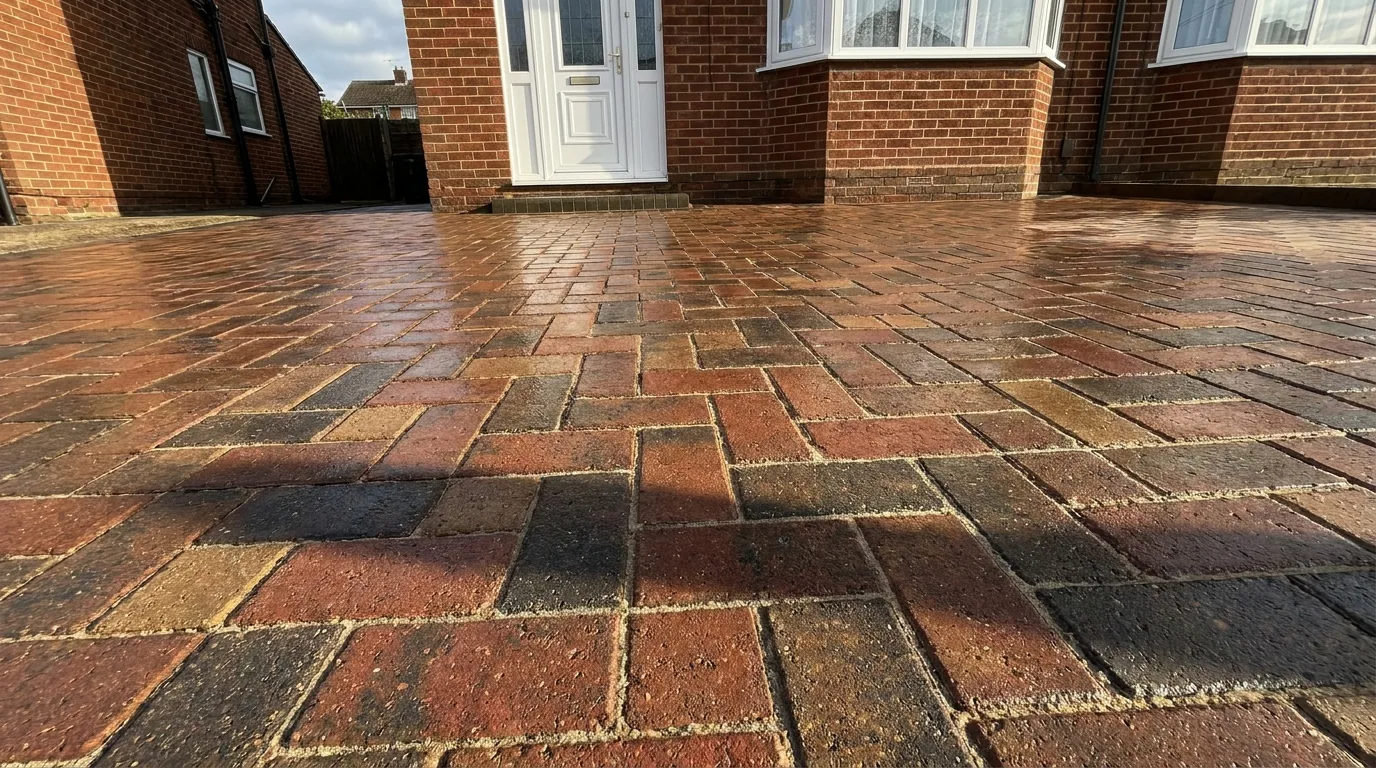
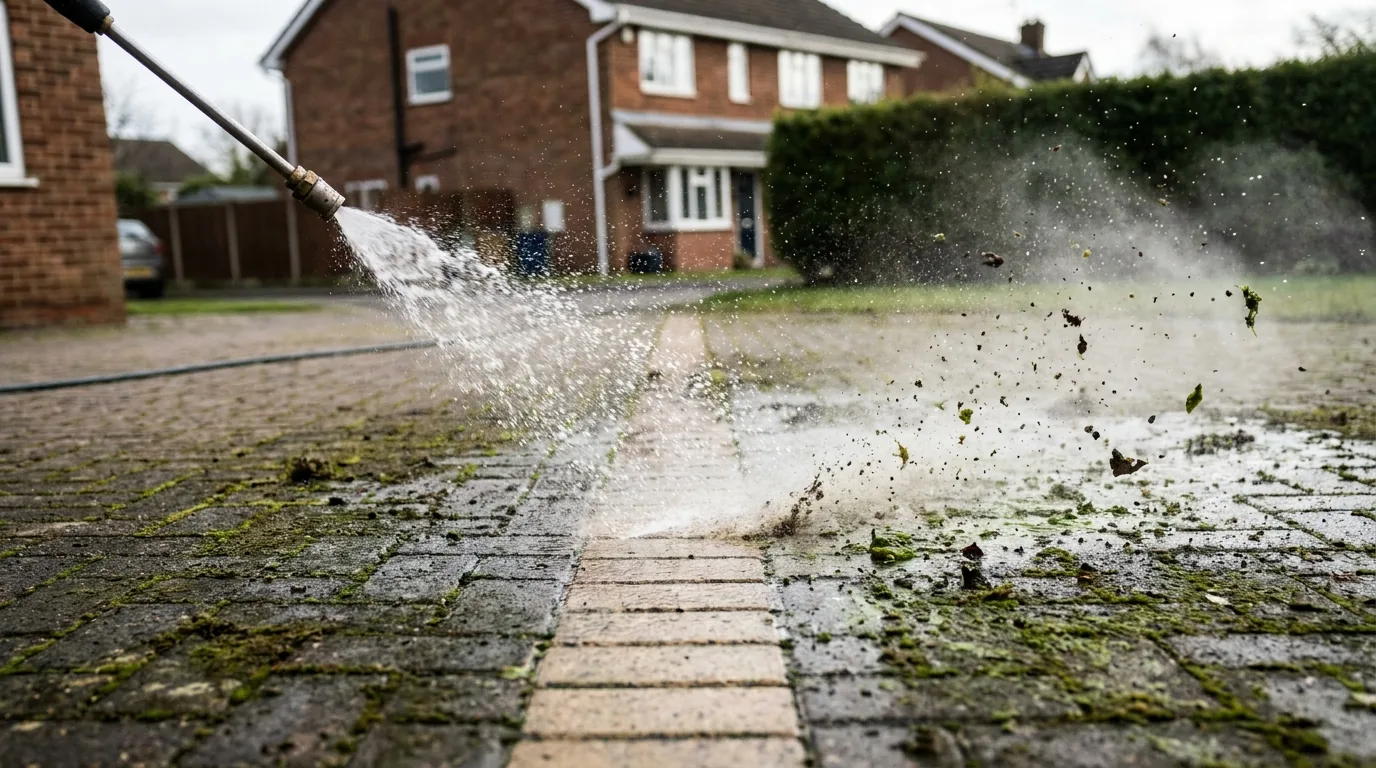
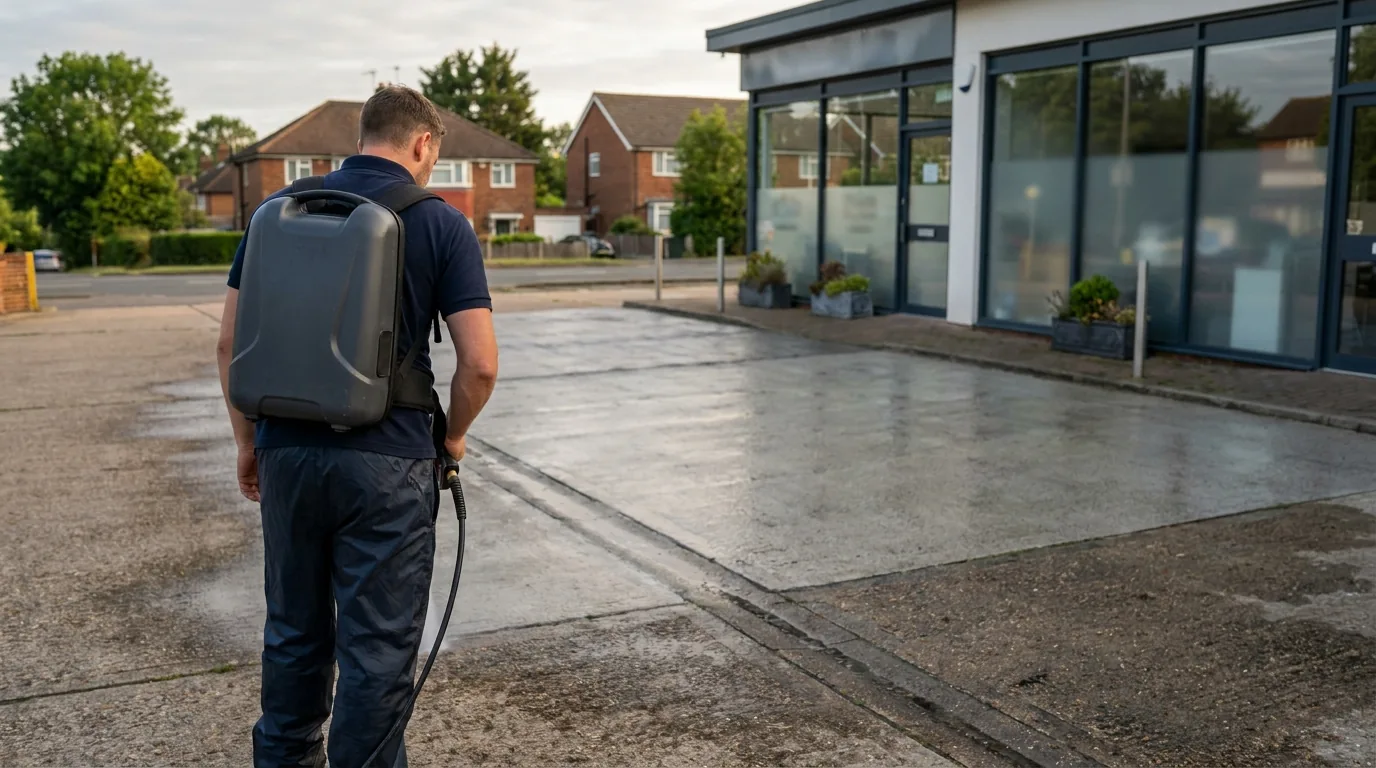
- Bunded surface-clean at medium pressure — 30° oblique, ≥200 mm standoff, downstream capture on Hill gradients.
- Re-sand kiln-dried sand on block paving — standard.
- Walk again with the customer — reshoot anything not right. If the result isn’t right, we redo it free.
Pressure washing across CR3 — what we cover
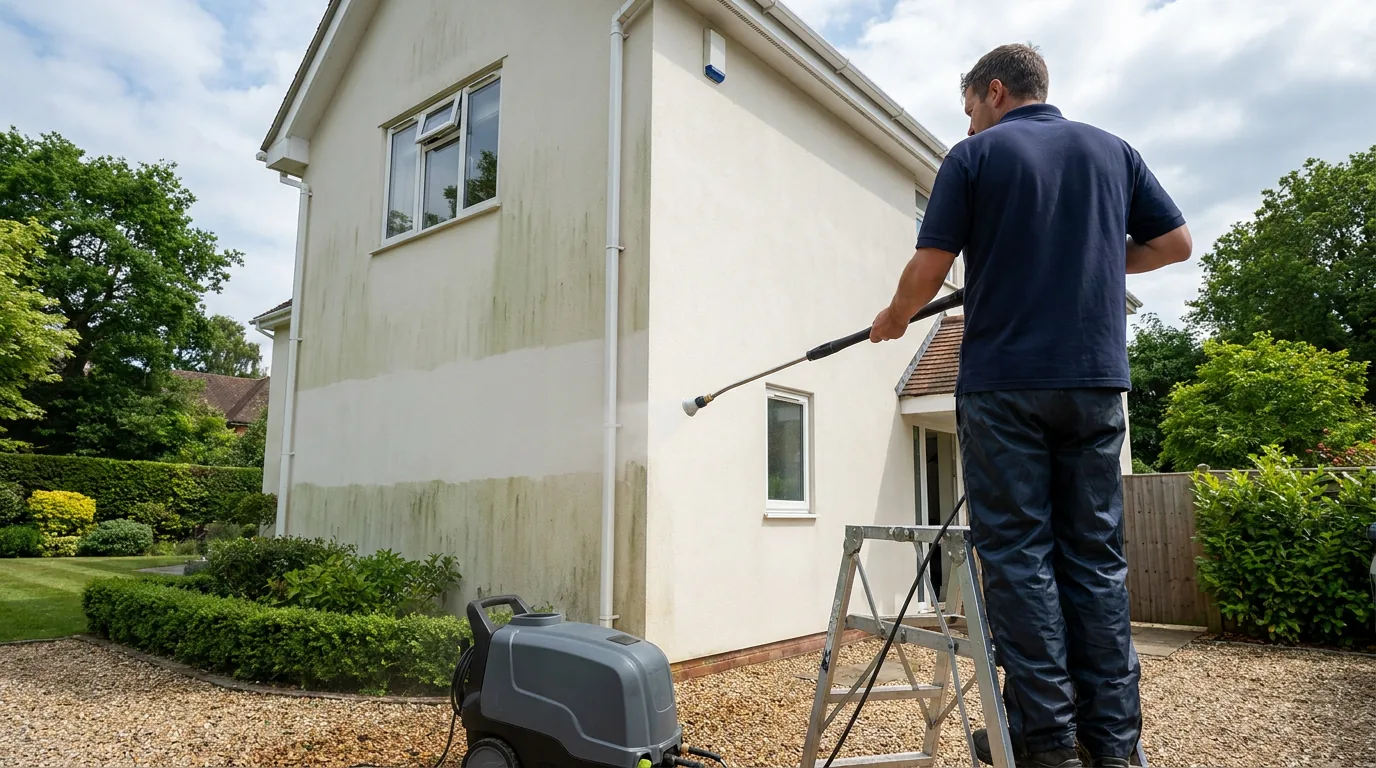
Caterham sits on the dip-slope of the North Downs and the town is split in two halves by the geography. Caterham Valley is at the bottom — Victorian and Edwardian streets, lots of shade, lots of damp. Caterham on the Hill is the top — interwar and post-war housing with steeper drives. We cover Oxted (RH8), Godstone (RH9), Redhill (RH1) and the rest of Surrey within 20 miles. Full list of areas here. Or call 01737 652 515.
What we see on Caterham drives
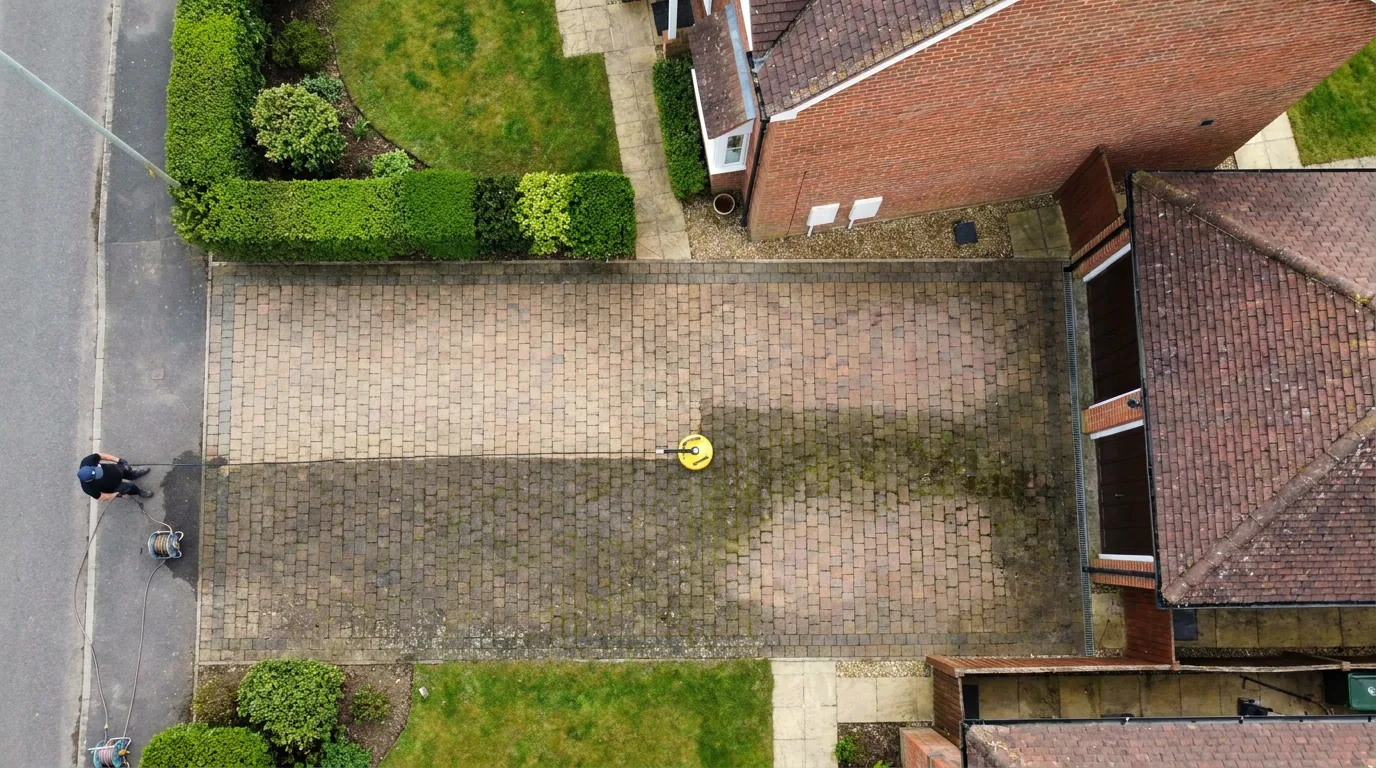
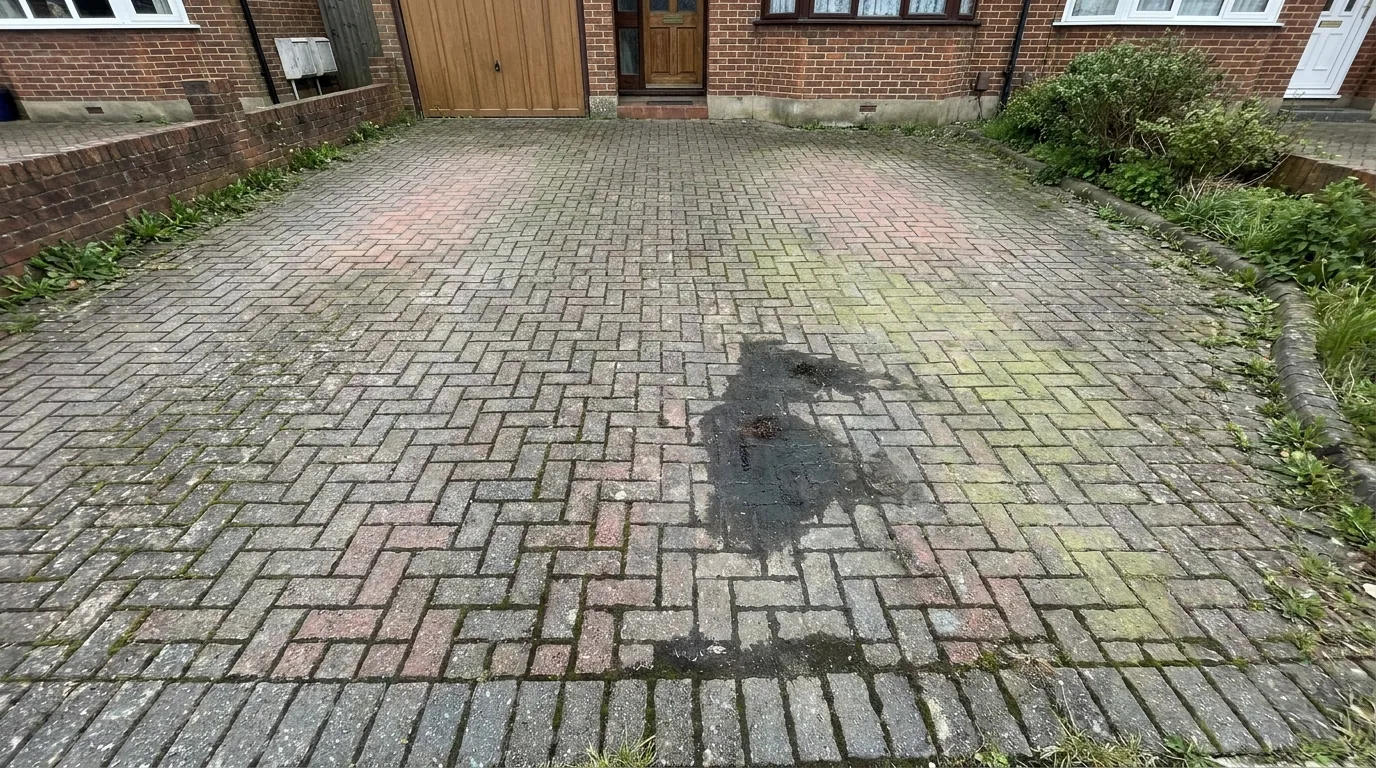
- Heavy moss on steep north-facing drives — the Caterham on the Hill speciality. Slippery and dangerous; pre-treat with biocide before washing.
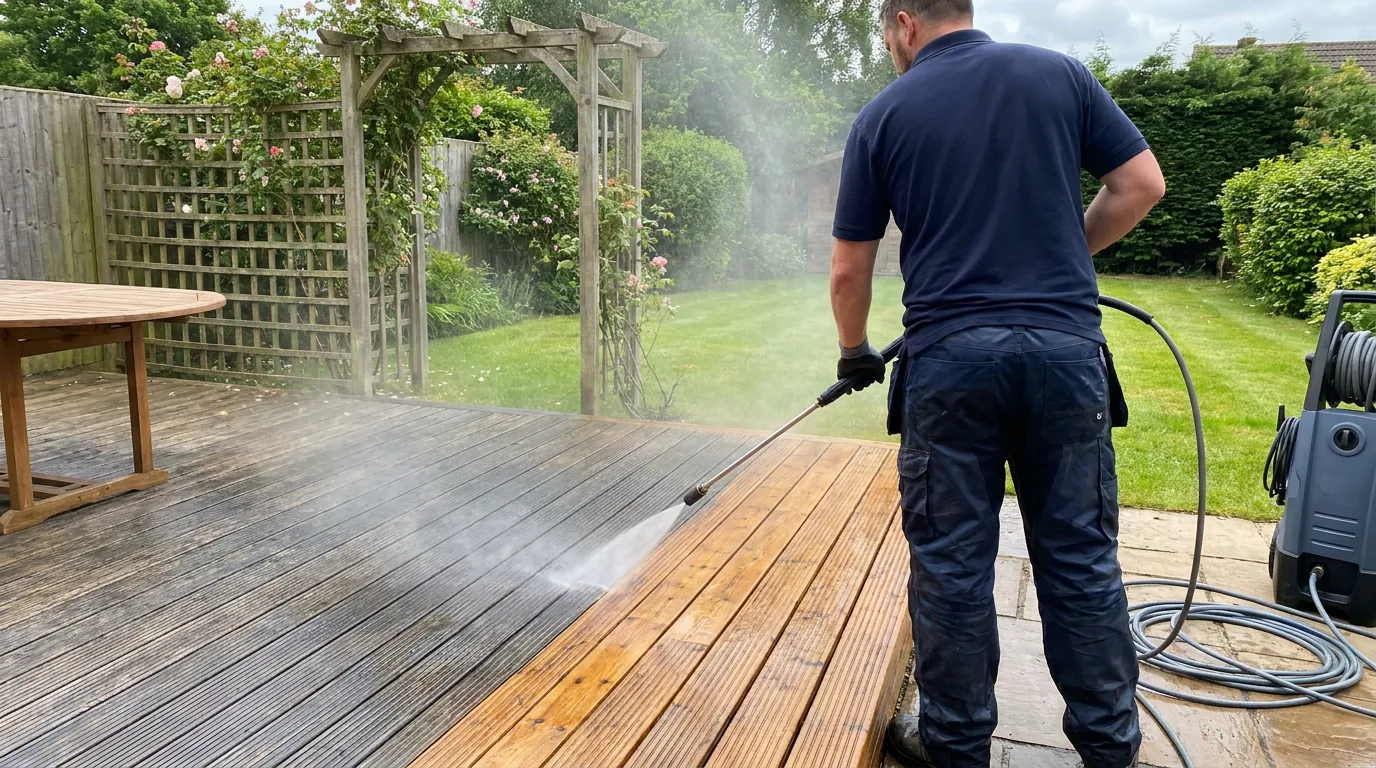
- Leaf tannin on patios — from the beech and oak woodland surrounding the town. Oxalic-acid pre-treat then surface clean lifts the dark marks.
- Algae on Valley driveways — less direct sun, more damp, more green film. Annual clean keeps it under control.
- Mineral deposits on dark block paving — from the hard chalk water. Specialist treatment removes the white film.
Helpful guides for Caterham homeowners
Moss removal · DIY vs pro · Driveway costs · Best time to clean · Banstead chalk comparison · Reigate two-substrate comparison
Sources
Every claim about CR3 substrate, gradient, tannin, slip threshold, biocide cadence, paving warranty and SUDS policy on this page is sourced. We cite primary data (Met Office, BGS, Environment Agency, Tandridge District Council) plus manufacturer guidance (Marshalls, Lithofin) and HSE/UKSRG slip guidance. We do not cite competitor pressure-washing blogs.
- Met Office — Wisley (Surrey) Location Long-Term Averages 1991–2020. Annual rainfall 648.41 mm. metoffice.gov.uk — Wisley averages. Accessed 21 May 2026.
- British Geological Survey (BGS) — Chalk Group lithostratigraphy (White Chalk Subgroup, Upper Cretaceous). Underlies the entire CR3 postcode — Caterham Valley sits at the dip-slope foot; Caterham on the Hill sits on the dip-slope itself. bgs.ac.uk — Chalk Group lexicon. Accessed 21 May 2026.
- Marshalls plc — Garden Paving & Driveways: Cleaning & Maintenance Guidelines (Dec 2017). Medium pressure, 30° oblique, ≥200 mm standoff; re-sand if joints are washed out. marshalls.co.uk — cleaning guidelines (PDF). Accessed 21 May 2026.
- Lithofin AG — Algex Special Cleaner product page and technical information. Annual reapplication, preferably in spring. lithofin.com — Algex. Accessed 21 May 2026.
- UK Slip Resistance Group / HSE — Introduction to the Pendulum Tester. PTV ≥36 low risk — particularly important on steep Hill gradients. ukslipresistance.org.uk — pendulum tester. Accessed 21 May 2026.
- Tandridge District Council — Local Plan and SUDS / drainage policies. The relevant council for CR3 Caterham, RH8 Oxted, RH9 Godstone. tandridge.gov.uk — Local Plan. Accessed 21 May 2026.
- Environment Agency / GOV.UK — Long-term flood risk for an area in England. Documents surface-water flood pockets across the Caterham Valley corridor. check-long-term-flood-risk.service.gov.uk. Accessed 21 May 2026.