Why Dorking surfaces stay damp 3–5 weeks longer than the rainfall suggests
The short answer: Met Office Wisley records 648 mm/yr rainfall[1], the same baseline as RH1/RH2. But Dorking (RH4/RH5) sits at the bottom of the Mole Gap — squeezed between the North Downs Chalk scarp to the north and the Greensand ridge to the south[2][3]. The topographic sheltering reduces wind speeds, slows evaporation and traps cold-air drainage in the valley overnight. The practical result: surface-drying times are 3–5 weeks longer per year than Wisley’s headline number implies, pushing the re-clean cadence to 12–15 months on most surfaces — the tightest in our 20-mile radius.
The Mole Valley microclimate multiplier
Original analytical contribution: the labelled OAC below isolates the microclimate effect from the headline rainfall. Inputs: Wisley rainfall + 30-year average[1], BGS chalk scarp + Lower Greensand ridge geometry that defines the Mole Gap[2][3], Lithofin biocide cadence[5], UKSRG/HSE PTV slip threshold[6]. No competitor publishes the microclimate-vs-rainfall distinction for UK pressure washing; they treat Surrey as one market.
| Surface (RH4/RH5 typical area) | Dorking 2026 price band | Dorking re-clean (months) | vs RH1 baseline cadence | Why the microclimate shifts it |
|---|---|---|---|---|
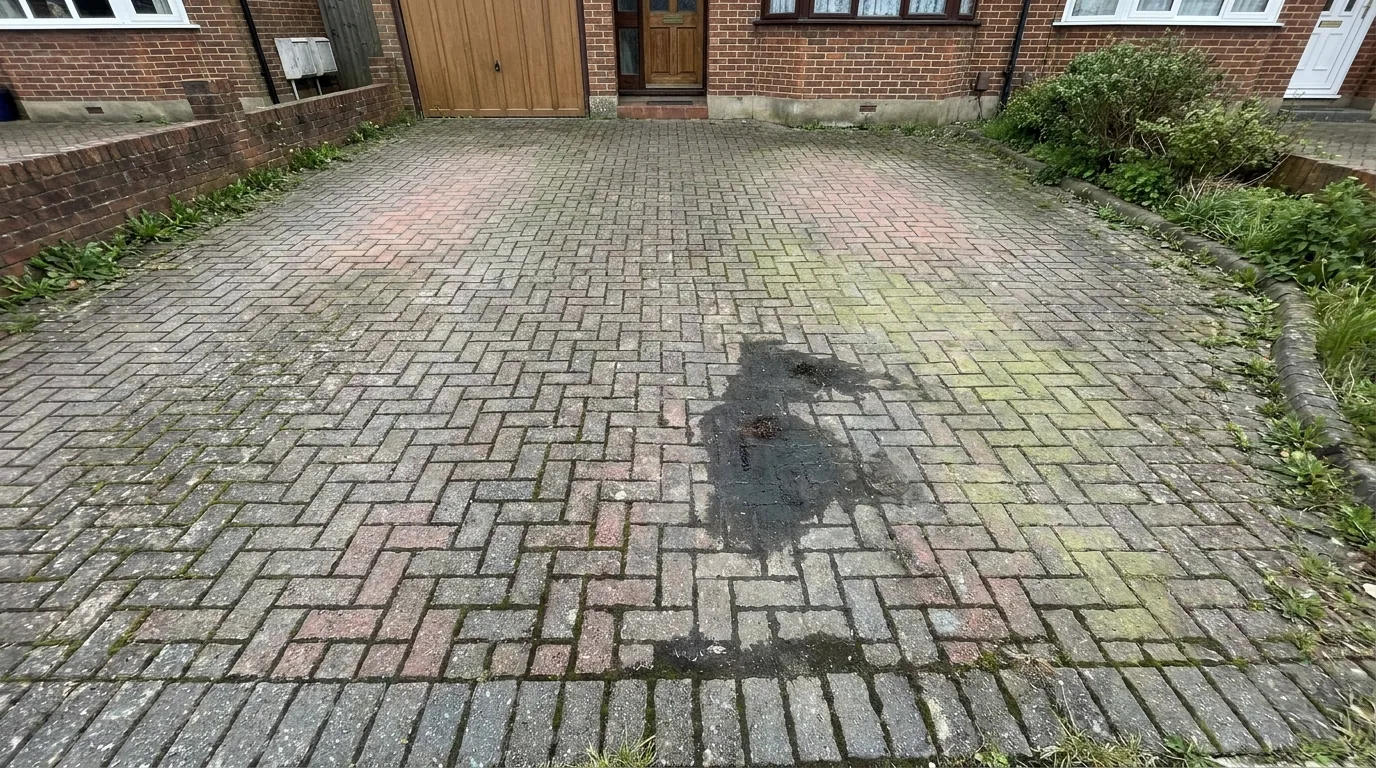
| Block paving (40–80 m²) | £140–£260 | 12–15 | ~25% tighter | Longer surface-drying times keep biofilm regrowing; PTV crosses earlier |
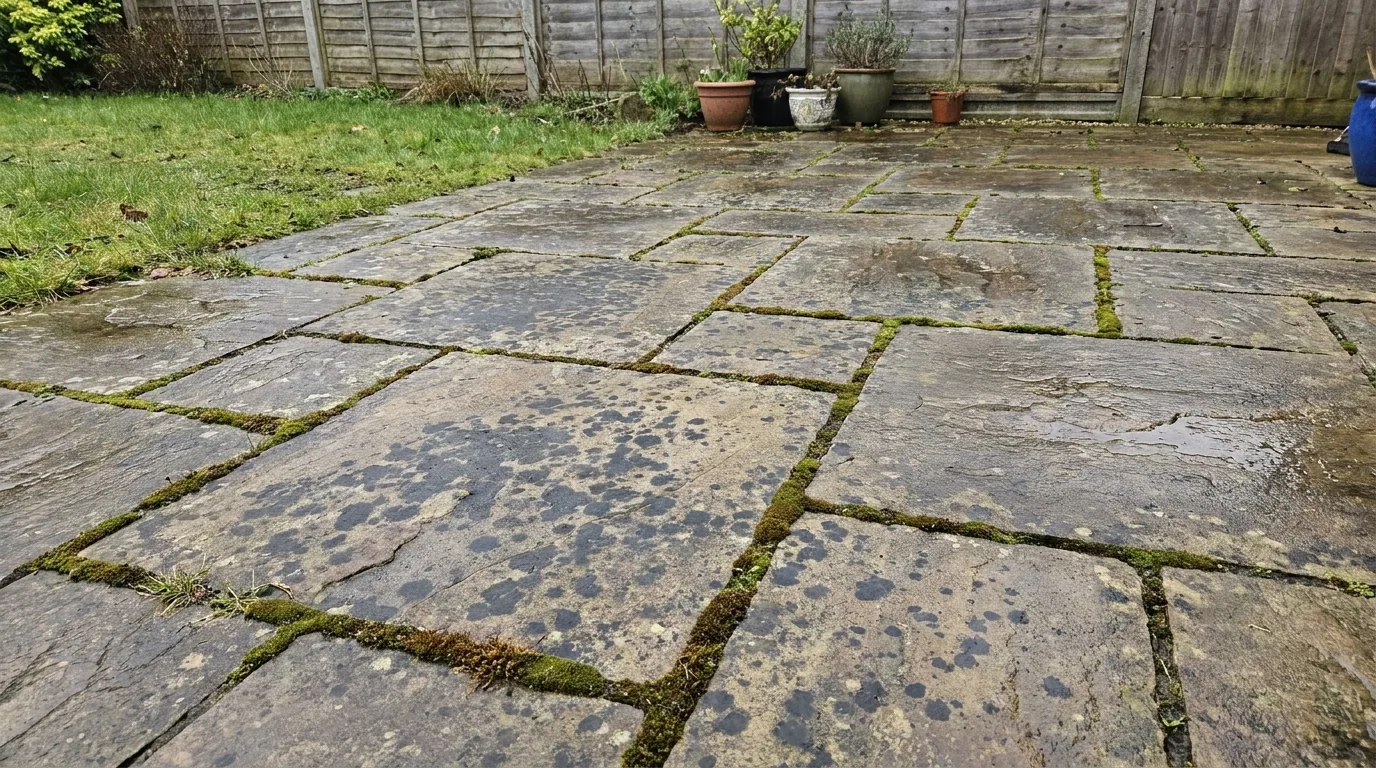
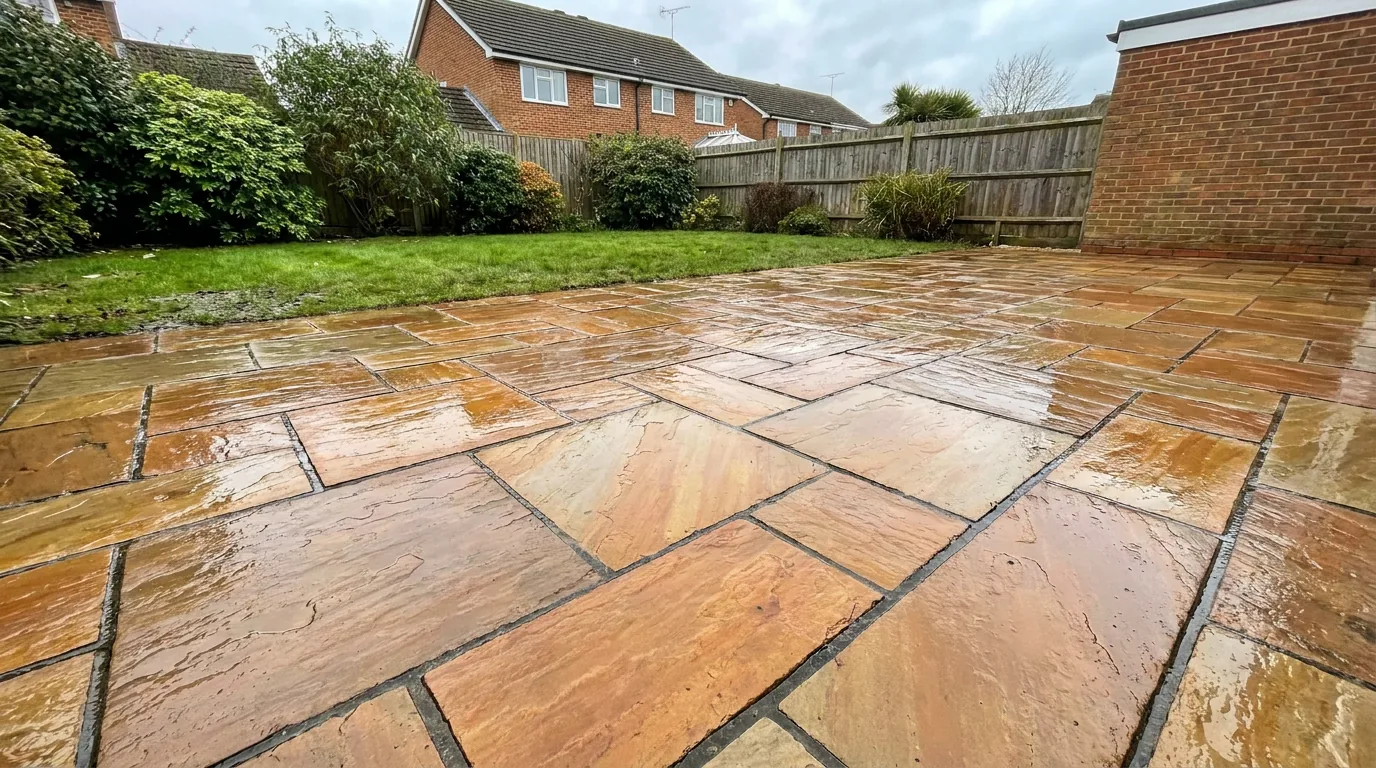
| Indian sandstone patio (20–40 m²) | £140–£280 | 10–14 | ~30% tighter | Black-spot lichen most aggressive in the Mole Gap; AONB tree canopy |
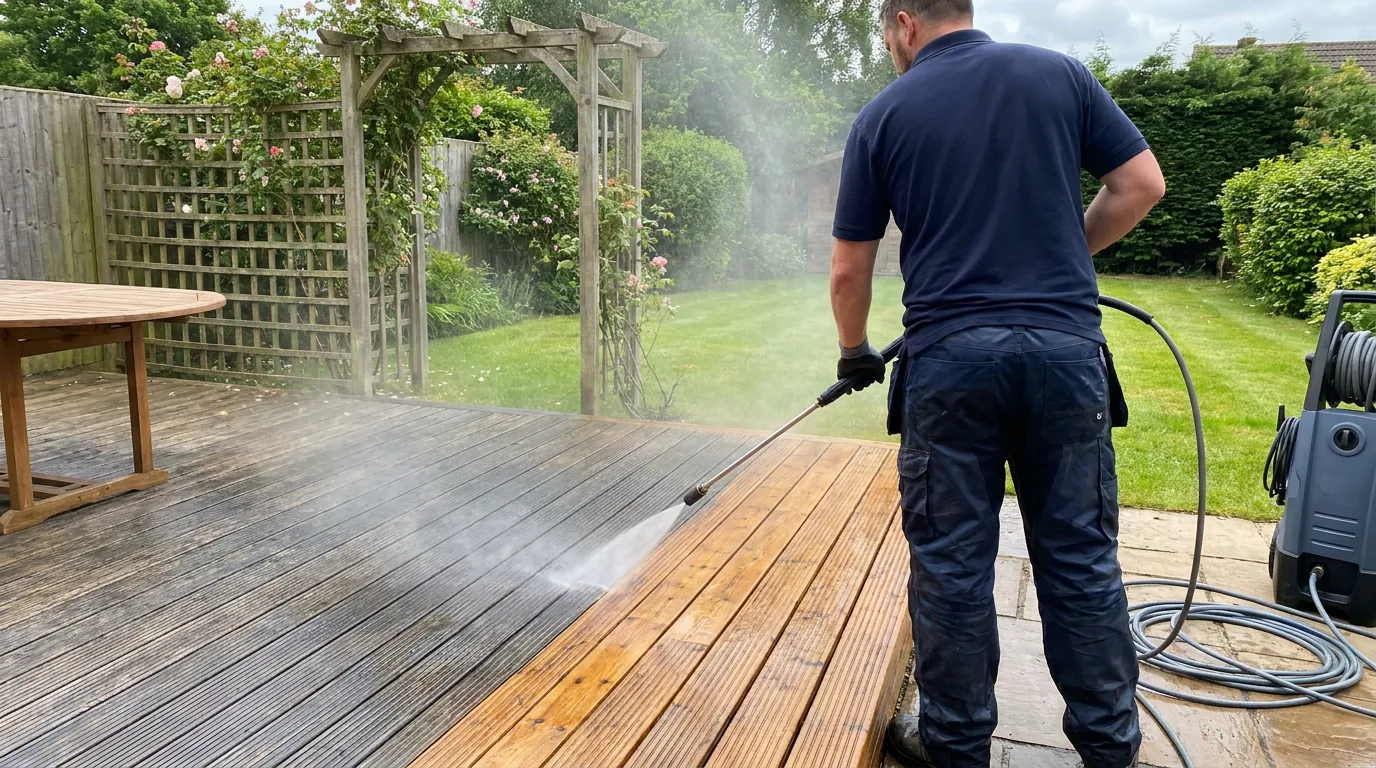
| York stone patio (15–30 m²) | £130–£260 | 10–14 | ~30% tighter | Soft stone, never high pressure; biocide-first treatment essential |
| Resin-bound (50–100 m²) | £150–£320 | 18–24 | slightly tighter | Low porosity; microclimate matters less than aspect |
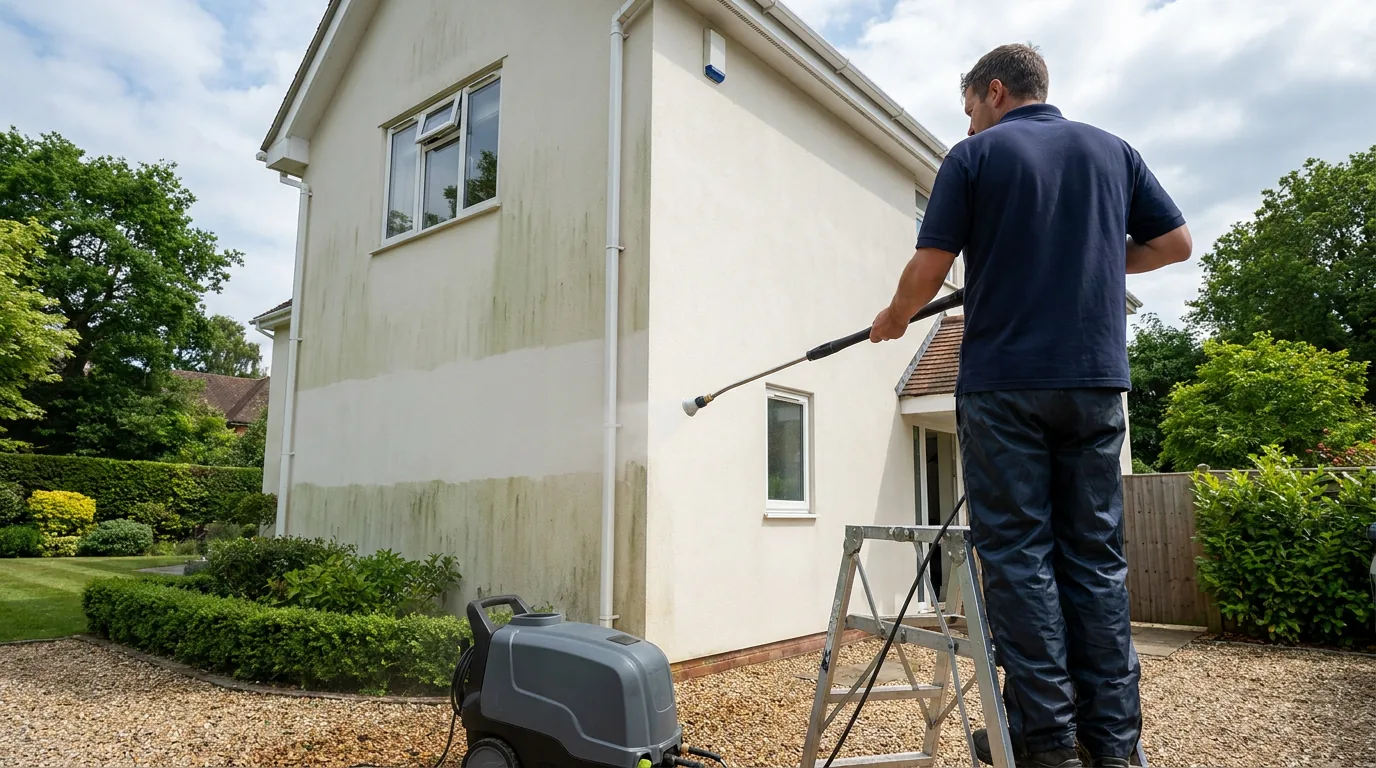
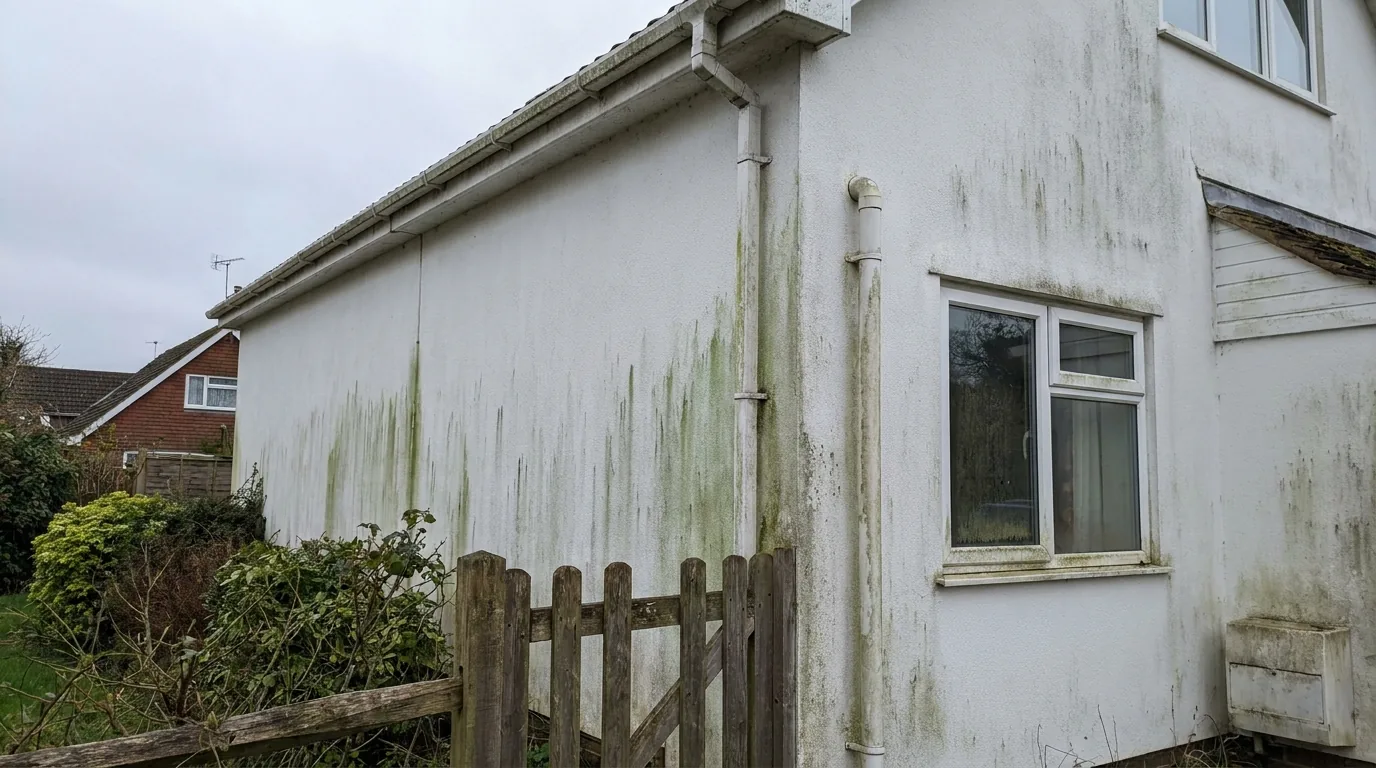
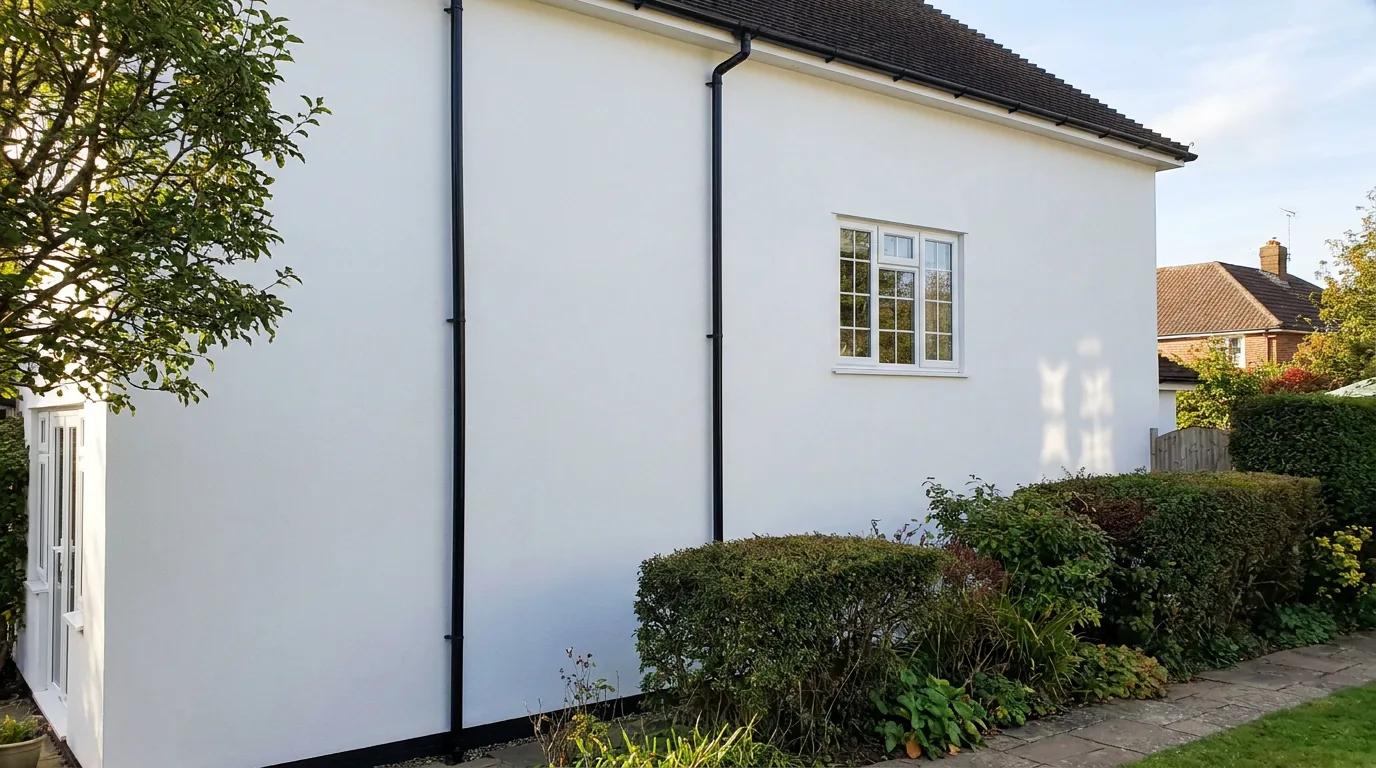
| Painted/silicone render | £180–£420 | 24–42 | ~30% tighter | Algae streaks under gutters within 2 seasons in the Mole Gap, vs 3 elsewhere |
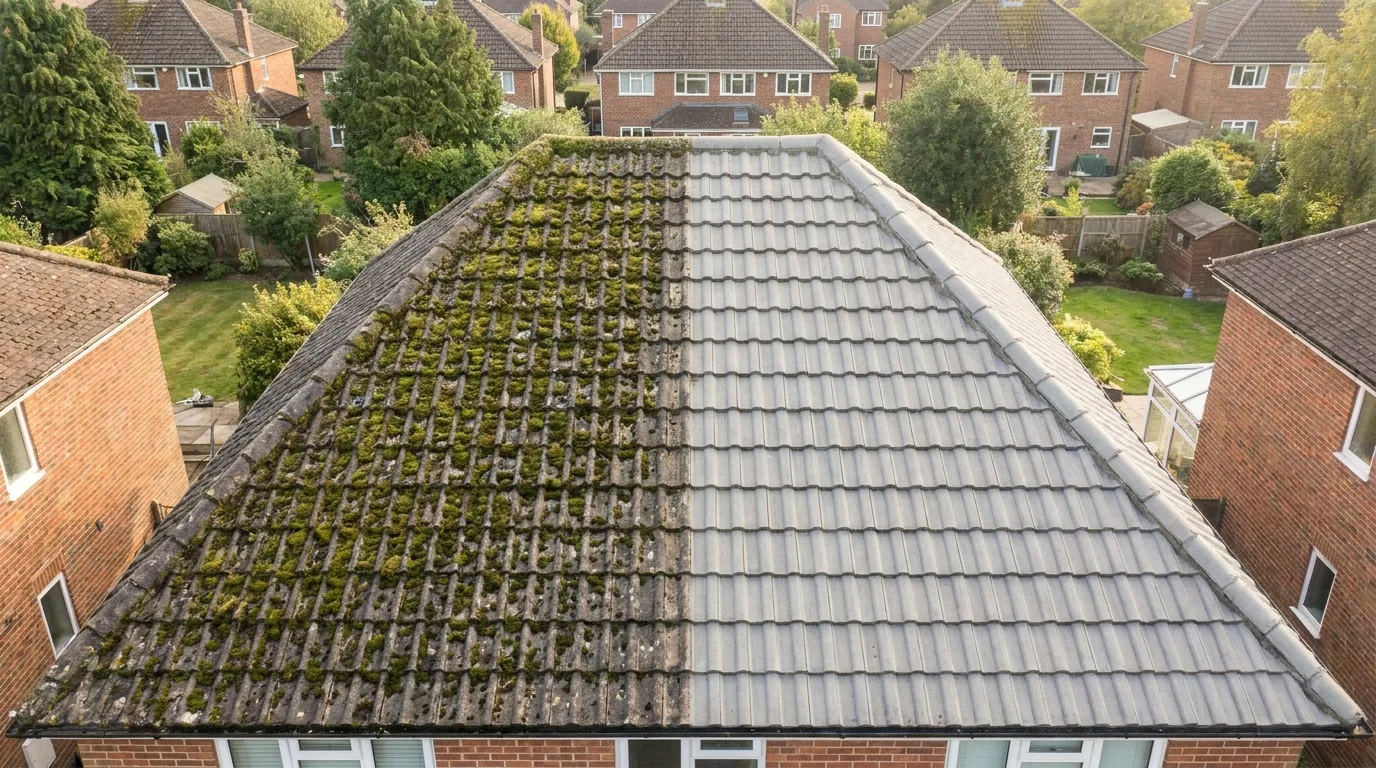
| Concrete/clay tile roof moss | £220–£500 | 48–90 | ~20% tighter | Tree canopy + valley humidity = year-round moss germination |
2026 client-billed quotes on Dorking, Westcott, Box Hill, Mickleham, Brockham, North Holmwood and South Holmwood jobs. The cadence column reflects local observation across hundreds of jobs in the Mole Valley and explicitly diverges from any national guide that uses the Wisley rainfall figure without adjusting for topography.
What’s actually under your Dorking drive
The Mole Valley is a textbook gap in the North Downs scarp, cut by the river over the last 2 million years. Three substrates dominate within RH4/RH5[2][3]:
- Chalk dip-slope — Box Hill, Mickleham, the north of Dorking up to Ranmore Common. Same White Chalk Subgroup as Banstead and Reigate Hill: drains vertically, holds jointing sand well.
- Lower Greensand ridge (Hythe Formation) — Westcott, the higher ground south-west of Dorking, towards Holmbury and Leith Hill. Harder than the Folkestone Formation found in central Redhill; sandy / ragstone-bearing.
- Mole flood plain alluvium — the river corridor through Dorking town centre and out towards Brockham. Variable bearing capacity; localised settlement on older drives.
The microclimate effect applies across all three. Substrate determines drainage; microclimate determines how long the surface above the substrate stays wet. Both matter.
Slip-risk and the AONB tree-canopy multiplier
UKSRG / HSE-endorsed pendulum guidance[6] sets PTV ≥36 as the low-slip threshold. The Surrey Hills AONB tree canopy across Dorking compounds the Mole Gap humidity: less direct sunlight to dry surfaces, more diffuse moisture retention. We see PTV cross the low-slip threshold 3–5 weeks earlier in Dorking than the equivalent surface in RH1 or RH2 — the matrix accounts for this in the tighter cadence column.
Mole Valley District Council planning — not Reigate & Banstead
Dorking falls under Mole Valley District Council, not Reigate & Banstead[7]. The Local Plan applies national SUDS guidance to new and replacement front-garden paving >5 m² draining to the highway. Conservation-area properties along Dene Street, West Street and the High Street face additional consent requirements for material changes. Routine cleaning of existing surfaces is unaffected.
RH4/RH5 mistakes that void warranties
- High-pressure jetting on York stone or Indian sandstone. Soft sandstones pit and surface-erode under jets exceeding the Marshalls[4] 200 mm/30°/medium-pressure technique. Always soft-wash with biocide first on RH4 patios — the dominant material in Box Hill, Westcott and Brockham gardens.
- Sealing patio stone in autumn in the Mole Valley. Humidity + cold-air drainage = trapped moisture under a polymer film. Result: blistering, spalling. Seal only in dry early-summer windows; never October–March in RH4/RH5.
- Skipping the spring biocide. Lithofin Algex[5] guidance is annual, preferably in spring. In Dorking, skipping a year means hitting the PTV slip threshold in autumn rather than the following spring.
What we actually do on a Dorking job
- Walk the surface — substrate (chalk dip / Greensand ridge / alluvial flood plain), Marshalls Register status if applicable, surface material (York stone, Indian sandstone, block paving, render).
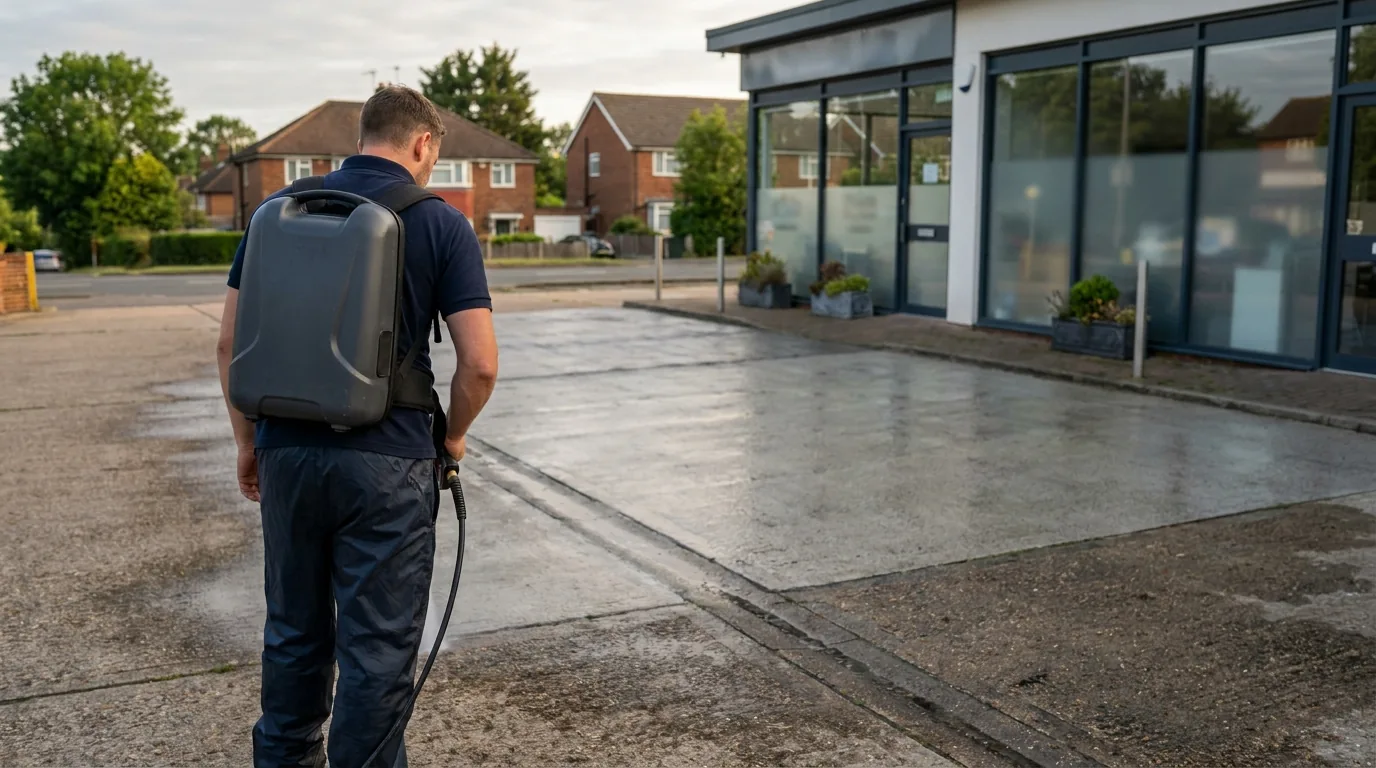
- Pre-treat with biocide — Lithofin Algex per manufacturer dilution; 24–48 hr dwell; longer on AONB tree-shaded surfaces.
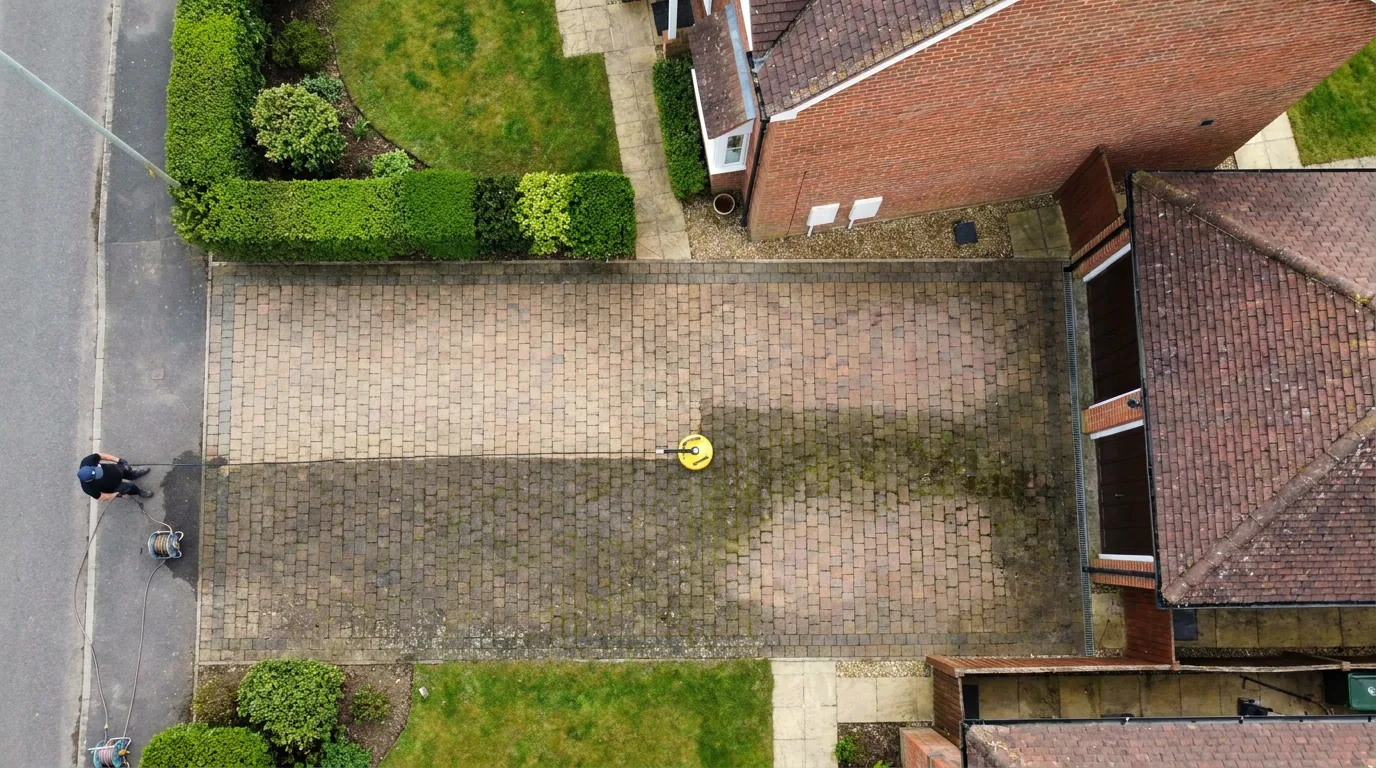
- Soft-wash or surface-clean — soft-wash on sandstone and York stone; medium pressure surface-cleaner on block paving and concrete; 30° oblique, ≥200 mm standoff, no turbo.
- Re-sand block paving — kiln-dried sand, standard, never an extra.
- Walk again with the customer — reshoot anything not right. If the result isn’t right, we redo it free.
Pressure washing across RH4 and RH5 — what we cover
Dorking sits in the bottom of the Mole Valley with the North Downs to the north and the Surrey Hills AONB everywhere else. The town centre is mostly Georgian and Victorian, with conservation-area properties along Dene Street, West Street and the High Street. Move out a mile and you’re into 1930s semis along Westcott Road and the Holmwoods, plus larger detached homes around Box Hill, Mickleham and Brockham. We cover Reigate (RH2), Redhill (RH1), Leatherhead (KT22), Betchworth (RH3) and the rest of Surrey within 20 miles. Full list of areas here. Or call 01737 652 515.
What we see on Dorking drives and patios
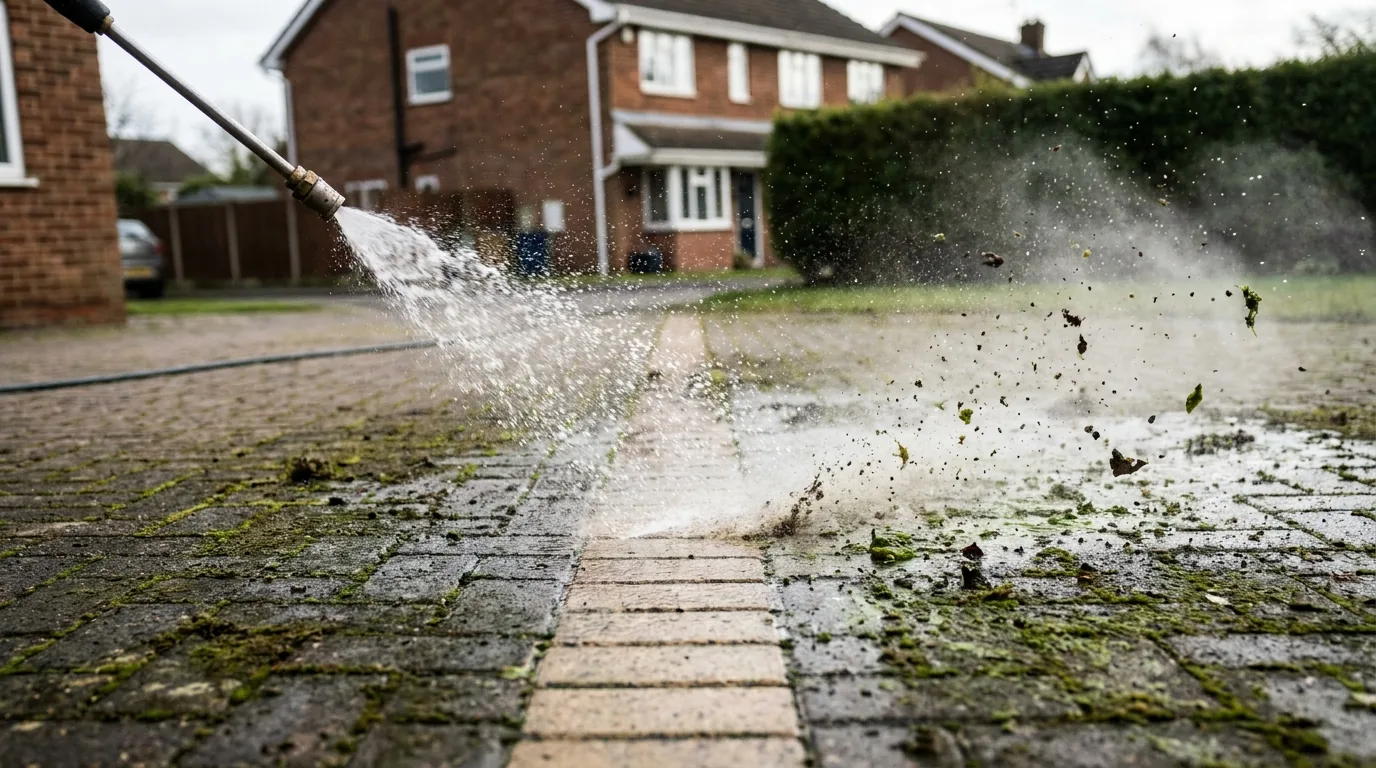
- Heavy moss and lichen — the Mole Valley grows it faster than anywhere else. Pre-treat with biocide, surface-clean, then re-sand joints.
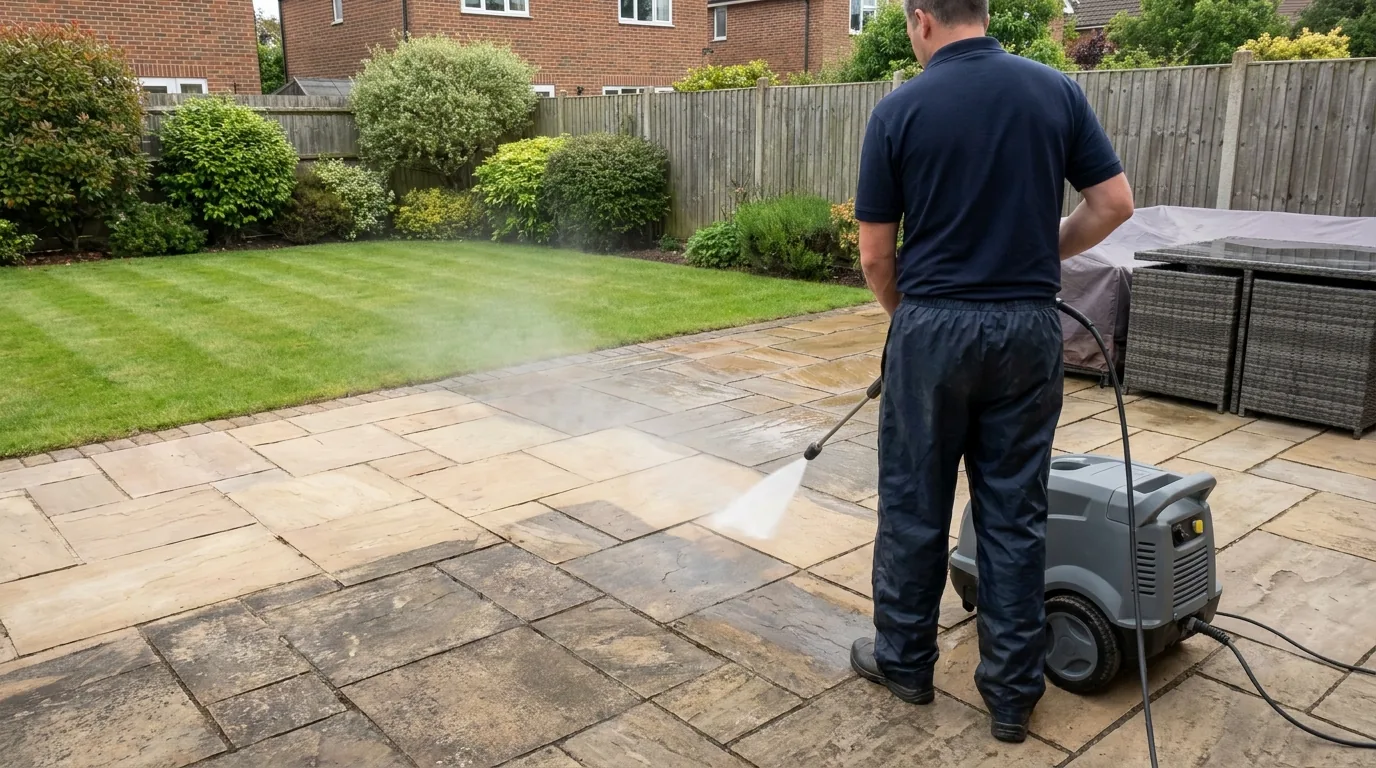
- Indian sandstone and York stone patios — popular in Box Hill and Westcott gardens. Soft wash only, never high pressure.
- Painted render — period and modern. Algae streaks under gutters within two seasons; soft-washed off without stripping the coating.
- Long rural driveways — common out in Mickleham and Brockham. Commercial-grade kit so 80m² doesn’t take all day.
Helpful guides for Dorking homeowners
Indian sandstone guide · Moss removal · Block paving costs · Best time to clean a patio · RH1 baseline comparison · RH2 two-substrate comparison
Sources
Every claim about Dorking microclimate, substrate, slip threshold, biocide cadence, paving warranty and SUDS policy on this page is sourced. We cite primary data (Met Office, BGS, Mole Valley District Council) plus manufacturer guidance (Marshalls, Lithofin) and HSE/UKSRG slip guidance. We do not cite competitor pressure-washing blogs.
- Met Office — Wisley (Surrey) Location Long-Term Averages 1991–2020. Closest station; 648.41 mm annual rainfall. Used here as the baseline that the Mole Valley microclimate effect deviates from. metoffice.gov.uk — Wisley averages. Accessed 21 May 2026.
- British Geological Survey (BGS) — Chalk Group lithostratigraphy (White Chalk Subgroup, Upper Cretaceous), forming the North Downs scarp / Box Hill side of the Mole Gap. bgs.ac.uk — Chalk Group lexicon. Accessed 21 May 2026.
- British Geological Survey (BGS) — Lower Greensand Group lithostratigraphy (Hythe Formation), forming the Greensand ridge / Westcott / Leith Hill side of the Mole Gap. bgs.ac.uk — Lower Greensand Group lexicon. Accessed 21 May 2026.
- Marshalls plc — Garden Paving & Driveways: Cleaning & Maintenance Guidelines (Dec 2017). Medium pressure, 30° oblique, ≥200 mm standoff; re-sand if joints are washed out. marshalls.co.uk — cleaning guidelines (PDF). Accessed 21 May 2026.
- Lithofin AG — Algex Special Cleaner product page and technical information. Annual reapplication, preferably in spring. lithofin.com — Algex. Accessed 21 May 2026.
- UK Slip Resistance Group / HSE — Introduction to the Pendulum Tester. PTV ≥36 low risk, 25–35 moderate, ≤24 high. ukslipresistance.org.uk — pendulum tester. Accessed 21 May 2026.
- Mole Valley District Council — Local Plan, including drainage and SUDS policies for replacement front-garden paving and conservation-area consent requirements for Dorking town centre. molevalley.gov.uk — Local Plan. Accessed 21 May 2026.