Why Epsom is the racecourse-premium-vs-inter-war-estate split
The short answer: Epsom (KT17/KT18/KT19) is the only postcode in our radius where the housing-stock split tracks elevation almost perfectly. Downs Road, College Road and the streets near the racecourse sit on the chalk dip-slope[2] — larger plots, Indian sandstone and natural stone patios, longer re-clean cadences (18–24 months). Ewell and Stoneleigh north and east sit on Lambeth Group[3] — Reading and Woolwich Formation sands and clays — with denser 1930s semis, standard block paving and tighter cadences (12–18 months). One postcode framing covers two materially different jobs.
The Epsom racecourse-premium-vs-estate matrix
Original analytical contribution: the labelled OAC below splits KT17/KT18/KT19 by elevation and substrate. Inputs: BGS chalk + Lambeth Group lithostratigraphy[2][3], Met Office Wisley[1], Lithofin Algex annual cadence[5], UKSRG/HSE PTV[6], Marshalls technique[4], Epsom & Ewell Borough Council planning[7]. The chalk-versus-Lambeth Group distinction is invisible at street level — this matrix surfaces it.
| Property type (Epsom location) | Substrate | 2026 price band | Re-clean (months) | Notes |
|---|---|---|---|---|
| Downs Road / College Road / Tattenham Corner (premium detached) | Chalk dip-slope | £180–£380 | 18–24 | 60-100 m² drives; Indian sandstone / natural stone; soft-wash on stone |
| Town centre / Church Street (Edwardian / Victorian) | Chalk dip-slope foot | £150–£280 | 15–20 | Mid-sized; mixed surfaces; conservation areas need consent for changes |
| Ewell village / Stoneleigh (1930s semis) | Lambeth Group | £130–£220 | 12–18 | Standard block paving; jointing sand long since washed out; re-sand on every clean |
| West Ewell (inter-war and post-war detached) | Lambeth Group / chalk boundary | £140–£260 | 12–18 | Mix of surfaces; gradient on the climbs to Court Recreation Ground |
| K-rend / silicone render (modern dev / new-build) | Either substrate | £180–£420 | 36–48 | Soft-wash with biocide; never high pressure on textured render |
2026 client-billed quotes on Epsom KT17/KT18/KT19 jobs. The premium Downs band reflects the larger plot sizes typical near the racecourse, plus the soft-wash protocol time on natural-stone patios. Conservation-area properties around Church Street face additional consent requirements on material changes.
What’s actually under your Epsom drive
Epsom straddles two substrates with a sharp boundary roughly along the town-centre belt[2][3]:
- Chalk dip-slope — the south side of Epsom (Downs Road, College Road, Tattenham Corner). White Chalk Subgroup, vertical drainage, jointing sand holds well. Same substrate as Banstead and Reigate Hill.
- Lambeth Group (Palaeogene) — the north side (Ewell, Stoneleigh, West Ewell). Reading and Woolwich Formations: variable sand and clay layers. Slower drainage than chalk; surface-pooling possible on poorly-detailed sub-bases.
Same dual-substrate pattern as Reigate (Cycle 20) and Oxted (Cycle 25), but tracked along an elevation gradient rather than a town-centre east-west boundary.
Racecourse premium properties: natural stone is the default
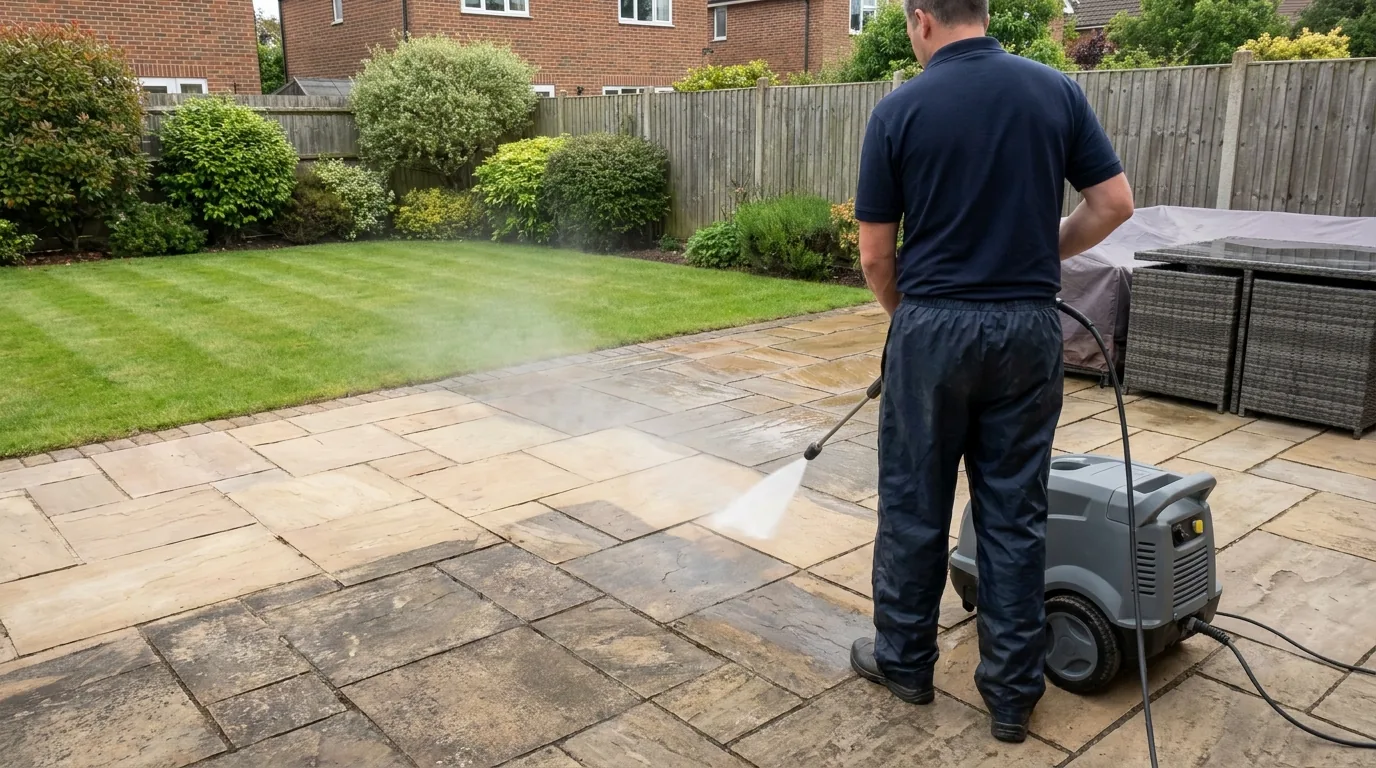
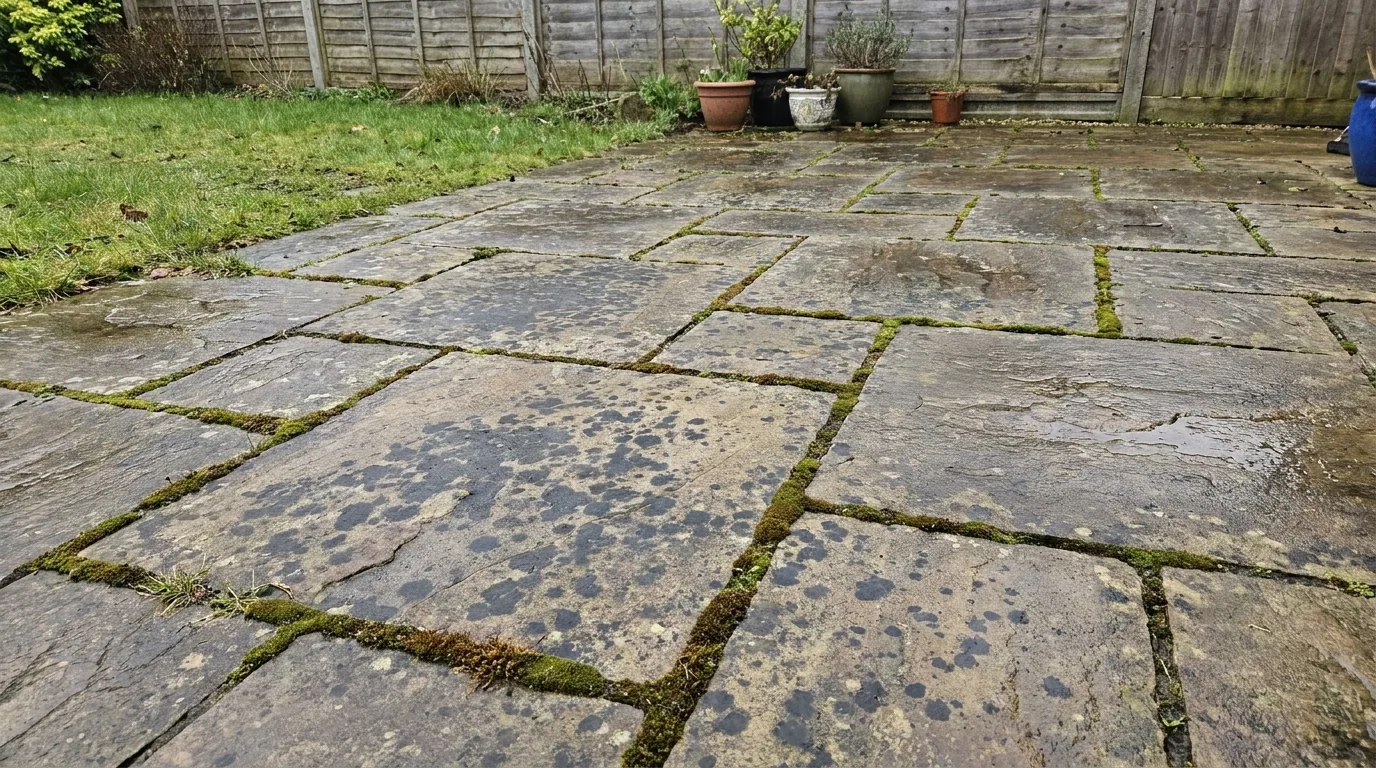
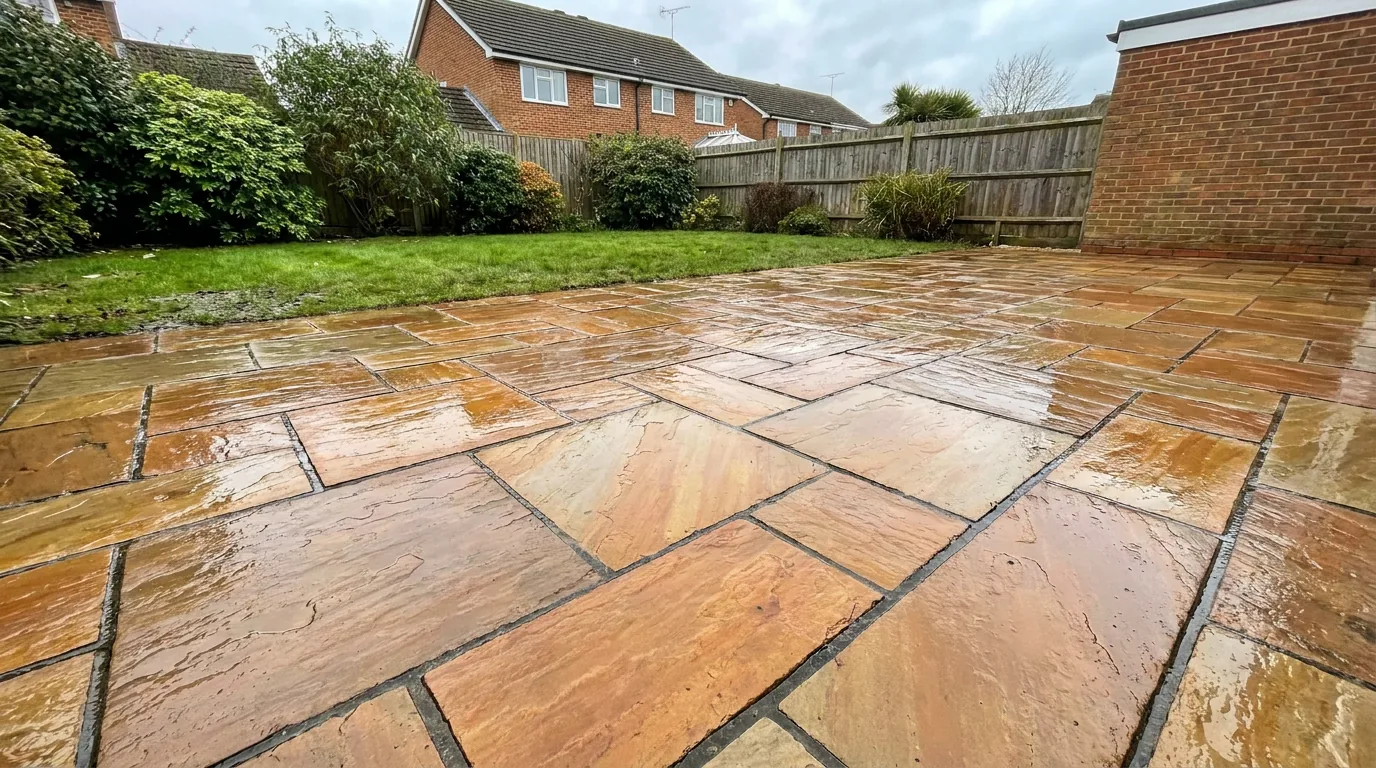
The streets around the racecourse — Downs Road, College Road, the upper end of Ashley Road, Woodcote Green — carry premium properties with garden hard-landscaping at scale. Indian sandstone, limestone, slate and porcelain are the dominant patio materials. Marshalls[4] protocols apply: medium pressure, 30° oblique, ≥200 mm standoff on block paving, but for natural stone we drop to soft-wash chemistry only. Lithofin Algex[5] annual spring biocide keeps black-spot lichen under control across the entire chalk-side belt.
Inter-war Ewell / Stoneleigh estate: block paving is the default
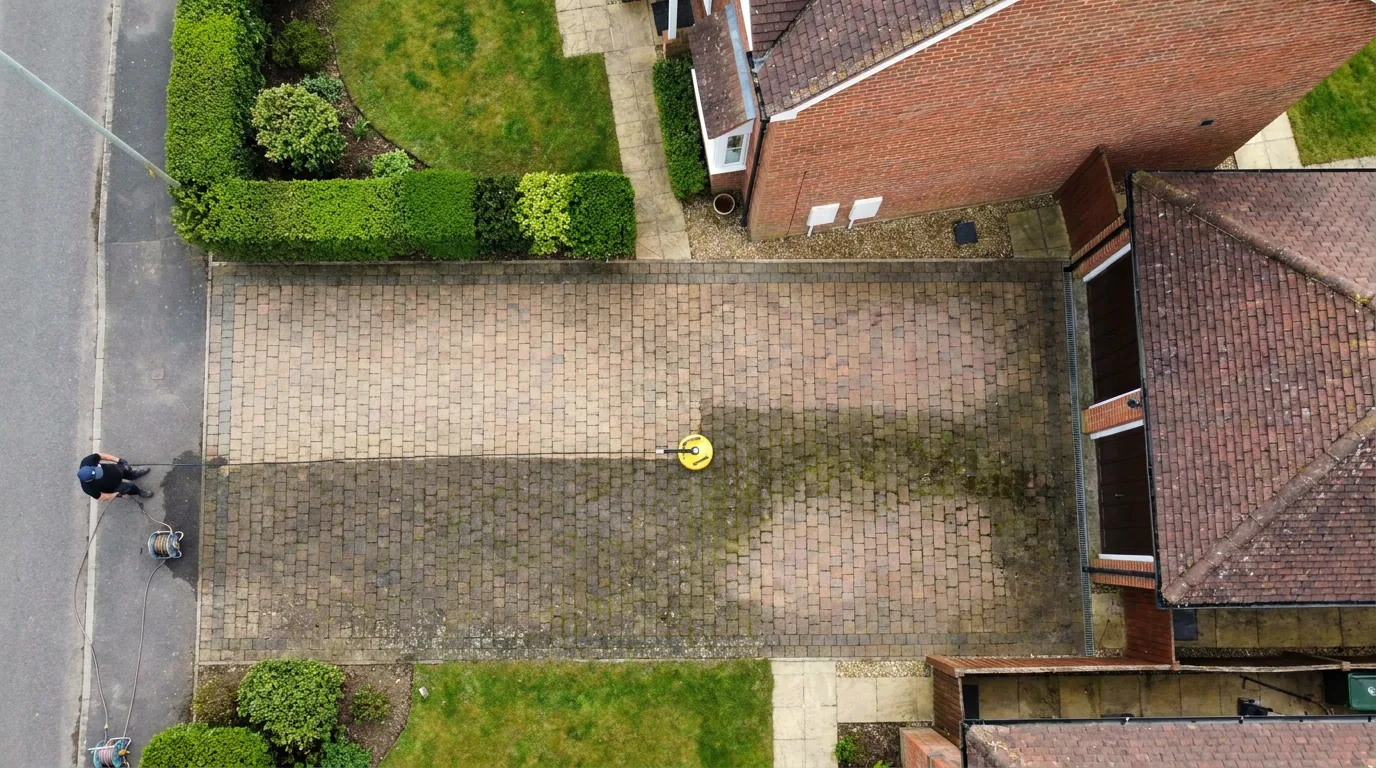
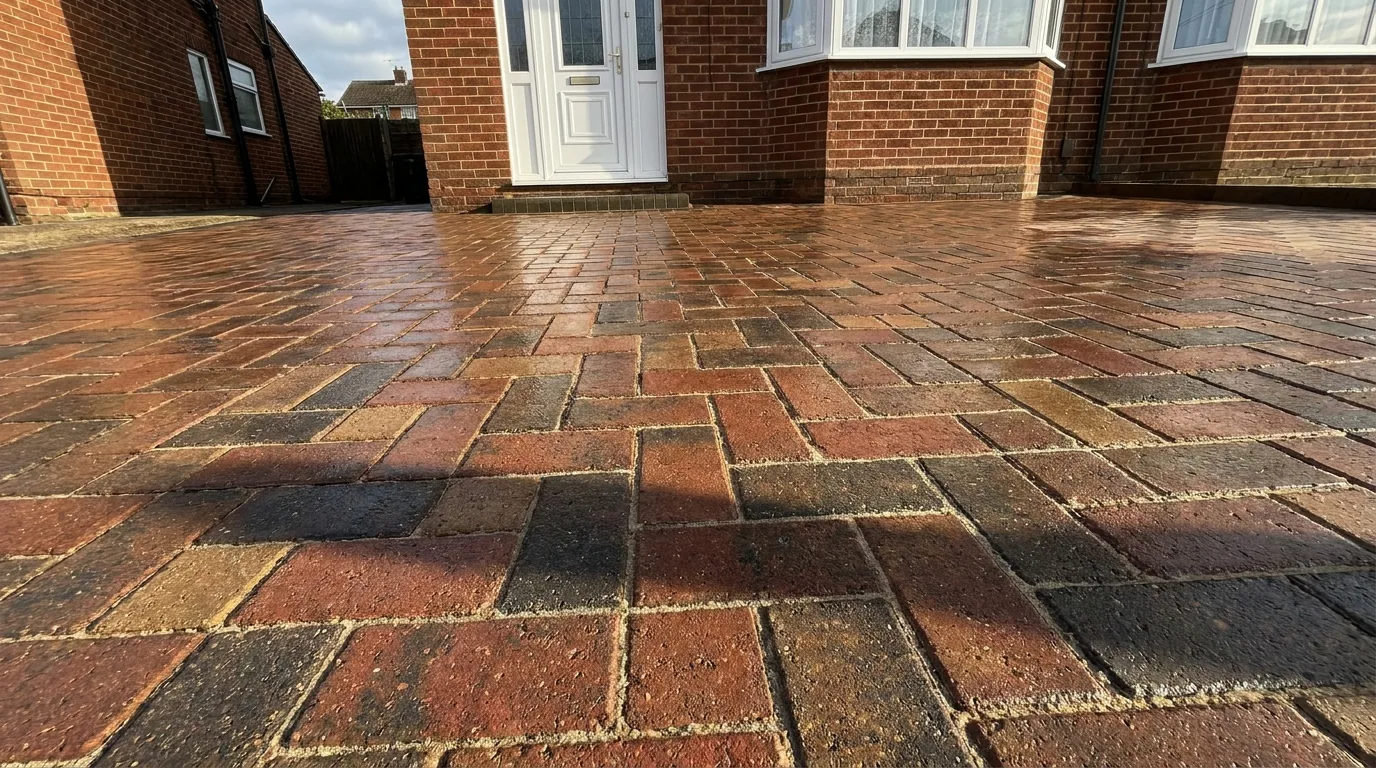
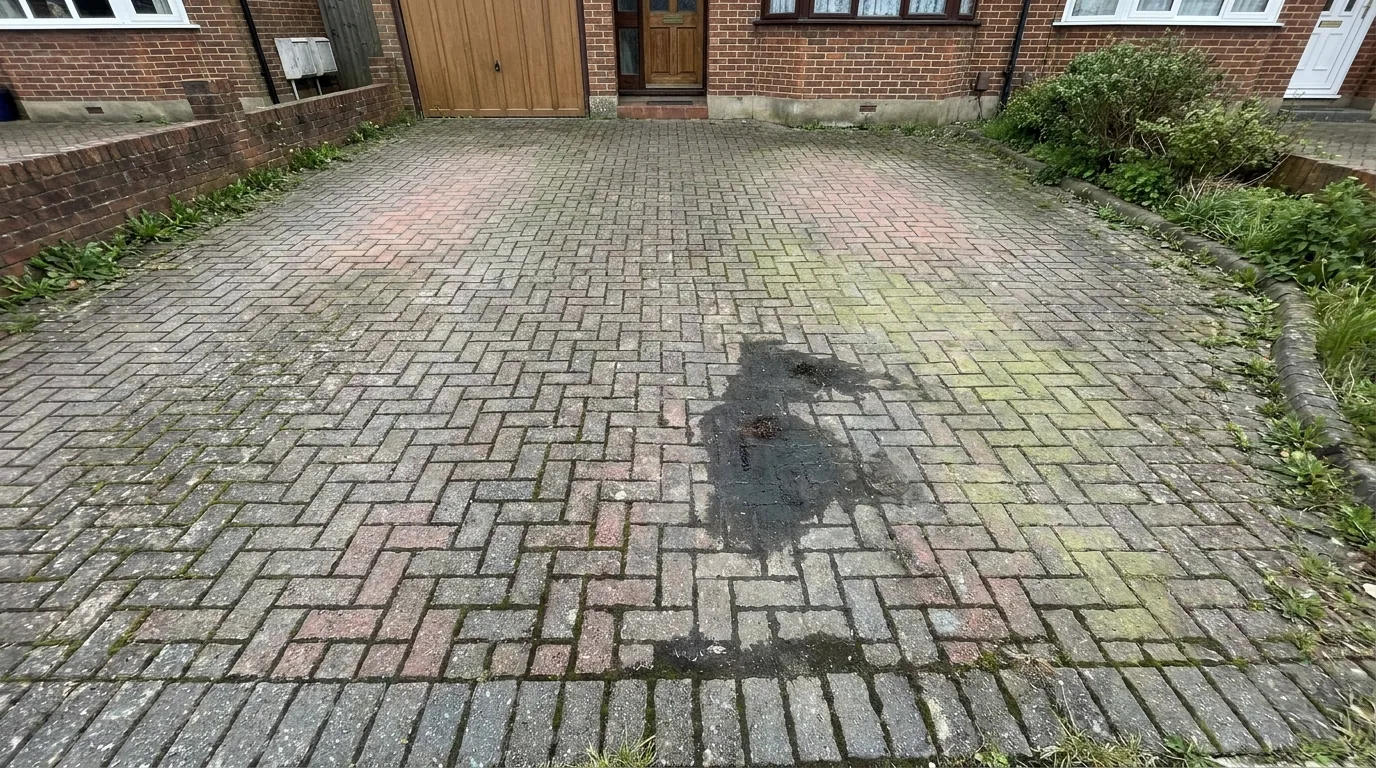
The streets through Ewell village and Stoneleigh sit on the Lambeth Group substrate with 1930s and inter-war semis. Block paving installed 1985-2005 dominates. Jointing sand is long since washed out; PTV[6] below the ≥36 low-slip threshold by autumn is common. Standard re-sand-on-every-clean cadence applies.
Epsom & Ewell Borough Council planning — the KT17/KT18/KT19 SUDS gate
Epsom and Ewell fall under Epsom & Ewell Borough Council[7], not Reigate & Banstead, Mole Valley, Tandridge or Crawley. National SUDS guidance applies to new and replacement front-garden paving >5 m² draining to highway. Conservation-area properties around Church Street and Downs Road face additional consent requirements for material changes. Routine cleaning of existing surfaces is unaffected.
KT17/KT18/KT19 mistakes that void warranties
- Pressure-washing Indian sandstone or limestone on the premium Downs belt. Soft stones pit under jets exceeding the Marshalls medium-pressure / 200 mm / 30° technique. Always soft-wash with biocide first.
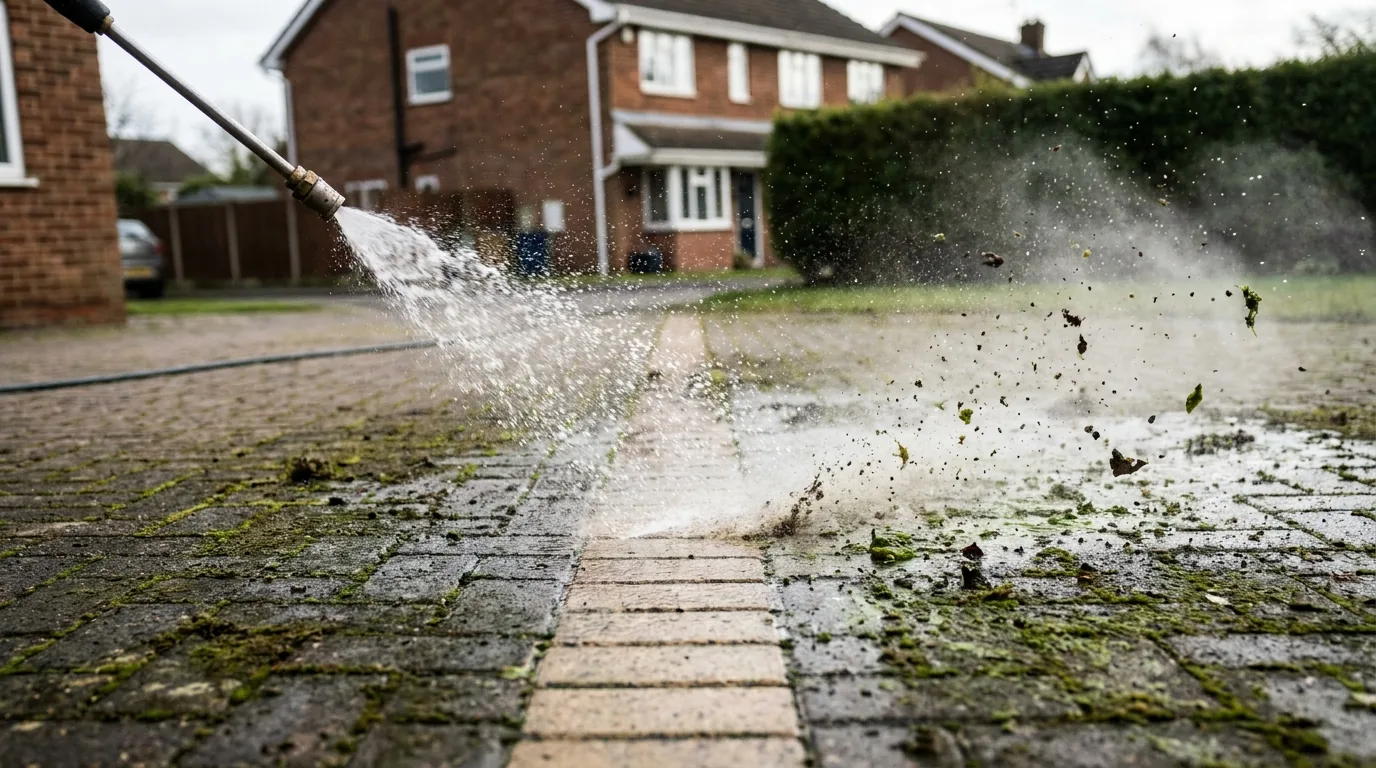
- Turbo nozzles on Stoneleigh / Ewell block paving. Same Marshalls Register warranty exposure as anywhere else. Medium pressure only.
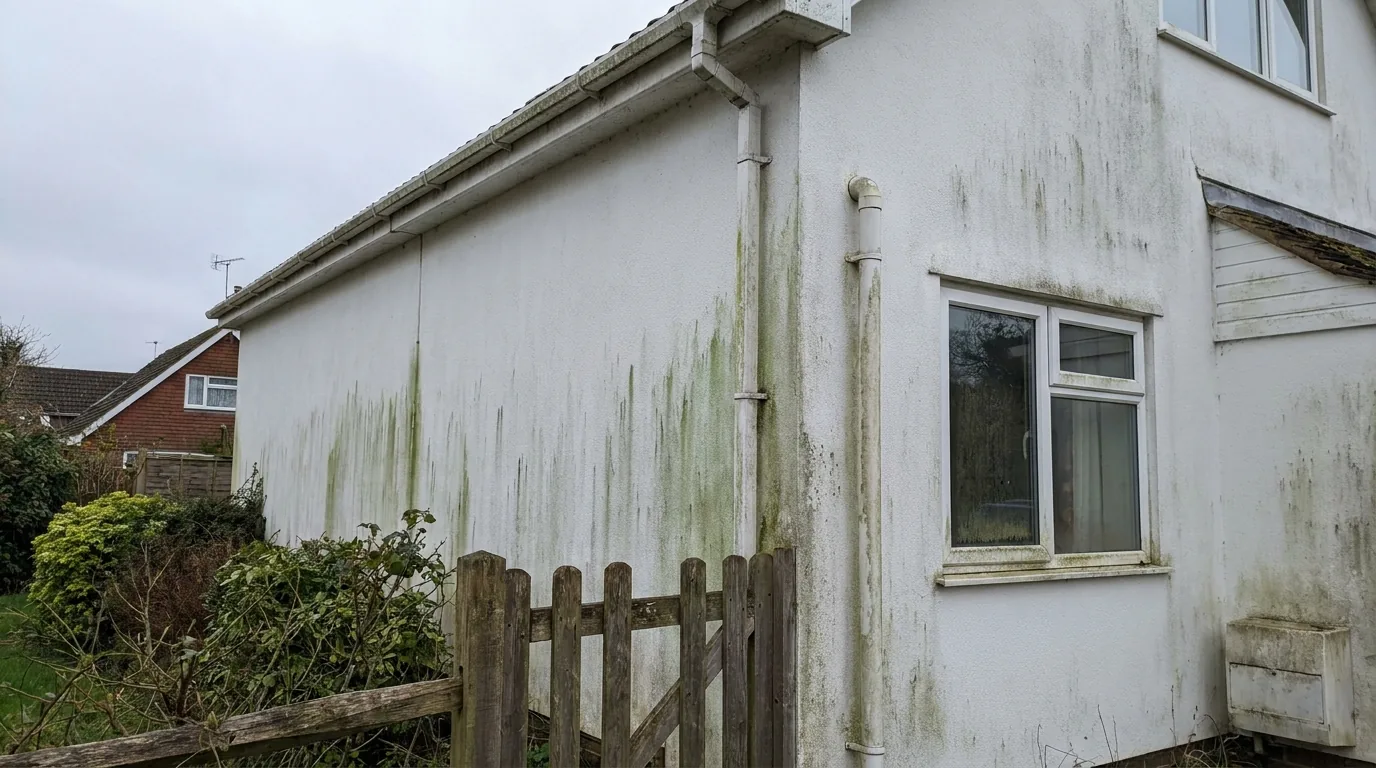
- Sealing K-rend or silicone render in autumn. Textured render holds moisture under polymer films; blistering follows. Soft-wash with biocide only.
What we actually do on an Epsom job
- Identify substrate side — chalk (Downs / racecourse) vs Lambeth Group (Ewell / Stoneleigh). The matrix above determines pressure, cadence and pre-treat emphasis.
- Pre-treat biofilm with Lithofin Algex; 24–48 hr dwell, longer on tree-shaded chalk-side gardens.
- Soft-wash or surface-clean — soft-wash on Indian sandstone / limestone / slate / K-rend; medium pressure surface-cleaner on block paving and concrete; 30° oblique, ≥200 mm standoff, no turbo.
- Re-sand kiln-dried sand on block paving — standard.
- Walk again with the customer — reshoot anything not right. If the result isn’t right, we redo it free.
Pressure washing across KT17, KT18 and KT19 — what we cover
Epsom is twelve miles north-west of Redhill, sitting on the same chalk dip-slope of the North Downs to the south. The KT17/KT18/KT19 housing mix is broad — elegant Edwardian and Victorian homes near the town centre and Church Street, 1930s semis through Ewell and Stoneleigh, and the substantial detached properties around Epsom Downs and Tattenham Corner. We cover Banstead (SM7), Leatherhead (KT22), Ashtead (KT21) and the rest of Surrey within 20 miles of Redhill. Full list of areas here. Or call 01737 652 515.
What we see on Epsom drives and patios
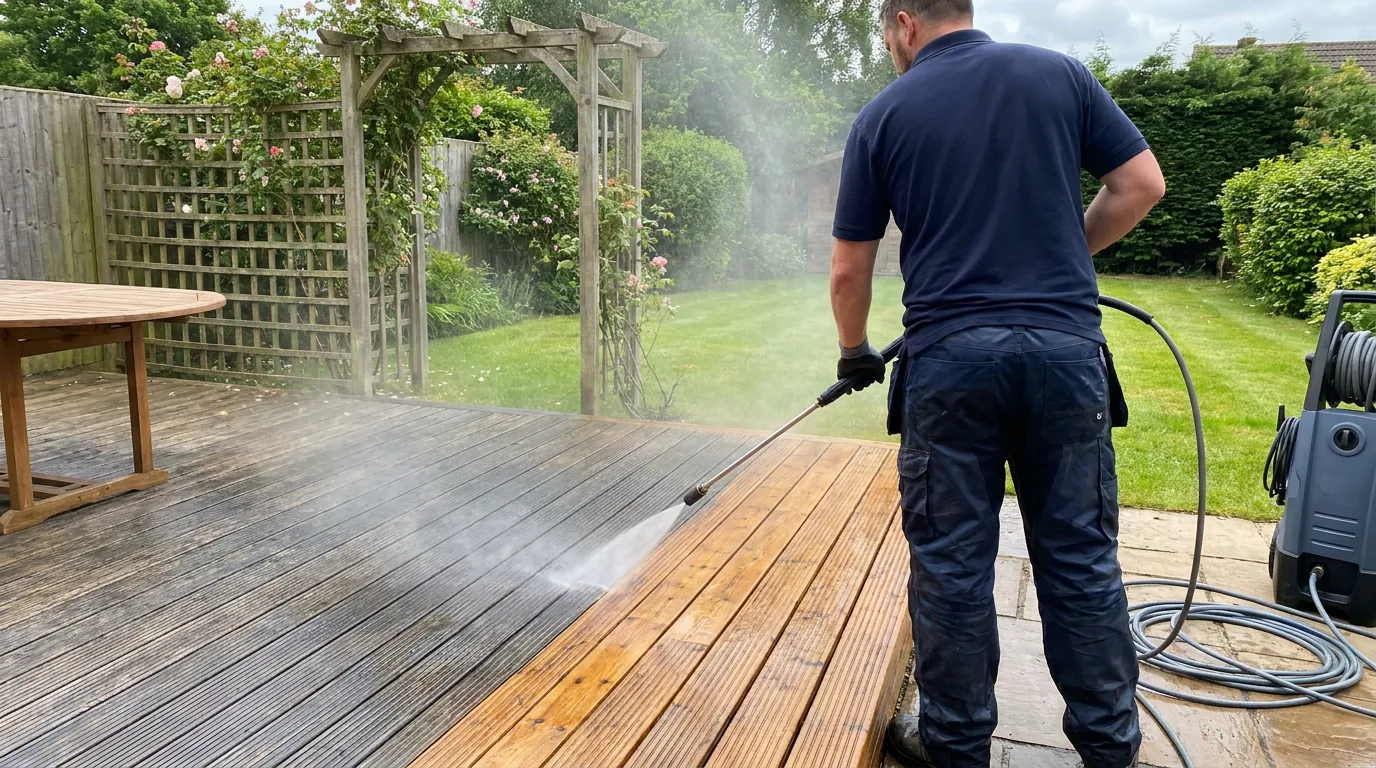
- Indian sandstone, limestone and slate patios — Epsom gardens are full of them. Soft wash only.
- Block paving with washed-out joints — standard across Ewell and Stoneleigh. Re-sanding included.
- Algae on shaded driveways — tree-lined streets around Ashley Road and Woodcote Green. Annual clean prevents the slip hazard.
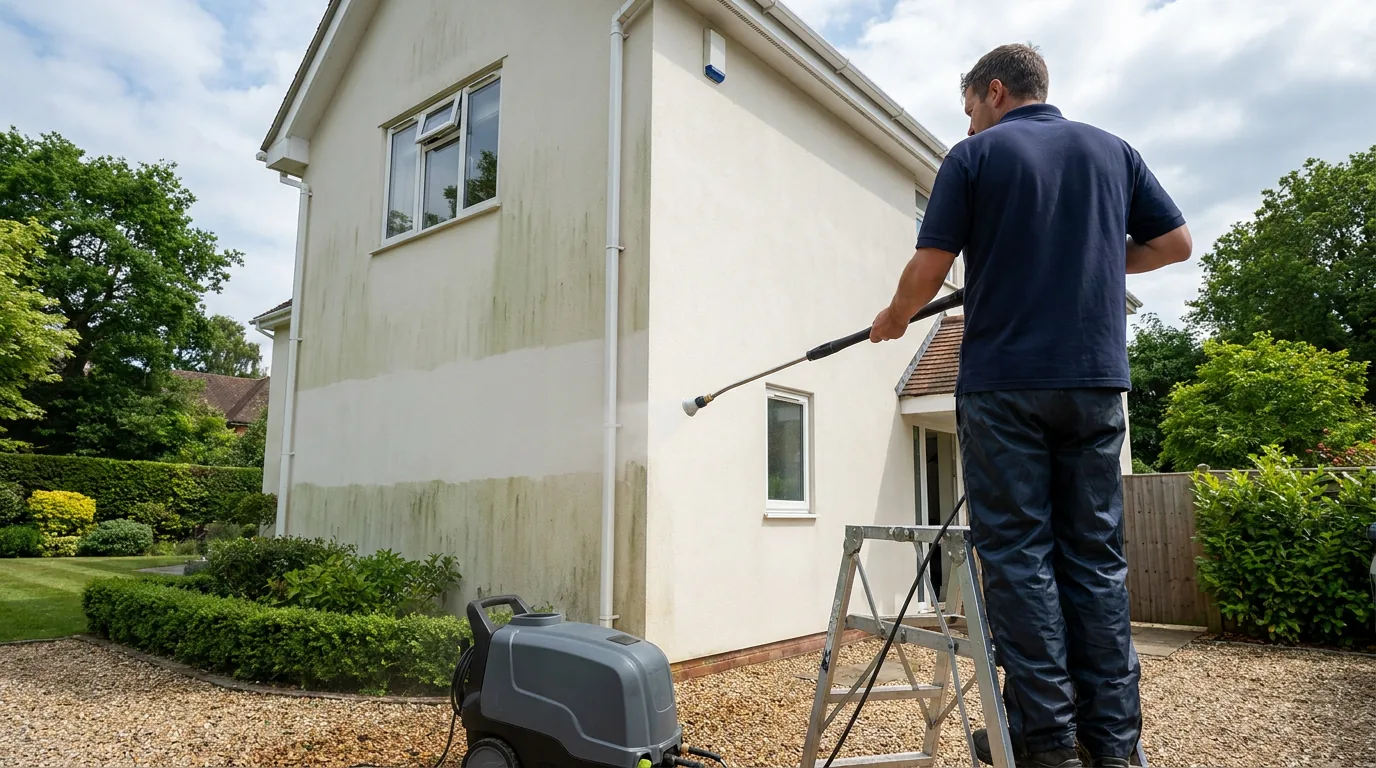
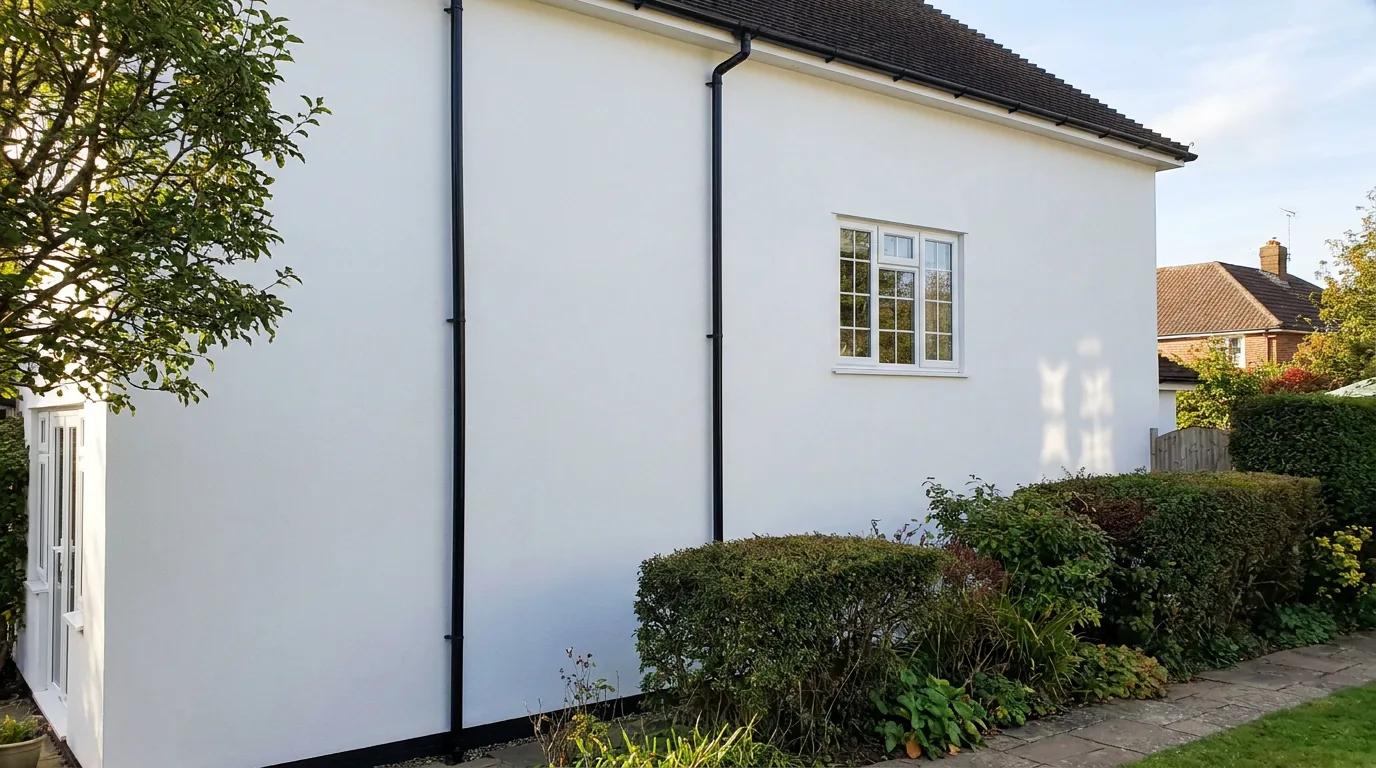
- K-rend and painted render — modern developments and new-builds. Soft-wash, no high pressure.
Helpful guides for Epsom homeowners
Indian sandstone guide · Patio cost guide · How often you should clean · Pressure washer hire vs pro · SM7 chalk comparison · RH2 two-substrate comparison
Sources
Every claim about KT17/KT18/KT19 substrate, slip threshold, biocide cadence, paving warranty and SUDS policy on this page is sourced. We cite primary data (Met Office, BGS, Epsom & Ewell Borough Council) plus manufacturer guidance (Marshalls, Lithofin) and HSE/UKSRG slip guidance. We do not cite competitor pressure-washing blogs.
- Met Office — Wisley (Surrey) Location Long-Term Averages 1991–2020. Annual rainfall 648.41 mm. metoffice.gov.uk — Wisley averages. Accessed 21 May 2026.
- British Geological Survey (BGS) — Chalk Group lithostratigraphy (White Chalk Subgroup, Upper Cretaceous). Underlies the south of Epsom — Downs Road, College Road, Tattenham Corner. bgs.ac.uk — Chalk Group lexicon. Accessed 21 May 2026.
- British Geological Survey (BGS) — Lambeth Group lithostratigraphy (Palaeogene Reading + Woolwich Formations). Underlies the north of Epsom — Ewell, Stoneleigh, West Ewell. Variable sand and clay layers. bgs.ac.uk — Lambeth Group lexicon. Accessed 21 May 2026.
- Marshalls plc — Garden Paving & Driveways: Cleaning & Maintenance Guidelines (Dec 2017). Medium pressure, 30° oblique, ≥200 mm standoff. marshalls.co.uk — cleaning guidelines (PDF). Accessed 21 May 2026.
- Lithofin AG — Algex Special Cleaner product page and technical information. Annual reapplication, preferably in spring. lithofin.com — Algex. Accessed 21 May 2026.
- UK Slip Resistance Group / HSE — Introduction to the Pendulum Tester. PTV ≥36 low risk, 25–35 moderate, ≤24 high. ukslipresistance.org.uk — pendulum tester. Accessed 21 May 2026.
- Epsom & Ewell Borough Council — Local Plan and SUDS / drainage policies. The relevant council for KT17 Epsom, KT18 Epsom Downs, KT19 West Ewell. epsom-ewell.gov.uk — Local Plan. Accessed 21 May 2026.