Why Merstham is the chalk-pit-village + motorway double-contamination problem
The short answer: Merstham (RH1) is the only village on our patch where two contamination sources stack on top of each other. The historical Merstham chalk pits and the chalk scarp itself[2] deposit pale chalk dust onto driveways and walls that mixes with rain to form a cement-like residue. The M25/M23 interchange immediately east of the village adds brake-dust, tyre microplastics and diesel film. Neither comes off with a hose. Both need pre-treatment chemistry plus the Marshalls medium-pressure / 200 mm / 30° technique[4] — not raw pressure. The result: Merstham drives need cleaning every 10–14 months, not the RH1 baseline 12–18.
The Merstham double-contamination matrix
Original analytical contribution: the labelled OAC below maps the two contamination types against location within RH1 Merstham. Inputs: BGS Chalk Group lithostratigraphy[2], Met Office Wisley[1], EA surface-water flood pockets through South Merstham[3], Marshalls technique[4], Lithofin Algex[5], UKSRG/HSE PTV[6], RBBC planning[7]. No UK competitor maps both chalk-dust cement and motorway pollution on the same page.
| Location | Dominant contamination | 2026 price band | Re-clean (months) | Pre-treat chemistry needed |
|---|---|---|---|---|
| Quality Street / old village (chalk-pit proximity) | Chalk dust + tree-shade biofilm | £130–£240 | 10–14 | Mild acid descaler + biocide; soft-wash on period stonework |
| South Merstham estates (M25/M23 within 400m) | Motorway pollution film + chalk dust | £150–£260 | 10–14 | Commercial degreaser + surfactant + biocide |
| Dean Lane / Battlebridge Road (tree-shaded older houses) | Biofilm + chalk dust | £140–£250 | 10–14 | Biocide-led; chalk-dust pre-rinse |
| North Merstham / Worsted Green | Standard moss + chalk dust | £130–£220 | 12–18 | Standard biocide pre-treat |
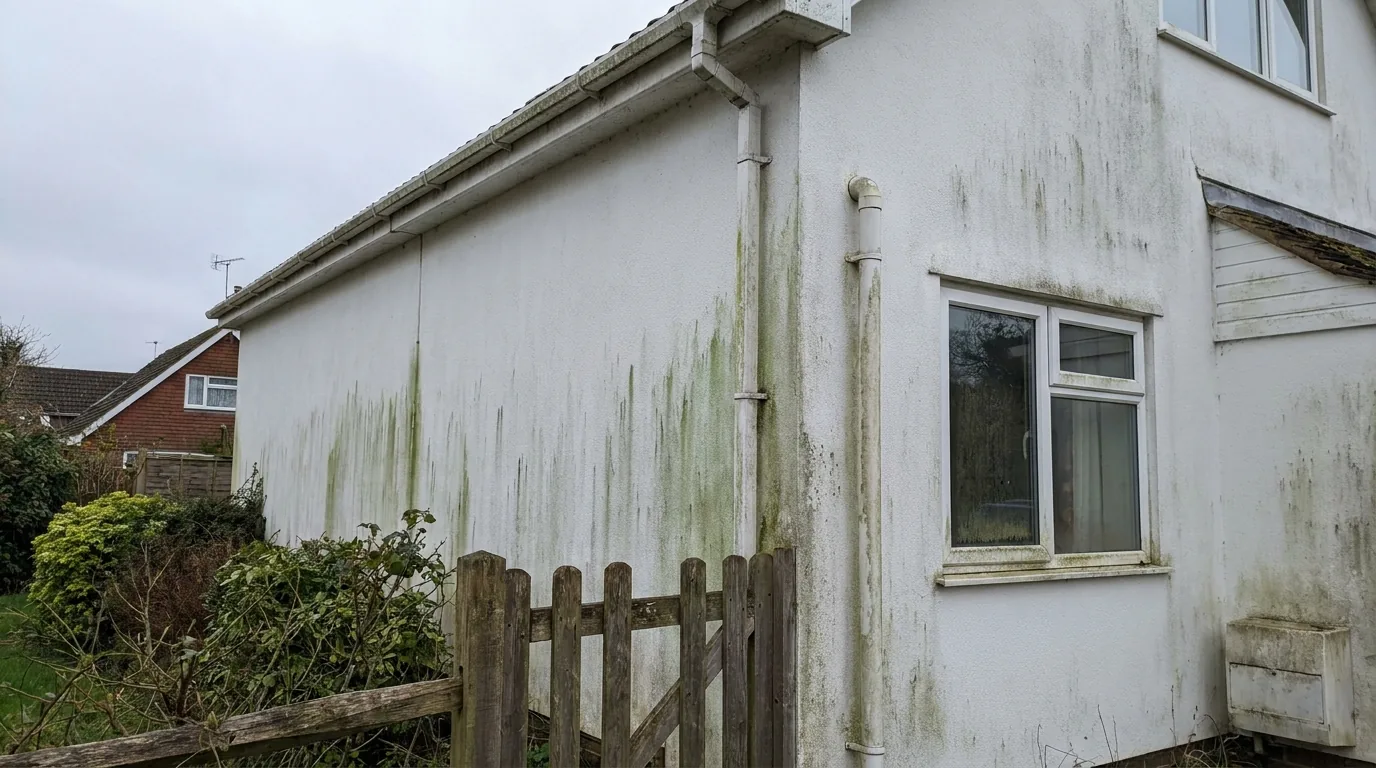
| Render across RH1 Merstham | Algae streaks + chalk dust haze | £180–£380 | 36–48 | Soft-wash with biocide; never high pressure |
2026 client-billed quotes on RH1 Merstham jobs. The 10–14 month cadence across most of the village (vs 12–18 month RH1 baseline) reflects the double contamination loading, not climatic difference — Wisley rainfall is identical to the rest of RH1.
The chalk-dust-meets-rain chemistry that makes Merstham unique
Merstham’s historical chalk pits operated for over 900 years — some of the chalk from the Tower of London came from here. Although the pits are long closed, the active chalk scarp behind the village still deposits chalk dust onto exterior surfaces during dry windy spells[2]. The chemistry is the practical problem: chalk (calcium carbonate) is slightly soluble in slightly acidic rainwater (carbonic acid from dissolved CO₂). The result on a porous surface is a thin film of redeposited calcium carbonate that bonds onto block paving and concrete. Pressure alone smears it; pure water rinses lift only the surface layer. A mild acid descaler followed by biocide is the protocol that actually clears it. We default to this on every Merstham job north of the railway.
M25/M23 interchange pollution layered on top
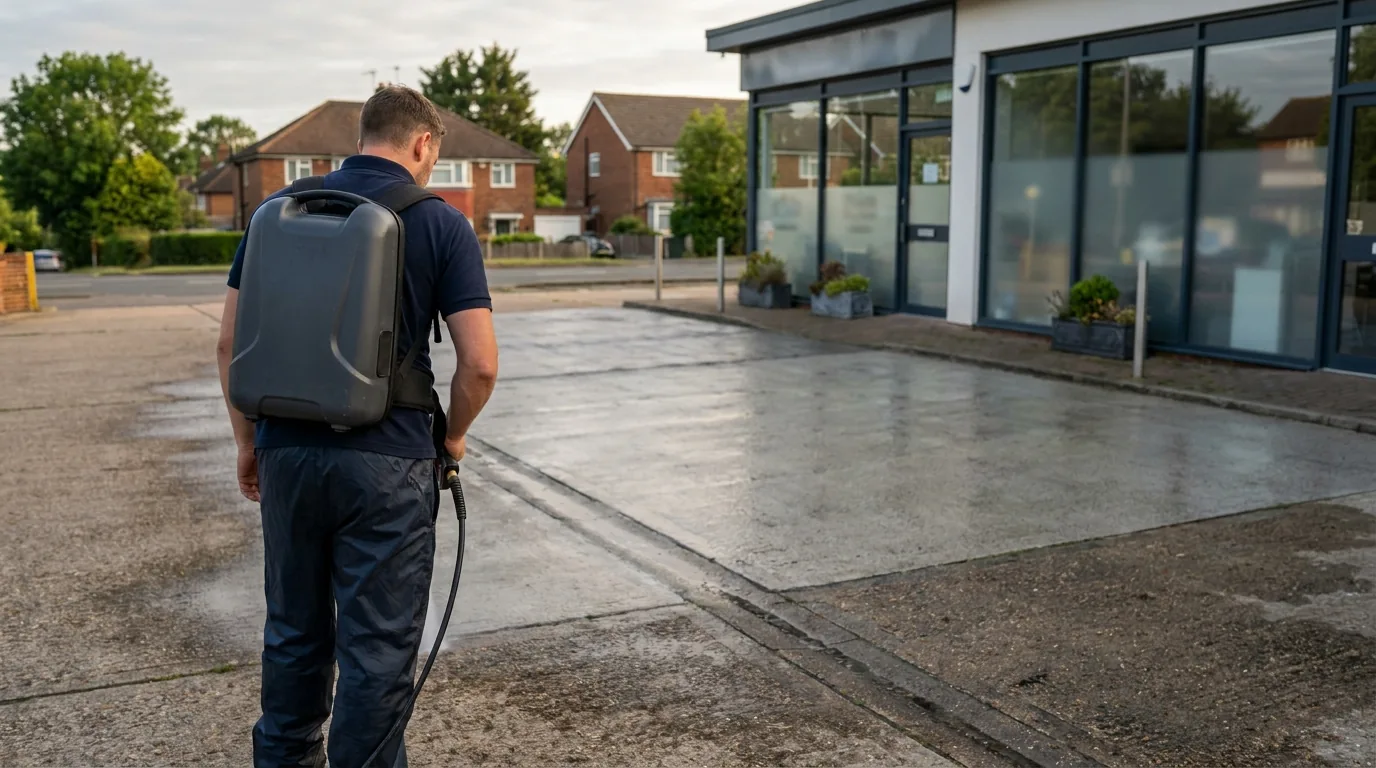
South Merstham within ~400m of the J8 interchange carries the same brake-dust / tyre-microplastic / diesel-film mixture documented on the Leatherhead KT22 page[4]. Layered onto the chalk dust, the result is a particularly stubborn dark-grey haze on light-coloured paving. We pre-treat with a commercial degreaser and surfactant, then apply the mild acid descaler for the chalk-dust component, then biocide for any biofilm. Three sequential pre-treats — then surface-clean per Marshalls technique.
Slip-risk along Quality Street and Dean Lane
Quality Street is a Grade II-listed terrace of timber-framed and brick cottages dating from the 14th century onwards; Dean Lane and Battlebridge Road are heavily tree-shaded. UKSRG / HSE PTV thresholds[6] at ≥36 are routinely crossed in autumn on these surfaces — the chalk-dust film is a slip-risk in its own right (it goes greasy when damp). Annual Lithofin Algex[5] spring biocide is the cadence; we add a mild-acid wash on chalk-dust-affected paving as needed.
Reigate & Banstead Borough Council planning — Merstham SUDS gate
Merstham falls under Reigate & Banstead Borough Council[7]. National SUDS guidance applies to new and replacement front-garden paving >5 m² draining to highway. Conservation-area constraints apply around Quality Street and the old village core. Routine cleaning of existing surfaces is unaffected. Notable: South Merstham has documented surface-water flood pockets on the Environment Agency map[3], so biocide and degreaser rinse needs bunded capture + foul-drain disposal on those streets.
Merstham mistakes that void warranties (or fail)
- Pressure-washing chalk-dust film without acid pre-treat. Smears the calcium carbonate film into joints; result hazes within days. Always mild acid descaler + biocide first.
- Pure pressure-washing motorway pollution film in South Merstham. Same outcome as Leatherhead: visible haze, repeat call-out. Always degreaser + surfactant first within 400m of J8.
- High pressure on Quality Street period stonework. Listed building exposure + soft historic stone vulnerability. Soft-wash chemistry only.
What we actually do on a Merstham job
- Identify contamination loading — chalk-dust dominant (old village) vs motorway-film dominant (South Merstham) vs biofilm-dominant (Dean Lane / tree-shaded). The matrix above sets the chemistry.
- Pre-treat motorway film with commercial degreaser + surfactant (South Merstham ≤400m to J8).
- Pre-treat chalk dust with mild acid descaler (entire RH1 Merstham village).
- Pre-treat biofilm with Lithofin Algex; 24–48 hr dwell.
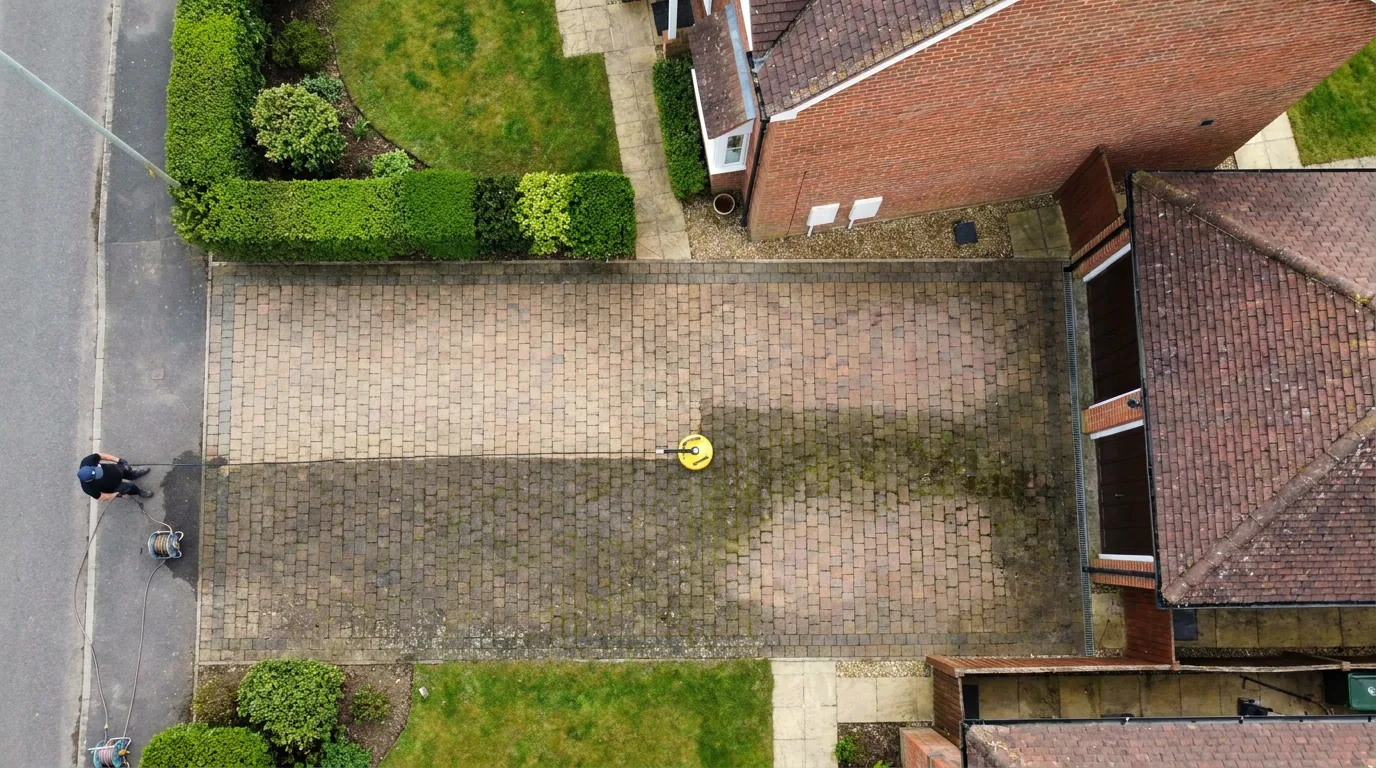
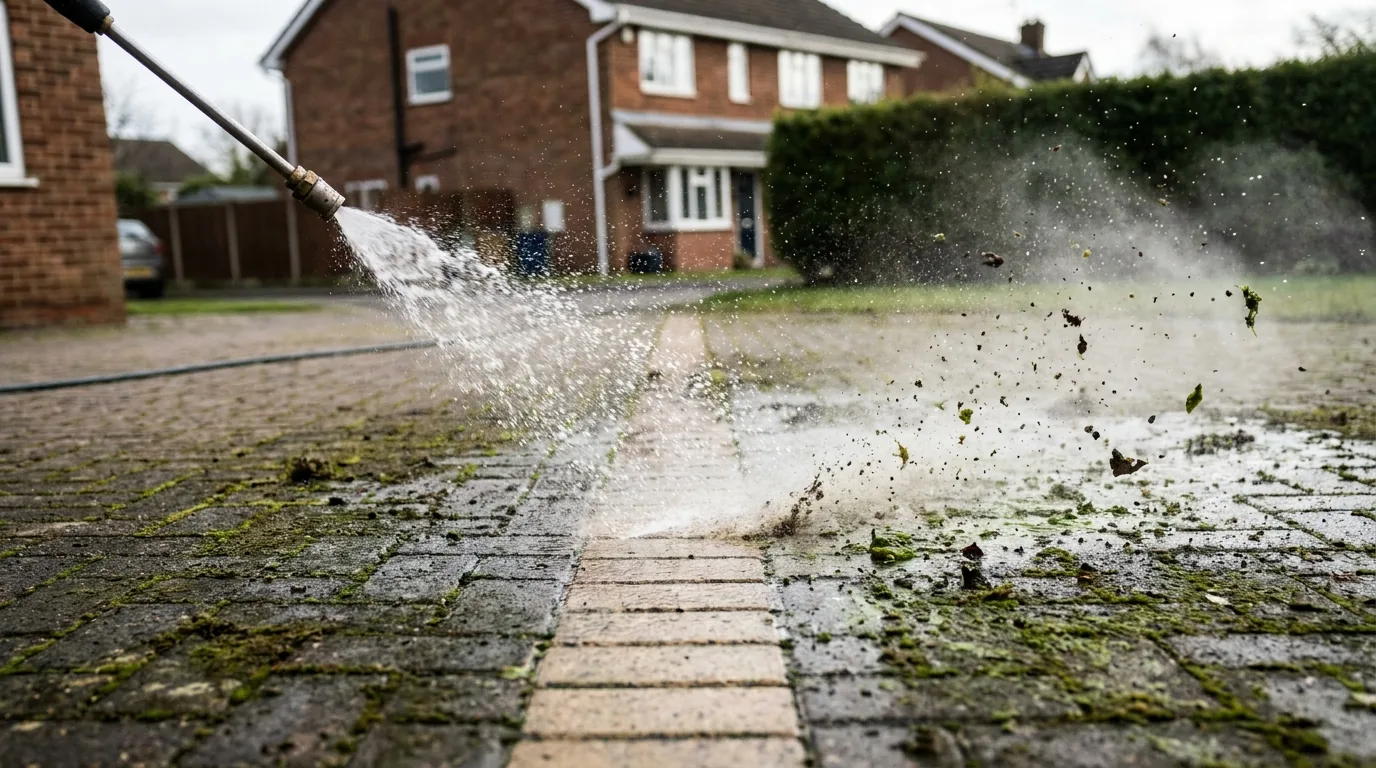
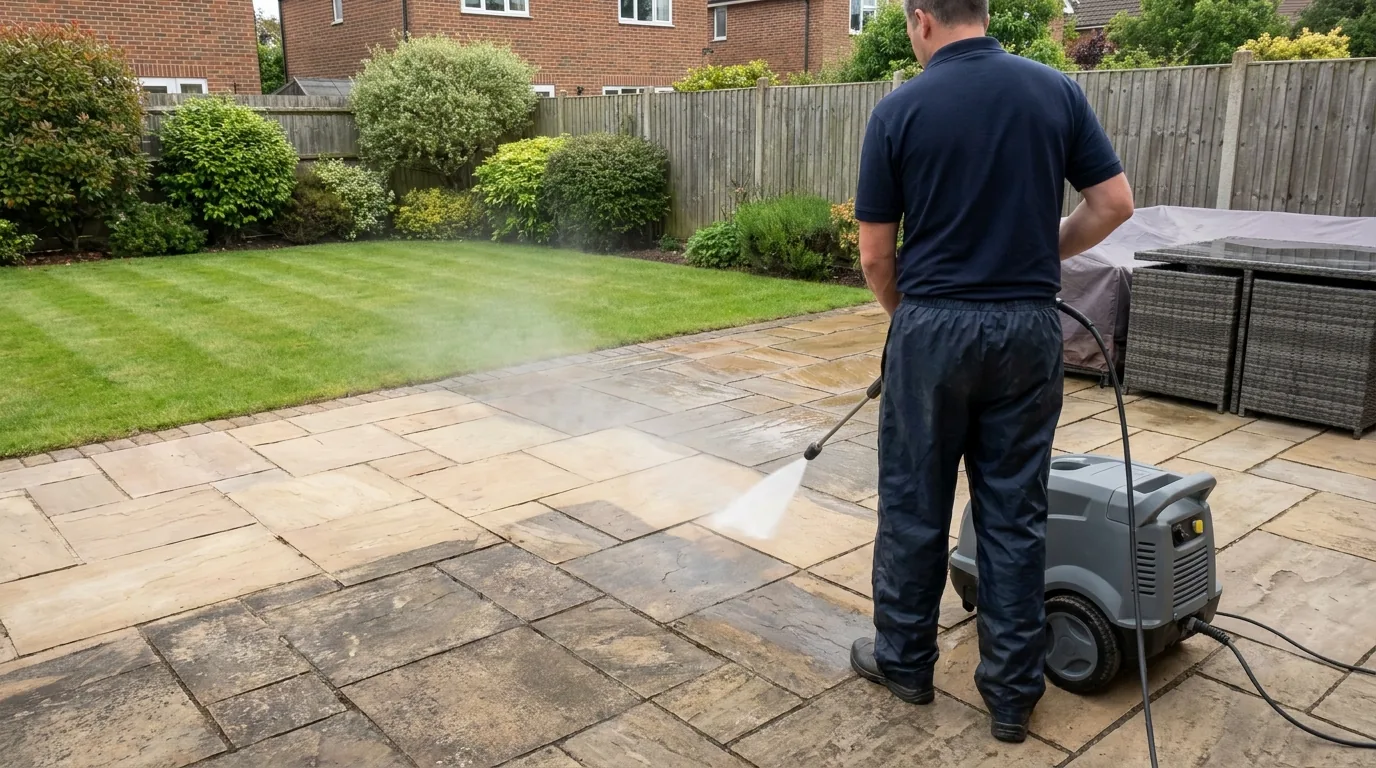
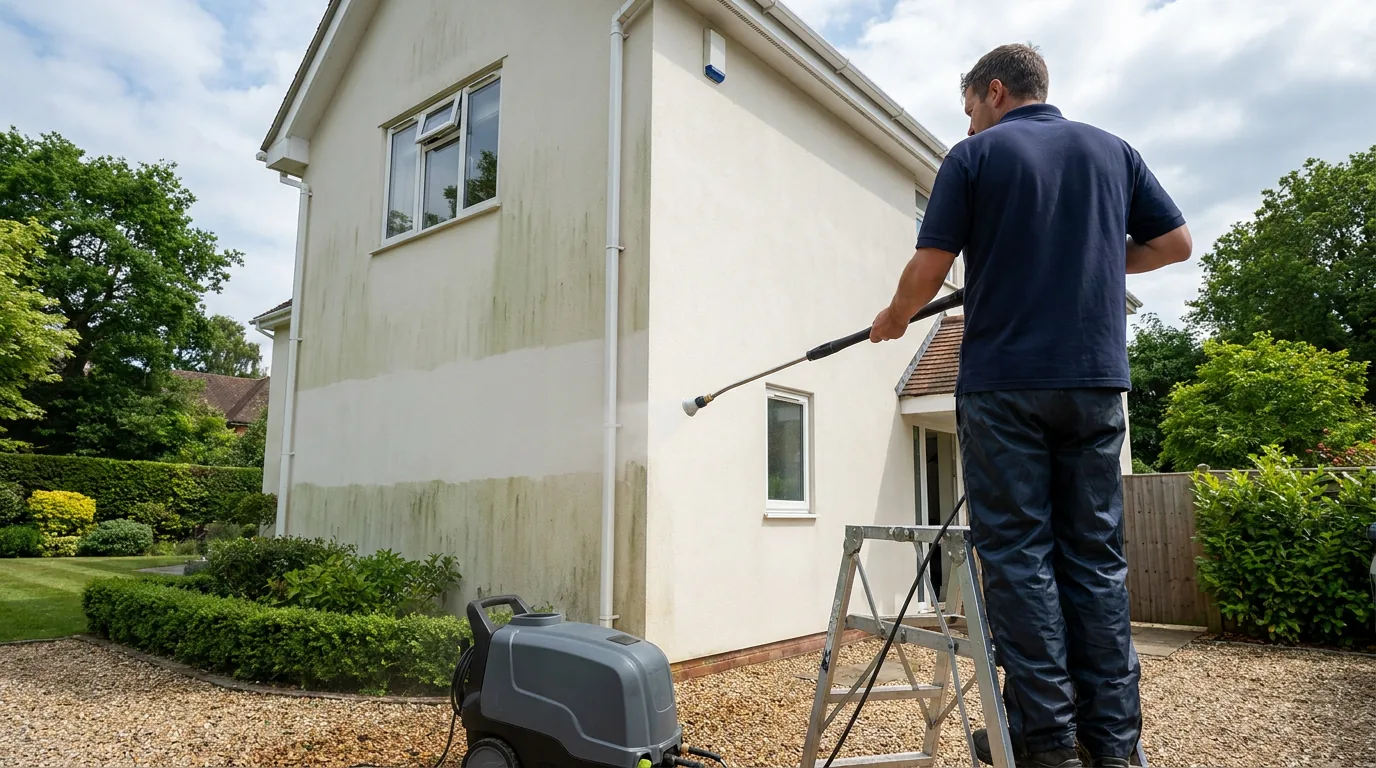
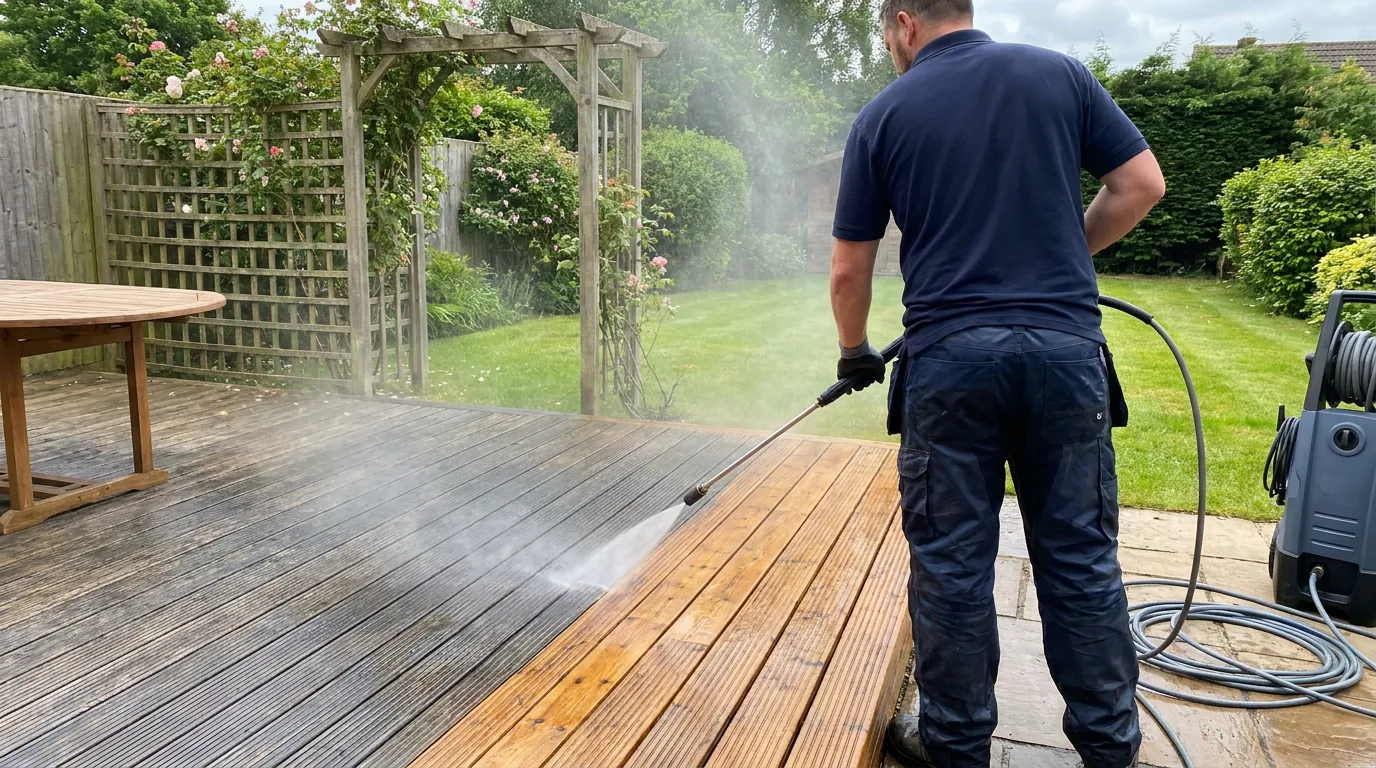
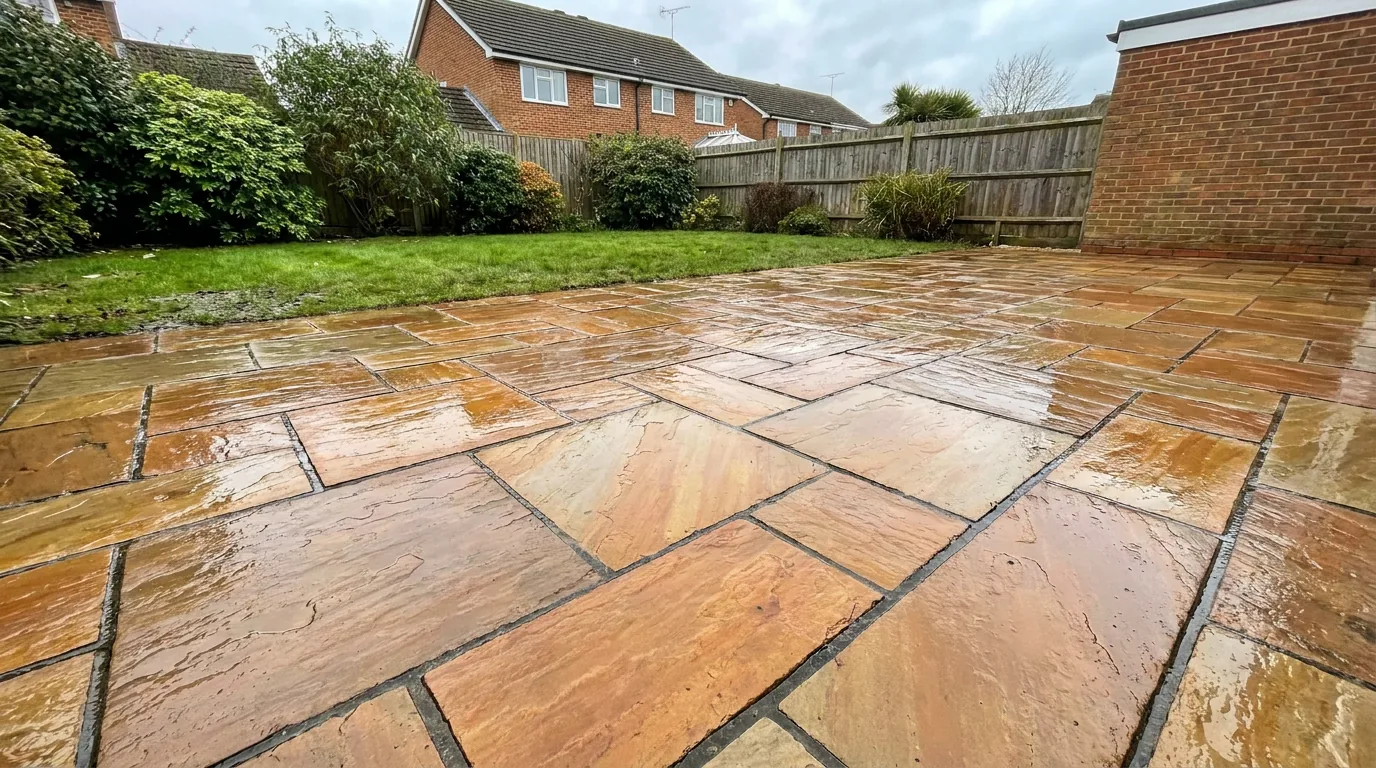
- Surface-clean at medium pressure — 30° oblique, ≥200 mm standoff, no turbo on Marshalls block paving; soft-wash on Quality Street period stonework.
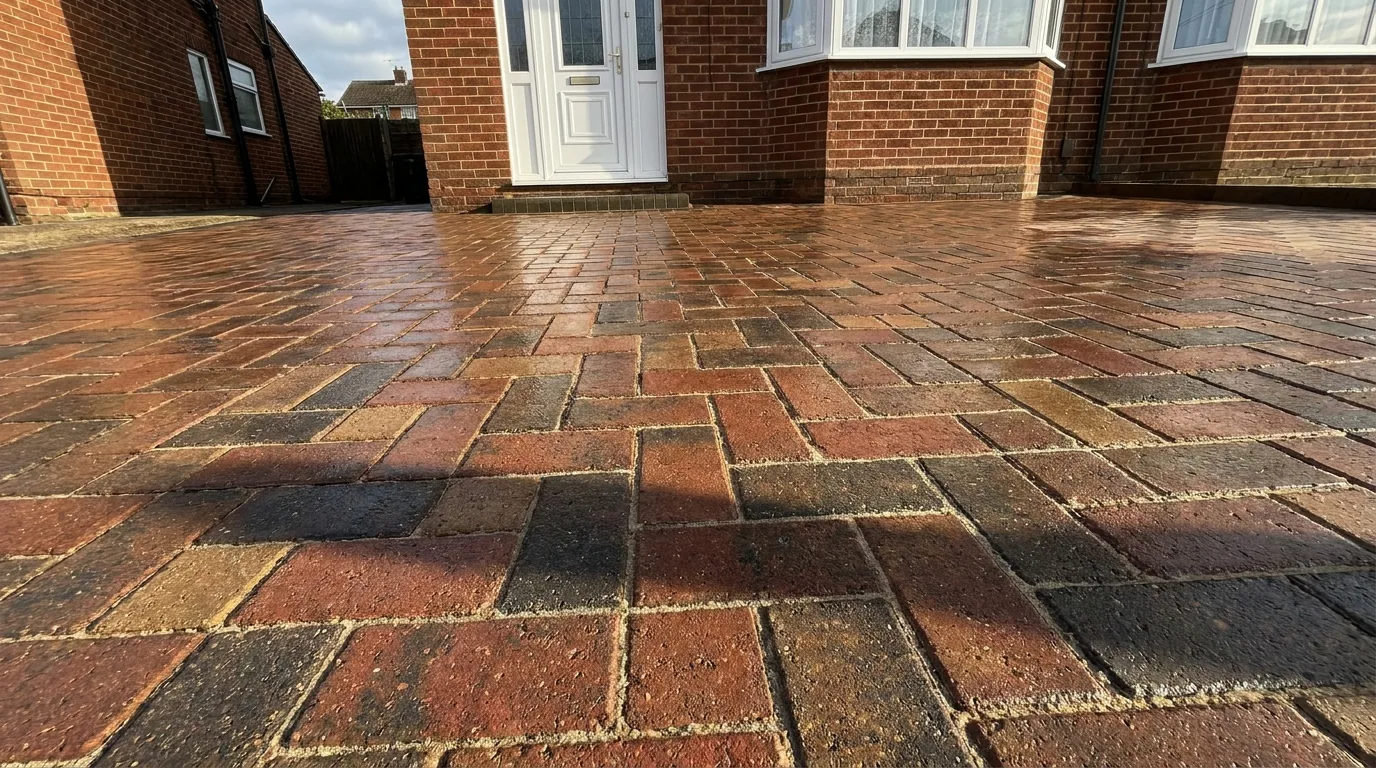
- Re-sand kiln-dried sand on block paving.
- Bunded rinse + foul-drain disposal on EA-flagged South Merstham streets.
- Walk again with the customer — reshoot anything not right. If the result isn’t right, we redo it free.
Pressure washing across Merstham — what we cover
Merstham is three miles north of Redhill at the foot of the North Downs, sitting right on the M25/M23 interchange. The village has a split character: period Quality Street and the older village fabric on one side, and 1960s-2000s estates in South Merstham closer to the motorway corridor on the other. We cover Redhill town centre, Reigate (RH2), Caterham (CR3) and the rest of Surrey within 20 miles. Full list of areas here. Or call 01737 652 515.
What we see on Merstham drives
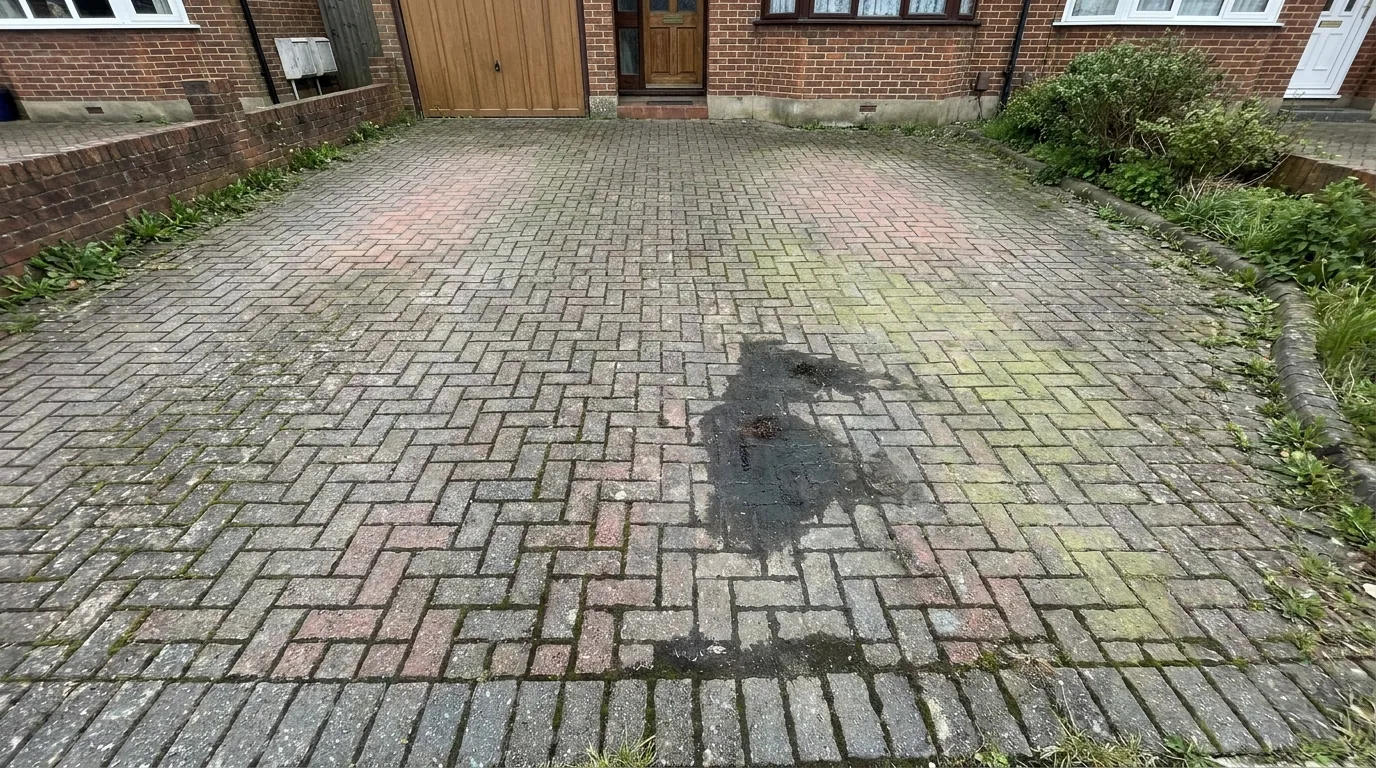
- M25/M23 pollution film — the Merstham speciality. Hot water plus commercial degreaser is the only way to lift it.
- Chalk dust deposits — pale powdery coating on dark surfaces. Mixes with rain to form a cement-like residue.
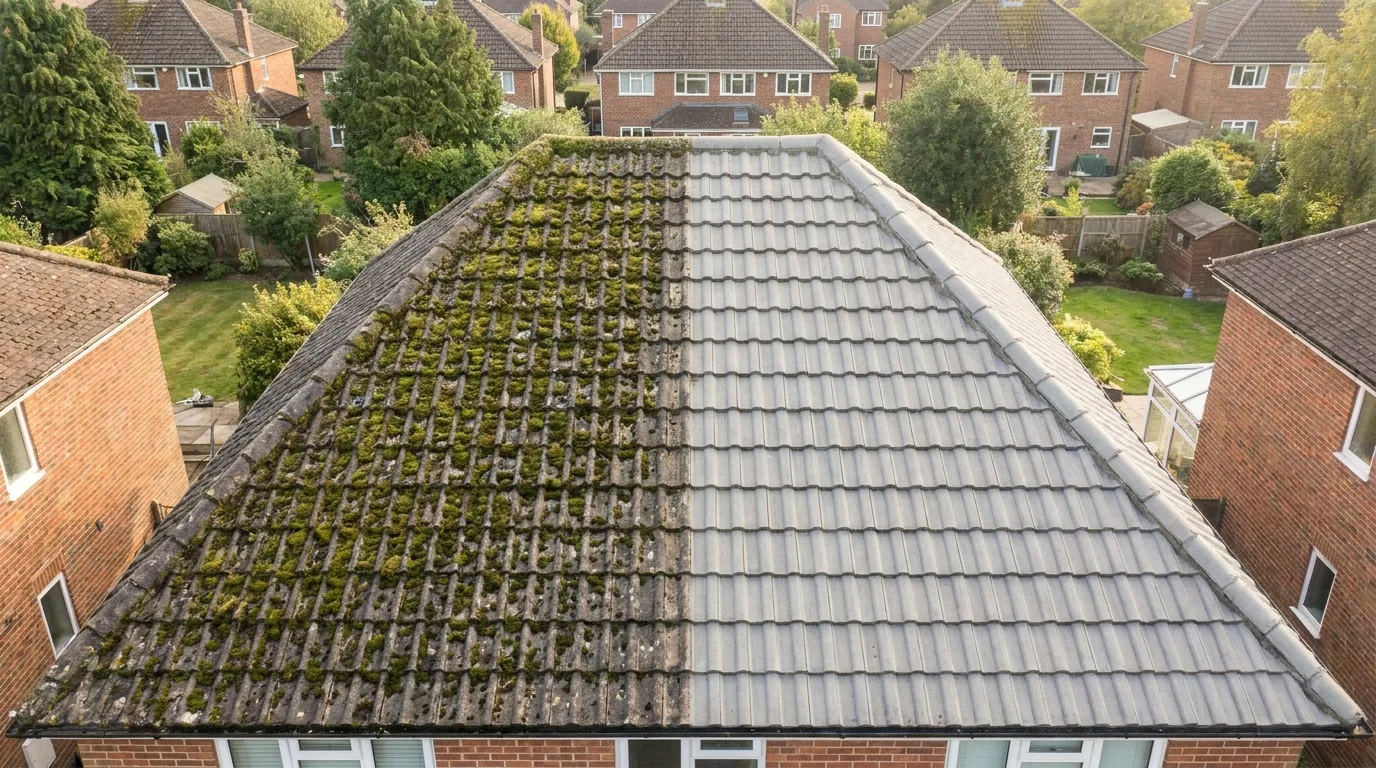
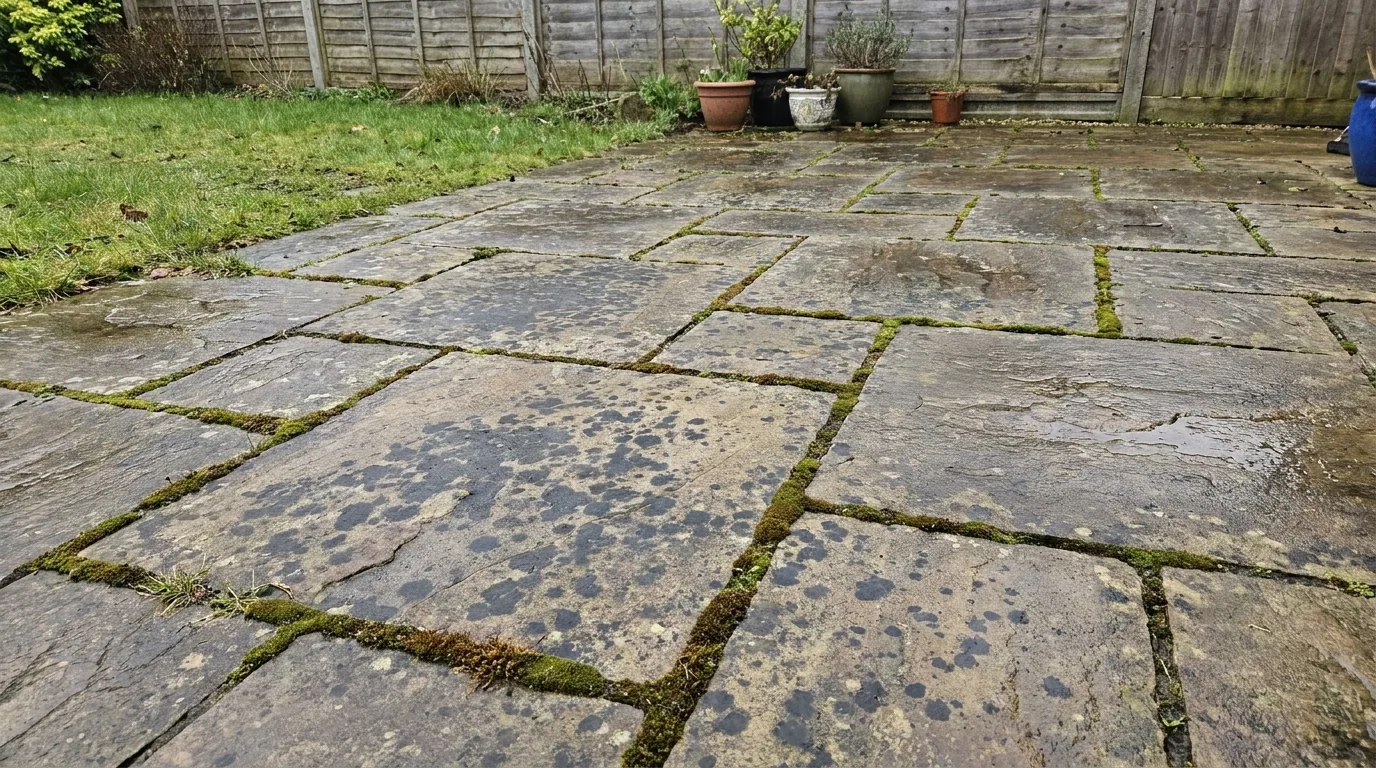
- Heavy moss along Quality Street — mature tree shade plus damp escarpment. Soft wash on period stonework, never high pressure.
- Block paving in South Merstham — 80s and 90s estates with deteriorated joint sand. Surface clean plus re-sanding.
Helpful guides for Merstham homeowners
How often you should clean · Oil stain removal · Moss removal · Driveway costs · KT22 M25-corridor comparison · RH1 baseline comparison
Sources
Every claim about Merstham chalk-dust chemistry, motorway-corridor pollution film, slip threshold, biocide cadence, paving warranty and SUDS policy on this page is sourced. We cite primary data (Met Office, BGS, Environment Agency, RBBC) plus manufacturer guidance (Marshalls, Lithofin) and HSE/UKSRG slip guidance. We do not cite competitor pressure-washing blogs.
- Met Office — Wisley (Surrey) Location Long-Term Averages 1991–2020. Annual rainfall 648.41 mm. metoffice.gov.uk — Wisley averages. Accessed 21 May 2026.
- British Geological Survey (BGS) — Chalk Group lithostratigraphy (White Chalk Subgroup, Upper Cretaceous). North Downs chalk scarp directly behind Merstham village; historical chalk-pit workings. bgs.ac.uk — Chalk Group lexicon. Accessed 21 May 2026.
- Environment Agency / GOV.UK — Long-term flood risk for an area in England. Documents surface-water flood pockets across South Merstham near the M25 corridor. check-long-term-flood-risk.service.gov.uk. Accessed 21 May 2026.
- Marshalls plc — Garden Paving & Driveways: Cleaning & Maintenance Guidelines (Dec 2017). Medium pressure, 30° oblique, ≥200 mm standoff. marshalls.co.uk — cleaning guidelines (PDF). Accessed 21 May 2026.
- Lithofin AG — Algex Special Cleaner product page and technical information. Annual reapplication. lithofin.com — Algex. Accessed 21 May 2026.
- UK Slip Resistance Group / HSE — Introduction to the Pendulum Tester. PTV ≥36 low risk. ukslipresistance.org.uk — pendulum tester. Accessed 21 May 2026.
- Reigate & Banstead Borough Council — Local Plan and Development Management Plan, including drainage and SUDS policies plus conservation-area constraints around Quality Street. reigate-banstead.gov.uk — Local Plan. Accessed 21 May 2026.