Why Redhill (RH1) is the Surrey valley-floor baseline
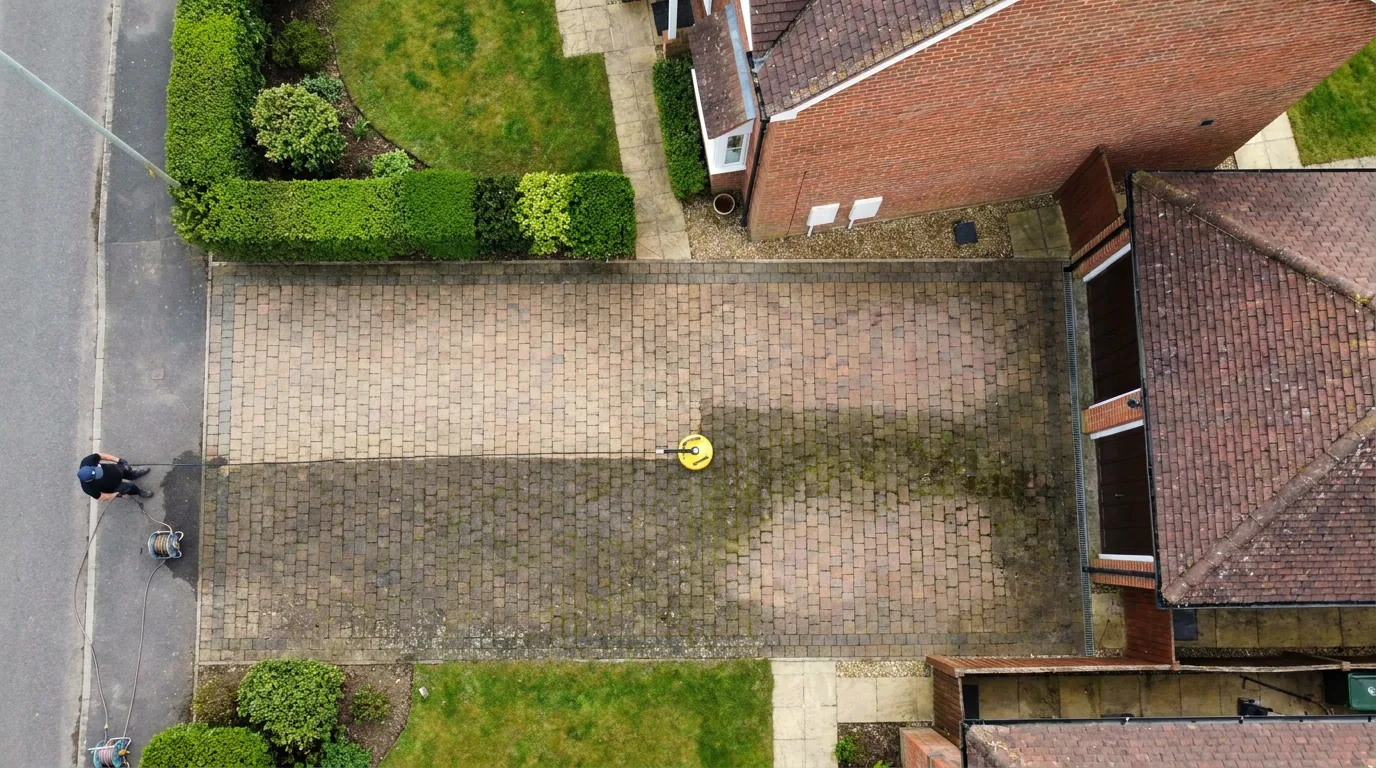
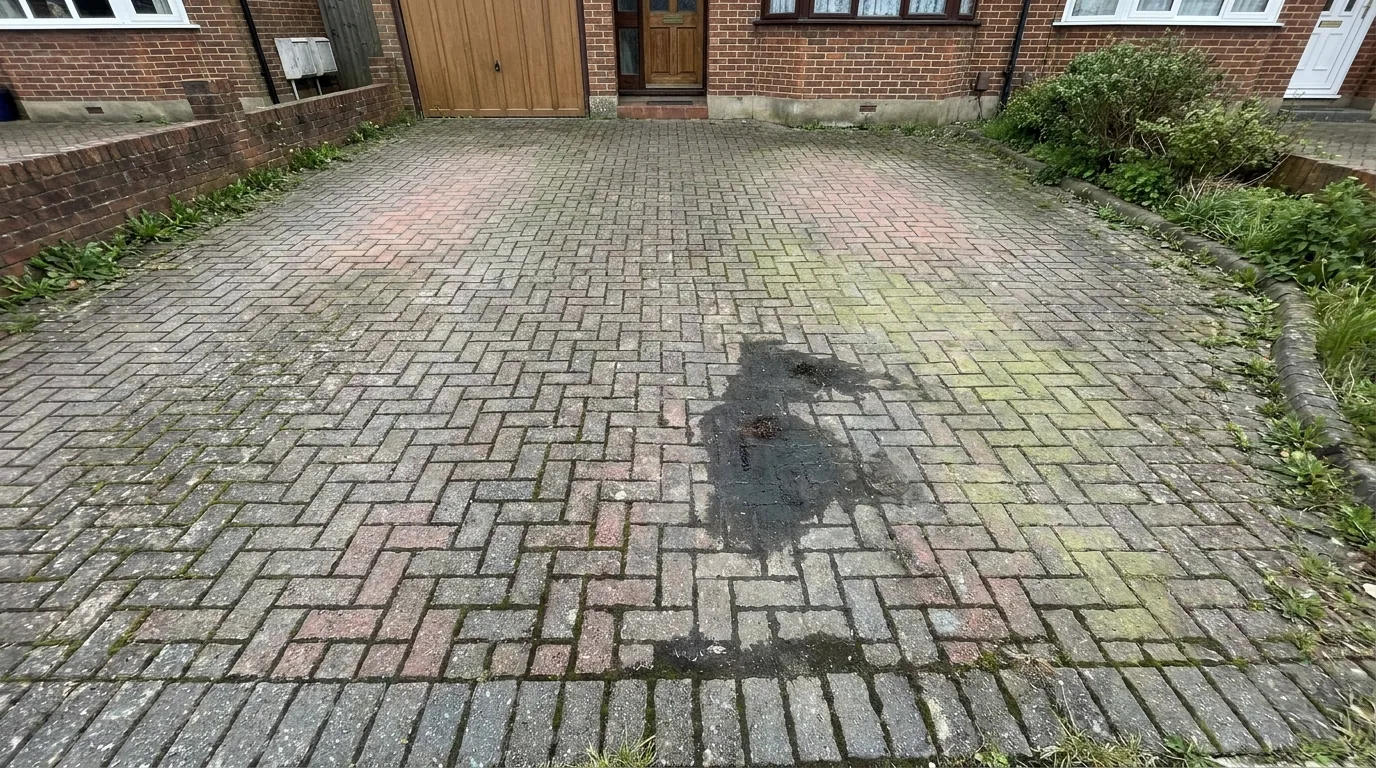
The short answer: Redhill sits in the Vale of Holmesdale — the low corridor between the North Downs chalk and the Greensand ridge — on Lower Greensand Folkestone Formation and Weald Clay edges, with Mole-tributary alluvium under Earlswood and Salfords[2]. The valley floor drains more slowly than the chalk eight miles north at Banstead and the surface-water flood footprint is documented across parts of RH1[3]. That single substrate fact makes RH1 the cheaper-per-job but tighter-cadence baseline. A standard 30–50 m² RH1 block-paving drive is £120–£180; re-clean cadence is 12–18 months on shaded plots versus 18–24 months on the chalk.
The RH1 valley-floor cost & cadence baseline
Original analytical contribution: the labelled OAC below anchors the area-pages comparison. Inputs: Wisley rainfall 648 mm/yr[1], BGS Lower Greensand + Weald Clay substrate behaviour[2], Environment Agency surface-water risk for the RH1 flood pockets[3], Lithofin annual biocide cadence[5], and Marshalls maintenance technique[4]. The baseline column is what every other Surrey area page will be measured against on this site.
| Surface (RH1 typical area) | RH1 baseline price 2026 | Re-clean interval (months) | SM7 chalk vs RH1 | What drives the baseline |
|---|---|---|---|---|
| Block paving (30–50 m²) | £120–£180 | 12–18 | +35% | 200x100x50 mm blocks; joints lose sand on Weald-clay edges first |
| Concrete drive (30–50 m²) | £100–£180 | 12–18 | +25% | Older Merstham/Salfords stock; oil-stain pre-treat the norm |
| Tarmac (30–60 m²) | £100–£200 | 12–24 | +20% | Moss colonises faster than concrete; medium pressure only |
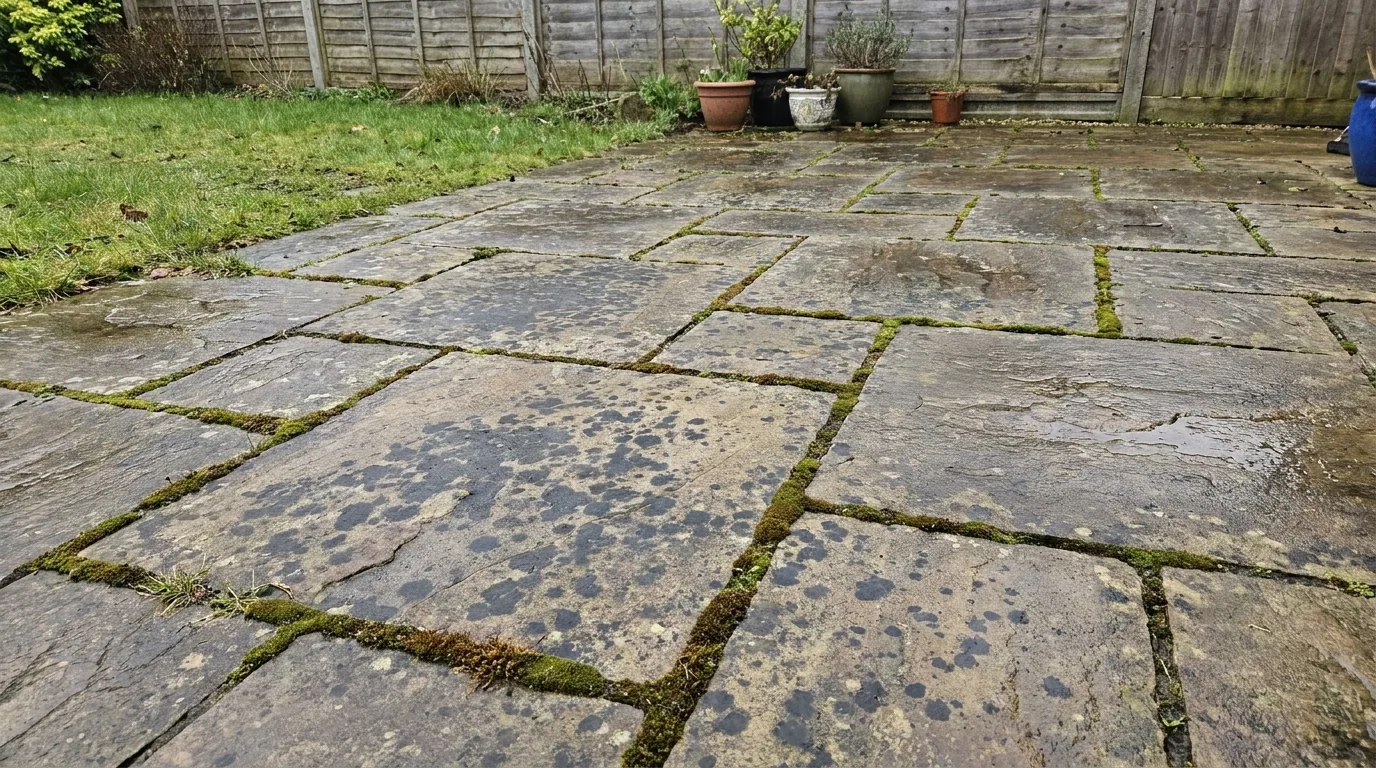
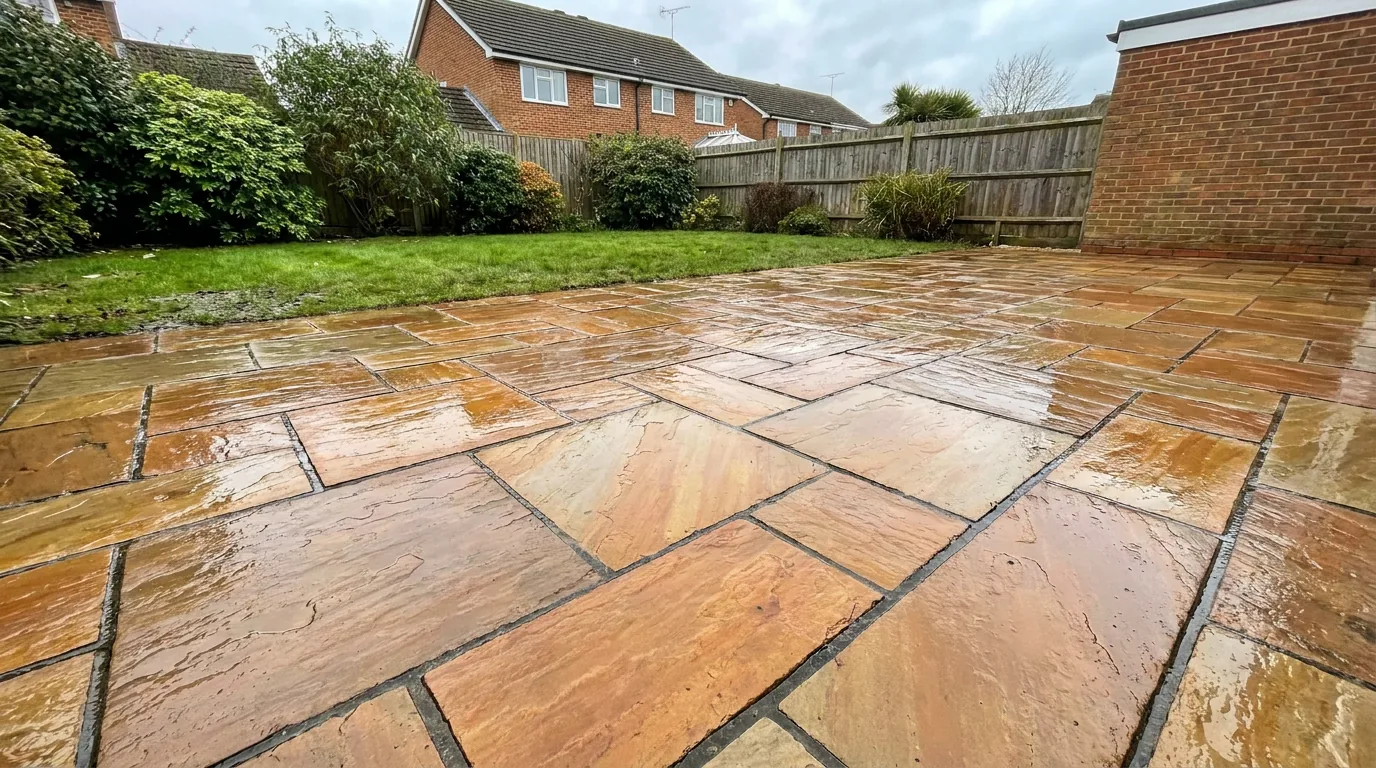
| Sandstone patio (15–30 m²) | £120–£240 | 12–18 | +25% | Black-spot lichen common on damp valley floor; soft wash + biocide |
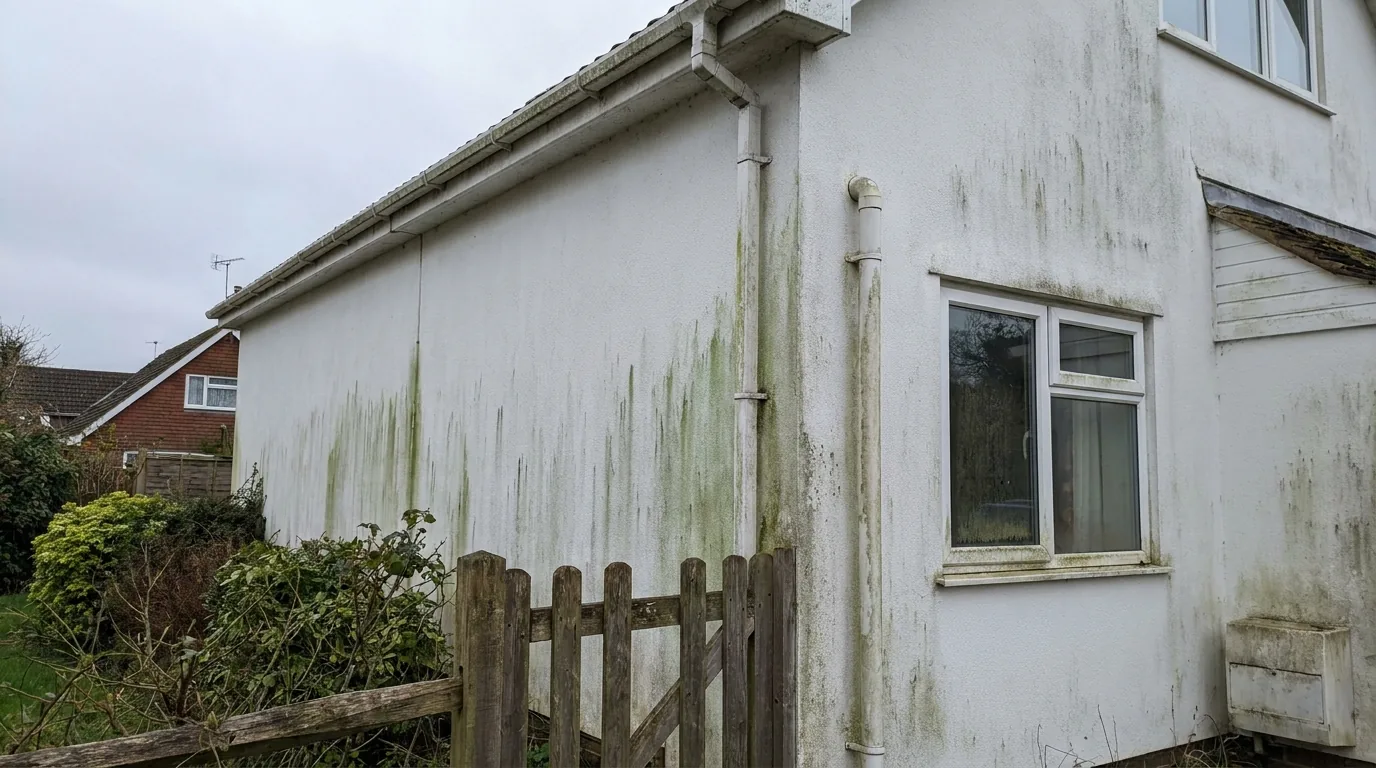
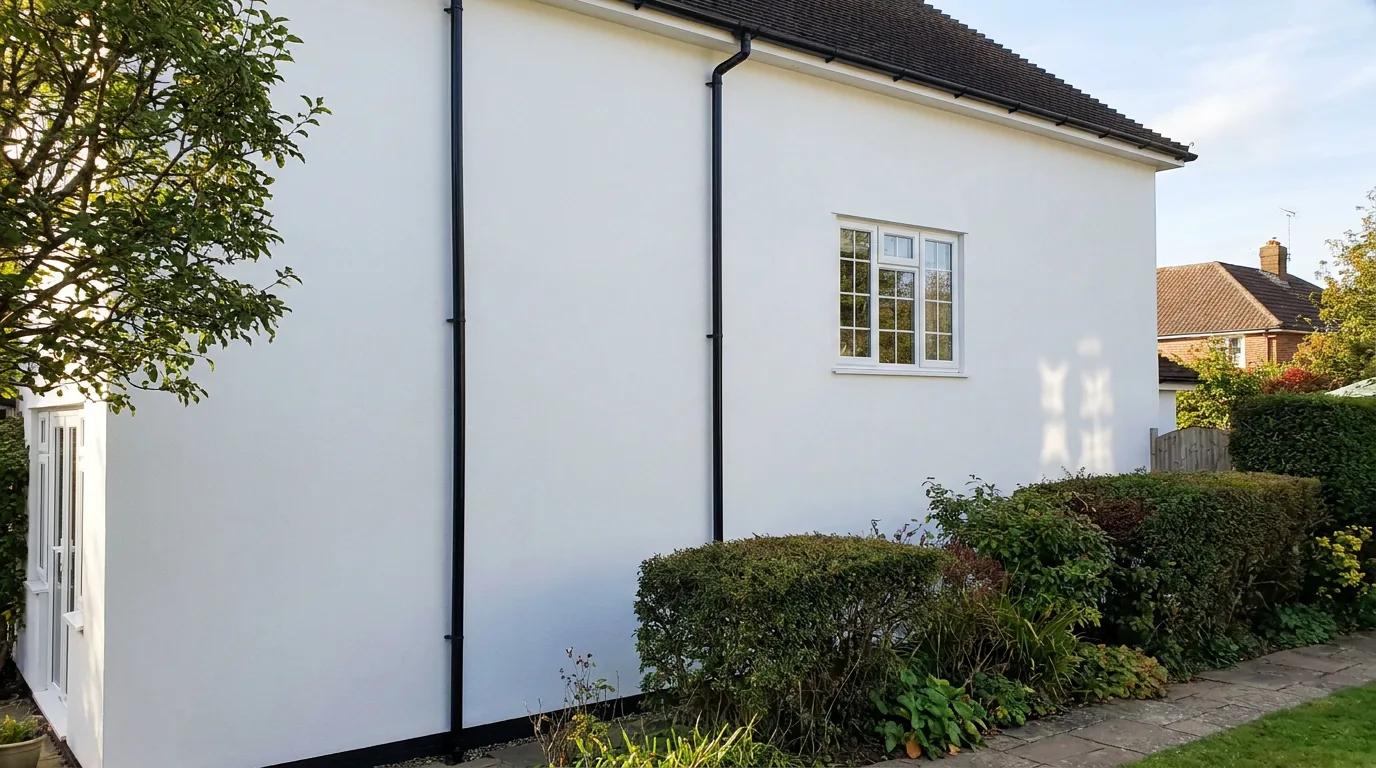
| Painted/silicone render (gable) | £150–£320 | 36–60 | +50% | Newer RH1 stock; gutter-streak algae from valley humidity |
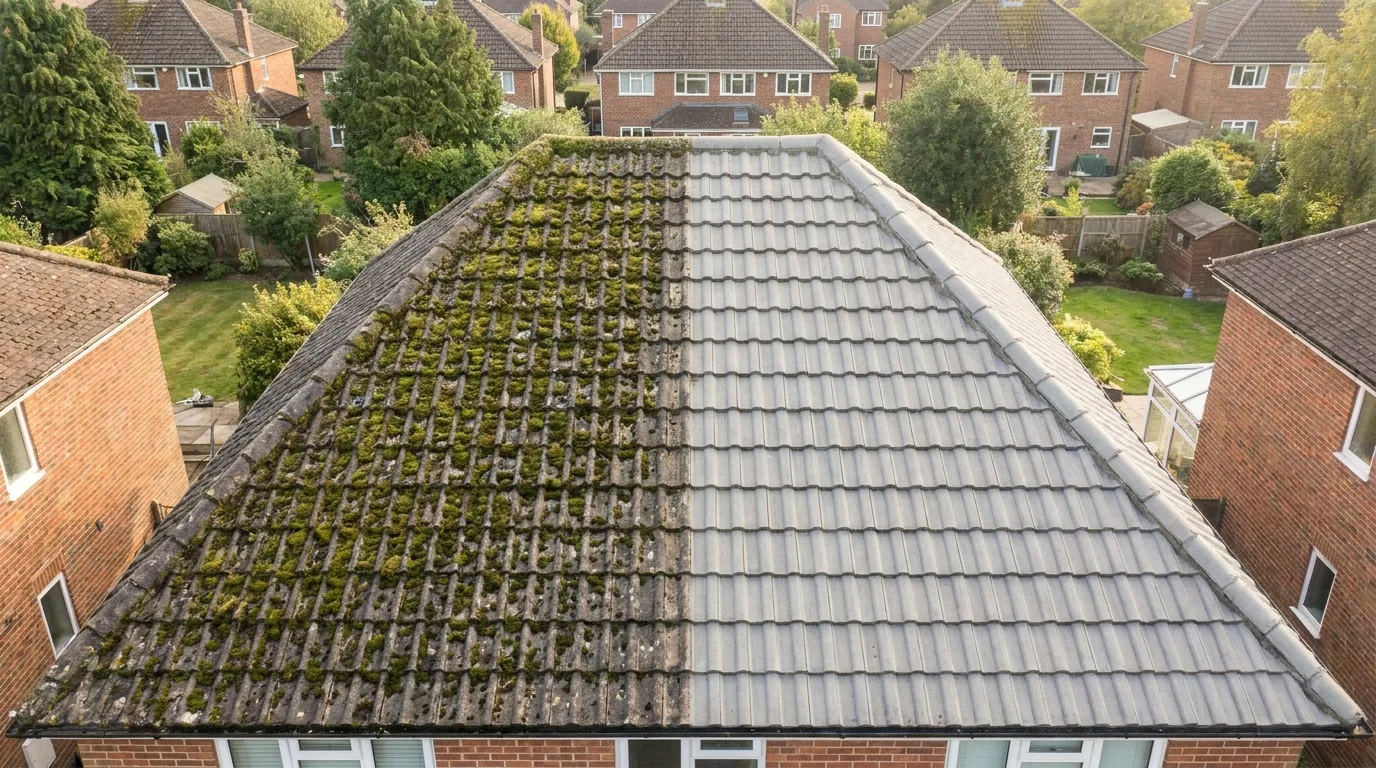
| Concrete/clay tile roof moss | £200–£450 | 60–120 | +40% | Standard RH1 detached pitches; biocide-only treatment between deep cleans |
RH1 baseline reflects 2026 client-billed quotes on Redhill, Merstham, Salfords, Earlswood and Nutfield jobs. The SM7 column compares to the Banstead chalk-multiplier (see Banstead page).
What’s actually under your Redhill drive
RH1 straddles three substrate types within the Vale of Holmesdale[2]:
- Folkestone Formation (Lower Greensand) — the most common substrate under central Redhill and Earlswood: medium-grained, weakly cemented sandstone that drains moderately but not as fast as chalk.
- Weald Clay edges — appearing south and east towards Salfords and South Nutfield. Heavier, slower draining, more hydrostatic load on sub-bases.
- Alluvium and made ground — along the River Mole tributaries through Earlswood, Salfords and Petridge Wood. Variable bearing capacity; localised heaving on poorly compacted older drives.
The practical consequence: RH1 jointing sand washes out faster than on Banstead chalk, hydrostatic lift can show up where Weald Clay sits under a paved drive, and biocide cadence stays at annual rather than stretching to 18–24 months as it can on the dip-slope chalk.
The Earlswood / Salfords surface-water risk no cost guide mentions
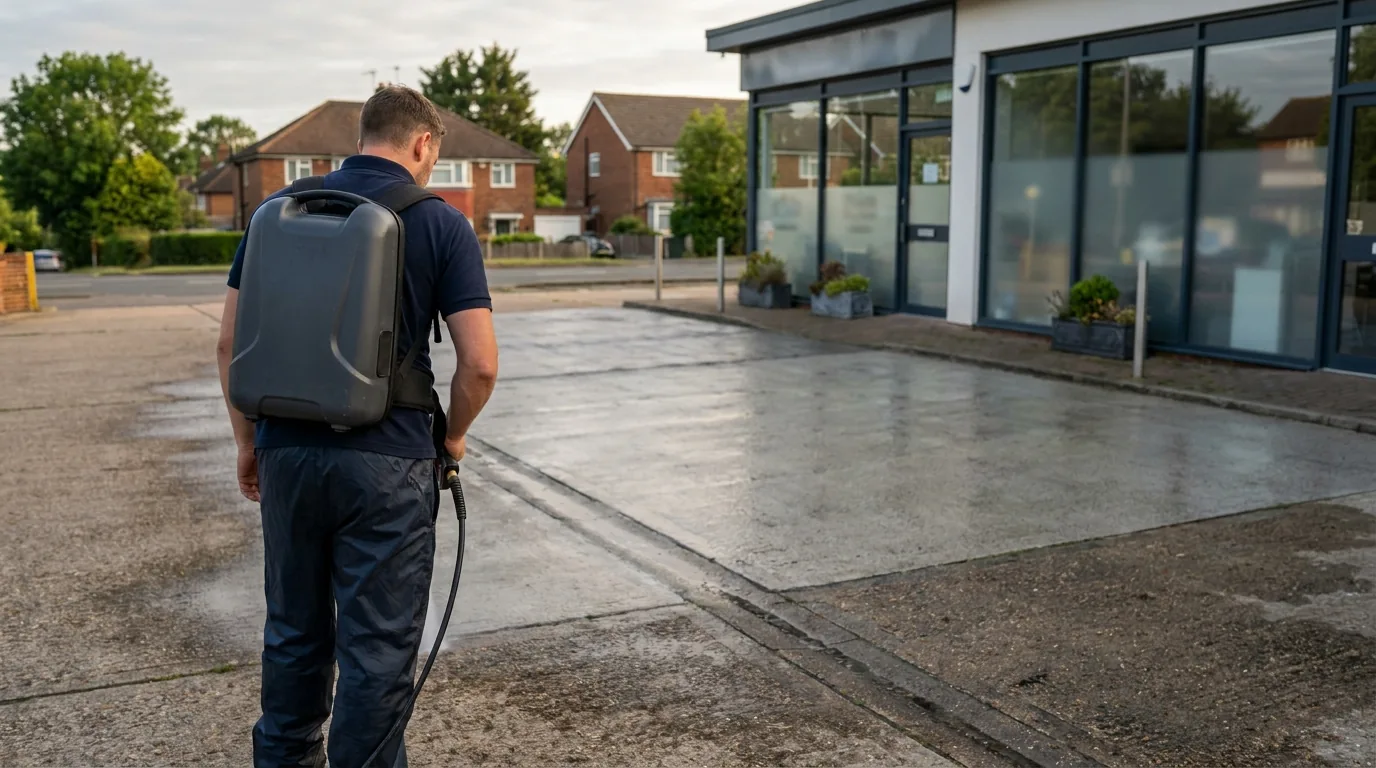
Parts of RH1 around Earlswood Common, Salfords and the lower Petridge Wood corridor carry documented surface-water flood risk on the Environment Agency long-term flood-risk map[3]. That matters for cleaning in two specific ways: (1) drainage from a freshly cleaned drive should not be directed into a surface-water-risk gully without an SUDS check — Reigate & Banstead Borough Council policy applies[7]; (2) biocide runoff on impermeable drives is a watercourse-pollution risk in those pockets. Patrick’s default for any Earlswood or Salfords job: bunded rinse, capture, dispose to foul drain only.
Slip-risk is the RH1 safety case too
UKSRG / HSE-endorsed pendulum guidance[6] sets PTV ≥36 as the low-slip threshold. RH1 valley humidity keeps algae and biofilm regrowing faster than on the Banstead chalk; PTV drops below the threshold 3–5 weeks earlier across RH1 north-facing block-paving drives than the UK averaged guidance suggests. That’s the technical reason behind the 12–18 month re-clean cadence in the matrix.
RH1 mistakes that void warranties
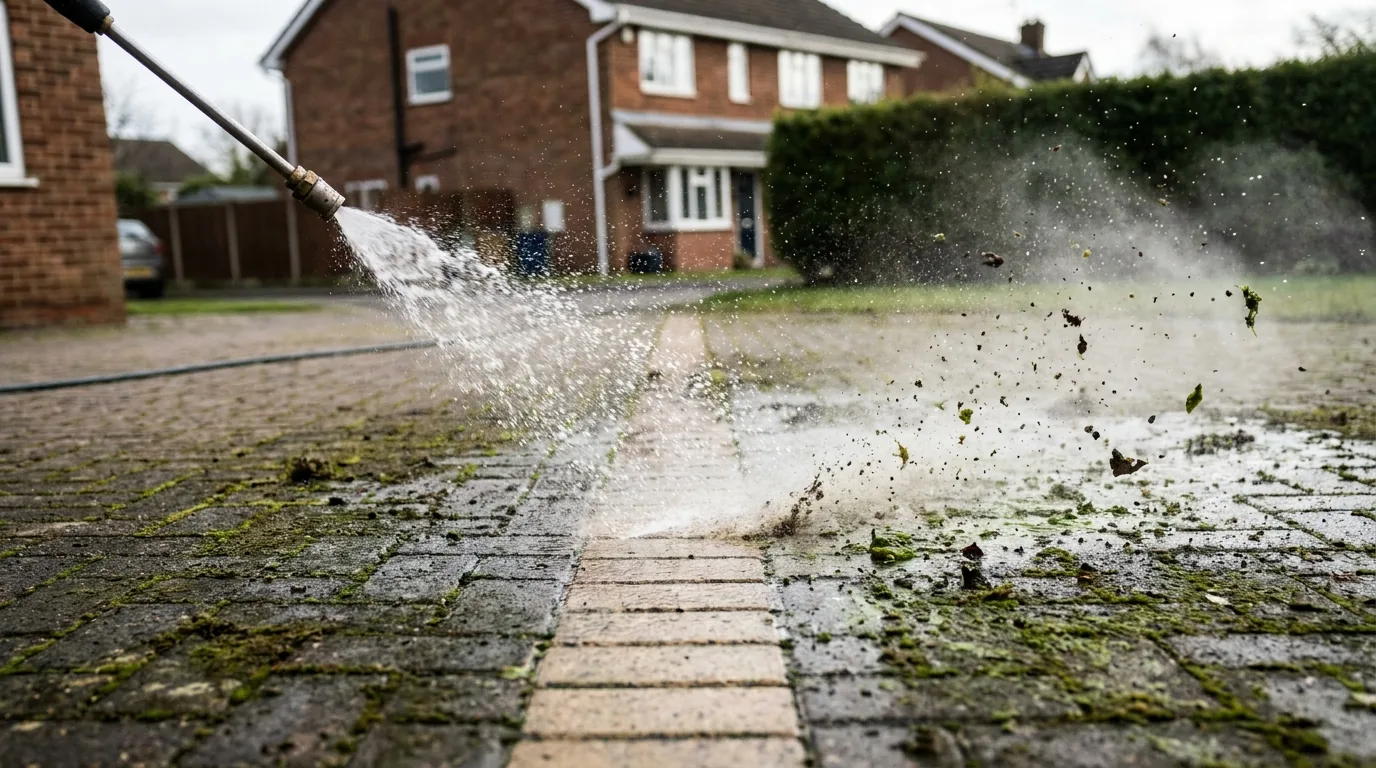
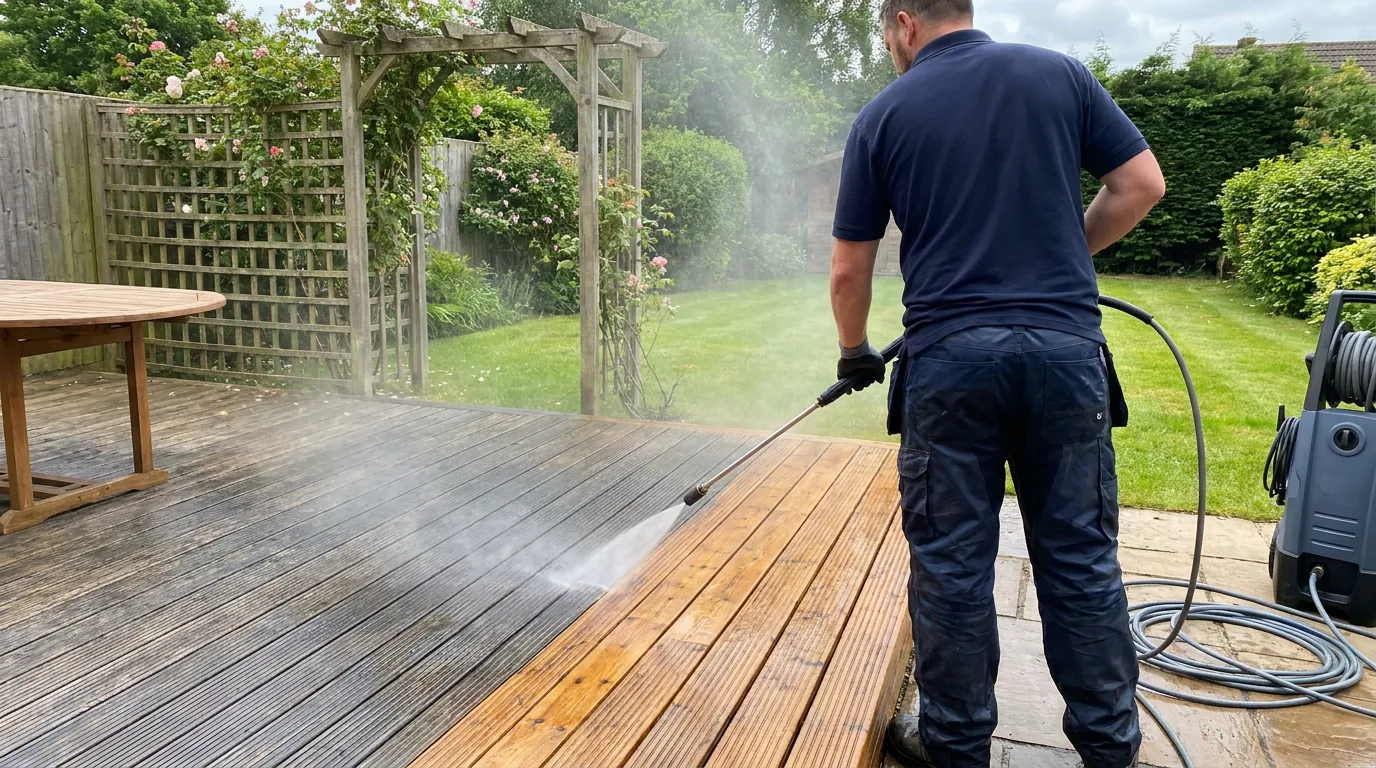
- Turbo nozzles on Marshalls block paving. Marshalls[4] require medium pressure, 30° oblique angle, ≥200 mm standoff. Turbo / dirt-blaster jets exceed the Drivesett/Tegula surface tolerance and risk warranty rejection on Marshalls Register installs — common across Redstone Hill and central Redhill.
- Sealing porous Indian sandstone in autumn. RH1 valley humidity traps moisture under a polymer seal. Result: blistering, surface spalling. Seal only in dry summer windows.
- Skipping the re-sand on block paving. BS 7533-101 treats joint sand as load-bearing. On the Weald-clay edges south of central Redhill, lose the sand and surface creep follows fast under tyre load.
What we actually do on a Redhill job
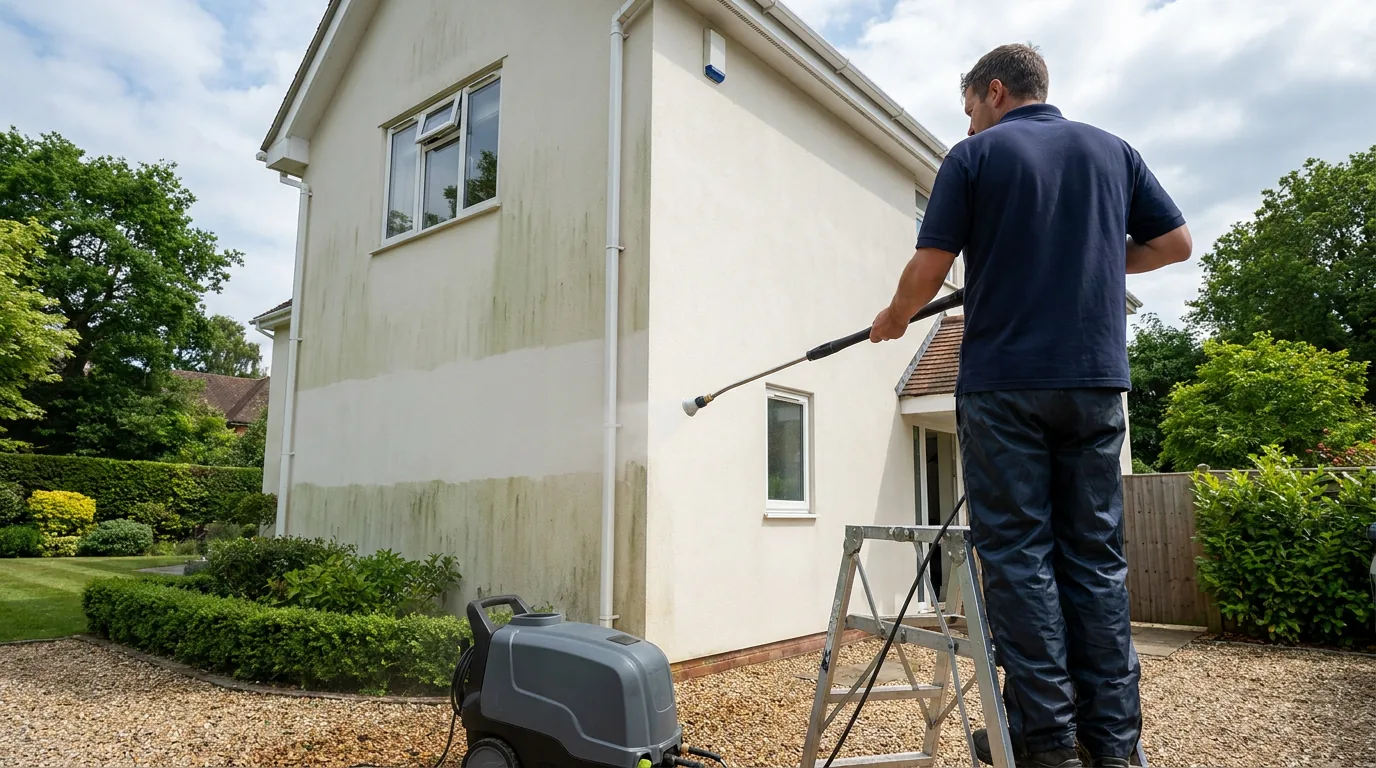
- Walk the drive — check substrate signals (sandstone fines on Folkestone Formation, clay heave on Weald edges), Marshalls Register status, jointing-sand condition, and surface-water-risk proximity for Earlswood/Salfords postcodes.
- Pre-treat with biocide — Lithofin Algex[5] or equivalent at manufacturer dilution; 24–48 hr dwell.
- Surface-clean at medium pressure — 30° oblique, 200 mm minimum, no turbo (Marshalls-compliant).
- Re-sand kiln-dried sand — standard, never an extra.
- Capture rinse on flood-risk postcodes — Earlswood, Salfords, Petridge Wood proximity: bunded rinse, dispose to foul drain.
- Walk again with the customer — reshoot anything not right. If the result isn’t right, we redo it free.
Pressure washing across RH1 — what we cover
Redhill and the surrounding RH1 villages — Merstham, Salfords, Earlswood, Nutfield, South Nutfield — are our home patch. Patrick is based here and most weeks we’re same-day or next-day for the RH1 postcode. Reigate (RH2) is right next door, plus Horley (RH6) to the south, Banstead (SM7) and Caterham (CR3) over the chalk. Full list of areas here. Or call 01737 652 515 — Patrick will walk through your RH1 drive in five minutes.
What we see on Redhill drives
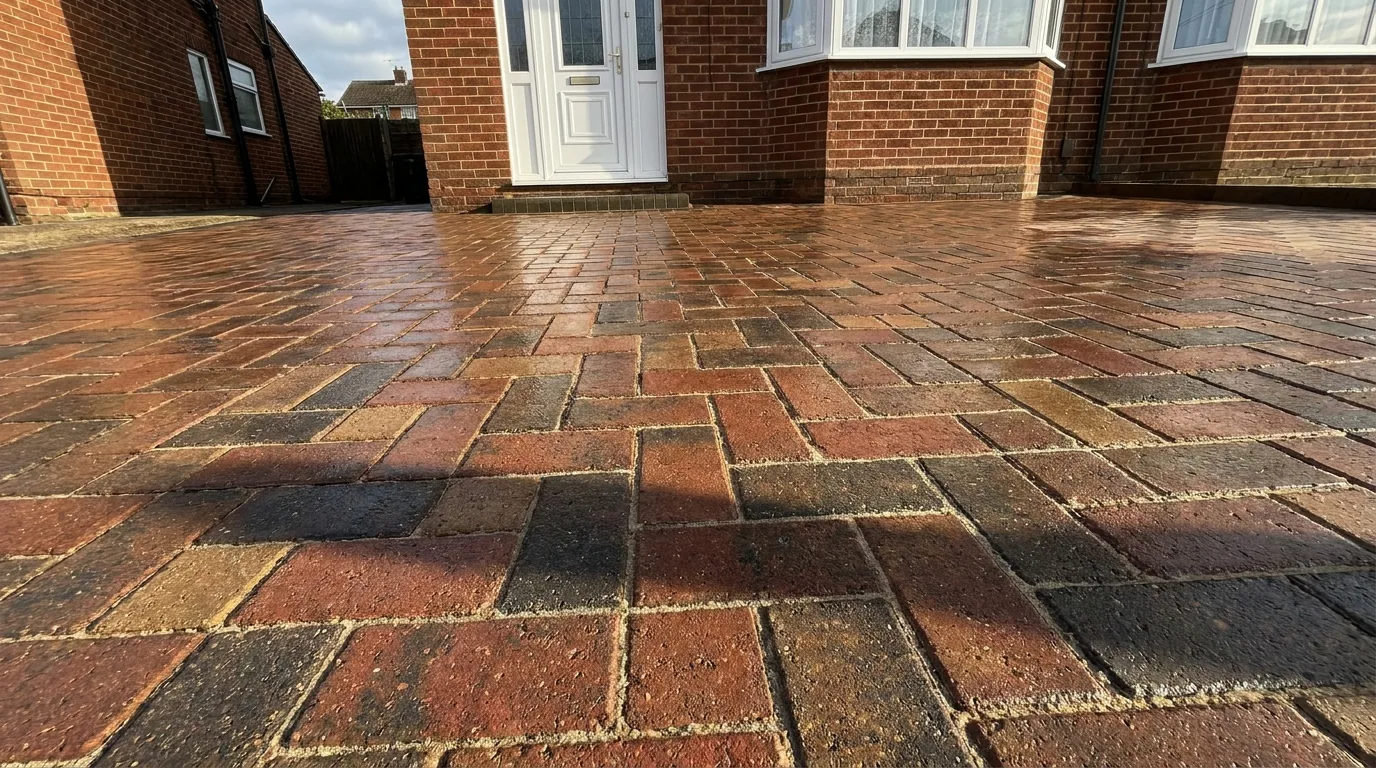
- Block paving with washed-out joints — almost universal in RH1 estates built 1985-2005. Re-sanding included with every clean.
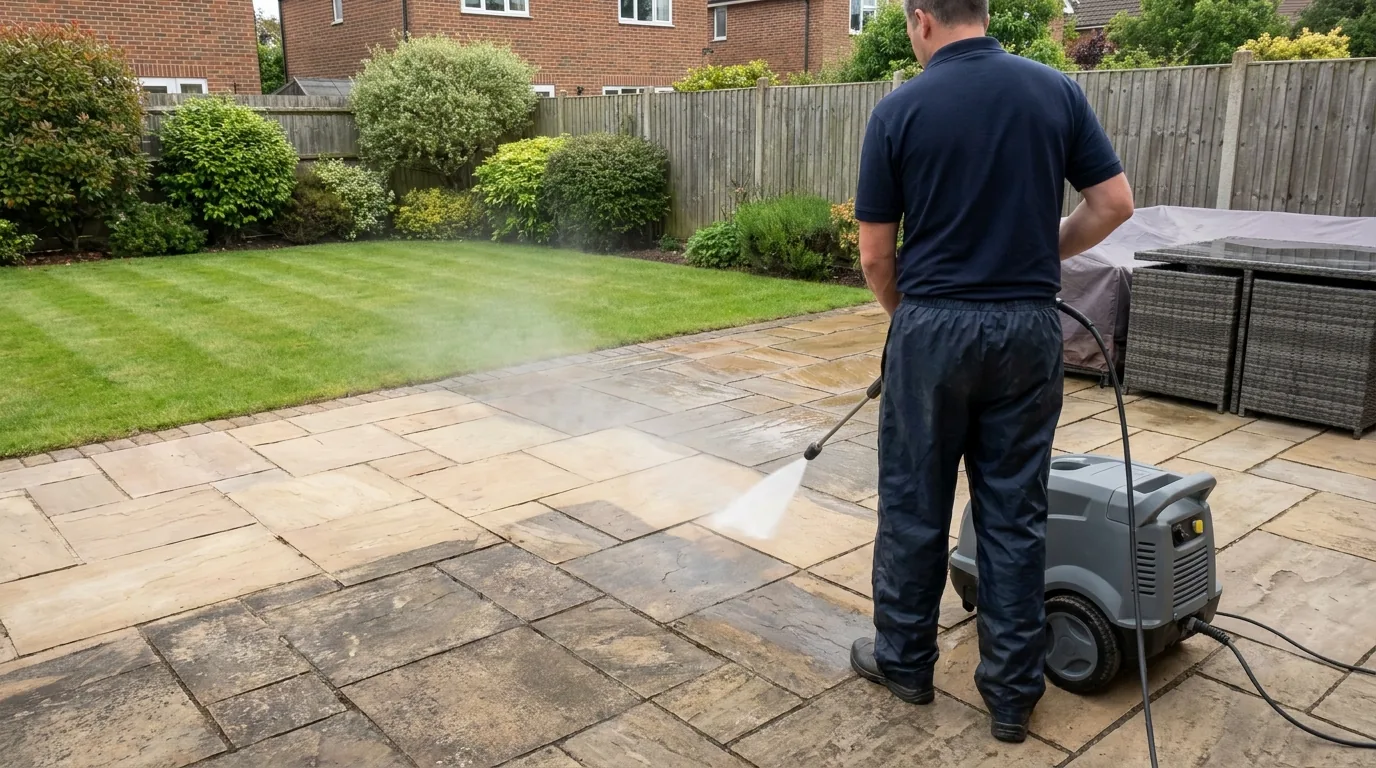
- Indian sandstone patios — popular in Reigate Hill and Redstone Hill. Black-spot lichen is the classic Redhill problem; soft wash with biocide handles it.
- Painted render — a lot of newer-build RH1 homes. Algae streaks under gutters are the giveaway. Soft wash, no pressure damage.
- Concrete driveways — older Merstham and Salfords stock. Oil staining is the issue, pre-treatment plus pressure washing handles most of it.
Helpful guides for Redhill homeowners
Full driveway cost guide · Moss removal guide · How often you should clean · Block paving costs · Efflorescence · Compare to Banstead
Sources
Every claim about RH1 substrate, rainfall, surface-water risk, biocide cadence, slip threshold, paving warranty and SUDS policy on this page is sourced. We cite primary data (Met Office, BGS, Environment Agency, Reigate & Banstead Borough Council) plus manufacturer guidance (Marshalls, Lithofin) and HSE/UKSRG slip guidance. We do not cite competitor pressure-washing blogs.
- Met Office — Wisley (Surrey) Location Long-Term Averages 1991–2020. Closest station to Redhill (RH1). Annual rainfall 648.41 mm; ~43% below the UK 1,147 mm mean. metoffice.gov.uk — Wisley averages. Accessed 21 May 2026.
- British Geological Survey (BGS) — Lower Greensand Group lithostratigraphy: Folkestone Formation and Hythe Formation, governing the Vale of Holmesdale substrate under central RH1 plus Weald Clay edges to the south and east. bgs.ac.uk — Lower Greensand Group lexicon. Accessed 21 May 2026.
- Environment Agency / GOV.UK — Long-term flood risk for an area in England. Documents surface-water flood-risk pockets across RH1 (notably Earlswood Common, Salfords corridor, Petridge Wood). check-long-term-flood-risk.service.gov.uk. Accessed 21 May 2026.
- Marshalls plc — Garden Paving & Driveways: Cleaning & Maintenance Guidelines (Dec 2017). “No more than medium pressure… lance held at an oblique angle… at least 200 mm (8″) from the surface.” Re-sand if joints are washed out. marshalls.co.uk — cleaning guidelines (PDF). Accessed 21 May 2026.
- Lithofin AG — Algex Special Cleaner product page and technical information. Manufacturer-specified reapplication interval is annual, preferably in spring. lithofin.com — Algex. Accessed 21 May 2026.
- UK Slip Resistance Group / HSE — Introduction to the Pendulum Tester. HSE-endorsed slip-risk method using BS 7976 Parts 1–3. Widely adopted thresholds: PTV ≥36 low risk, 25–35 moderate, ≤24 high. ukslipresistance.org.uk — pendulum tester. Accessed 21 May 2026.
- Reigate & Banstead Borough Council — Local Plan and Development Management Plan, including drainage and SUDS policies governing replacement front-garden paving. reigate-banstead.gov.uk — Local Plan. Accessed 21 May 2026.