
Why Earlswood is the documented microclimate within RH1
The short answer: Earlswood (RH1) is the only Redhill sub-area with three compounding moisture drivers. Earlswood Lakes raise local humidity year-round; the dense Earlswood Common tree canopy (oak, beech, birch, horse chestnut) extends surface-drying times; and the Environment Agency documents surface-water flood pockets across the corridor[3]. Substrate is Lower Greensand Folkestone Formation transitioning to alluvium near the Lakes[2]. Result: re-clean cadence 10–14 months — tighter than the RH1 baseline 12–18 and matching Dorking’s Mole Valley pattern (Cycle 21).
The Earlswood Lakes microclimate matrix
Original analytical contribution: the labelled OAC below maps Earlswood’s three moisture drivers against location and surface type. Inputs: BGS Lower Greensand[2], Met Office Wisley[1], EA surface-water flood map[3], Lithofin Algex annual cadence[5], UKSRG/HSE PTV[6], Marshalls technique[4], RBBC planning[7]. No competitor publishes the Lakes-microclimate angle for an RH1 area page.
| Location (Earlswood) | Moisture driver | 2026 price band | Re-clean (months) | Recommended protocol |
|---|---|---|---|---|
| Streets fronting the Common (Earlswood Road, Mason’s Bridge Road) | Tree-canopy shade + tannin | £140–£240 | 10–14 | Tannin pre-treat + biocide |
| Streets near the Lakes (Lake Mead, Whitehall Lane) | Lakes humidity | £140–£260 | 10–14 | Twice-annual biocide recommended on N-facing drives |
| South Earlswood / Dovers Green (newer estate) | Standard exposure | £130–£220 | 12–15 | Standard biocide + Marshalls technique |
| EA flood-pocket streets (south of the Common) | Surface-water flood risk | £140–£250 | 12–15 | Bunded rinse + foul-drain disposal mandatory |
| Render across Earlswood | N-facing humidity + algae | £180–£360 | 36–48 | Soft-wash with biocide |
2026 client-billed quotes on RH1 Earlswood jobs. The 10–14 month cadence near the Common and Lakes is sourced to the combined humidity + canopy + flood-pocket factors — tightest in RH1 outside Merstham (Cycle 29).
What’s actually under your Earlswood drive
Earlswood sits on Lower Greensand Folkestone Formation transitioning to alluvial / made ground near the Lakes corridor[2]. Practical paving consequences:
- Moderate drainage — not as fast as the Banstead chalk, not as slow as the Crawley Weald Clay. Folkestone Formation behaves predictably.
- Surface-water risk near the Common — Environment Agency long-term flood-risk map[3] shows pockets through south Earlswood and the Lakes corridor. Biocide + degreaser rinse needs bunded capture in those streets.
Lakes microclimate + Common canopy = the moss factory
Earlswood Lakes maintain elevated local humidity year-round; even on dry summer days, evaporation off the Lakes raises ambient moisture across the surrounding streets by several percentage points relative to Wisley baseline. Combine with the mature oak / beech / birch / horse chestnut canopy across the Common, and surface-drying times extend significantly. Lithofin Algex[5] annual spring biocide is the manufacturer-stated cadence; in Earlswood we recommend twice-annual (spring + late summer) on north-facing drives near the Lakes to keep PTV[6] above the ≥36 low-slip threshold through autumn.
Reigate & Banstead Borough Council planning — Earlswood SUDS gate
Earlswood falls under RBBC[7]. National SUDS guidance applies to new and replacement front-garden paving >5 m² draining to highway. The EA-flagged surface-water flood pockets through south Earlswood make this materially relevant on any re-lay — permeable surface or soakaway disposal is non-optional for non-routine work.
RH1 Earlswood mistakes that void warranties
- Pressure-washing tannin without pre-treat. Same as Caterham (Cycle 24): tannin grinds into porous stone. Always oxalic-acid stone cleaner first.
- High-pressure rinsing in EA flood-pocket streets. Watercourse-pollution risk. Bunded rinse + foul-drain disposal.
- Turbo nozzles on Marshalls block paving. Standard Marshalls Register warranty exposure[4]: medium pressure, 30° oblique, ≥200 mm standoff.
What we actually do on an Earlswood job
- Identify location category — Common-fronting / Lakes-adjacent / Dovers Green / EA flood-pocket. The matrix sets the protocol.
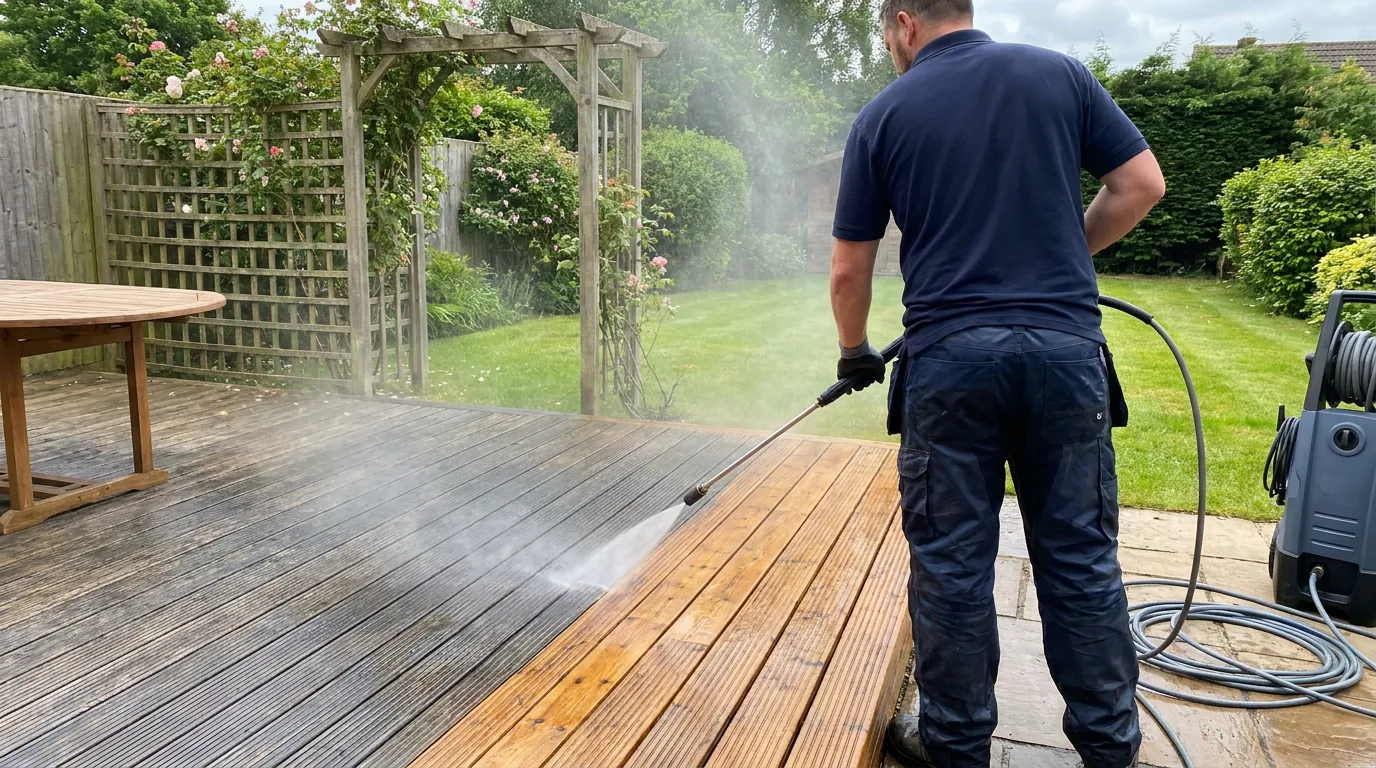
- Tannin pre-treat with oxalic-acid stone cleaner on shaded patios.
- Pre-treat biofilm with Lithofin Algex; 24–48 hr dwell.
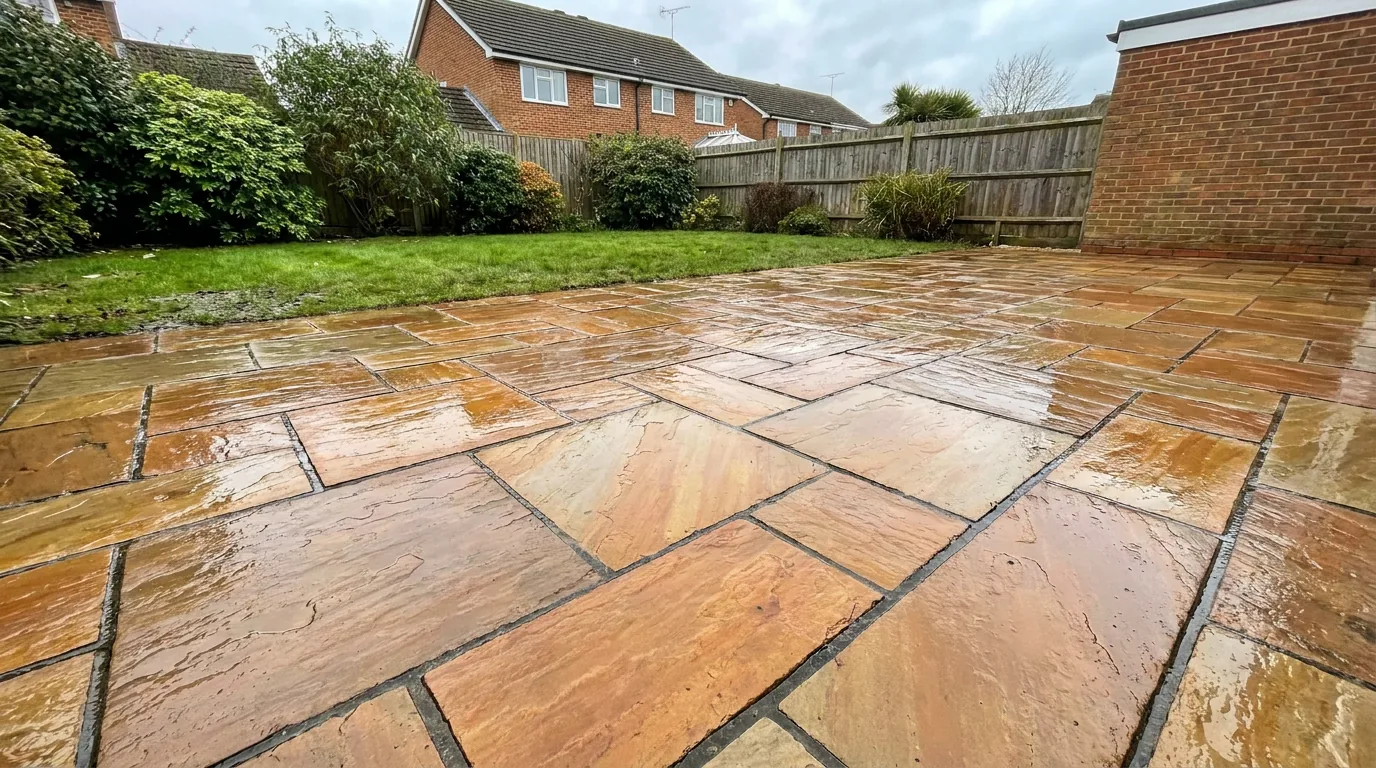
- Surface-clean at medium pressure — Marshalls technique: 30° oblique, ≥200 mm standoff, no turbo.
- Re-sand kiln-dried sand on block paving.
- Bunded rinse + foul-drain disposal in EA flood-pocket streets.
- Recommend twice-annual biocide on north-facing drives near the Common or Lakes.
- Walk again with the customer — reshoot anything not right. If the result isn’t right, we redo it free.
Pressure washing across Earlswood — what we cover
Earlswood is two miles south of our Redhill base, sitting between us and Reigate. The neighbourhood is defined by Earlswood Common, the picturesque Earlswood Lakes and the tree-lined streets that make it one of the most desirable corners of RH1. We cover all of RH1, plus Reigate (RH2) and the rest of Surrey within 20 miles. Full list of areas here. Or call 01737 652 515.
What we see on Earlswood drives
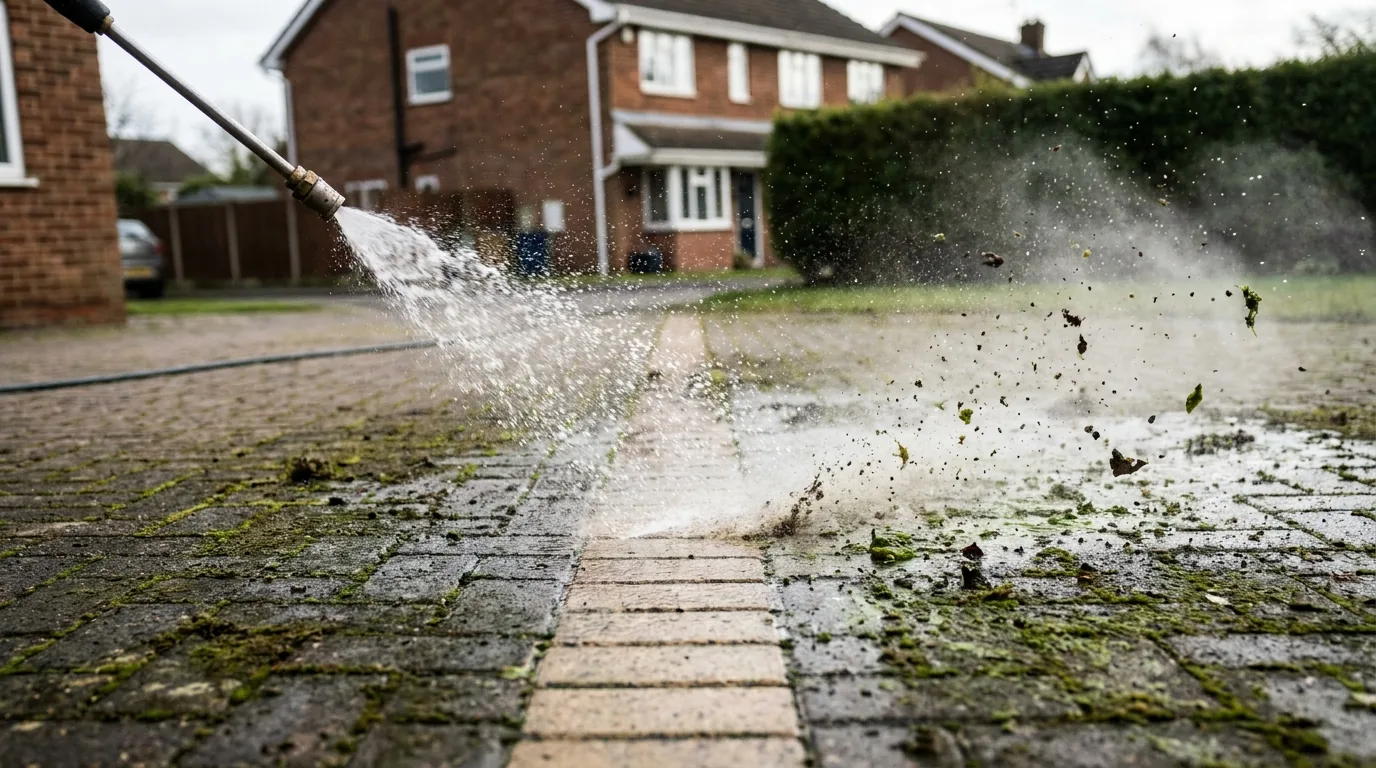
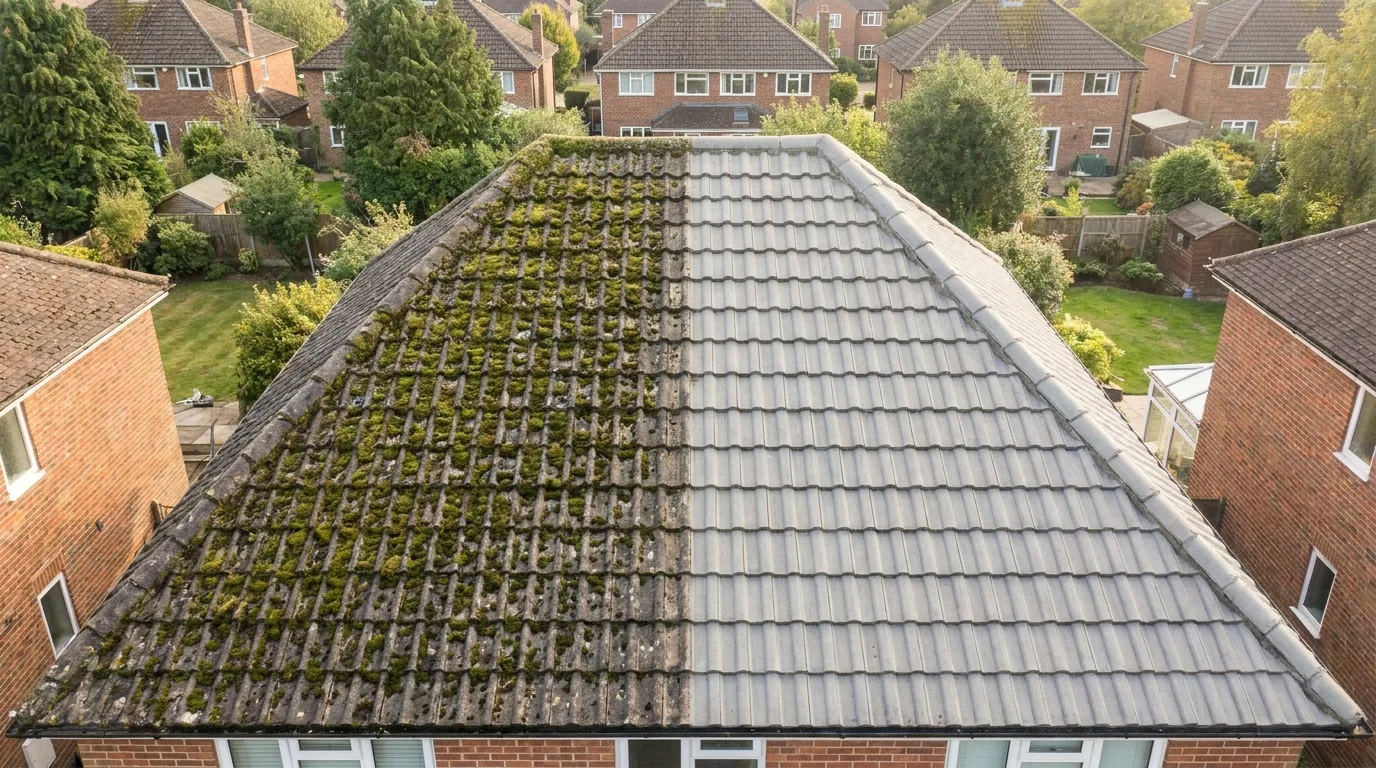
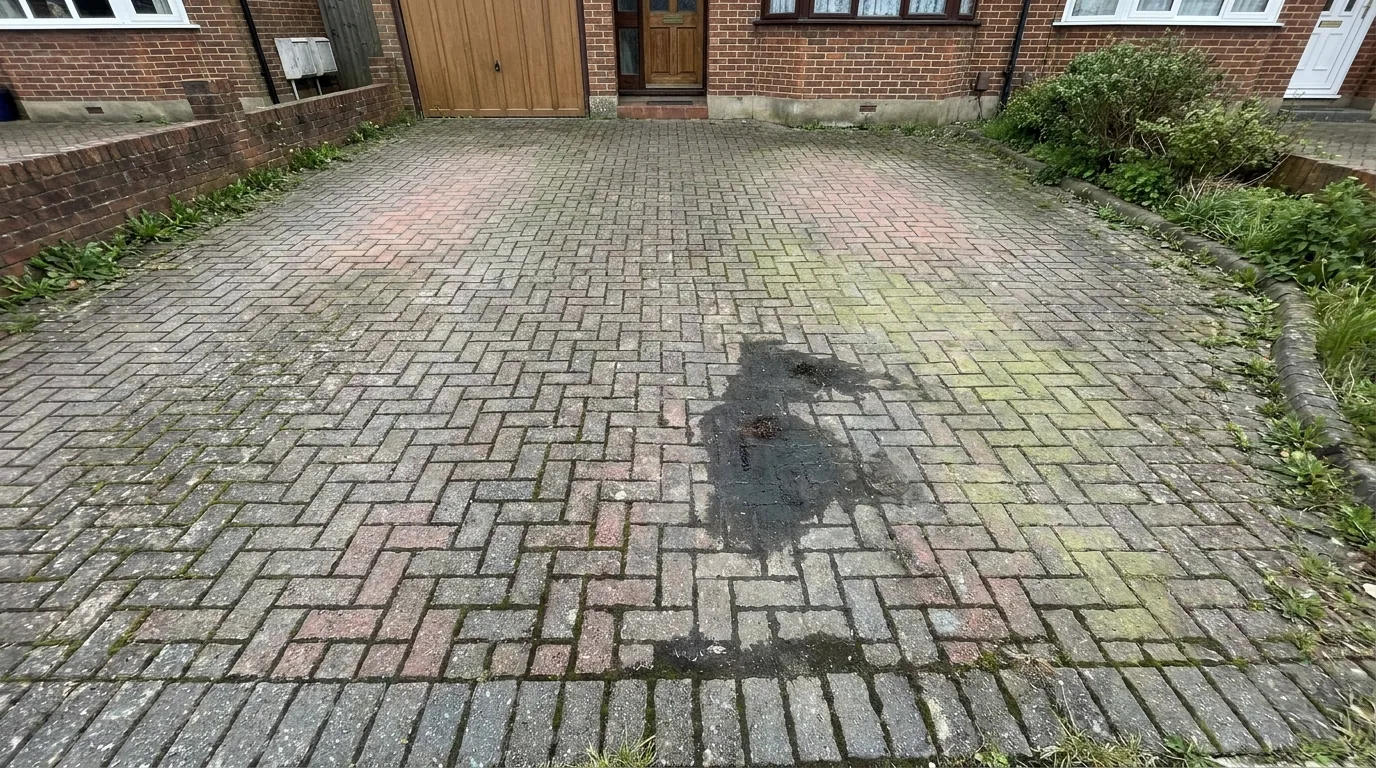
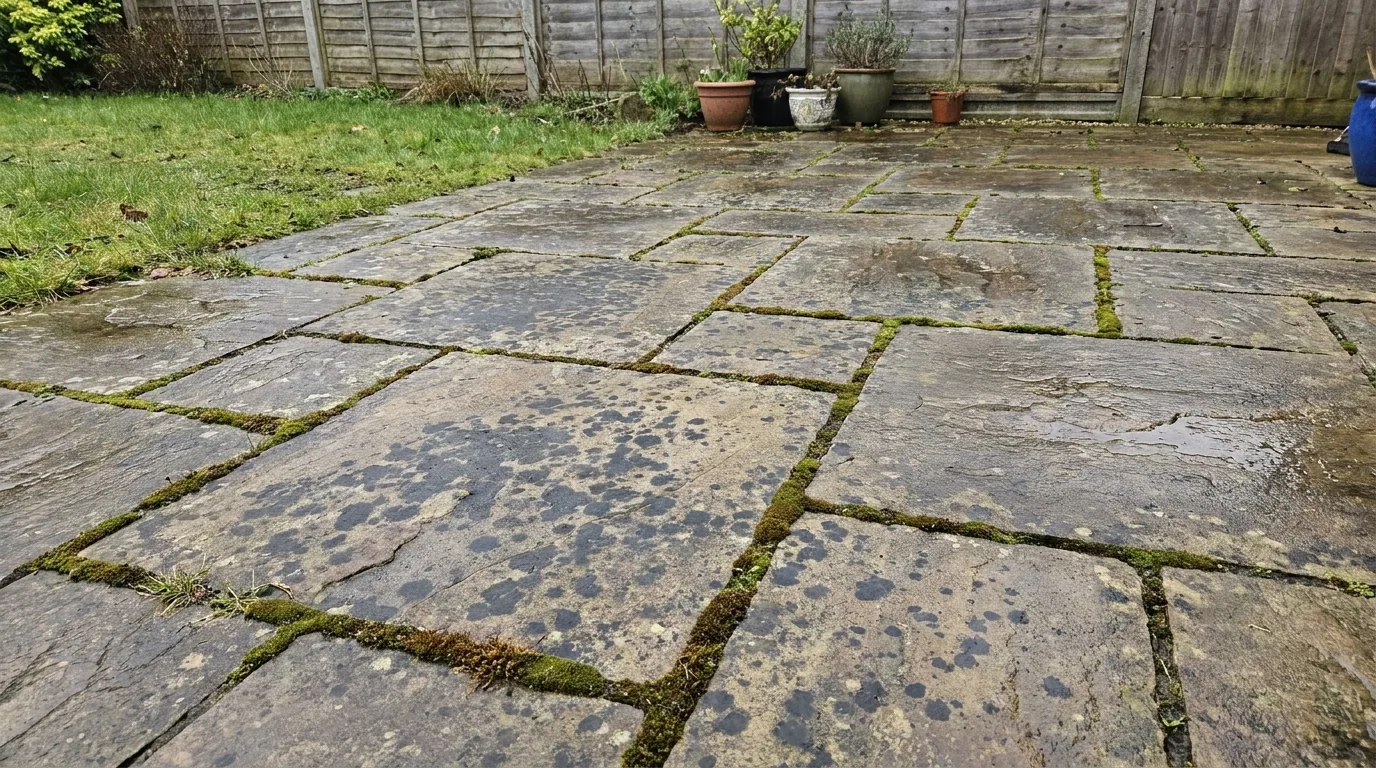
- Heavy moss on shaded driveways — the Earlswood default. North-facing drives near the Common are worst.
- Leaf tannin staining — oak, beech and birch around the Lakes. Dark brown marks on lighter stone and concrete.
- Slippery green algae — ubiquitous in shaded gardens. Soft wash with biocide kills it at root level.
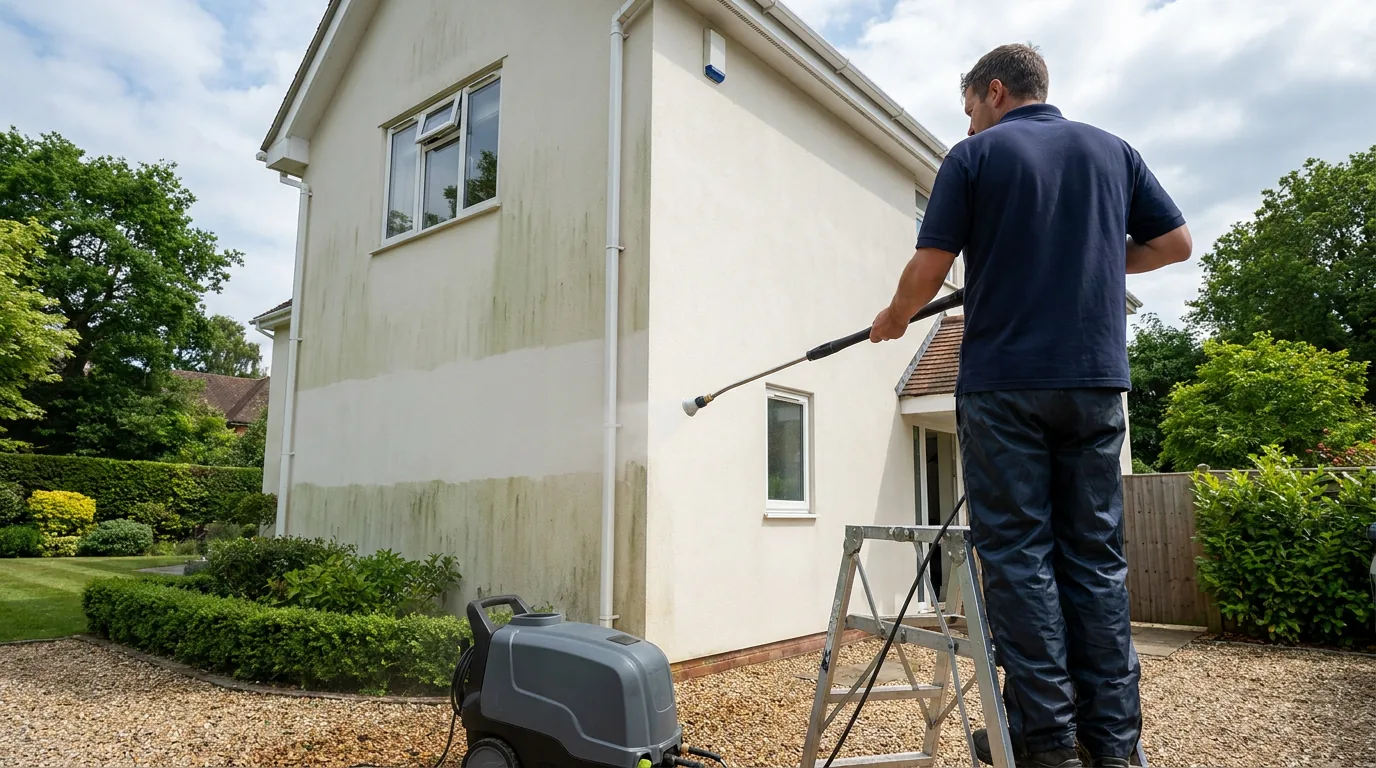
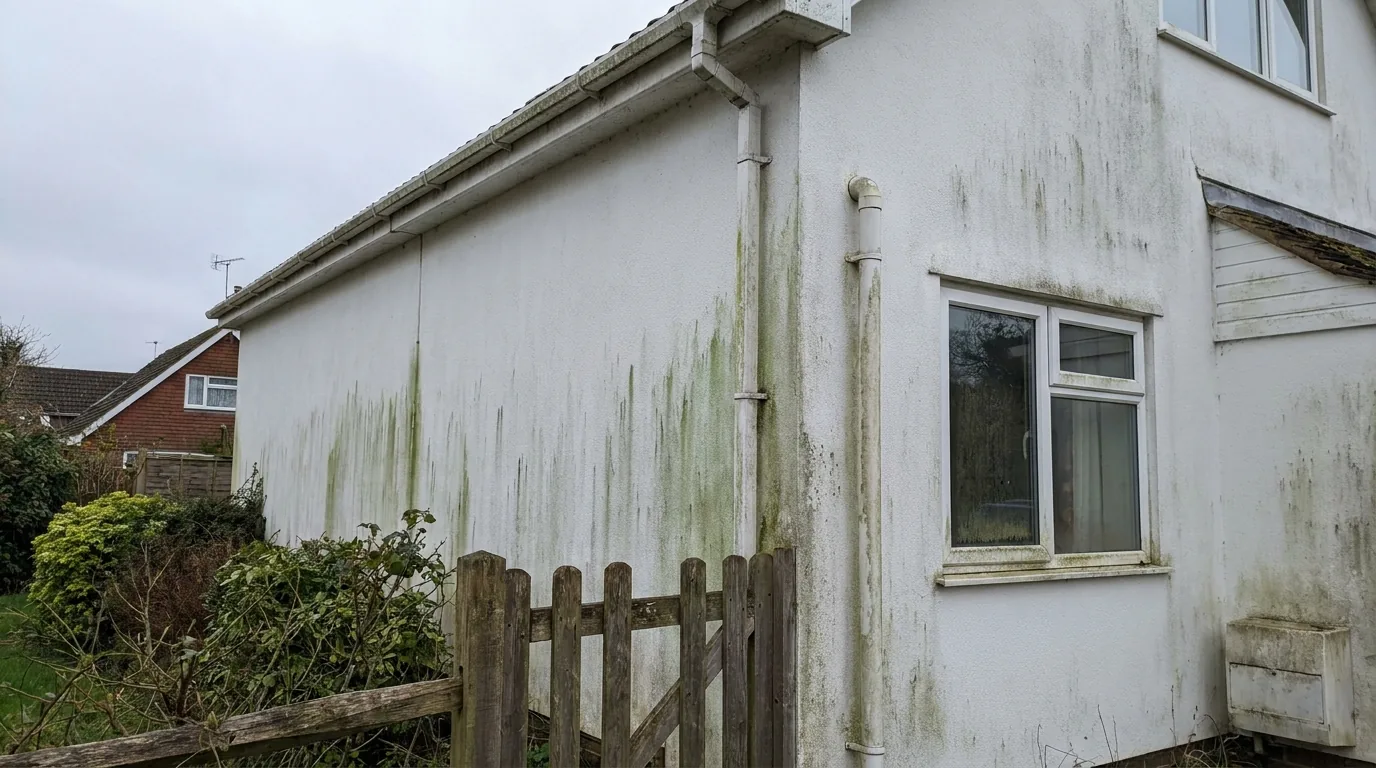
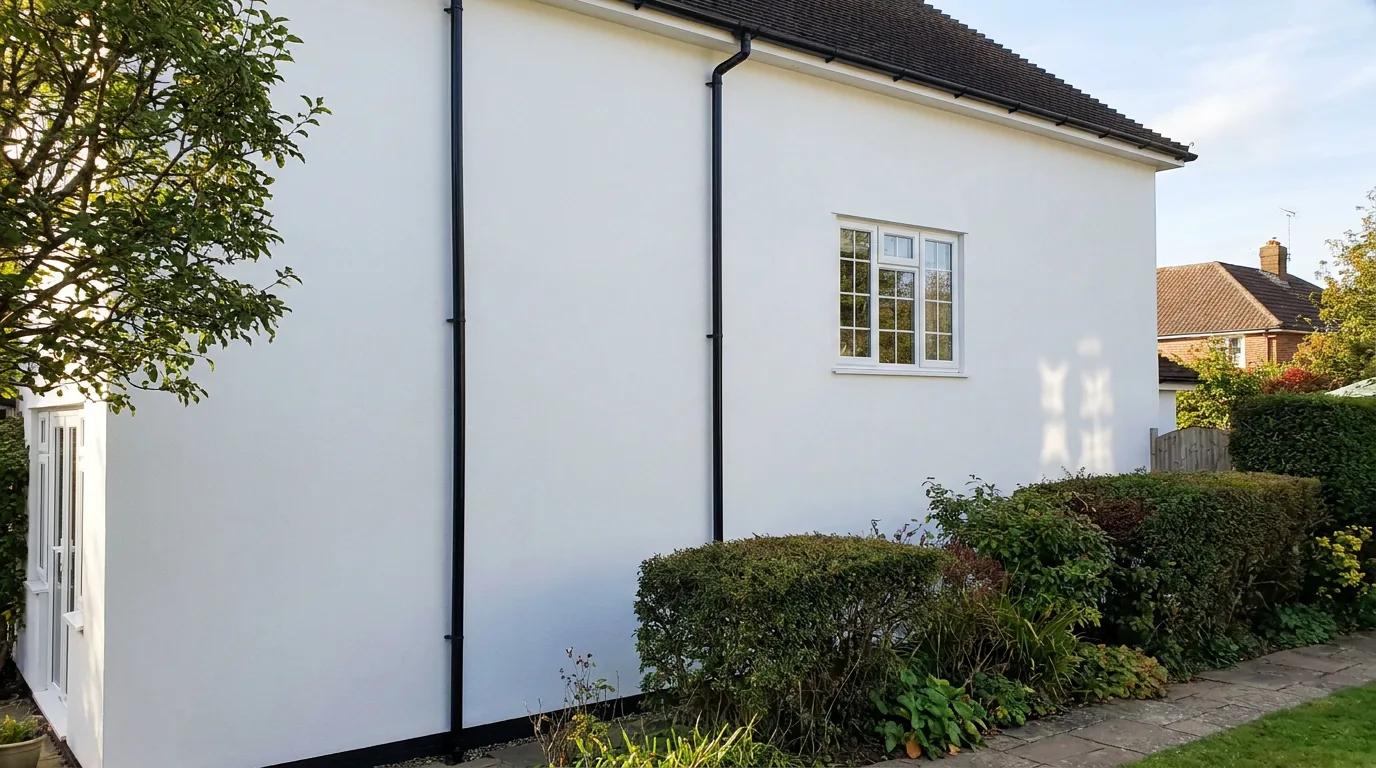
- Dirty render on period property — algae streaks under gutters, especially north and west elevations.
Helpful guides for Earlswood homeowners
Moss removal · Best time for patio cleaning · Indian sandstone guide · How often to clean · RH1 baseline comparison · RH4 Mole Valley microclimate comparison
Sources
Every claim about Earlswood substrate, Lakes microclimate, surface-water risk, slip threshold, biocide cadence, paving warranty and SUDS policy on this page is sourced. We cite primary data (Met Office, BGS, Environment Agency, RBBC) plus manufacturer guidance (Marshalls, Lithofin) and HSE/UKSRG slip guidance. We do not cite competitor pressure-washing blogs.
- Met Office — Wisley (Surrey) Location Long-Term Averages 1991–2020. Annual rainfall 648.41 mm. metoffice.gov.uk — Wisley averages. Accessed 21 May 2026.
- British Geological Survey (BGS) — Lower Greensand Group lithostratigraphy (Folkestone Formation). Underlies Earlswood transitioning to alluvial / made ground near the Lakes corridor. bgs.ac.uk — Lower Greensand Group lexicon. Accessed 21 May 2026.
- Environment Agency / GOV.UK — Long-term flood risk for an area in England. Documents surface-water flood pockets across south Earlswood and the Lakes corridor. check-long-term-flood-risk.service.gov.uk. Accessed 21 May 2026.
- Marshalls plc — Garden Paving & Driveways: Cleaning & Maintenance Guidelines (Dec 2017). Medium pressure, 30° oblique, ≥200 mm standoff. marshalls.co.uk — cleaning guidelines (PDF). Accessed 21 May 2026.
- Lithofin AG — Algex Special Cleaner product page and technical information. Annual reapplication, preferably in spring. lithofin.com — Algex. Accessed 21 May 2026.
- UK Slip Resistance Group / HSE — Introduction to the Pendulum Tester. PTV ≥36 low risk. ukslipresistance.org.uk — pendulum tester. Accessed 21 May 2026.
- Reigate & Banstead Borough Council — Local Plan and Development Management Plan, including drainage and SUDS policies. reigate-banstead.gov.uk — Local Plan. Accessed 21 May 2026.