Why two Reigate drives 800m apart need different cleaning
The short answer: Reigate (RH2) straddles two substrates within a 10-minute walk of the High Street. North Reigate — Wray Lane, Reigate Hill, the chalk scarp foot — sits on the Upper Cretaceous Chalk Group[2], the same drainage geology as Banstead eight miles north. South Reigate — Priory Park, Woodhatch, South Park, the Old Town — sits on Lower Greensand Folkestone Formation and Weald Clay edges[3], the same valley-floor substrate as the RH1 baseline. Same RH2 postcode; materially different cleaning economics.
The two-substrate RH2 matrix
Original analytical contribution: the labelled OAC below compares the chalk-scarp north of Reigate High Street against the valley-floor south for the same six surfaces. Inputs: Wisley rainfall[1], BGS chalk vs Lower Greensand substrate behaviour[2][3], Lithofin biocide cadence[5], Marshalls technique[4], UKSRG/HSE PTV thresholds[6]. No UK competitor publishes a within-RH2 comparison like this; they treat “Reigate” as a single market.
| Surface (typical area) | North RH2 (Reigate Hill / Wray Lane / scarp foot) | South RH2 (Old Town / Woodhatch / South Park) | Why the split |
|---|---|---|---|
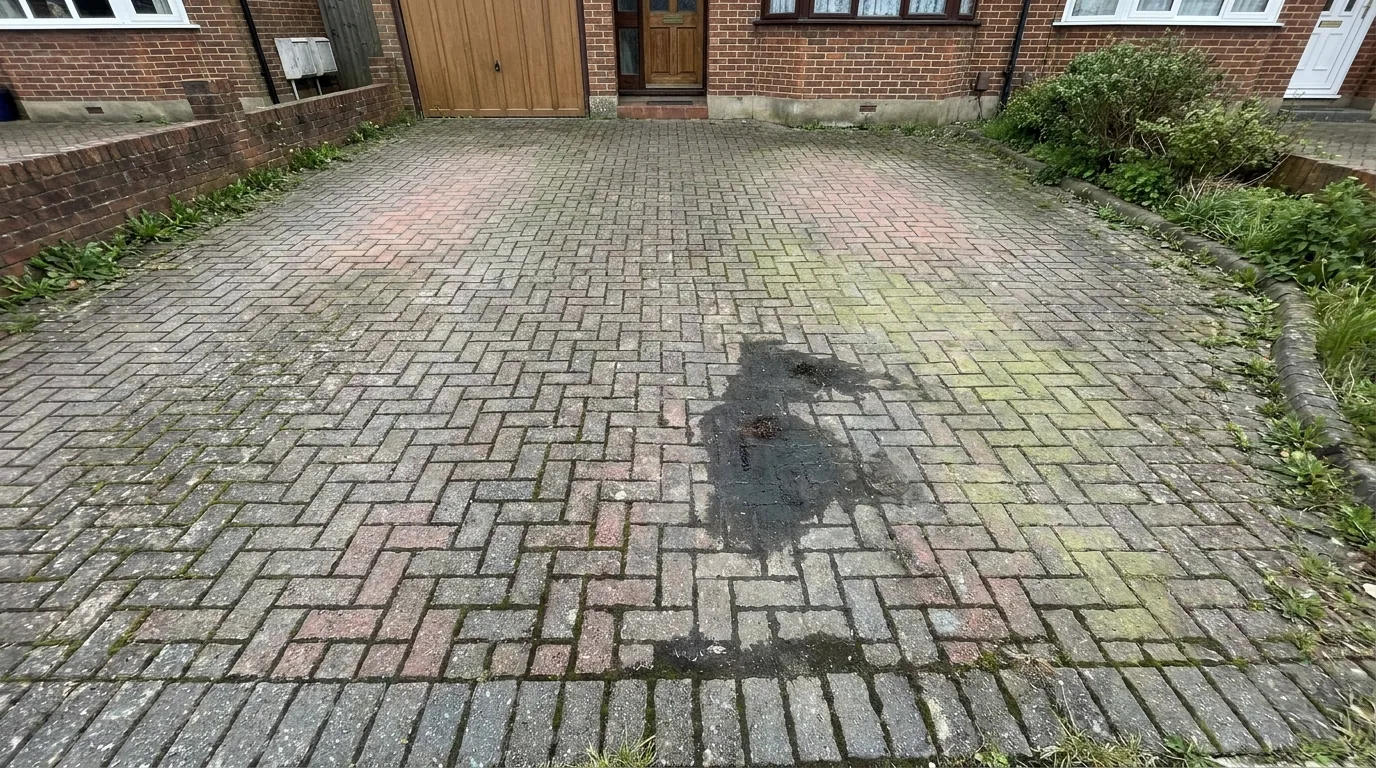
| Block paving (40–80 m²) | £160–£280, re-clean 18–24 mo | £130–£220, re-clean 12–18 mo | Chalk drains vertically; valley clay holds moisture, jointing sand washes out faster |
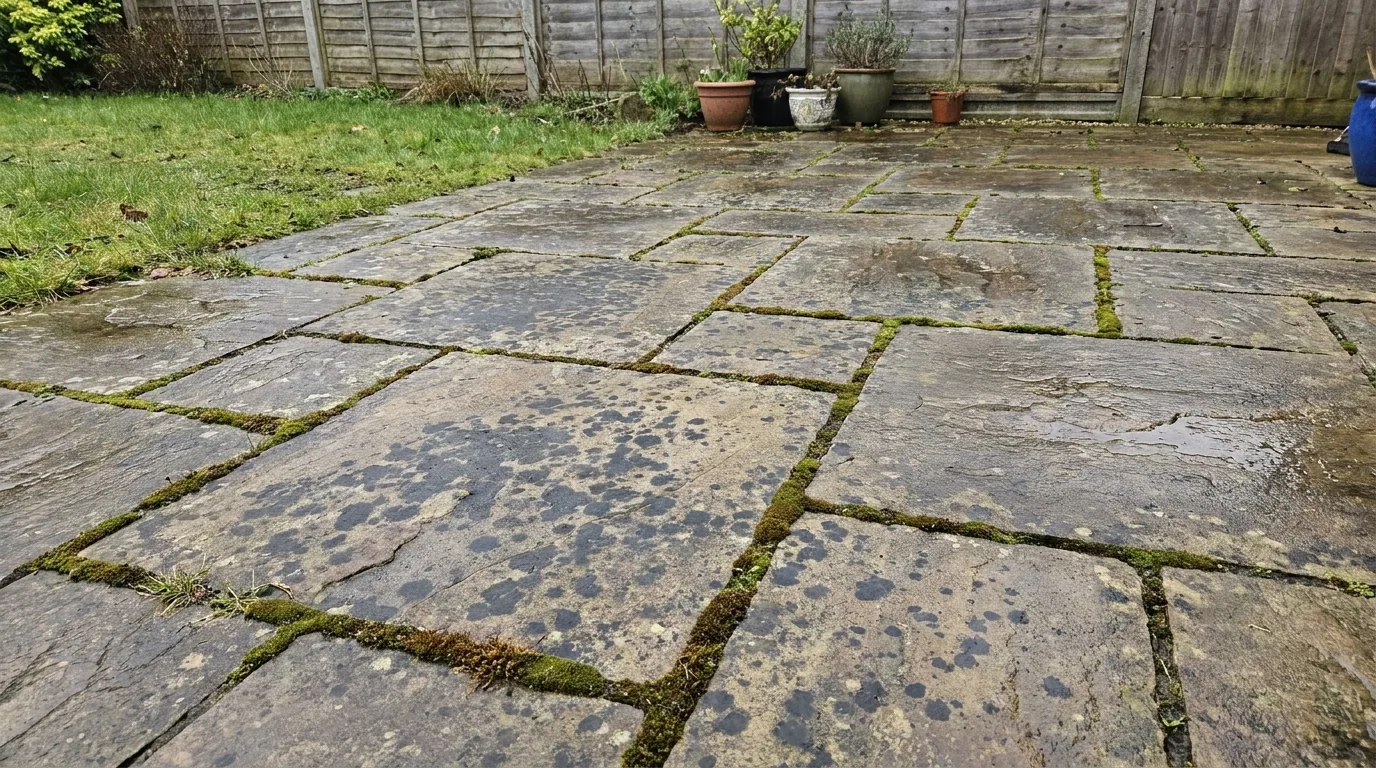
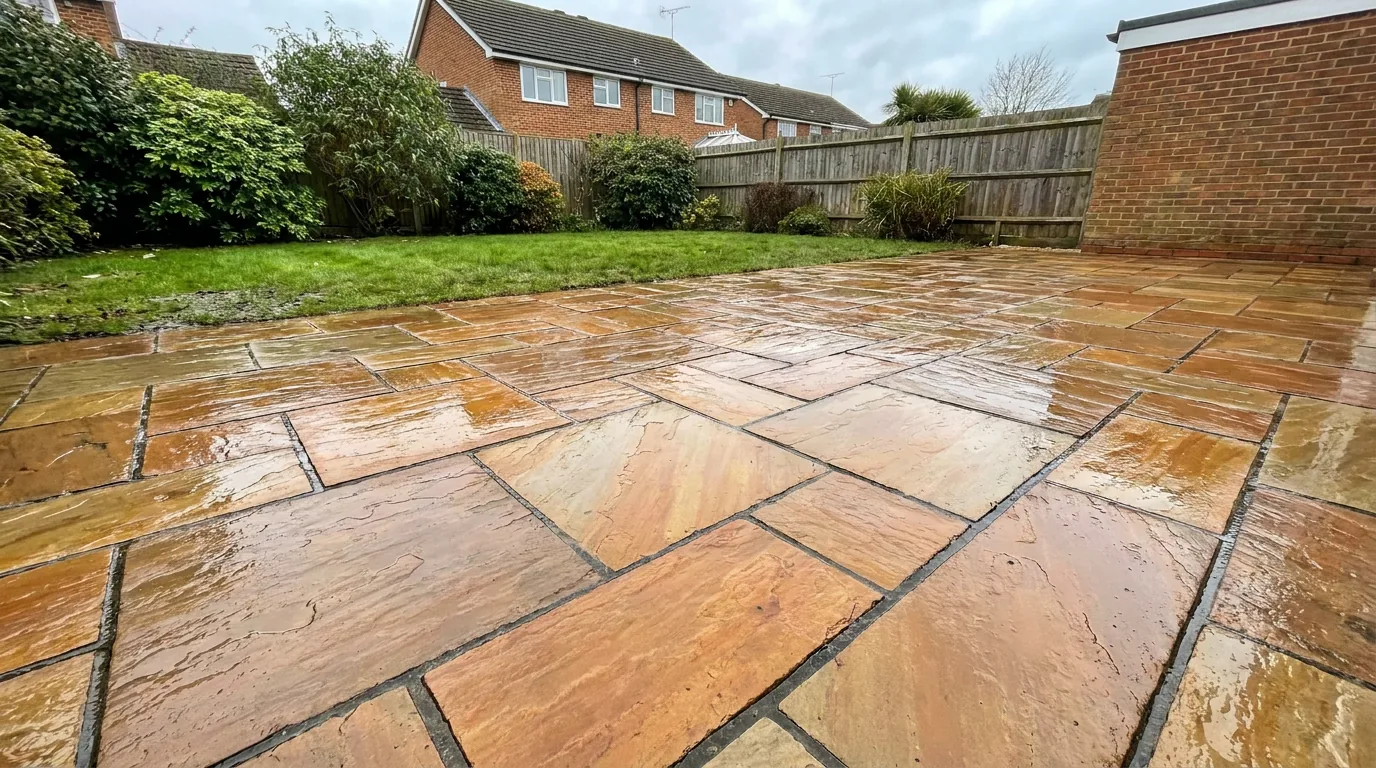
| Indian sandstone patio (20–40 m²) | £140–£280, re-clean 18–24 mo | £120–£240, re-clean 12–18 mo | Black-spot lichen more aggressive in valley humidity; annual biocide non-negotiable |
| Resin-bound (50–90 m²) | £160–£320, re-clean 24–36 mo | £140–£280, re-clean 18–30 mo | Resin porosity lower on both sides; substrate matters less than aspect |
| Porcelain patio (15–30 m²) | £110–£220, re-clean 24–36 mo | £100–£200, re-clean 18–30 mo | Vitrified porcelain near-impermeable; biocide-only treatment between deep cleans |
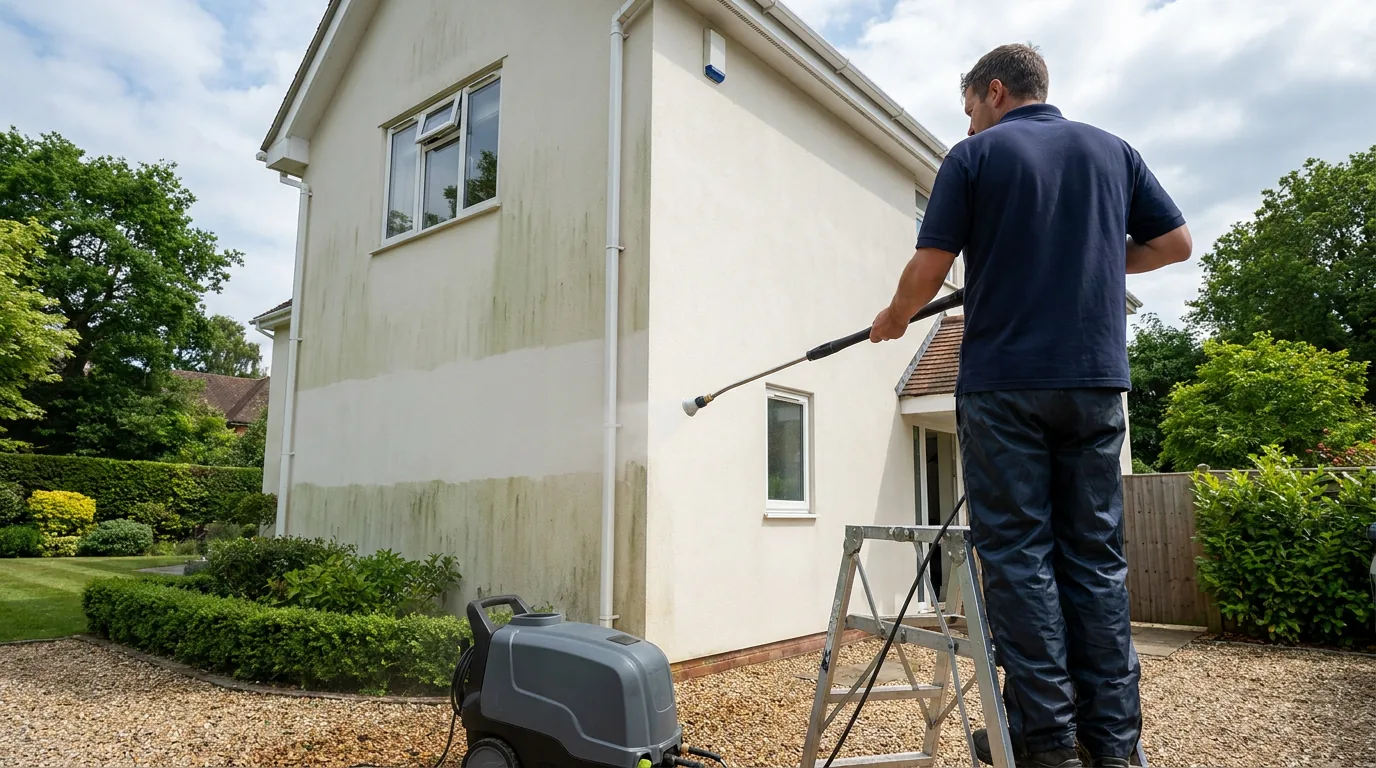
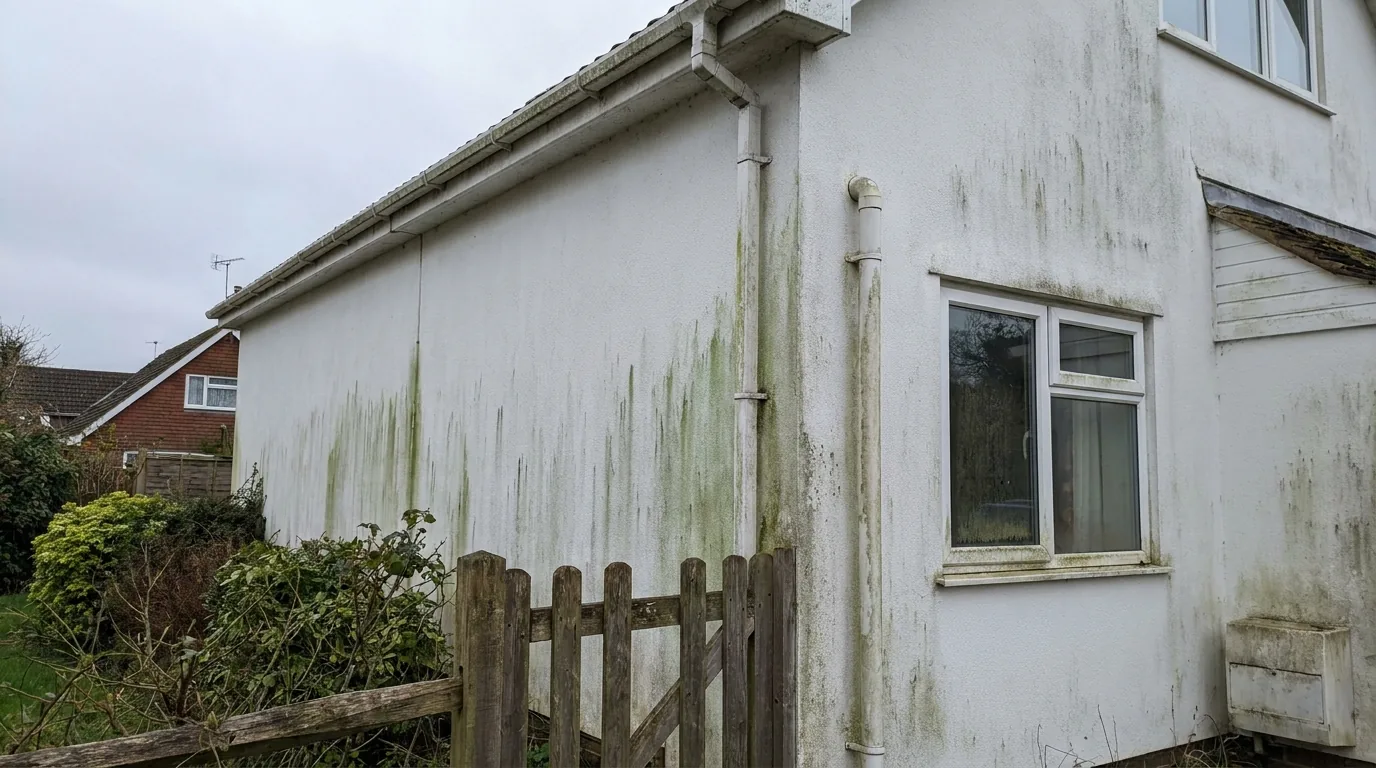
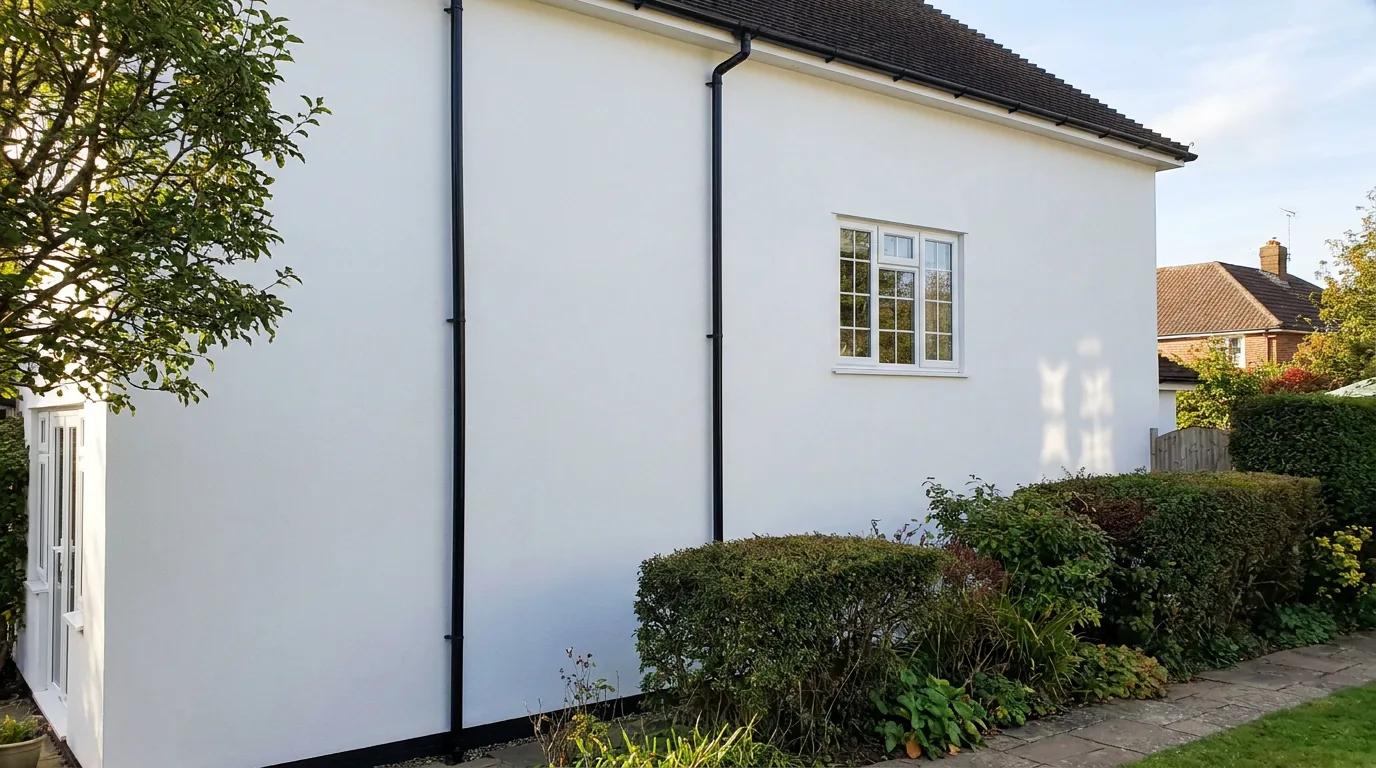
| Painted/silicone render (gable) | £200–£420, re-clean 36–60 mo | £180–£360, re-clean 36–48 mo | Larger detached homes Wray Lane side; algae streaks under gutters either side |
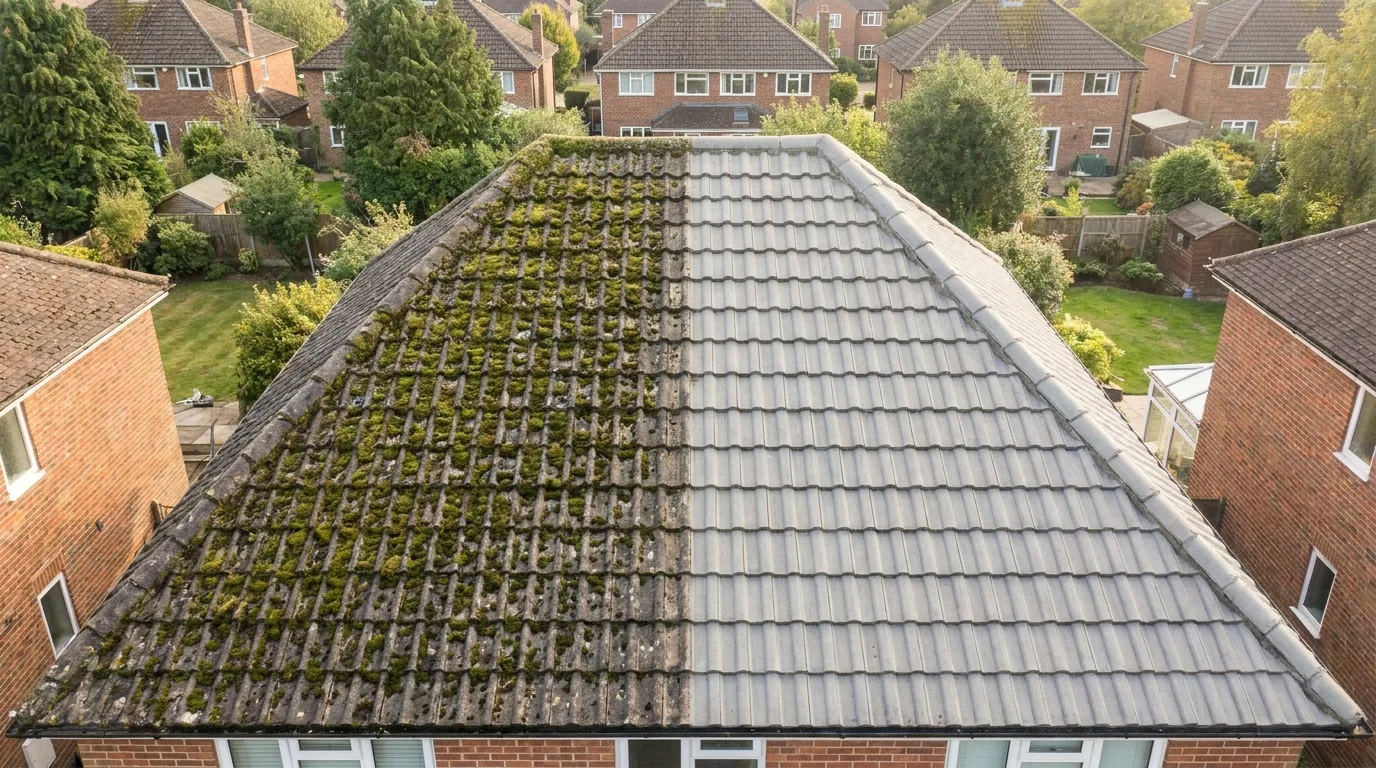
| Concrete/clay tile roof moss | £250–£520, re-clean 60–120 mo | £220–£450, re-clean 48–96 mo | Hill aspect pitches drier; valley pitches face higher moss-germination pressure |
2026 client-billed quotes on RH2 jobs. The boundary is roughly Reigate High Street — the chalk-scarp foot runs along Wray Lane to Reigate Heath at the western edge; the Lower Greensand / Weald Clay side starts south of West Street and extends through Woodhatch and South Park. Reigate Hill itself sits on the chalk dip-slope.
What’s actually under your Reigate drive
The Reigate High Street sits almost exactly on the boundary between the Upper Cretaceous Chalk Group[2] and the Lower Greensand Group[3]:
- North of the High Street — Wray Lane, Reigate Hill, Skimmington, Reigate Heath fringe. White Chalk Subgroup, highly permeable, drains vertically. The same substrate as Banstead. Jointing sand persistence is excellent.
- South of the High Street — Old Town, Priory Park, Woodhatch, South Park. Lower Greensand Folkestone Formation with Weald Clay edges further south. Slower drainage, hydrostatic load possible on poorly-detailed sub-bases.
The result is two materially different cleaning economics inside one postcode. North Reigate behaves like the SM7 chalk-multiplier matrix — longer re-clean intervals, higher per-job prices because the drives are bigger. South Reigate behaves like the RH1 valley-floor baseline — tighter cadence, smaller plots, lower per-job prices.
Slip-risk and the Reigate Hill north-facing problem
UKSRG / HSE-endorsed pendulum guidance[6] sets the low-slip threshold at PTV ≥36. Reigate Hill north-facing drives off Wray Lane carry an unusual combination: chalk drains well so the substrate isn’t the problem, but the north aspect under mature beech and oak keeps surface biofilm growing through the wetter months. Result — PTV crosses the threshold before the visual cue arrives even on the chalk side. The matrix accounts for this in the 18–24 month cadence; you can’t simply wait for “it looks bad”.
Reigate & Banstead Borough Council planning — the RH2 SUDS gate
Reigate falls under Reigate & Banstead Borough Council planning policy[7]. National policy applies SUDS guidance to new and replacement front-garden paving >5 m² draining to the highway: permeable surface or soakaway disposal required unless planning permission is obtained. Routine cleans of existing drives are unaffected — this matters only if a Woodhatch or Reigate Hill homeowner is debating re-laying rather than cleaning.
RH2 mistakes that void warranties
- Turbo nozzles on Marshalls Drivesett or Tegula. Marshalls cleaning & maintenance guidelines[4] require medium pressure, 30° oblique angle, ≥200 mm standoff. Turbo / dirt-blaster jets exceed the surface tolerance and risk Marshalls Register warranty rejection — common on Reigate Hill and Wray Common installs.
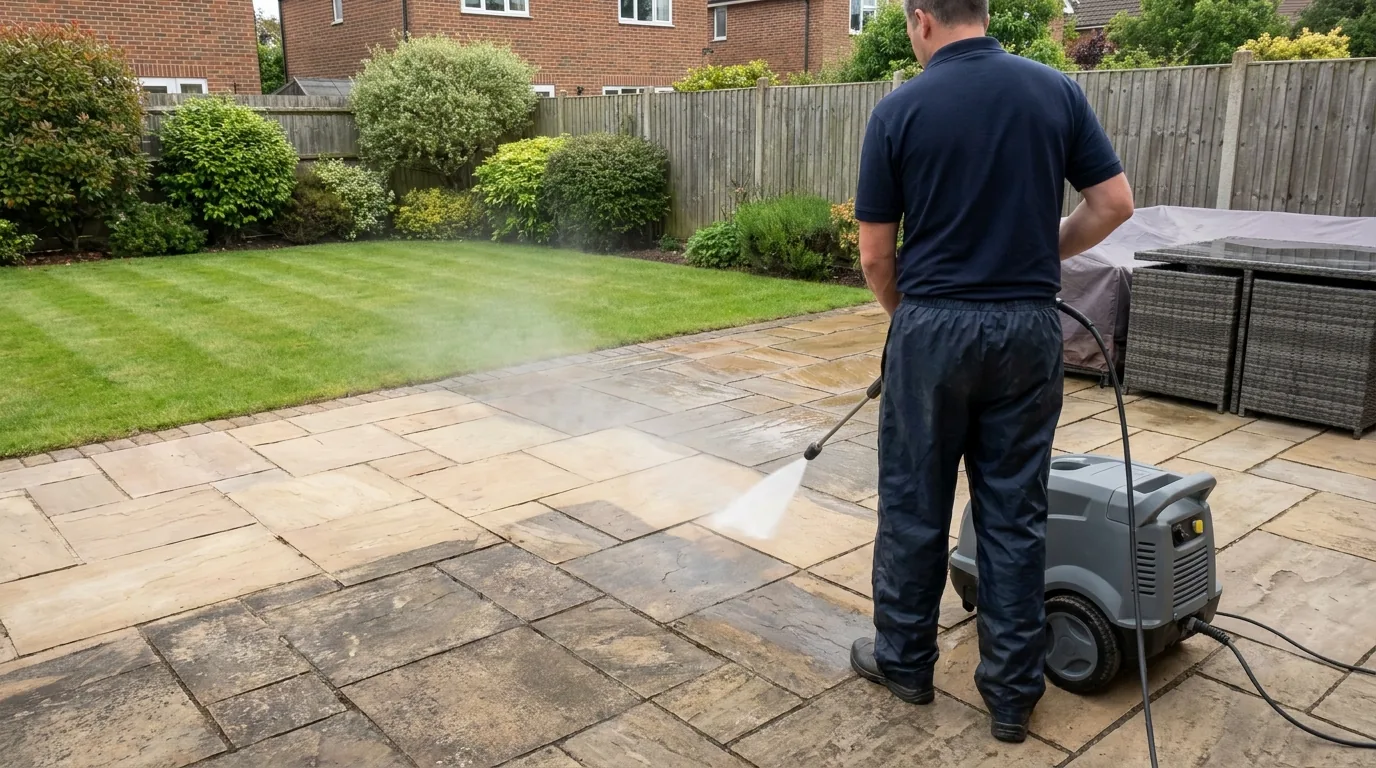
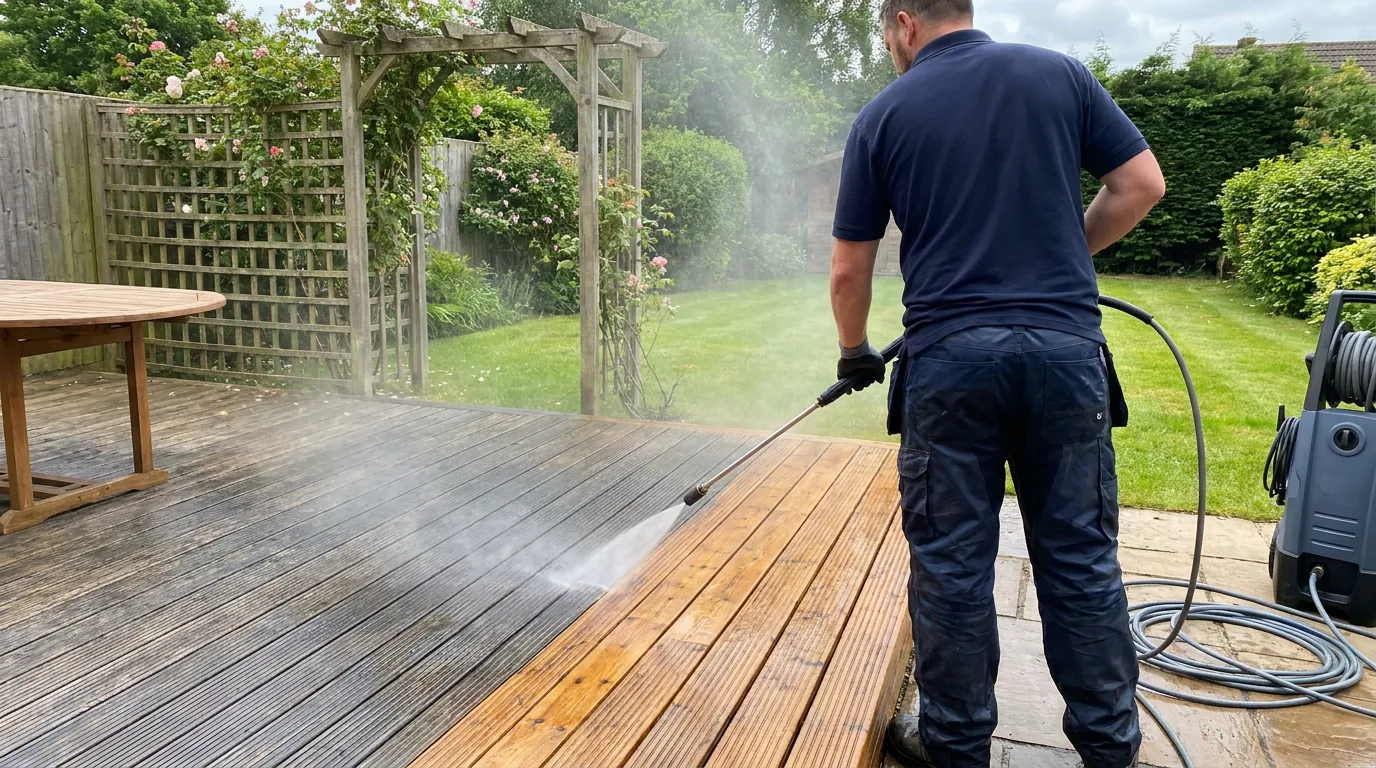
- High-pressure jetting on Indian sandstone. Etches the surface, removes the fine sealing layer, accelerates black-spot recolonisation. Always soft-wash with biocide on RH2 sandstone — the dominant patio material across Reigate Hill and Priory Park.
- Sealing valley-side drives in autumn. Lower Greensand + Weald Clay hold surface moisture; polymer film traps it, blistering follows. Seal only in dry summer windows on the south side of the High Street.
What we actually do on a Reigate job
- Walk the drive and confirm side of the High Street — chalk drains differently than Greensand; the matrix dictates pressure, biocide dwell, re-sand emphasis.
- Pre-treat with biocide — Lithofin Algex[5] per manufacturer dilution; 24–48 hr dwell, longer on shaded north-facing chalk-side drives.
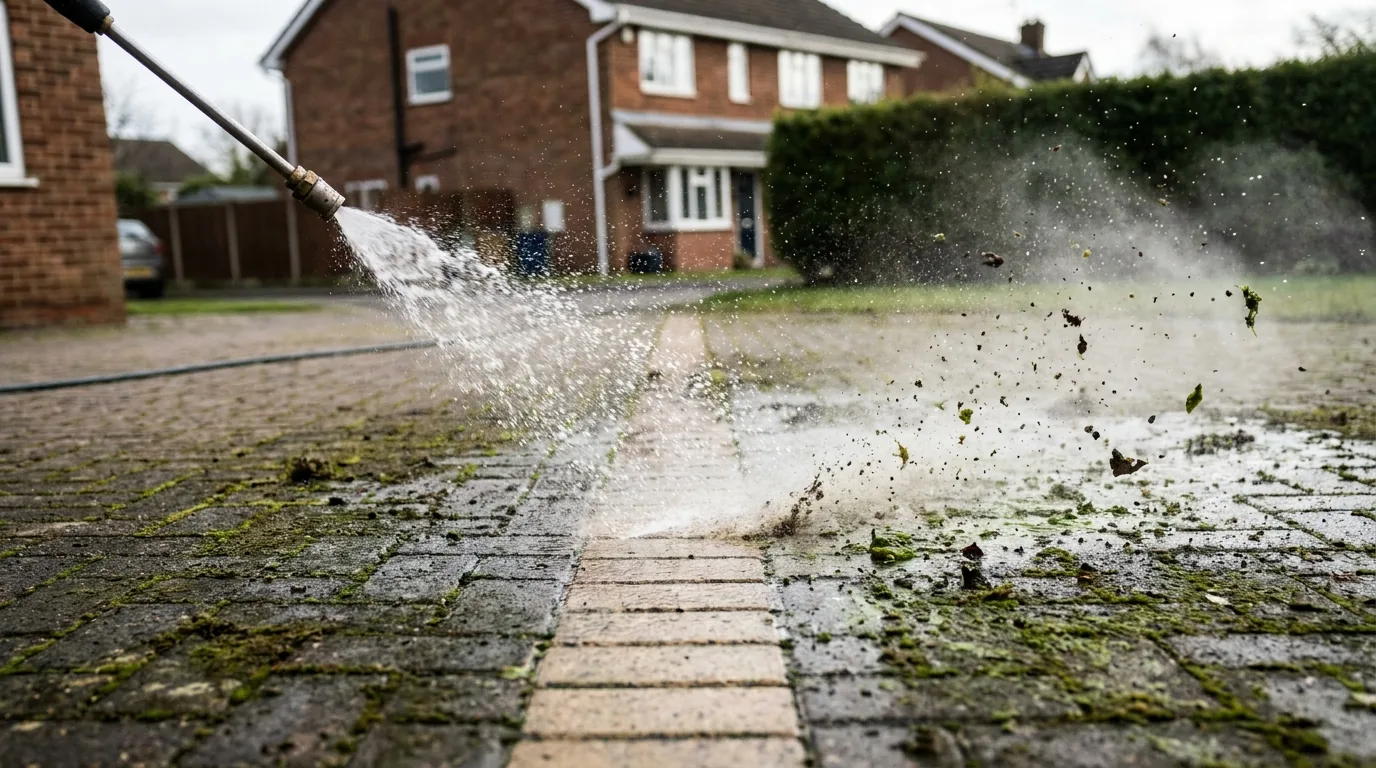
- Surface-clean at medium pressure — 30° oblique, ≥200 mm standoff, no turbo.
- Re-sand kiln-dried sand — standard, never an extra; emphasis on the valley side where joints wash out faster.
- Walk again with the customer — reshoot anything not right. If the result isn’t right, we redo it free.
Pressure washing across RH2 — what we cover
Reigate is one postcode west of our Redhill base — we’re there most weeks. The RH2 housing stock is a mix: Reigate Hill detached homes with sweeping block-paved drives, Edwardian and Victorian properties around Priory Park and the Old Town, and the established 1930s-onwards estates through Woodhatch, South Park and Wray Common. Right next door is Redhill (RH1), and we cover Dorking (RH4), Banstead (SM7), Horley (RH6) and Caterham (CR3) too. Full list of areas here. Or call 01737 652 515.
What we see on Reigate drives
- Indian sandstone patios with black-spot — the classic Reigate Hill problem. Soft wash with biocide, never high pressure.
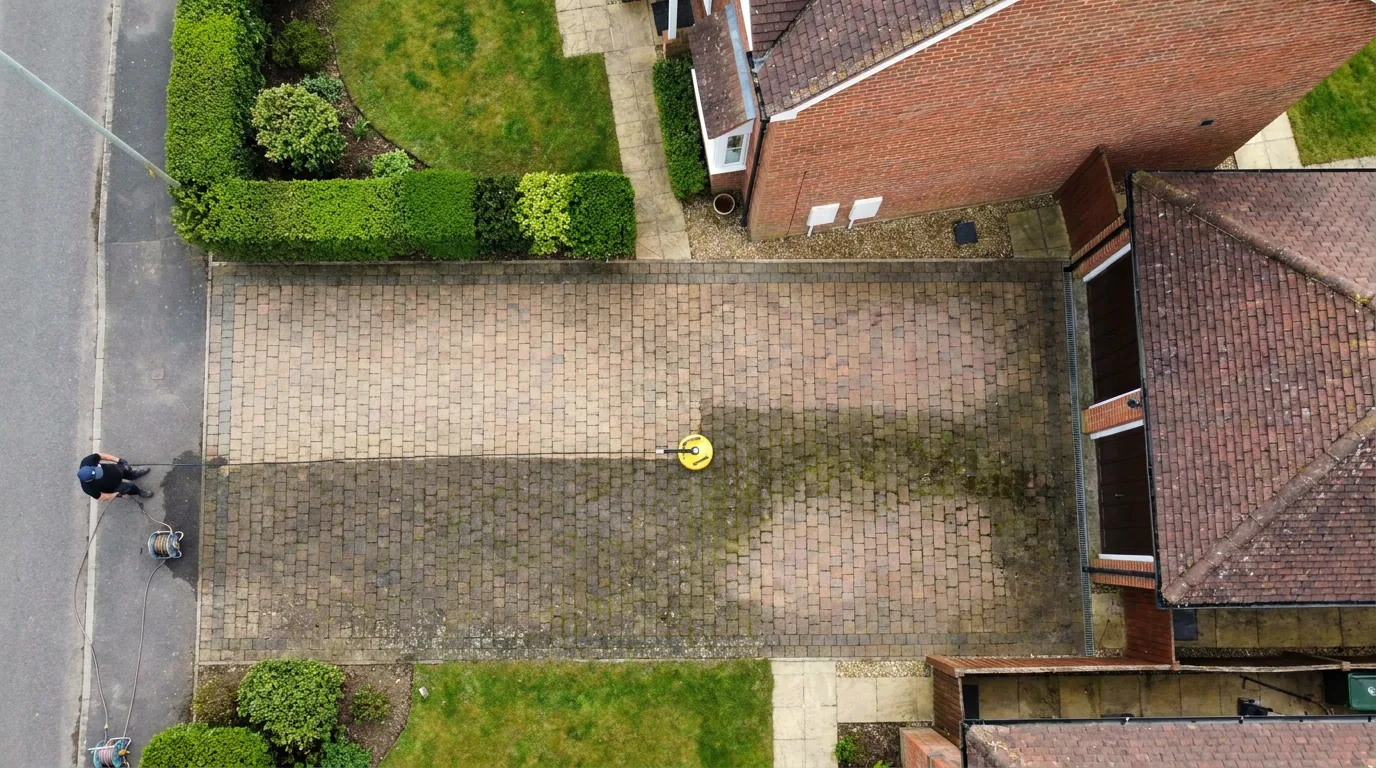
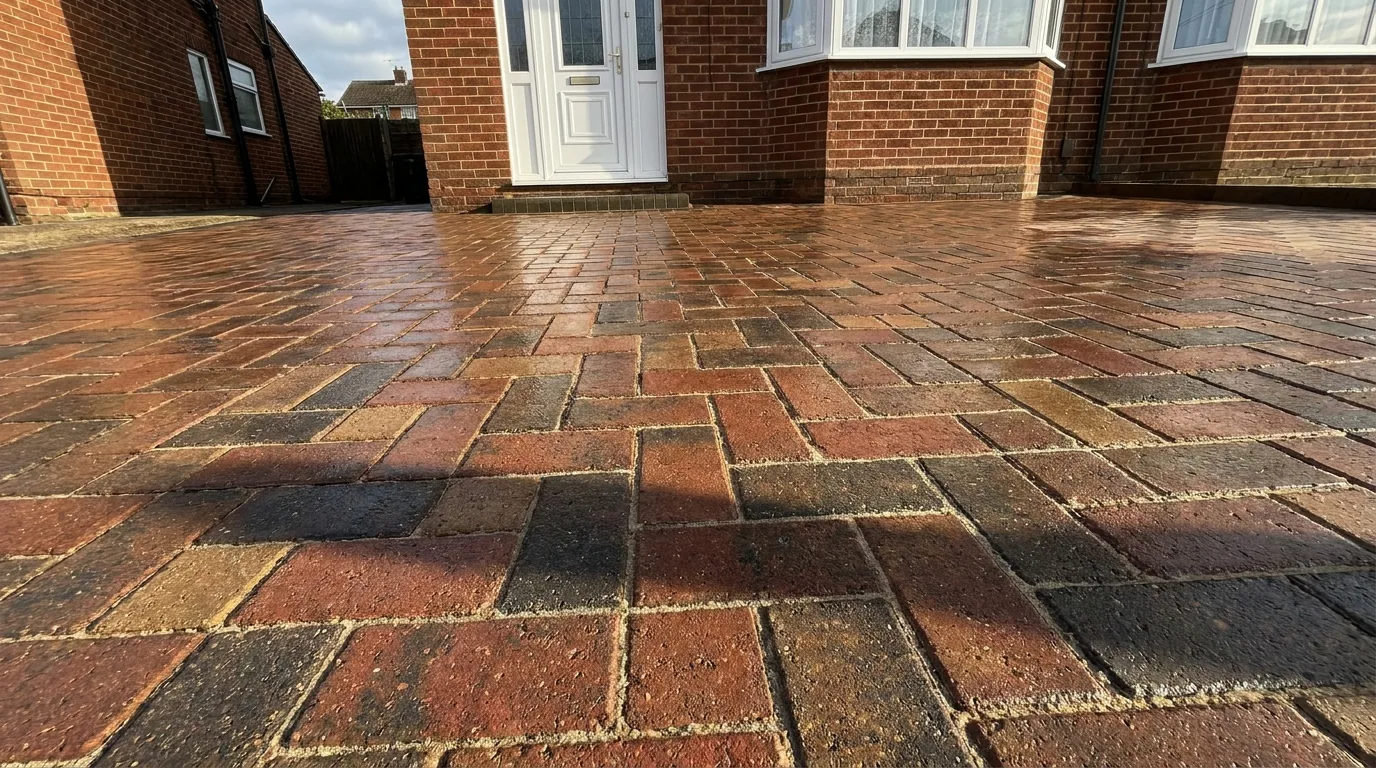
- Block paving driveways — standard across Woodhatch and South Park. Joints washed out, moss in every gap. Re-sanding included.
- Painted render — newer-build homes around Skimmington and the Reigate Heath fringes. Algae streaks under gutters, soft-washed off without damaging the coating.
- Larger drives near the Hill — 60-100m² is normal up there. We bring commercial-grade kit so big drives don’t take all day.
Helpful guides for Reigate homeowners
Indian sandstone guide · Driveway cost guide · Moss removal guide · Block paving costs · RH1 baseline comparison · SM7 chalk-multiplier comparison
Sources
Every claim about RH2 substrate, rainfall, slip threshold, biocide cadence, paving warranty and SUDS policy on this page is sourced. We cite primary data (Met Office, British Geological Survey, Reigate & Banstead Borough Council) plus manufacturer guidance (Marshalls, Lithofin) and HSE/UKSRG slip guidance. We do not cite competitor pressure-washing blogs.
- Met Office — Wisley (Surrey) Location Long-Term Averages 1991–2020. Closest station to Reigate (RH2). Annual rainfall 648.41 mm; ~43% below the UK 1,147 mm mean. metoffice.gov.uk — Wisley averages. Accessed 21 May 2026.
- British Geological Survey (BGS) — Chalk Group lithostratigraphy (White Chalk Subgroup, Upper Cretaceous), governing the chalk-scarp foot at Wray Lane, Reigate Hill and the north of the RH2 High Street boundary. Highly permeable. bgs.ac.uk — Chalk Group lexicon. Accessed 21 May 2026.
- British Geological Survey (BGS) — Lower Greensand Group lithostratigraphy (Folkestone & Hythe Formations) plus Weald Clay edges, governing the south side of the RH2 High Street through Old Town, Woodhatch and South Park. bgs.ac.uk — Lower Greensand Group lexicon. Accessed 21 May 2026.
- Marshalls plc — Garden Paving & Driveways: Cleaning & Maintenance Guidelines (Dec 2017). “No more than medium pressure… lance held at an oblique angle… at least 200 mm (8″) from the surface.” Re-sand if joints are washed out. marshalls.co.uk — cleaning guidelines (PDF). Accessed 21 May 2026.
- Lithofin AG — Algex Special Cleaner product page and technical information. Manufacturer-specified reapplication interval is annual, preferably in spring. lithofin.com — Algex. Accessed 21 May 2026.
- UK Slip Resistance Group / HSE — Introduction to the Pendulum Tester. HSE-endorsed slip-risk method using BS 7976 Parts 1–3. Widely adopted thresholds: PTV ≥36 low risk, 25–35 moderate, ≤24 high. ukslipresistance.org.uk — pendulum tester. Accessed 21 May 2026.
- Reigate & Banstead Borough Council — Local Plan and Development Management Plan, including drainage and SUDS policies governing replacement front-garden paving. reigate-banstead.gov.uk — Local Plan. Accessed 21 May 2026.