Why Crawley is the only postcode where era-of-build predicts the clean
The short answer: Crawley was designated a New Town in 1947 and built out in well-defined planned neighbourhoods, each with a clear surface era. Three Bridges and Northgate (1950s–60s): concrete drives, slab patios, oil-stain pre-treatment. Pound Hill / Furnace Green / Maidenbower (1990s+): block paving, joint sand washed out, re-sand on every clean. The substrate — Weald Clay across most of RH10/RH11[2] — sits slow-draining beneath all of them, so cadence is tight regardless of era. We split RH10/RH11 work by neighbourhood era, not postcode.
The Crawley New Town era-by-era cleaning matrix
Original analytical contribution: the labelled OAC below maps Crawley's planned-neighbourhood chronology to cleaning economics. Inputs: BGS Weald Clay substrate[2], Environment Agency flood-risk map for Tilgate/Manor Royal corridor[3], Met Office Wisley[1], Marshalls technique[4], Lithofin Algex biocide cadence[5]. No UK competitor publishes an era-based area matrix; they treat “Crawley” as one market.
| Era / neighbourhood | Dominant surface | 2026 price band | Re-clean (months) | Era-specific risk |
|---|---|---|---|---|
| 1950s–60s: Three Bridges, Northgate, West Green | Concrete drives, slab patios | £100–£200 | 12–18 | 60+ years of oil drips embedded; hot-water pre-treat essential |
| 1970s: Tilgate, Langley Green, Gossops Green | Concrete & early tarmac | £100–£220 | 12–18 | Tarmac moss colonisation aggressive on Weald Clay |
| 1980s–90s: Broadfield, Bewbush, Ifield | Early block paving | £120–£240 | 12–18 | Joint sand near-totally washed out by now; re-sand non-negotiable |
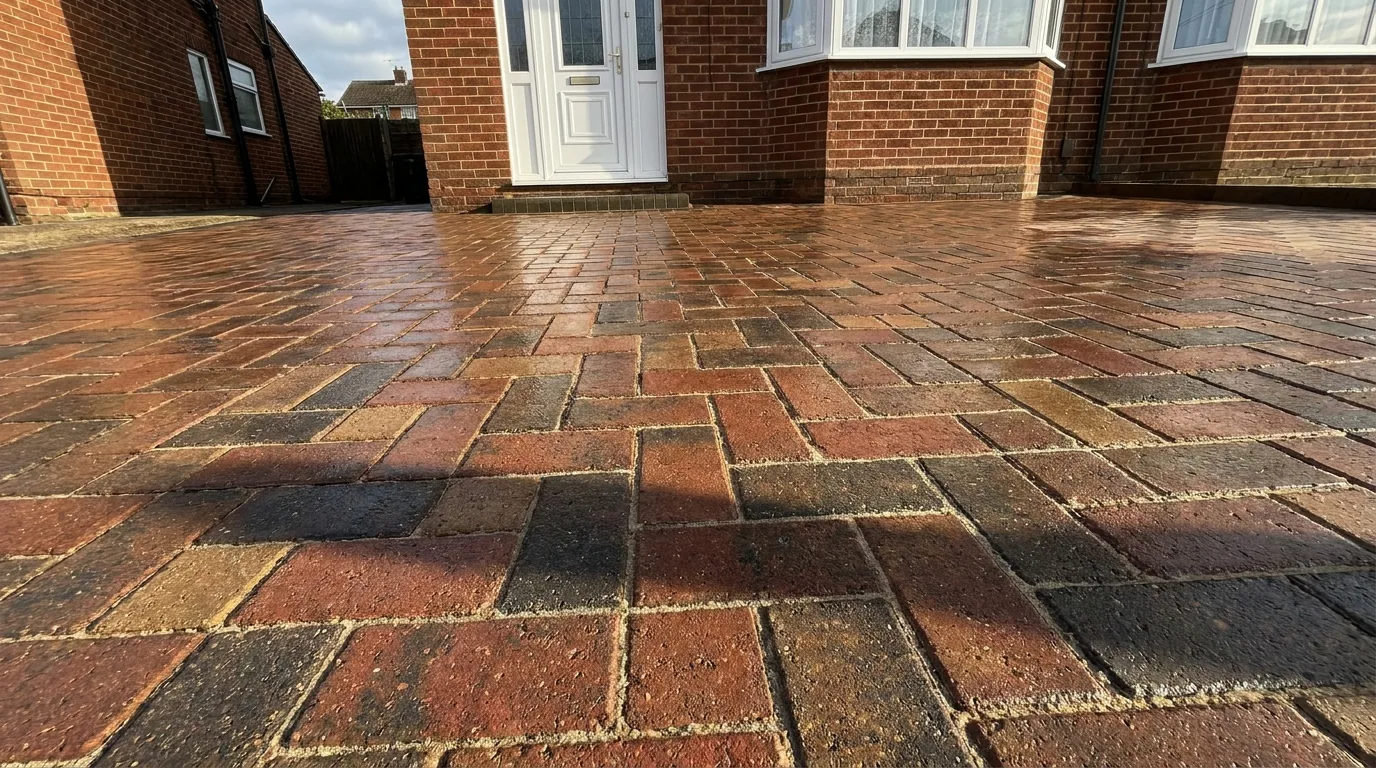
| 1990s+: Pound Hill, Furnace Green, Maidenbower | 200x100x50 mm block paving | £130–£240 | 12–18 | Marshalls Drivesett / Tegula warranty-sensitive: medium pressure only |
| 2000s+: Forge Wood, Kilnwood Vale (RH10) | Block / resin-bound / porcelain | £140–£300 | 18–30 | SUDS-compliant permeable drives (Crawley BC policy applies on changes) |
| Commercial: Manor Royal, County Oak, retail A2011 | Concrete forecourts, car-park bays | £380–£1,800/visit | 3–6 | M23/Gatwick brake-dust film + PTV slip liability on retail forecourts |
2026 client-billed quotes on RH10/RH11 jobs. Commercial bands reflect the Manor Royal / County Oak retail scale (single-visit ticket for a retail forecourt is 5–10× a residential drive). Out-of-hours bookings (early-morning / late-evening) add ~15–25% to commercial bands and avoid disrupting customers.
What’s actually under your Crawley drive
Most of Crawley sits on Weald Clay Formation[2] — Lower Cretaceous Wealden Group, the same slow-draining heavy substrate underlying Horley to the north. Practical paving consequences:
- Slow vertical drainage — surface-pooling and standing water under poorly-detailed sub-bases. Hydrostatic lift can show on older Broadfield/Bewbush drives.
- Surface-water flood pockets documented across parts of Crawley by the Environment Agency[3]: the River Mole headwaters through Tilgate Park, parts of Manor Royal towards County Oak. Biocide and degreaser rinse needs bunded capture + foul-drain disposal in those postcodes.
- Brake-dust and exhaust film — M23 and Gatwick proximity means a different residue layer than rural RH1. Surfactant pre-treatment plus medium-pressure surface clean per Marshalls[4] handles it without etching.
Commercial Crawley: Manor Royal, County Oak, retail A2011
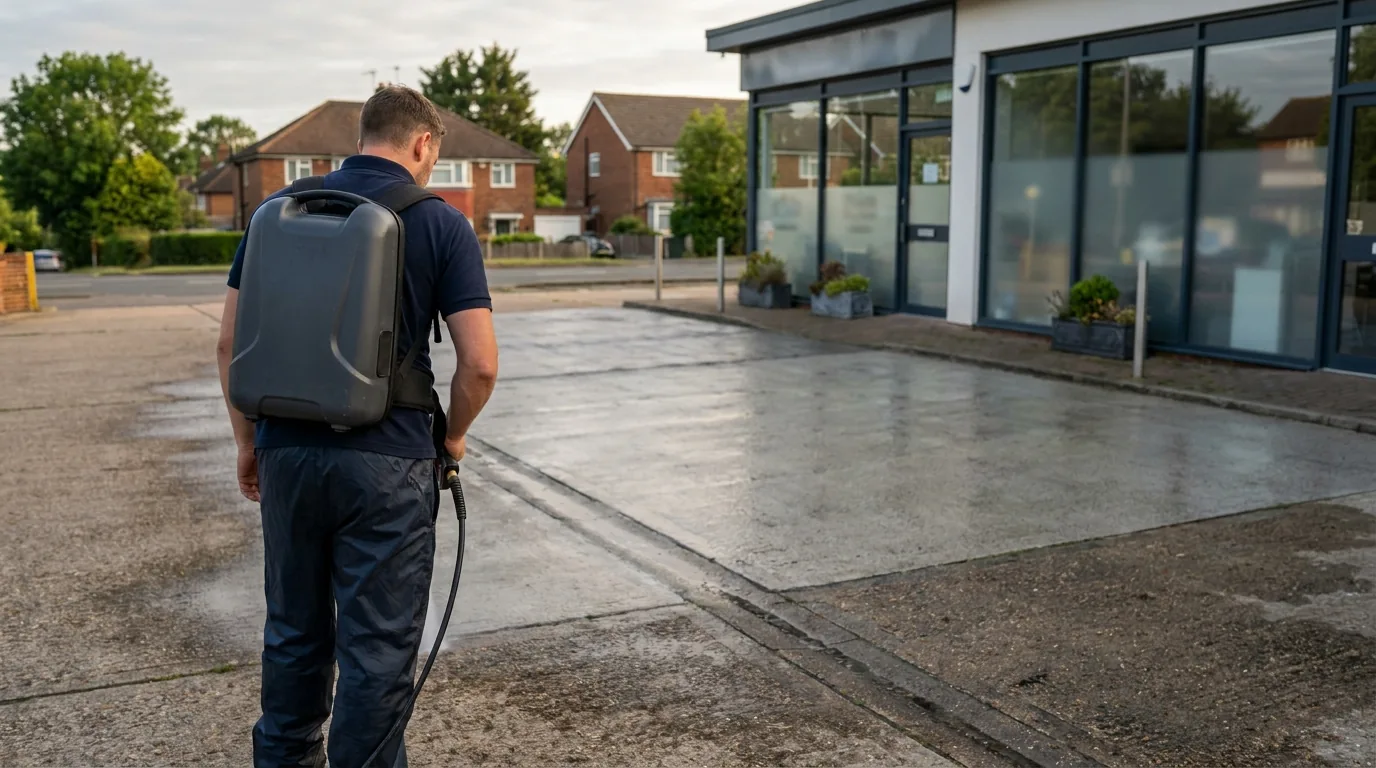
The commercial side of Crawley is the largest in our 20-mile radius. Manor Royal alone is one of the South East’s biggest business parks; County Oak retail and the A2011 corridor add hundreds of square metres of forecourt. PTV slip-risk liability[6] — HSE-endorsed pendulum thresholds: ≥36 low, 25–35 moderate, ≤24 high — gates the typical quarterly contracted cadence on high-traffic retail forecourts. Out-of-hours cleans (06:00 or 22:00 slots) keep the trading day intact.
Crawley Borough Council planning — not Reigate & Banstead
Crawley falls under Crawley Borough Council, not Reigate & Banstead[7]. The Local Plan applies national SUDS guidance to new and replacement front-garden paving >5 m² draining to highway, plus design policies that bear on commercial-forecourt changes around Manor Royal. Routine cleaning of existing surfaces is unaffected; this matters only on a re-lay or extension.
RH10/RH11 mistakes that void warranties
- Turbo nozzles on Pound Hill / Furnace Green / Maidenbower block paving. Marshalls[4] require medium pressure, 30° oblique, ≥200 mm standoff. Turbo / dirt-blaster jets risk Marshalls Register warranty rejection on Drivesett and Tegula installs — widespread across 1990s+ Crawley estates.
- Surface-cleaning over un-pre-treated 60-year-old concrete oil drips. Three Bridges and Northgate concrete has decades of embedded staining; pressure alone grinds it deeper. Hot-water pre-treat with degreaser first.
- High-pressure rinsing in EA-flagged Tilgate / Manor Royal flood pockets. Surface-water risk + biocide runoff = watercourse-pollution exposure. Bunded rinse, foul-drain disposal only.
What we actually do on a Crawley job
- Identify the era / neighbourhood — the matrix above determines pressure, biocide dwell, re-sand emphasis and pre-treatment chemistry.
- Pre-treat with biocide — Lithofin Algex[5] at manufacturer dilution, 24–48 hr dwell.
- Hot-water degreaser pre-treat on Three Bridges / Northgate concrete oil staining.
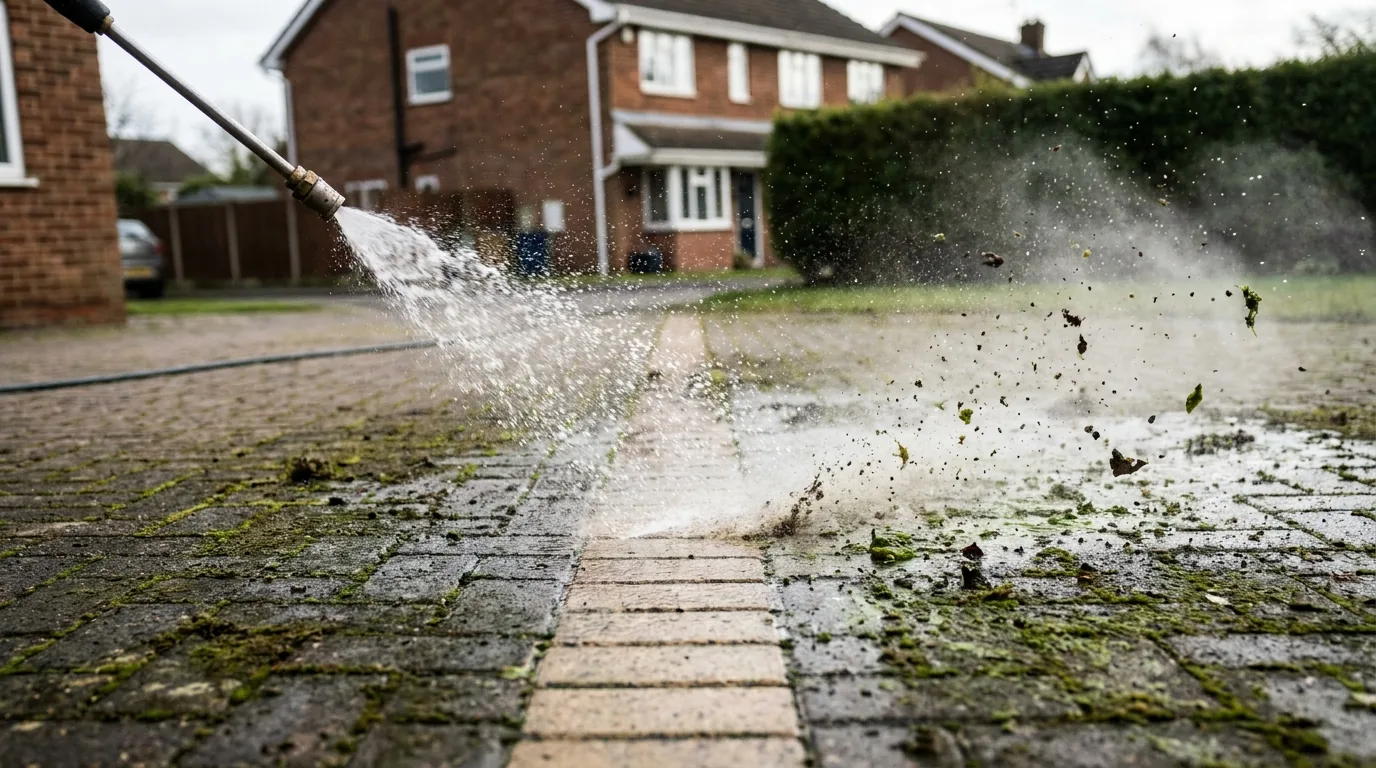
- Surface-clean at medium pressure — 30° oblique, ≥200 mm, no turbo on Marshalls block paving.
- Re-sand kiln-dried sand on block paving — standard, never an extra.
- Bunded rinse + foul-drain disposal on EA-flagged Tilgate / Manor Royal postcodes.
- Walk again with the customer — reshoot anything not right. If the result isn’t right, we redo it free.
Pressure washing across RH10 and RH11 — what we cover
Crawley was built as a New Town from 1947, so the housing stock is unusually uniform — planned neighbourhoods with clear surface eras. Three Bridges and Northgate are 1950s-60s concrete drives and slab patios. Pound Hill, Furnace Green and Maidenbower are dominated by 1990s-onwards block paving. We also cover Redhill (RH1), Horley (RH6), East Grinstead (RH19) fringe, Horsham (RH12) fringe and the rest of Surrey/Sussex within 20 miles of RH1. Full list of areas here. Or call 01737 652 515.
What we see on Crawley drives
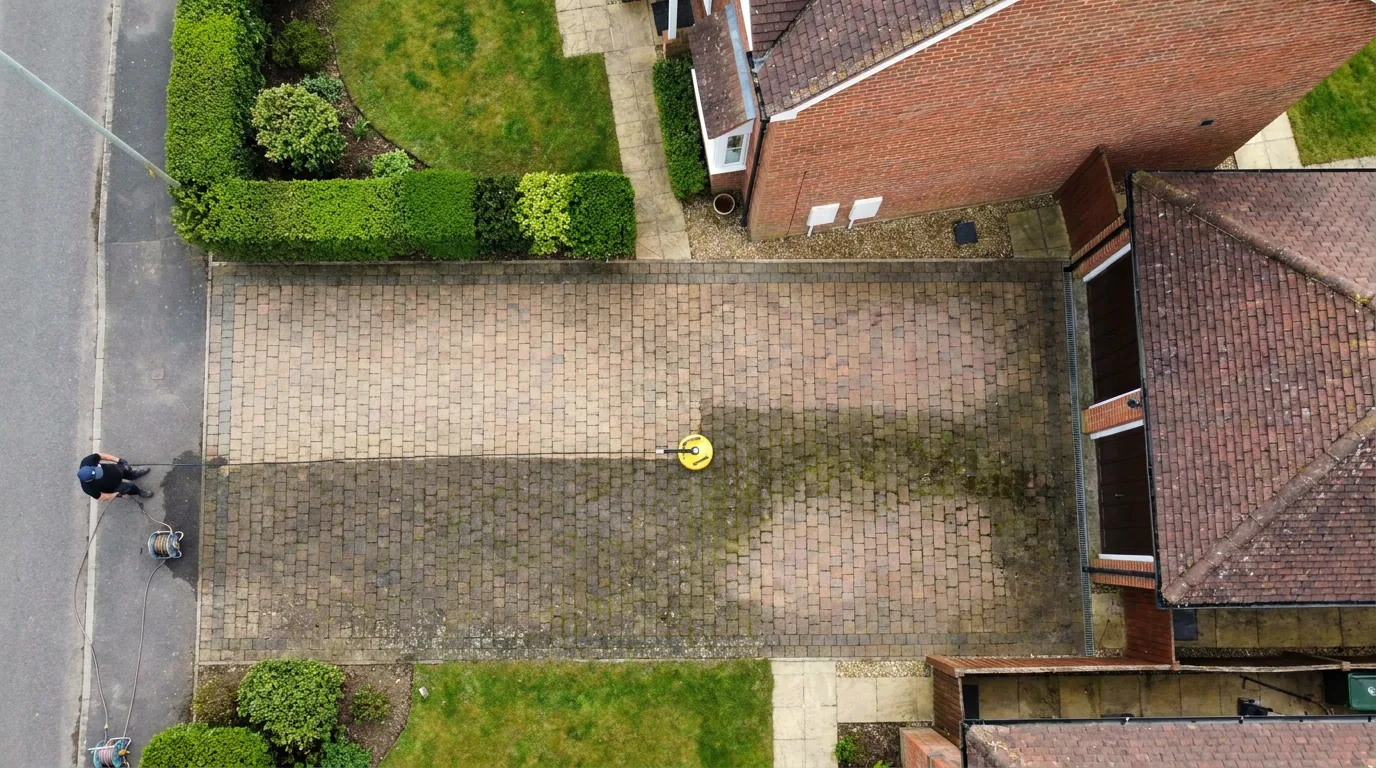
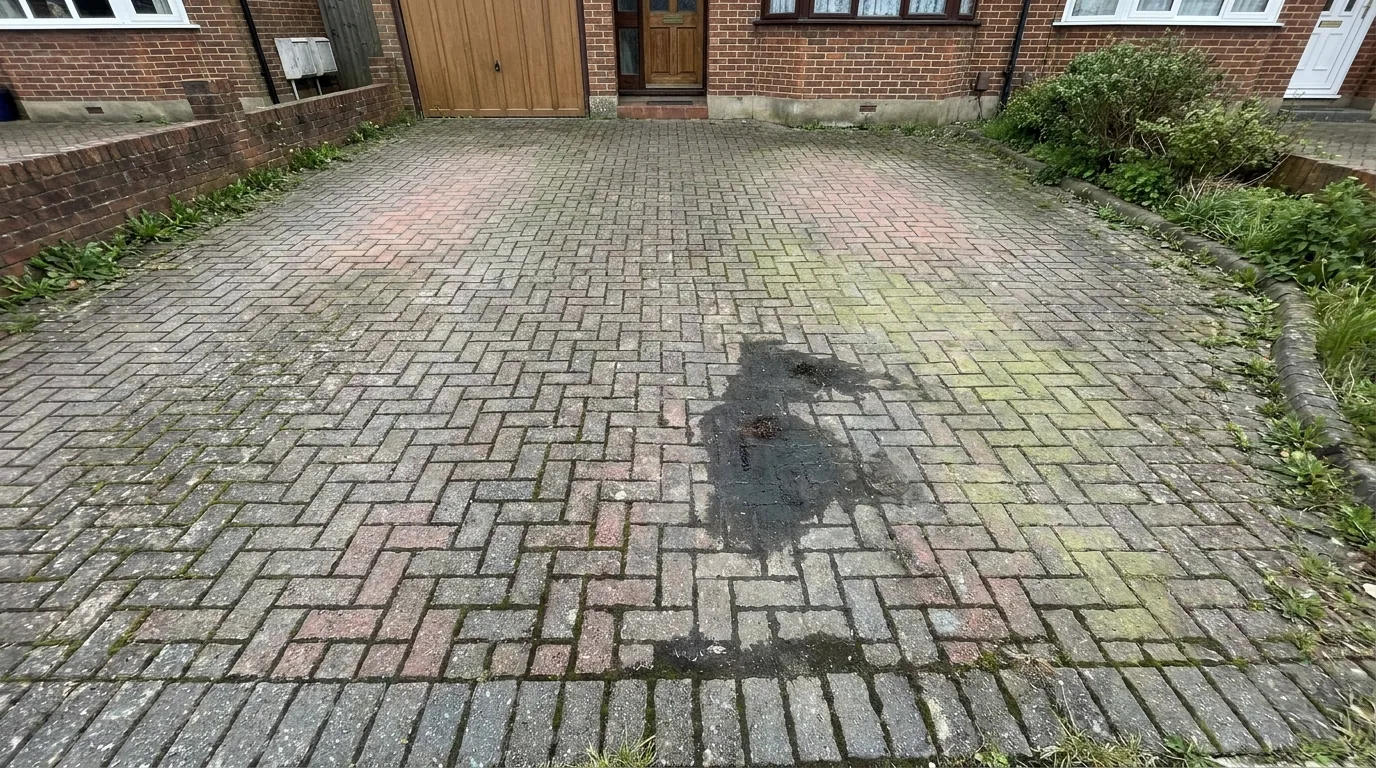
- Block-paving moss and weeds — the Crawley default. Pound Hill, Furnace Green and Maidenbower estates all have it. Re-sanding included.
- Oil staining on older concrete — Three Bridges and Northgate. Hot water plus commercial degreaser lifts most of it.
- Commercial forecourts — Manor Royal, County Oak, retail parks. Out-of-hours bookings to avoid disruption.
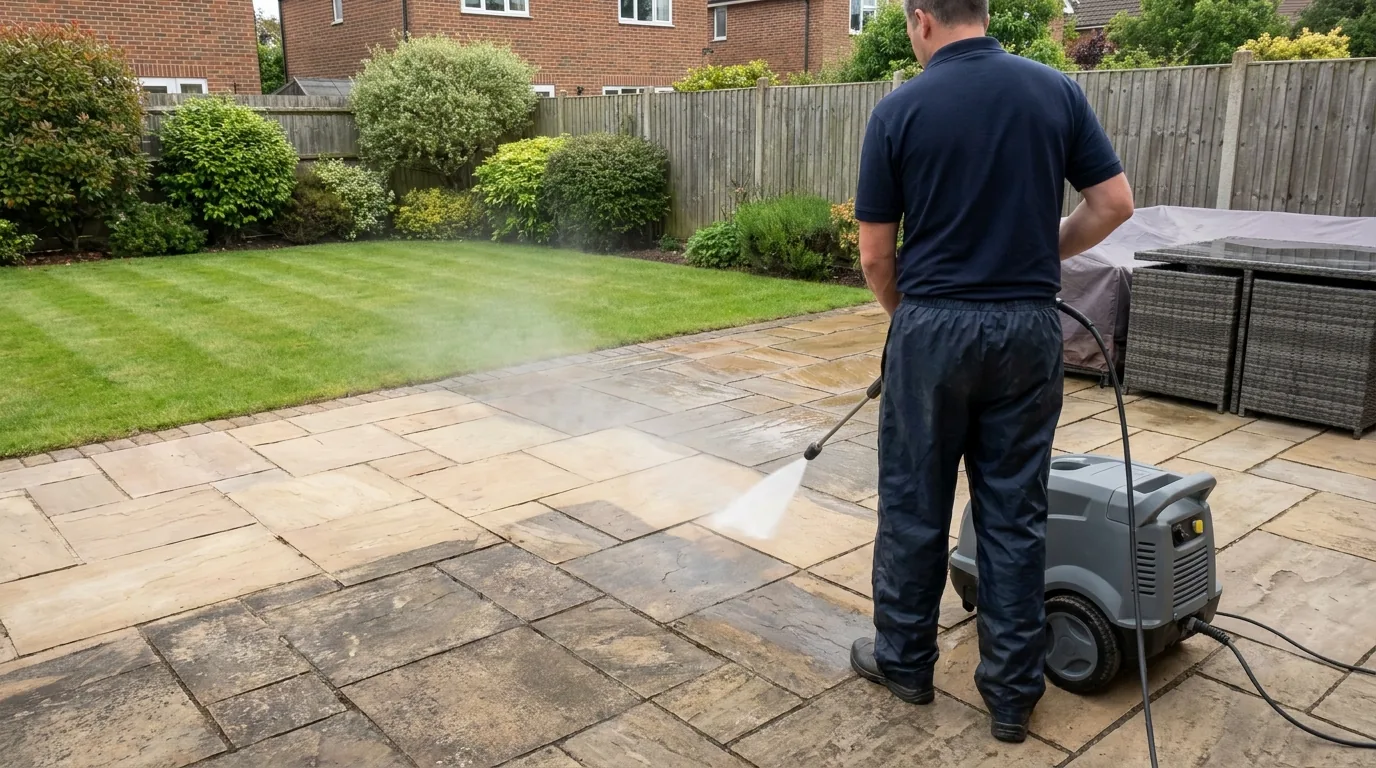
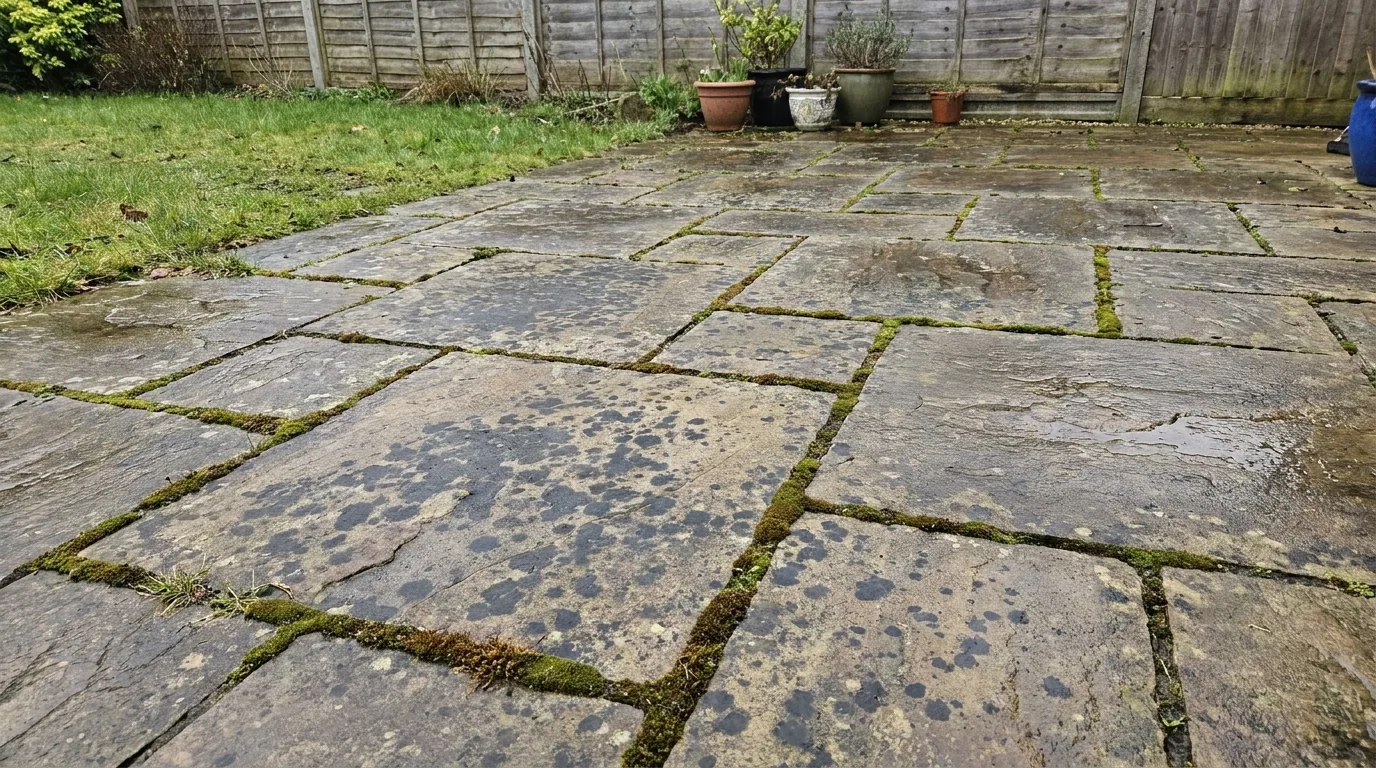
- Algae on patio slabs — ubiquitous in shaded gardens, slippery and dangerous. Soft wash with biocide.
Helpful guides for Crawley homeowners
Driveway cost guide · Moss removal · Oil stain removal · DIY vs professional · Commercial pressure washing · RH6 residential-vs-commercial comparison
Sources
Every claim about Crawley substrate, surface-water risk, slip threshold, biocide cadence, paving warranty and SUDS policy on this page is sourced. We cite primary data (Met Office, BGS, Environment Agency, Crawley Borough Council) plus manufacturer guidance (Marshalls, Lithofin) and HSE/UKSRG slip guidance. We do not cite competitor pressure-washing blogs.
- Met Office — Wisley (Surrey) Location Long-Term Averages 1991–2020. Closest official Met Office station to RH10/RH11. Annual rainfall 648.41 mm. metoffice.gov.uk — Wisley averages. Accessed 21 May 2026.
- British Geological Survey (BGS) — Weald Clay Formation lithostratigraphy (Lower Cretaceous Wealden Group). Slow-draining substrate underlying most of Crawley. bgs.ac.uk — Weald Clay Formation lexicon. Accessed 21 May 2026.
- Environment Agency / GOV.UK — Long-term flood risk for an area in England. Documents surface-water flood pockets across Crawley, including Tilgate Park (River Mole headwaters) and parts of Manor Royal towards County Oak. check-long-term-flood-risk.service.gov.uk. Accessed 21 May 2026.
- Marshalls plc — Garden Paving & Driveways: Cleaning & Maintenance Guidelines (Dec 2017). Medium pressure, 30° oblique, ≥200 mm standoff; re-sand if joints are washed out. marshalls.co.uk — cleaning guidelines (PDF). Accessed 21 May 2026.
- Lithofin AG — Algex Special Cleaner product page and technical information. Annual reapplication interval, preferably in spring. lithofin.com — Algex. Accessed 21 May 2026.
- UK Slip Resistance Group / HSE — Introduction to the Pendulum Tester. PTV ≥36 low risk, 25–35 moderate, ≤24 high. Liability threshold for high-traffic commercial forecourts. ukslipresistance.org.uk — pendulum tester. Accessed 21 May 2026.
- Crawley Borough Council — Local Plan, including drainage / SUDS policies for replacement front-garden paving and design policies for commercial-forecourt changes around Manor Royal. crawley.gov.uk — Local Plan. Accessed 21 May 2026.