
Why Nutfield needs a different cleaning playbook from the rest of RH1
The short answer: Nutfield (RH1) is the rural eastern village in our home postcode — period York stone and sandstone paving, Wealden clay tracking from rural lanes and farm access, and the South Nutfield marshland corridor with EA-documented surface-water flood pockets[4]. The substrate transitions from Lower Greensand around Mid Street and the village core[2] to Weald Clay south through the marsh[3]. Same Marshalls / Lithofin protocols apply, but the contamination loading is closer to Oxted Limpsfield Chart (Cycle 25) than to central Redhill.
The Nutfield rural-fringe contamination matrix
Original analytical contribution: the labelled OAC below splits RH1 Nutfield by contamination source and substrate. Inputs: BGS Lower Greensand + Weald Clay[2][3], Met Office Wisley[1], EA South Nutfield marsh-corridor flood pockets[4], Lithofin Algex[6], Marshalls technique[5], RBBC planning[7]. No competitor publishes a rural-fringe contamination split for a Surrey village page.
| Location (Nutfield) | Substrate / contamination | 2026 price band | Re-clean (months) | Notes |
|---|---|---|---|---|
| Village centre / Mid Street (period cottages) | Lower Greensand / York stone | £150–£280 | 12–18 | Soft-wash on period stone; oxalic-acid tannin pre-treat |
| Church Hill / detached homes | Lower Greensand | £160–£320 | 12–18 | Mixed surfaces; standard cadence |
| Rural lanes (clay-tracking properties) | Lower Greensand + Wealden clay deposits | £180–£360 | 12–18 | Mineral surfactant pre-treat for clay deposits: +£30–£80 |
| South Nutfield (marsh-corridor) | Weald Clay / EA flood-pocket | £140–£260 | 12–18 | Bunded rinse + foul-drain disposal mandatory |
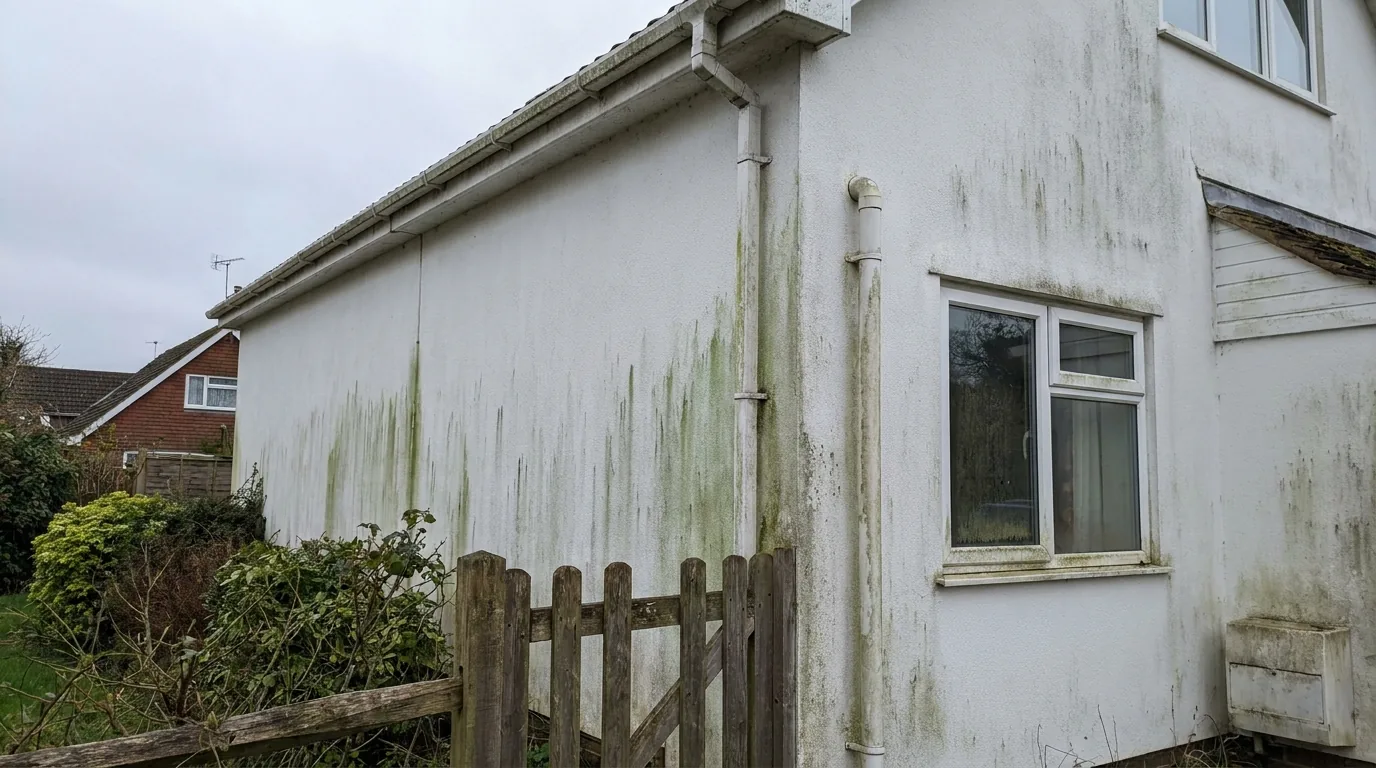
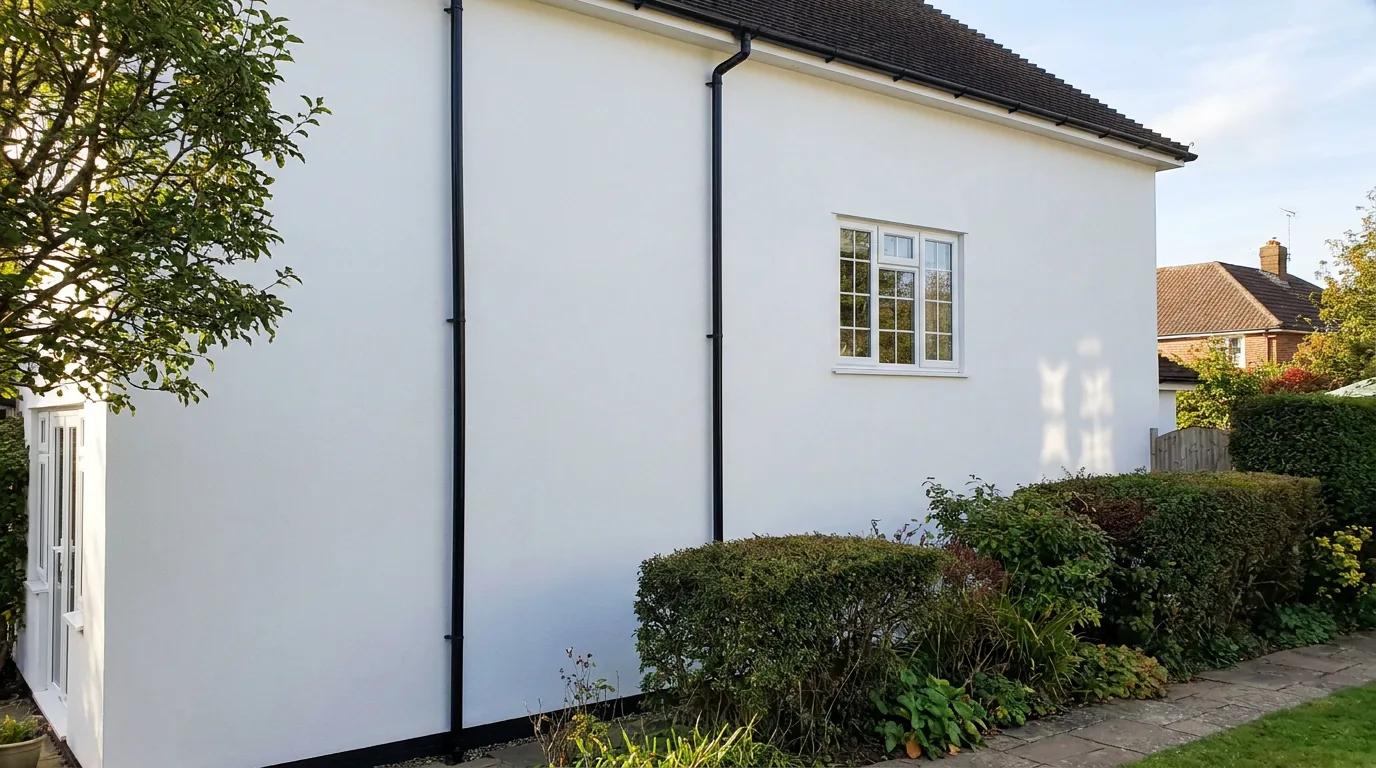
| Render (period / inter-war) | Either substrate | £180–£380 | 36–48 | Soft-wash with biocide |
2026 client-billed quotes on RH1 Nutfield jobs. The £30–£80 clay-tracking pre-treat surcharge applies on Wealden-clay-loaded rural-lane drives — analogous to the Oxted Limpsfield Chart pattern (Cycle 25) but at smaller frontages.
What’s actually under your Nutfield drive
Nutfield straddles the Lower Greensand to Weald Clay transition[2][3]:
- Lower Greensand — village centre, Mid Street, Church Hill. Moderate drainage; jointing sand persists reasonably well.
- Weald Clay — south of the village through South Nutfield and the marsh-corridor towards Bletchingley. Slow drainage; surface-water flood pockets documented by EA[4].
Wealden clay tracking and rural-lane access
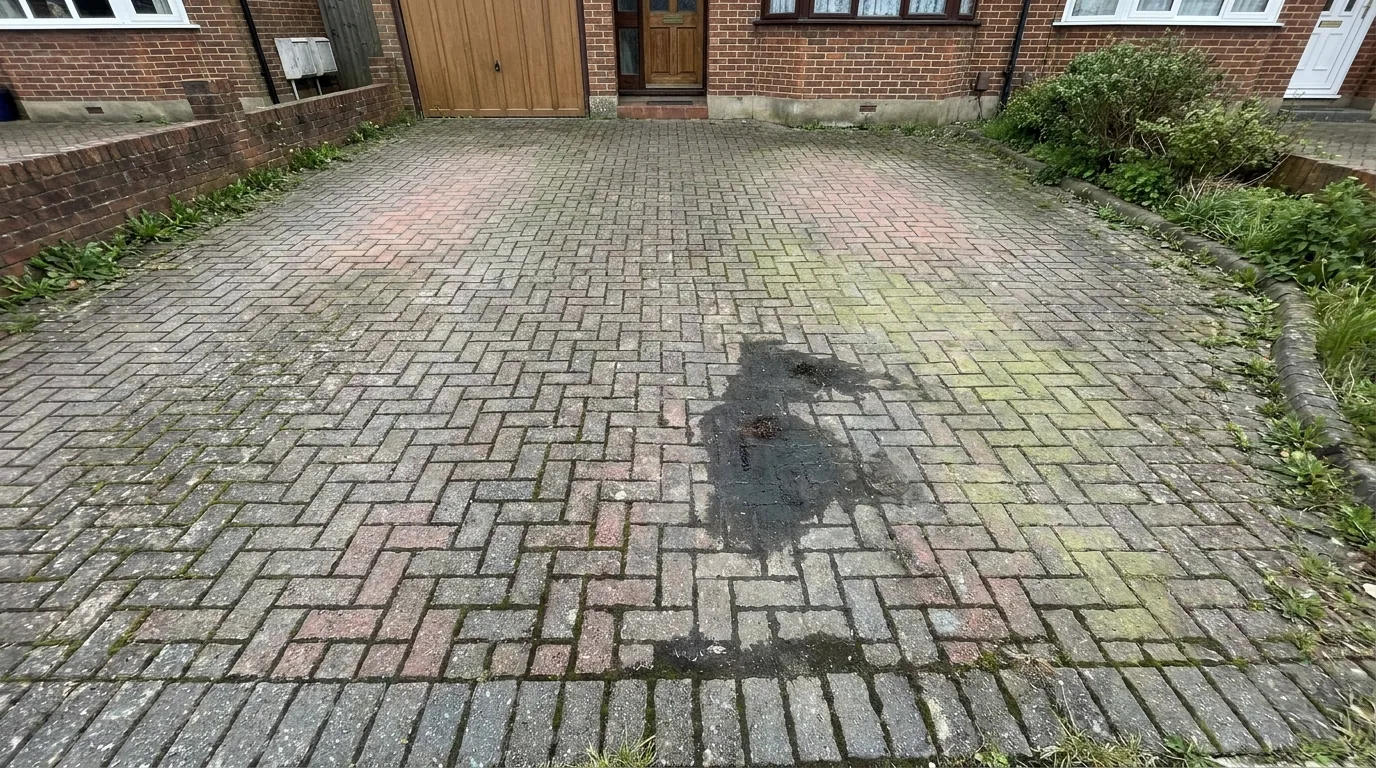
Rural-lane properties on Cooper’s Hill Road, Mid Street rural extensions and the lanes off South Nutfield carry the Wealden clay tracking issue: vehicles bringing dried clay deposits from farm tracks onto block-paving drives. Same protocol as the Oxted Limpsfield Chart matrix (Cycle 25): mineral surfactant pre-treat plus long water dwell before surface clean. The £30–£80 surcharge in the matrix covers this.
Period York stone and sandstone protocols
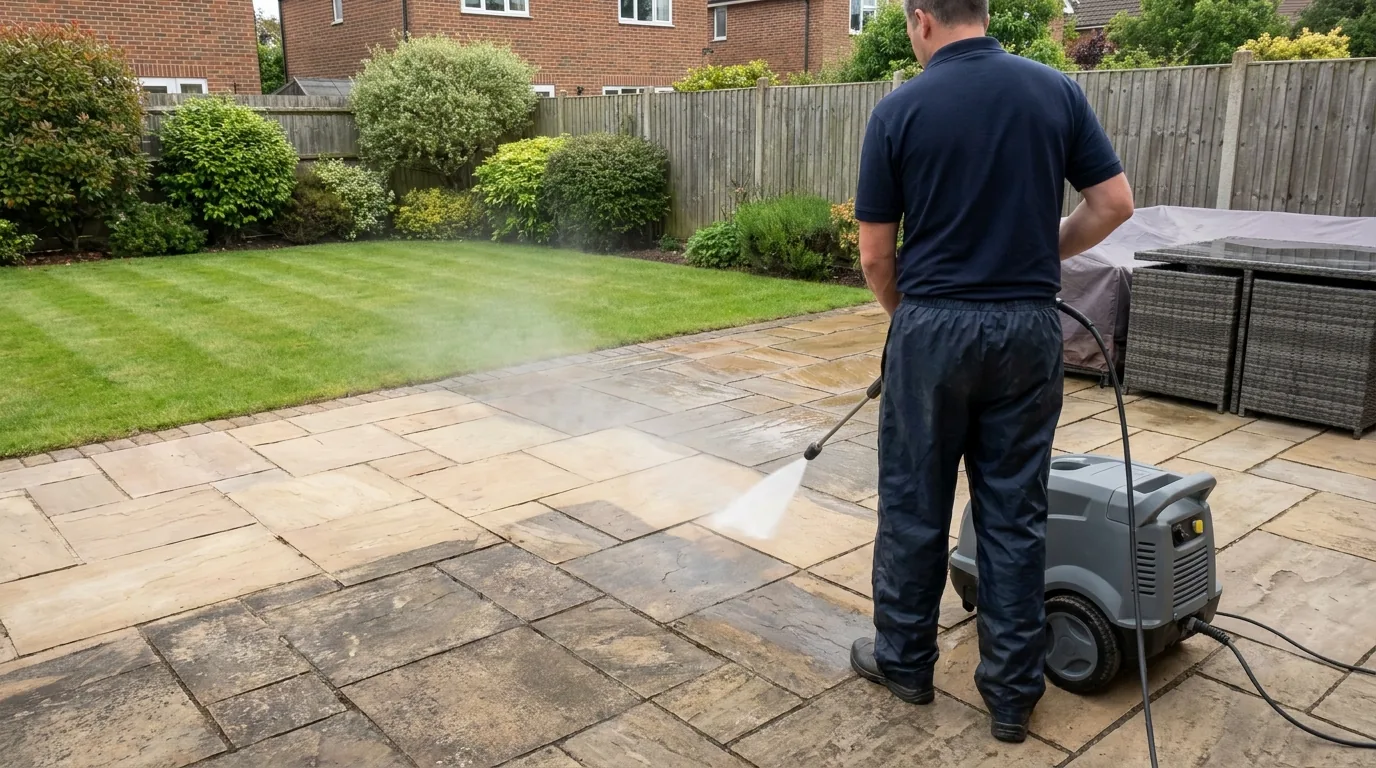
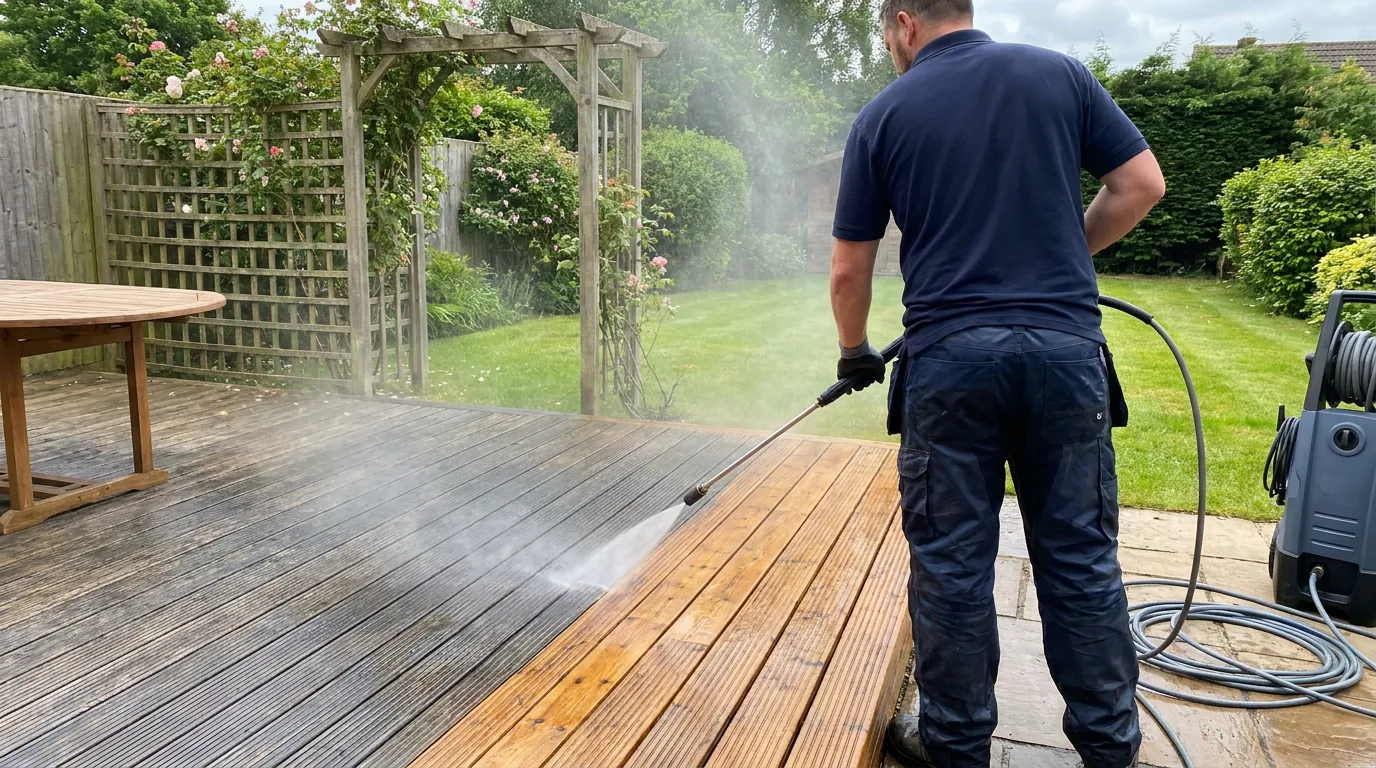
The village centre cluster around Mid Street includes period properties with York stone and Surrey sandstone paths. Marshalls[5] medium-pressure technique applies in principle (200 mm / 30°) but soft natural stones reward dropping pressure further. Always oxalic-acid stone cleaner first for tannin staining; then soft-wash with Lithofin Algex[6] biocide.
Reigate & Banstead Borough Council planning — Nutfield SUDS gate
Nutfield falls under RBBC[7]. National SUDS guidance applies to new and replacement front-garden paving >5 m² draining to highway. South Nutfield marsh-corridor flood-pockets[4] add an environmental compliance angle.
RH1 Nutfield mistakes that void warranties
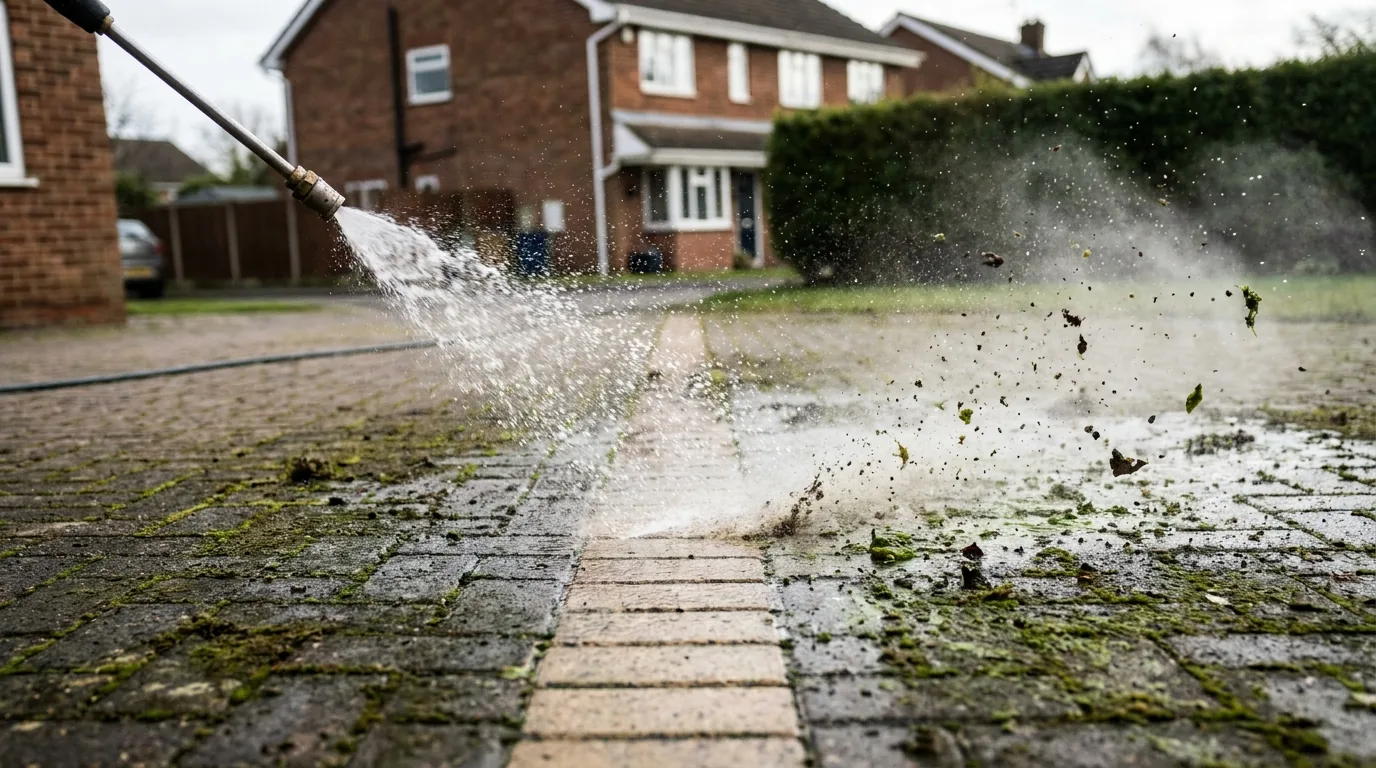
- Pressure-washing dry Wealden clay deposits. Flakes back into joint sand; surface re-stains within a week. Mineral pre-treat + long water dwell first.
- High-pressure on York stone or Surrey sandstone. Soft natural stones pit and erode. Soft-wash chemistry only.
- High-pressure rinsing in South Nutfield marsh corridor. EA-flagged surface-water risk + biocide runoff = watercourse-pollution exposure. Bunded rinse mandatory.
What we actually do on a Nutfield job
- Identify location category — village centre / Church Hill / rural-lane / South Nutfield marsh. The matrix sets the protocol.
- Pre-treat tannin with oxalic-acid stone cleaner on period paving.
- Pre-treat Wealden clay deposits with mineral surfactant + long water dwell.
- Pre-treat biofilm with Lithofin Algex; 24–48 hr dwell.
- Soft-wash or surface-clean — soft-wash on York stone / sandstone; medium pressure on standard block paving.
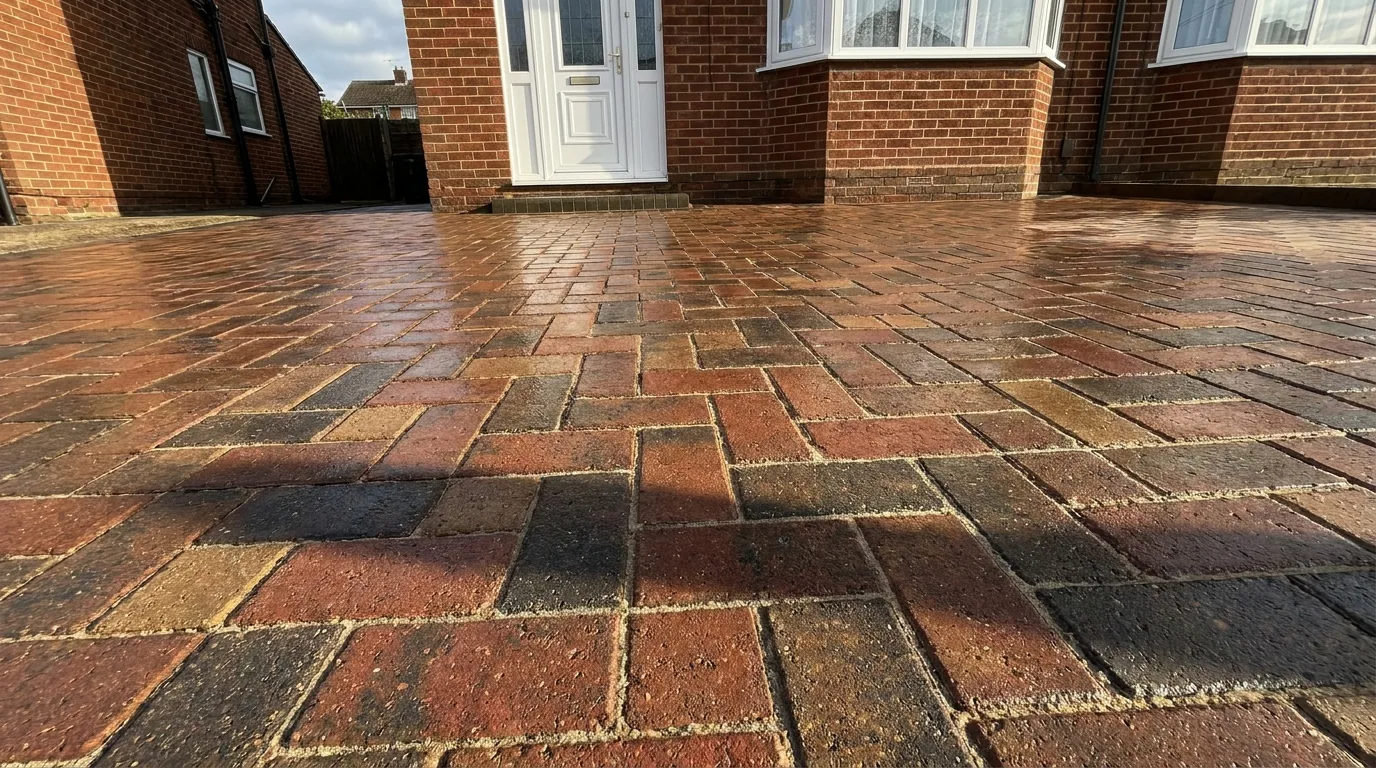
- Re-sand kiln-dried sand on block paving.
- Bunded rinse + foul-drain disposal on South Nutfield marsh-corridor streets.
- Walk again with the customer — reshoot anything not right. If the result isn’t right, we redo it free.
Pressure washing across Nutfield — what we cover
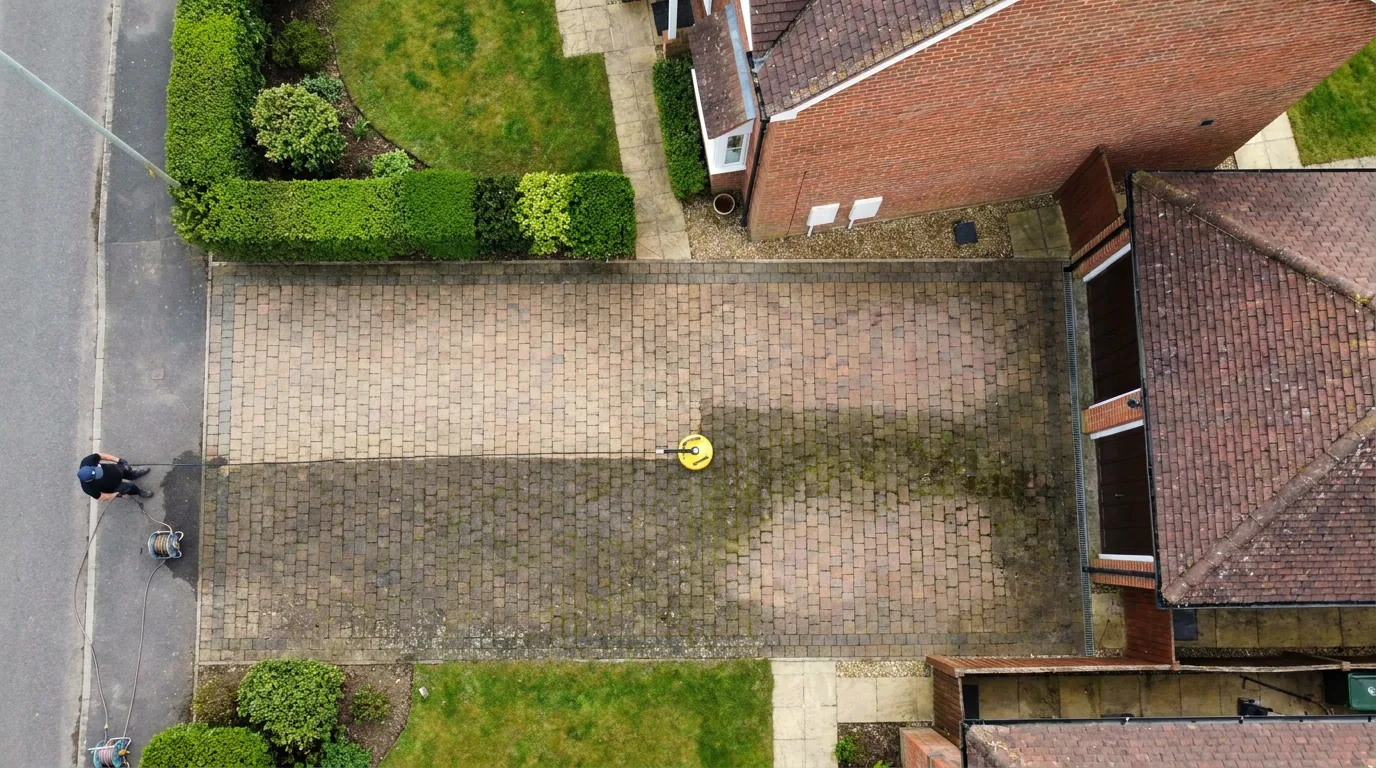
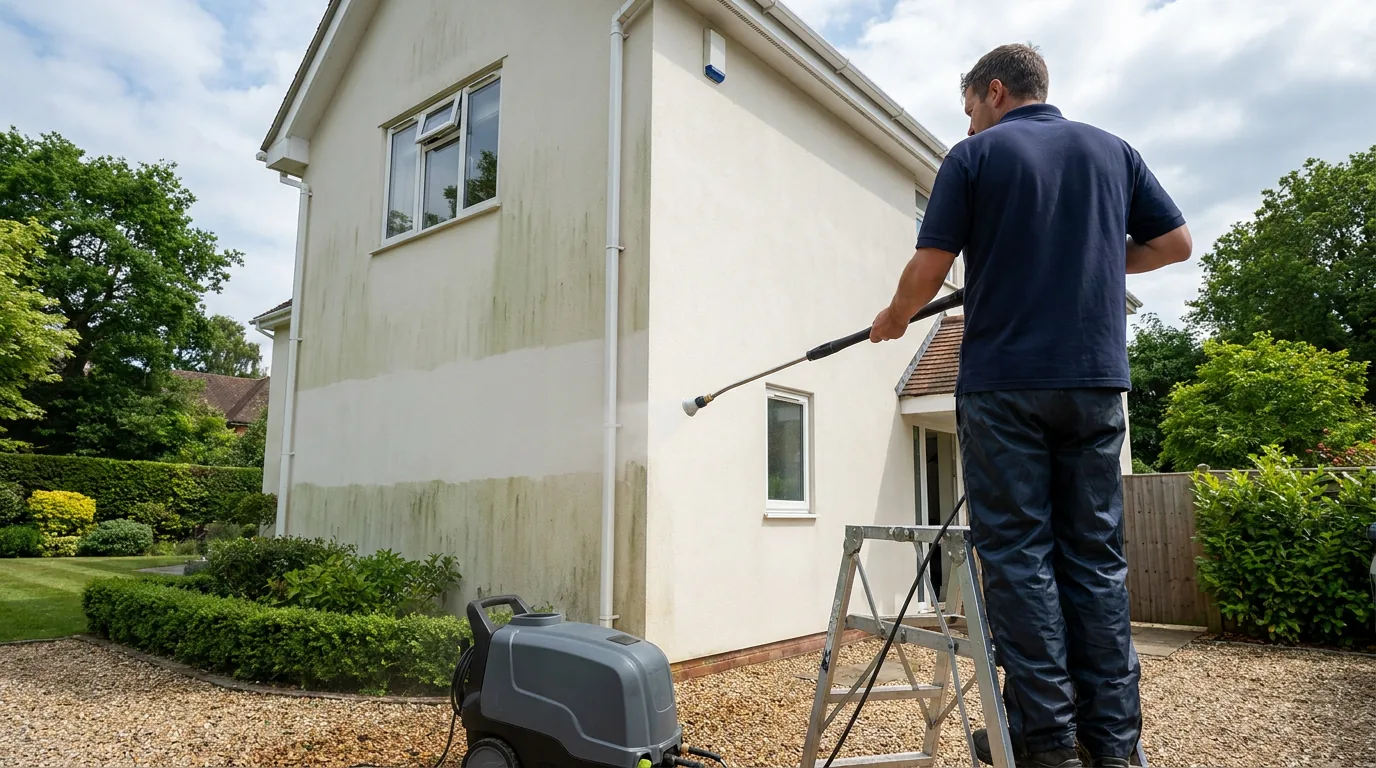
Nutfield is the rural east side of RH1, three miles from our Redhill base. The village character is defined by period properties: cottages clustered around Mid Street and the village centre, larger detached homes along Church Hill with countryside views, and the lower-lying South Nutfield closer to the marsh nature reserve. We cover the rest of RH1 (Redhill, Merstham, Salfords, Earlswood), plus Reigate (RH2), Bletchingley fringe and the rest of Surrey within 20 miles. Full list of areas here. Or call 01737 652 515.
What we see on Nutfield drives and paths
- Mud and Surrey clay deposits — from rural lanes, especially in winter. Pressure washing rather than sweeping.
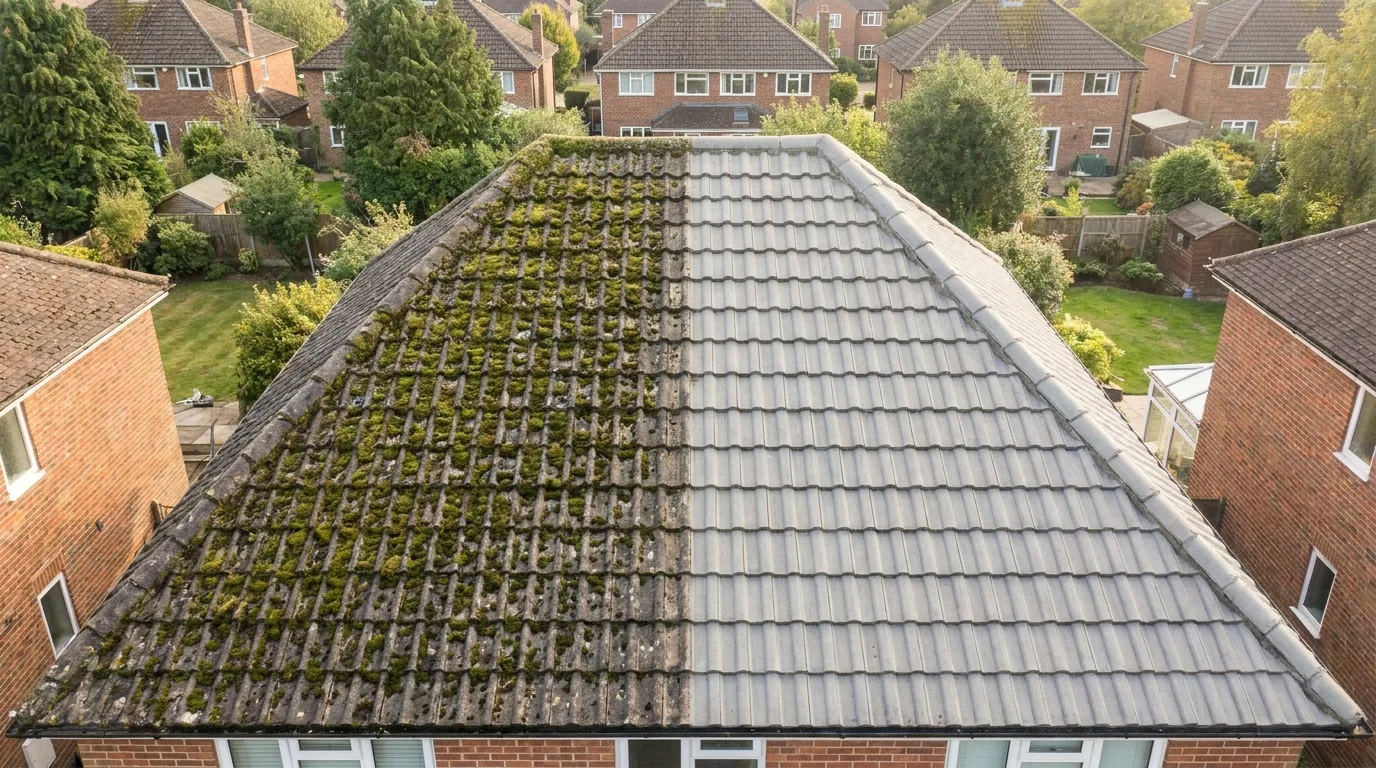
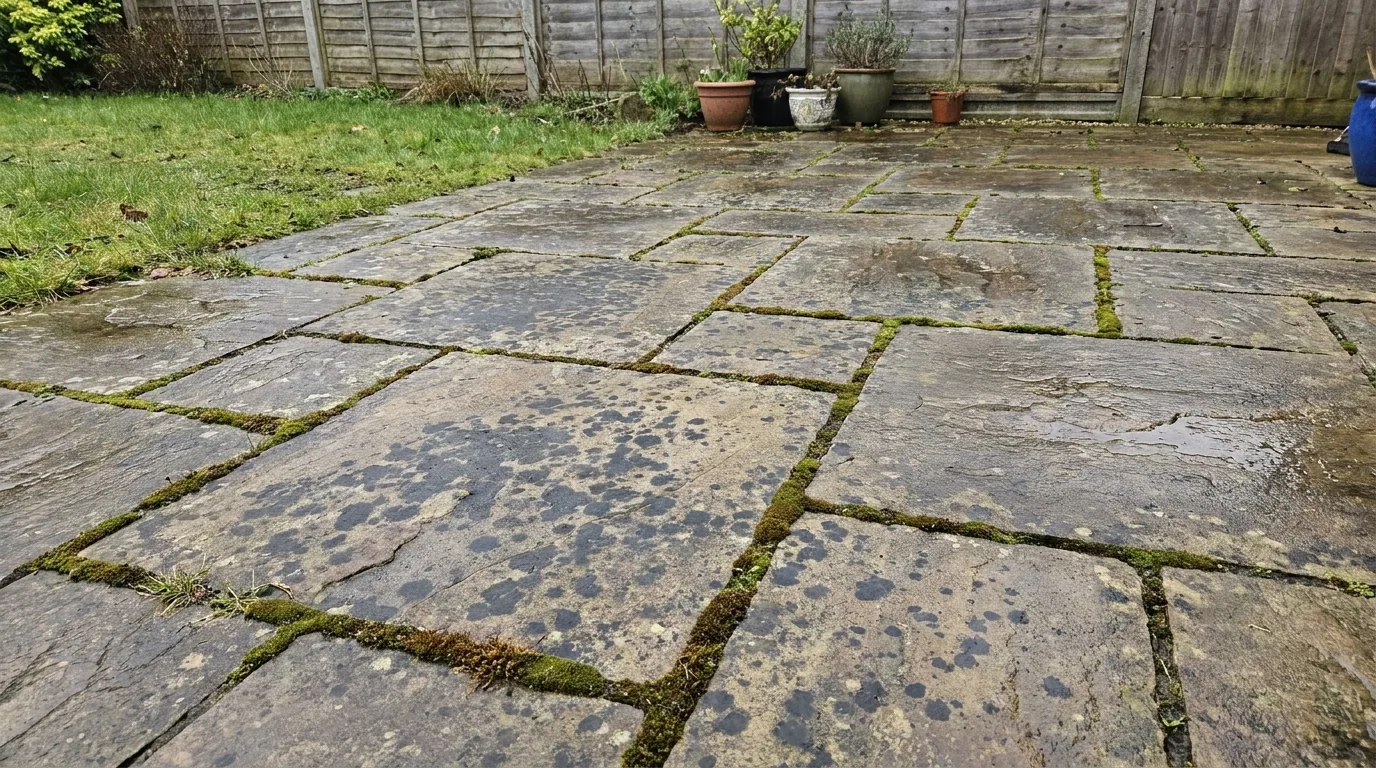
- Moss on period stone — thick, set in joint pointing. Soft wash with biocide, never high pressure.
- Leaf tannin staining — oak and beech, dark brown marks on lighter stone.
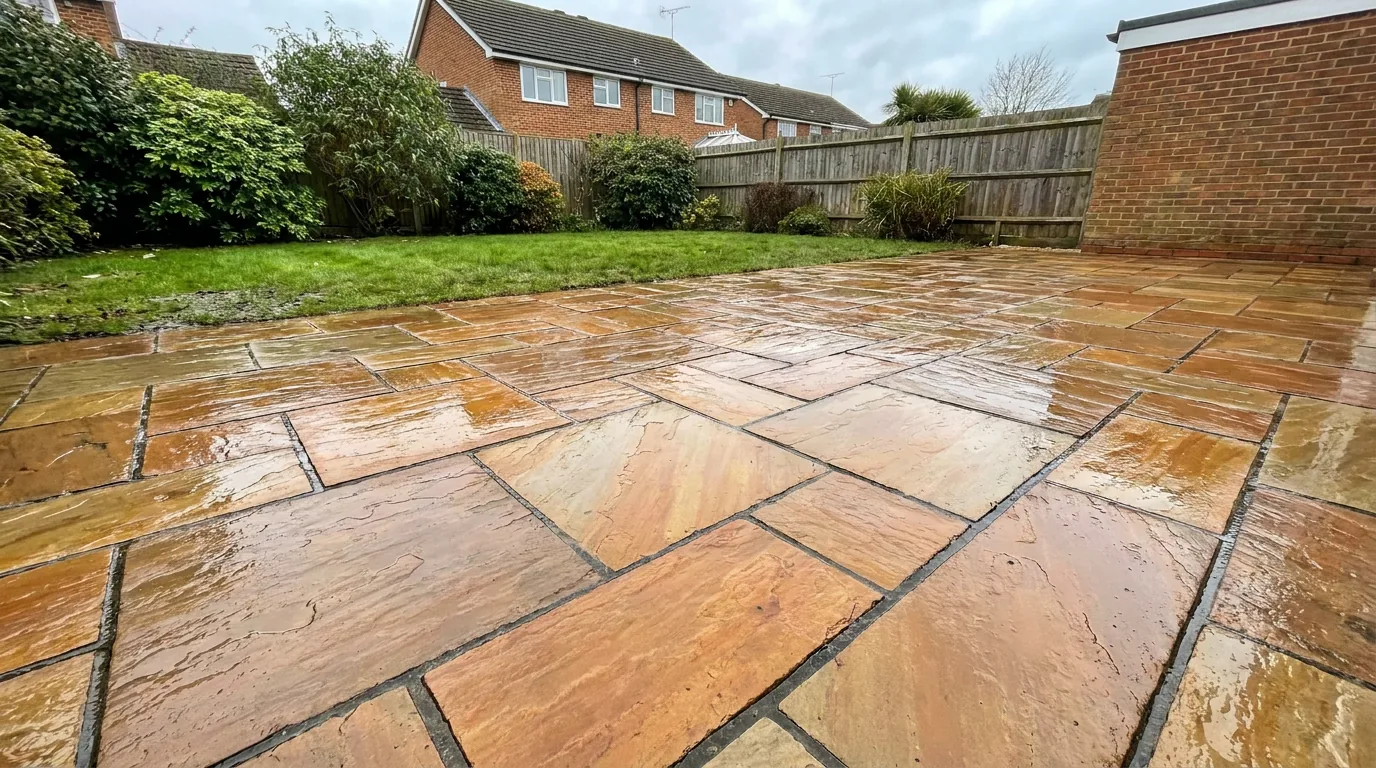
- Weathered York stone and sandstone — decades of grime and biological growth. Cleaning reveals the original colour.
Helpful guides for Nutfield homeowners
DIY vs pro · Moss removal · Can pressure damage stone? · Best time to clean · RH8 Limpsfield Chart clay-tracking comparison · RH1 baseline comparison
Sources
Every claim about Nutfield substrate, Wealden clay tracking, period material protocols, EA flood-risk, biocide cadence and SUDS policy on this page is sourced. We cite primary data (Met Office, BGS, Environment Agency, RBBC) plus manufacturer guidance (Marshalls, Lithofin). We do not cite competitor pressure-washing blogs.
- Met Office — Wisley (Surrey) Location Long-Term Averages 1991–2020. Annual rainfall 648.41 mm. metoffice.gov.uk — Wisley averages. Accessed 21 May 2026.
- British Geological Survey (BGS) — Lower Greensand Group lithostratigraphy (Folkestone & Hythe Formations). Underlies village centre, Mid Street, Church Hill. bgs.ac.uk — Lower Greensand Group lexicon. Accessed 21 May 2026.
- British Geological Survey (BGS) — Weald Clay Formation lithostratigraphy. Underlies South Nutfield and the marsh-corridor towards Bletchingley. bgs.ac.uk — Weald Clay Formation lexicon. Accessed 21 May 2026.
- Environment Agency / GOV.UK — Long-term flood risk for an area in England. Documents South Nutfield marsh-corridor surface-water flood pockets. check-long-term-flood-risk.service.gov.uk. Accessed 21 May 2026.
- Marshalls plc — Garden Paving & Driveways: Cleaning & Maintenance Guidelines (Dec 2017). Medium pressure, 30° oblique, ≥200 mm standoff. marshalls.co.uk — cleaning guidelines (PDF). Accessed 21 May 2026.
- Lithofin AG — Algex Special Cleaner product page and technical information. Annual reapplication, preferably in spring. lithofin.com — Algex. Accessed 21 May 2026.
- Reigate & Banstead Borough Council — Local Plan and Development Management Plan, including drainage and SUDS policies. reigate-banstead.gov.uk — Local Plan. Accessed 21 May 2026.