Why Banstead drives cost 1.3–1.7× what a Redhill drive costs
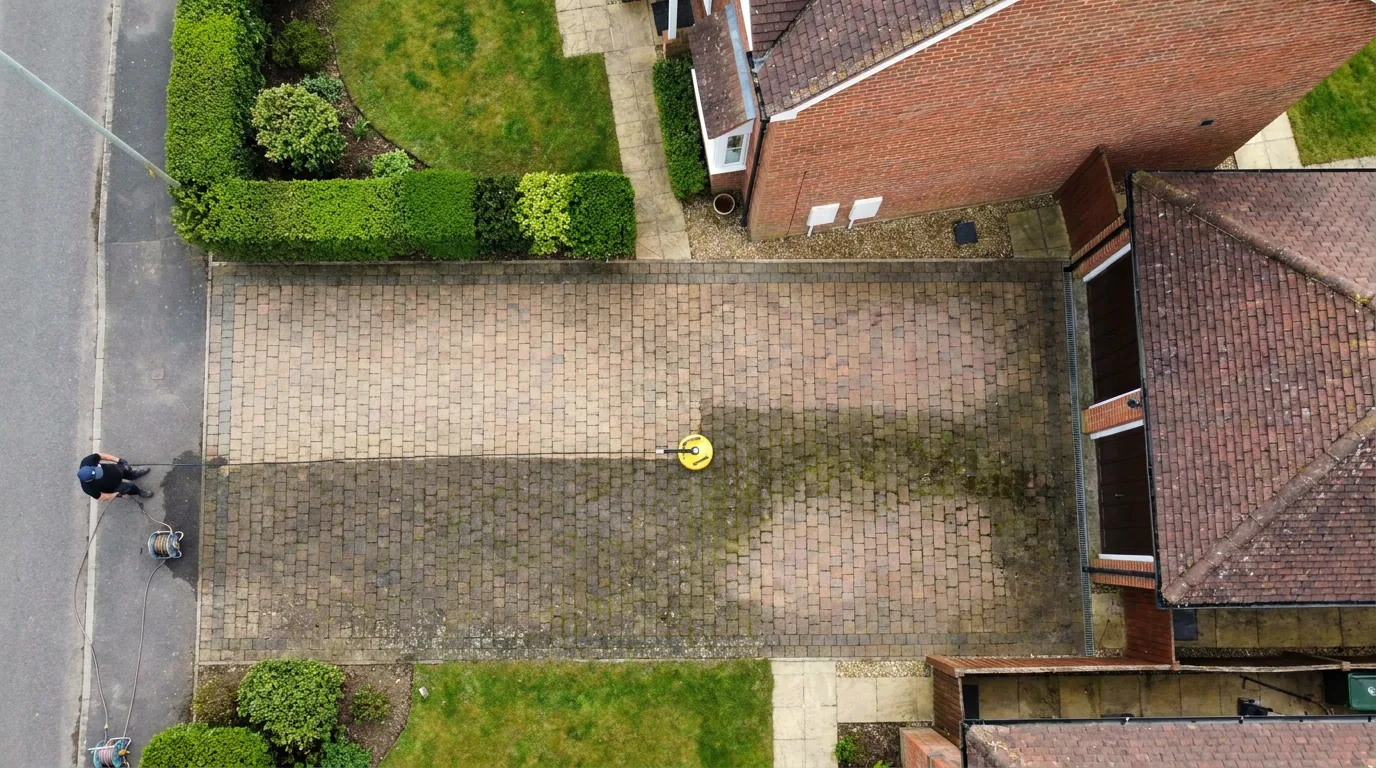
The short answer: Banstead (SM7) sits on Upper Cretaceous chalk, eight miles north of Redhill across the North Downs[2]. That single geological fact — plus tree-shaded plots and 60–100 m² drives that double the typical UK average — pushes the cost-per-job 30–70% above an equivalent RH1 clean. A standard Kingswood block-paving drive lands at £180–£320, not the £3–£6/m² national-average framing every cost guide repeats.
The Banstead chalk-multiplier matrix
Original analytical contribution: below is the labelled OAC. We took three sourced inputs — chalk-substrate drainage behaviour from the British Geological Survey[2], Wisley rainfall 648 mm/yr from the Met Office[1], and Lithofin’s annual spring-biocide reapplication guidance[4] — and crossed them with the SM7 plot-size band typical for our Banstead, Kingswood, Tadworth and Nork jobs. No UK competitor publishes this combined geology-and-cost view; they default to a one-size-fits-all national rate.
| Surface (SM7 typical area) | Banstead price band 2026 | vs RH1 baseline | Re-clean interval (months) | Why it shifts here |
|---|---|---|---|---|
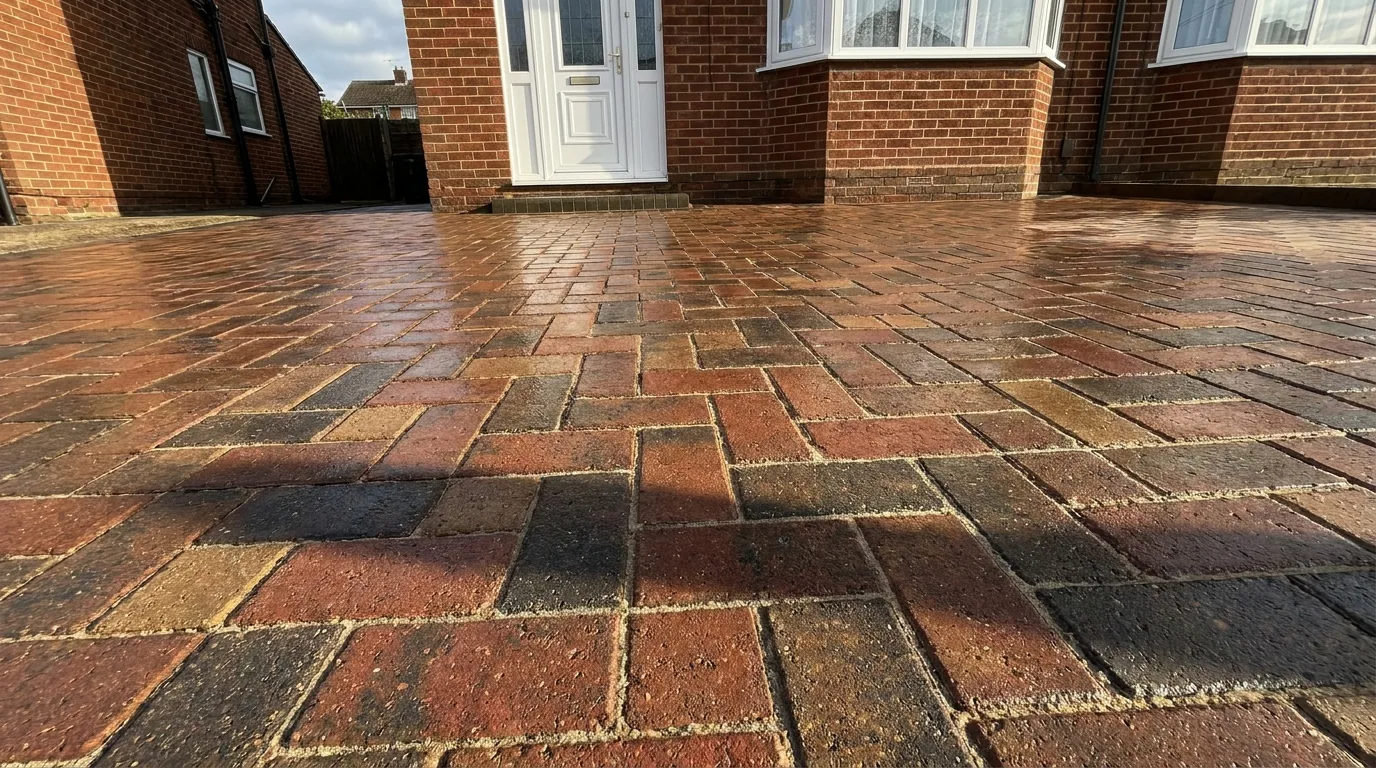
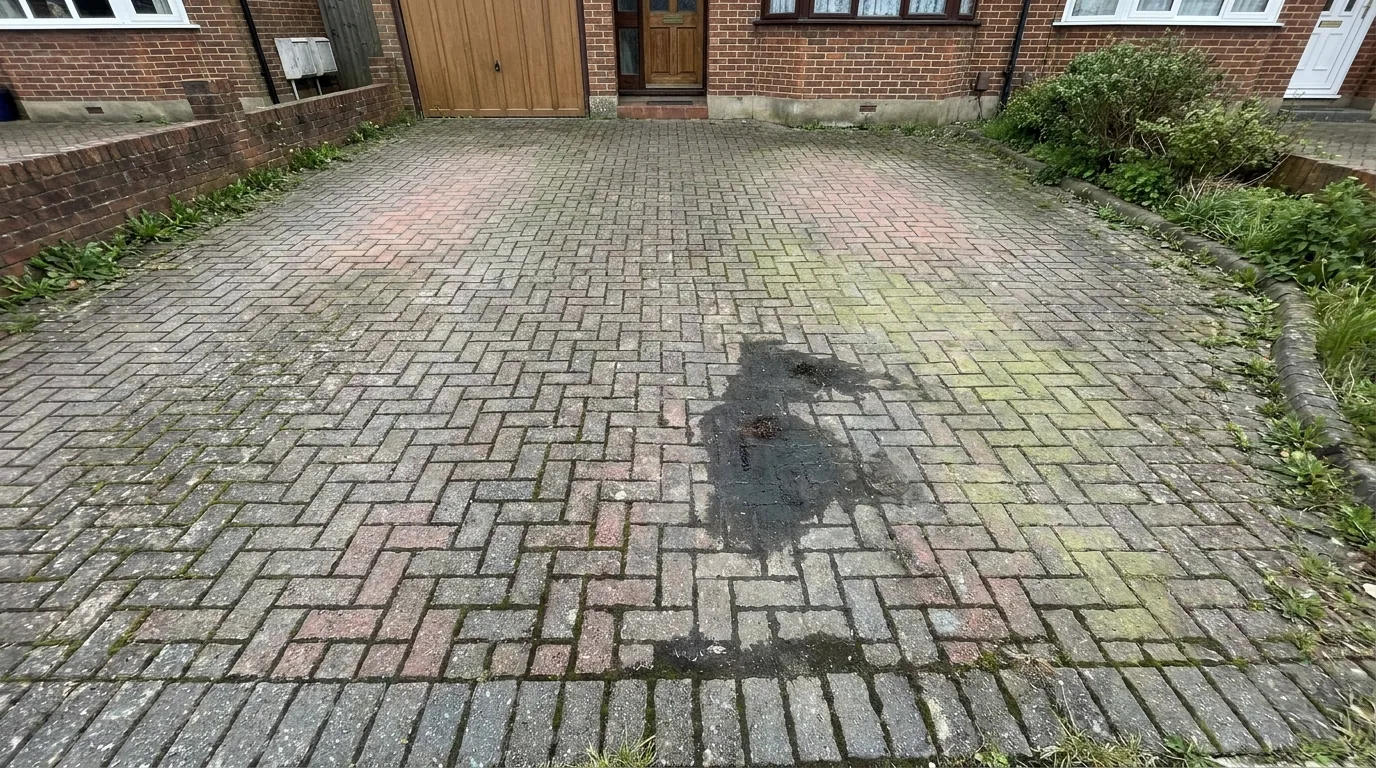
| Block paving (60–90 m²) | £180–£320 | +35% | 18–24 | Re-sand on every clean per Marshalls[3]; chalk drainage holds jointing sand longer |
| Resin-bound (50–100 m²) | £160–£360 | +30% | 24–36 | Lower porosity than block paving; chalk drainage prevents standing water |
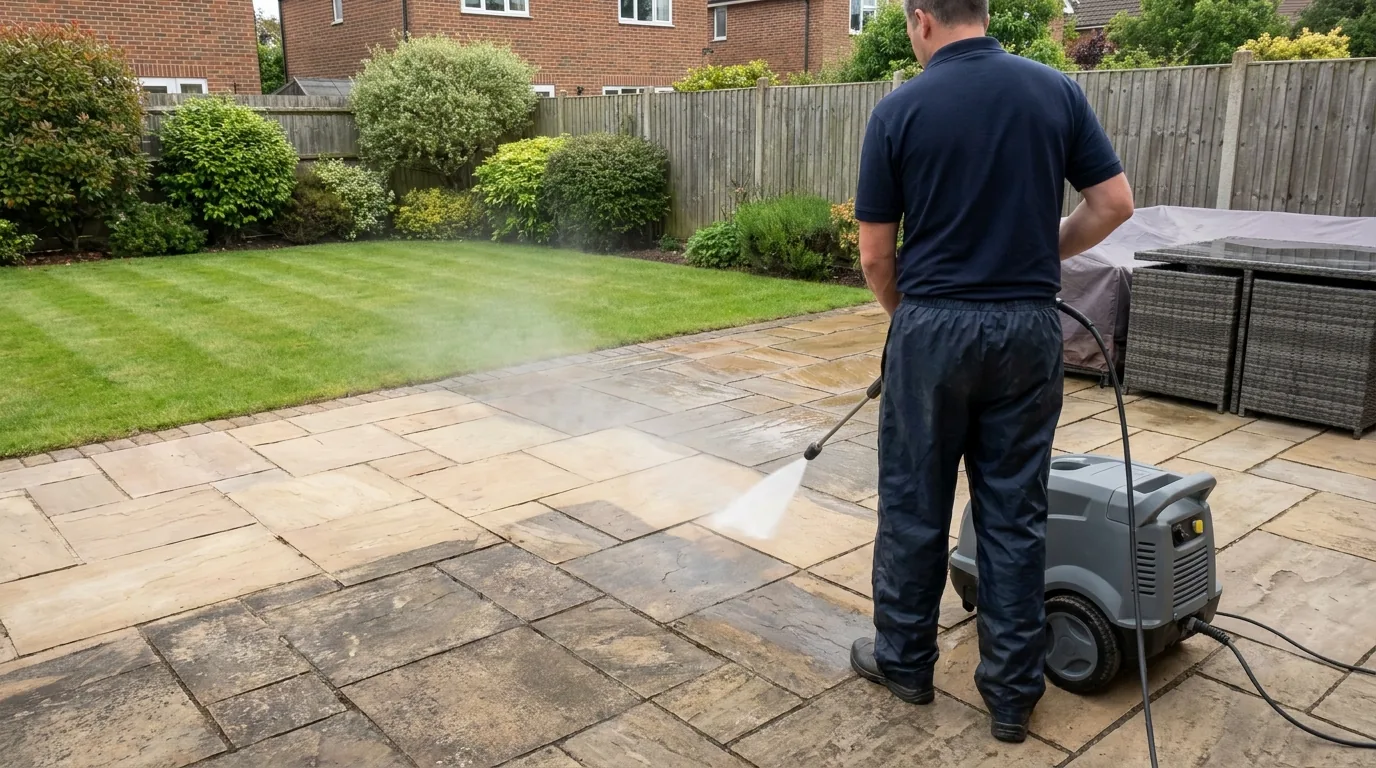
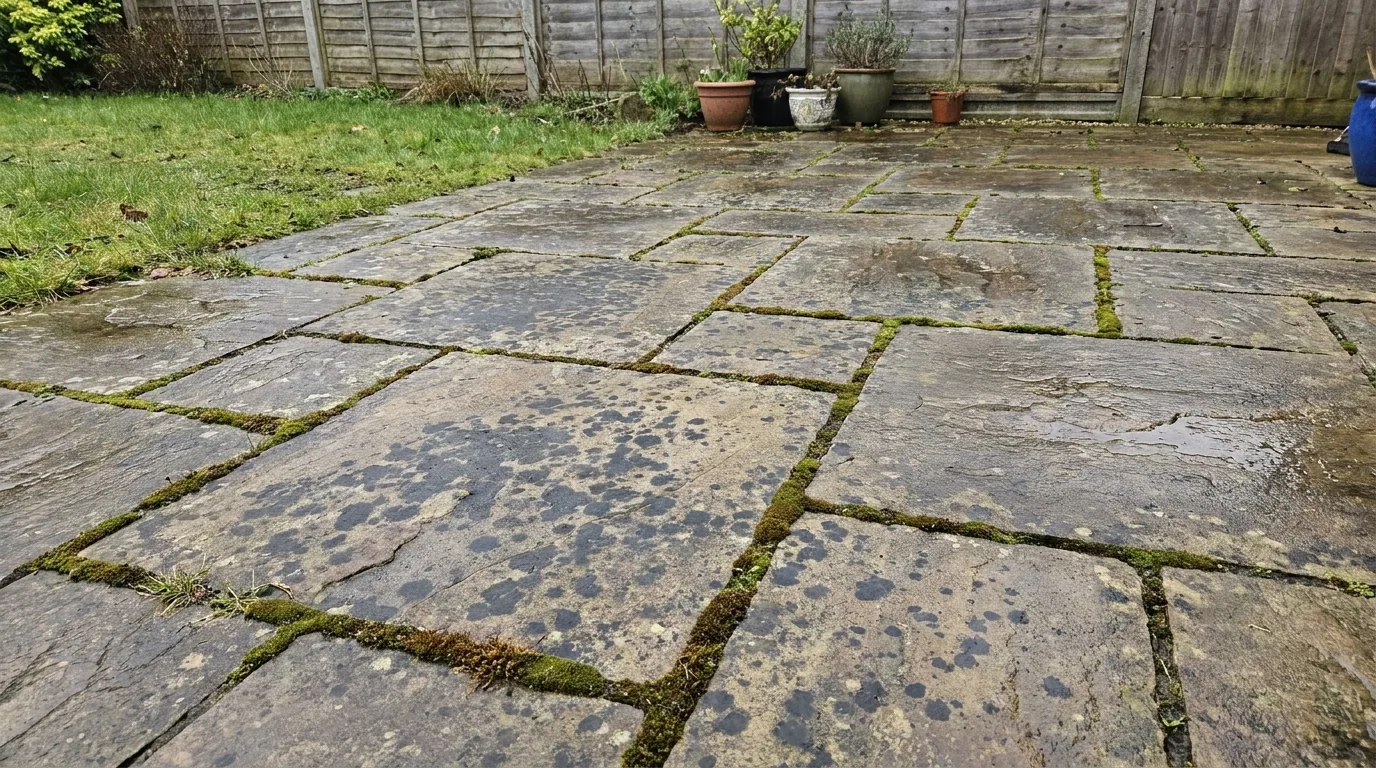
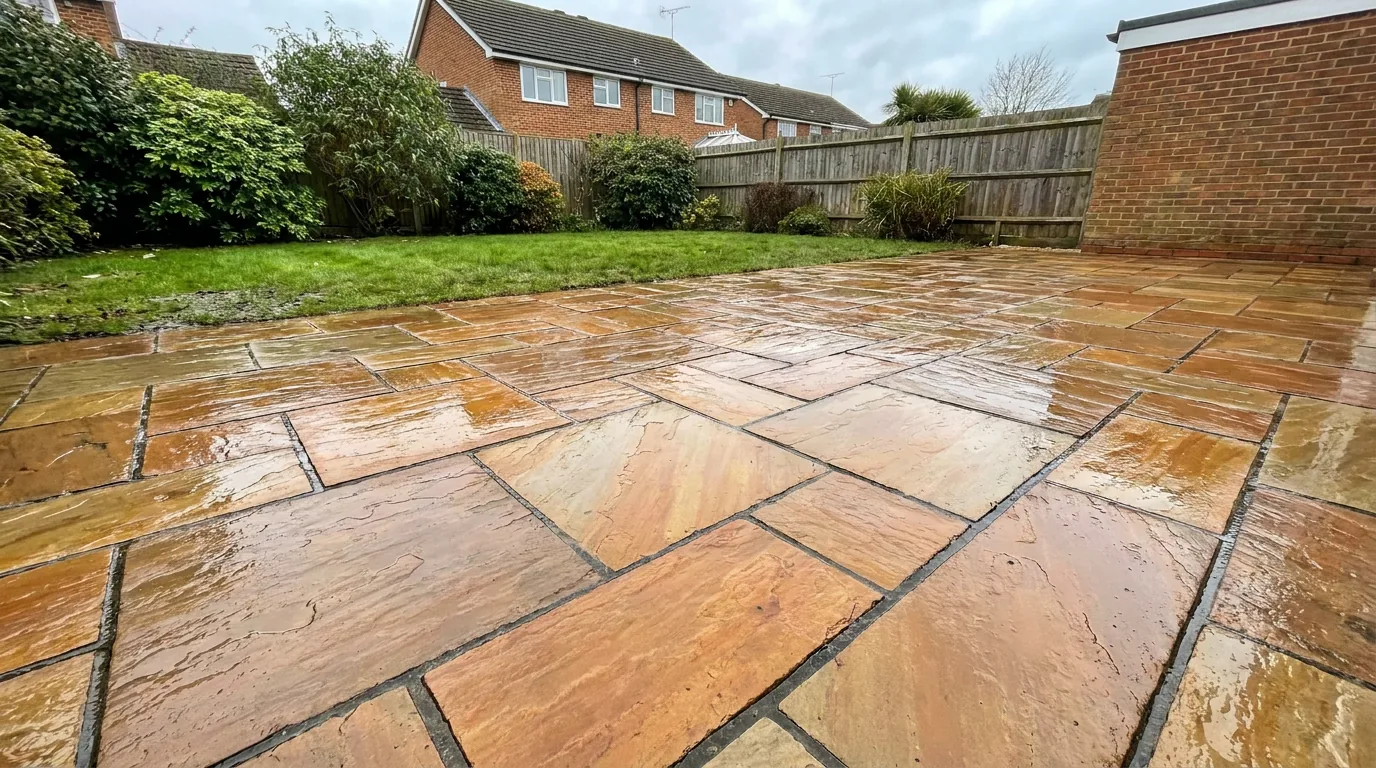
| Indian sandstone patio (25–50 m²) | £160–£320 | +25% | 12–18 | North-facing aspect across Banstead Woods accelerates black-spot fungus |
| Porcelain patio (20–40 m²) | £120–£260 | +20% | 24–36 | Low porosity; biocide-only treatment between deep cleans |
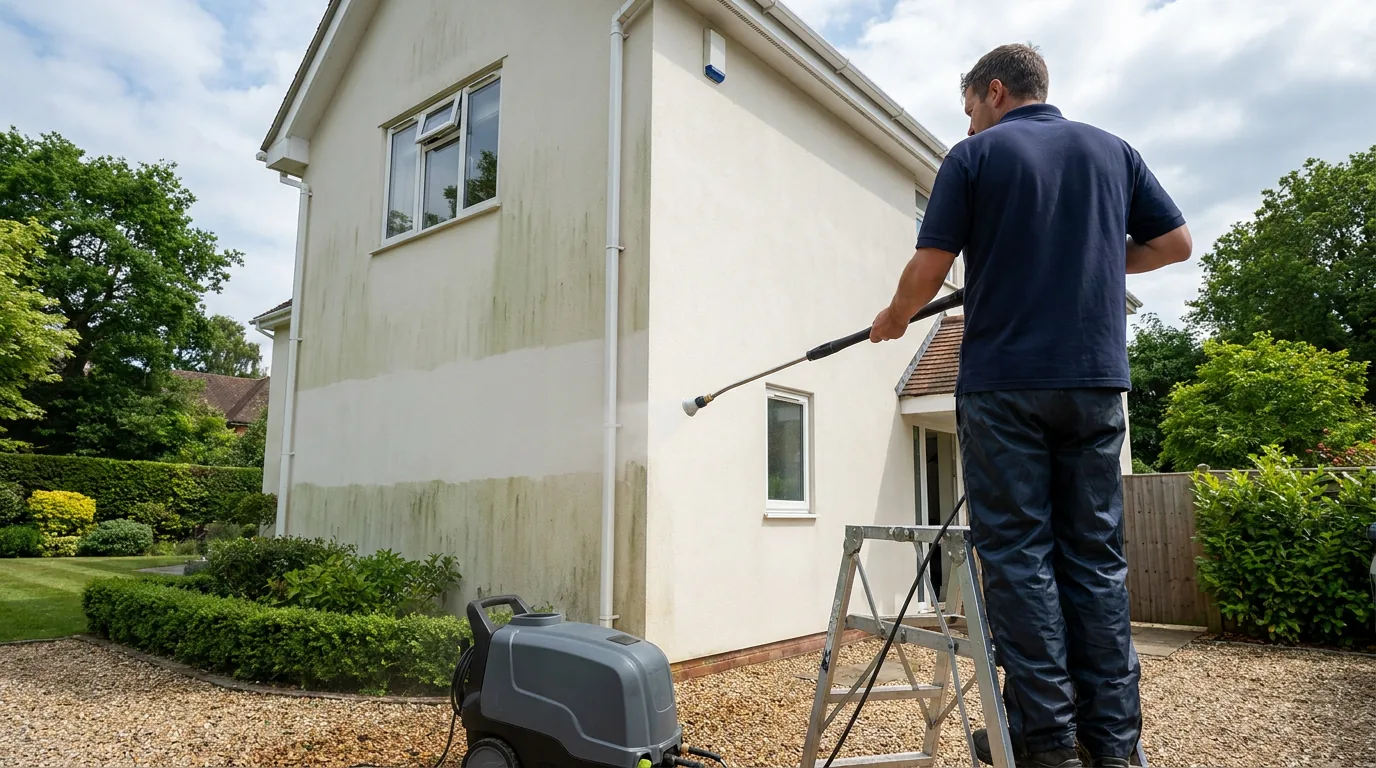
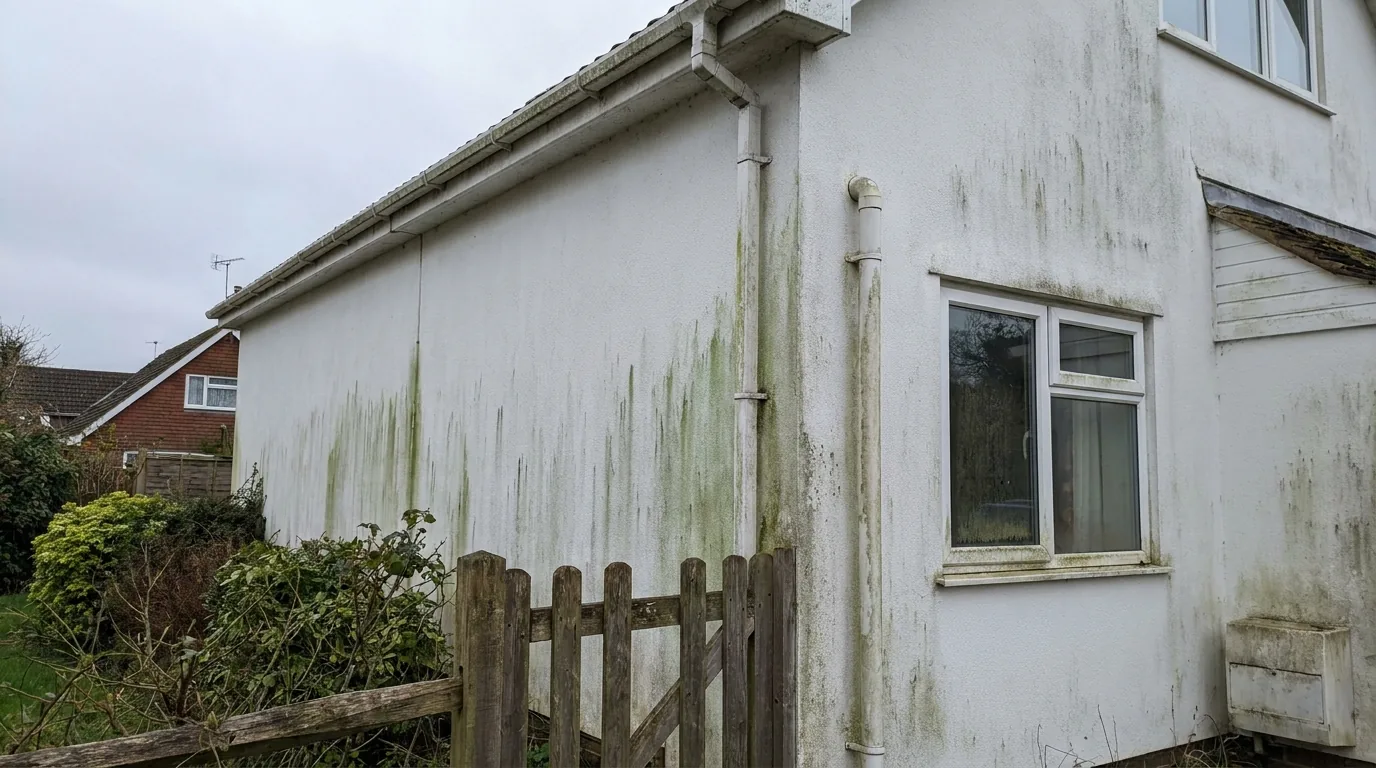
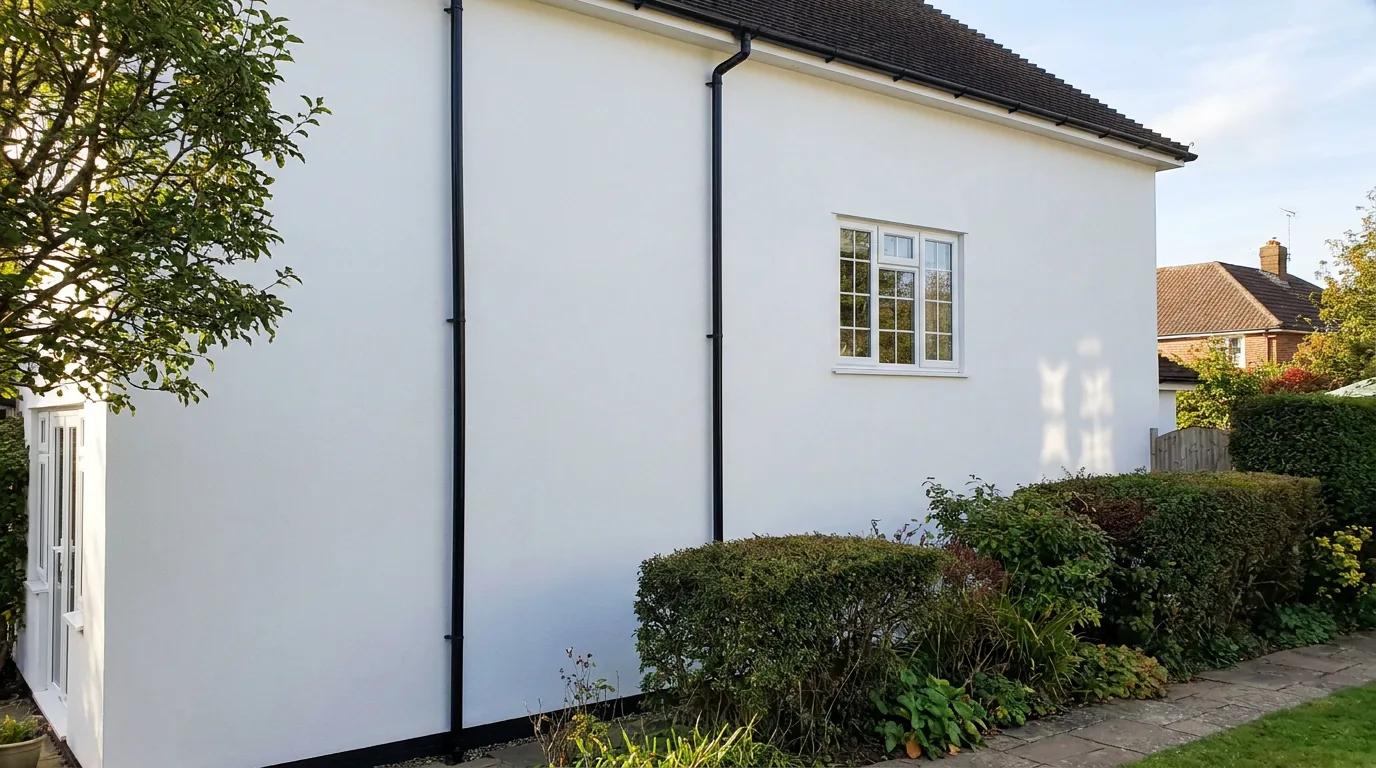
| Painted/silicone render (gable + bay) | £220–£520 | +50% | 36–60 | Two-storey Kingswood/Tadworth homes; soft-wash only; pole-access surcharge |
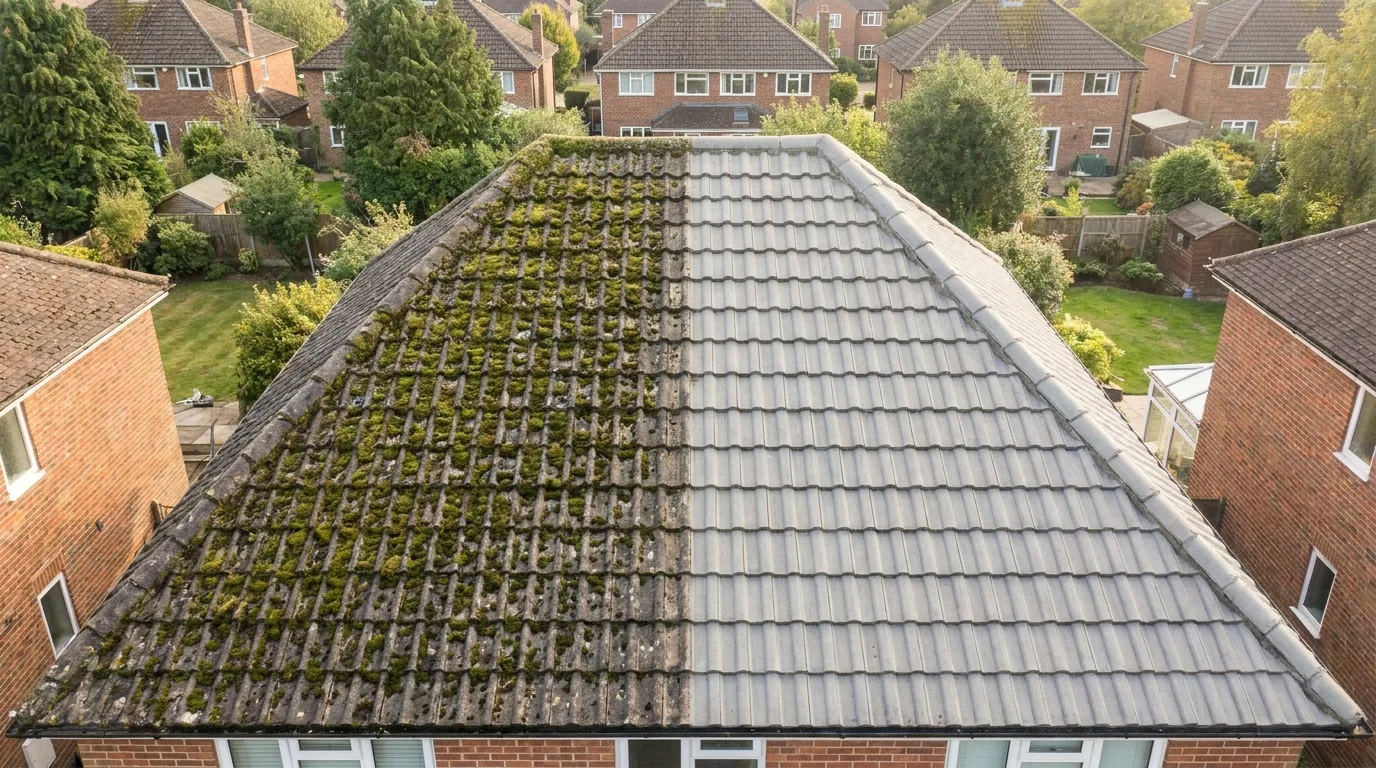
| Concrete/clay tile roof moss removal | £280–£650 | +40% | 60–120 | Larger detached pitches; tree-shade keeps moss germinating year-round |
Banstead price bands reflect 2026 client-billed quotes on SM7/KT20 jobs. The “vs RH1 baseline” column compares to the same surface and condition on an equivalent Redhill plot, where typical drives are 30–50 m². The matrix is conservative on render and roof because the access surcharge varies more than the per-m² clean cost.
What’s actually under your Banstead drive
The North Downs ridge between Banstead Village and Tadworth sits on the Upper Cretaceous Chalk Group[2] — specifically the White Chalk Subgroup, with the Lewes Nodular Chalk and Seaford Chalk formations close to the surface. Two practical consequences for paving:
- Drainage is excellent. Fissured chalk is highly permeable, so rainwater moves vertically rather than pooling under a sub-base. That’s why a correctly installed Banstead drive almost never shows the hydrostatic-lift problems you see on London-clay drives further north.
- Movement is low — but not zero. Chalk is a soft rock that dissolves in mildly acidic groundwater (karst) over centuries. Localised solution features under a sub-base are rare in residential SM7 but show up occasionally on the older Banstead High Street terraces. If a block-paving drive has dipped at the gully end, that’s the suspect.
Because the chalk drains well, BS 7533-101:2021[7] — the standard governing modular paving construction — treats the jointing sand as part of the load-transfer system. That’s why we re-sand on every block-paving clean: lose the sand, lose the structural binding, and the surface starts to creep under tyre load.
Why the moss-regrowth interval is shorter than the SM7 chalk drainage suggests
Two competing forces drive the cadence. Met Office Wisley — the closest station to SM7 — records 648.41 mm annual rainfall (1991–2020 averages)[1], around 43% drier than the UK 1,147 mm mean. That alone would point to a 24-month cleaning cadence for most Banstead drives. But Banstead Woods, Kingswood Warren and the mature treelines through Nork cast deep shade on a high proportion of north-facing drives. Algae and biofilm need only diffuse moisture, not pooled water, to colonise.
Lithofin’s manufacturer guidance on Algex[4] specifies an annual reapplication interval, preferably in spring. That gives the practical floor: on a shaded SM7 north-facing drive, biocide once a year sets the baseline; the deep-clean interval extends to 18–24 months on block paving, 24–36 months on resin-bound, only if the biocide has been kept up.
Slip-risk is the SM7 safety case — not just aesthetics
UKSRG / HSE-endorsed pendulum-test guidance[5] uses PTV (Pendulum Test Value) as the slip-risk index: PTV ≥36 = low risk, 25–35 = moderate, ≤24 = high. Algae and moss are the two contaminants that drop outdoor paving below PTV 36 fastest. For older SM7 residents and pre-school kids in equal measure, that’s the practical reason to clean every 18–24 months rather than “when it looks bad” — you cross the threshold before the visual cue arrives.
Permeable paving, SUDS and Reigate & Banstead Borough Council
Banstead falls under Reigate & Banstead Borough Council planning policy[6]. The Development Management Plan and current Local Plan apply national Sustainable Drainage Systems (SUDS) guidance to new and replacement driveways. The practical SM7 takeaway: if you’re replacing a non-permeable drive larger than 5 m² that drains to the highway, you may need planning permission unless the new surface is permeable or drains to a soakaway. Existing paved drives that simply need cleaning are unaffected — this only matters if a Kingswood or Tadworth owner is debating a re-lay rather than a clean.
SM7 mistakes that void warranties
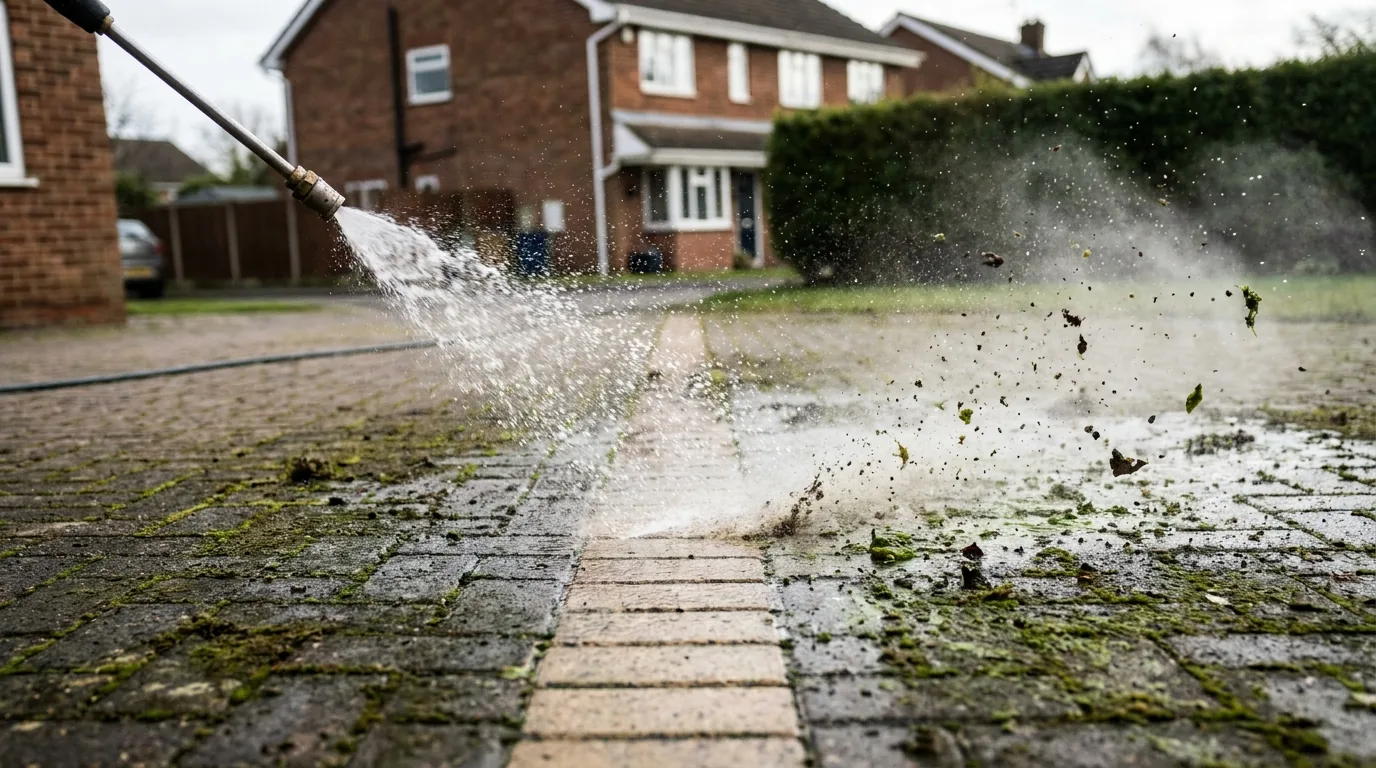
- Turbo / dirt-blaster nozzles on Marshalls block paving. Marshalls’ cleaning & maintenance guidance[3] is explicit: no more than medium pressure, 30° oblique angle, at least 200 mm (8″) from the surface. A rotating turbo jet exceeds the surface tolerance and risks Marshalls Register warranty rejection on Drivesett and Tegula ranges — common across Kingswood Warren.
- Sealing Indian sandstone in winter. Cold + damp porous stone + polymer film traps moisture under the seal. The film blisters, the stone spalls. Always seal in dry summer conditions if at all.
- Skipping the re-sand on block paving. BS 7533-101 treats the joint sand as load-bearing[7]. Lose it, and surface creep follows within 18 months on heavily used Kingswood drives.
What we actually do on a Banstead job
- Walk the drive — check for sunken bays (chalk solution feature suspects), Marshalls Register block-paving warranty status, and jointing-sand condition.
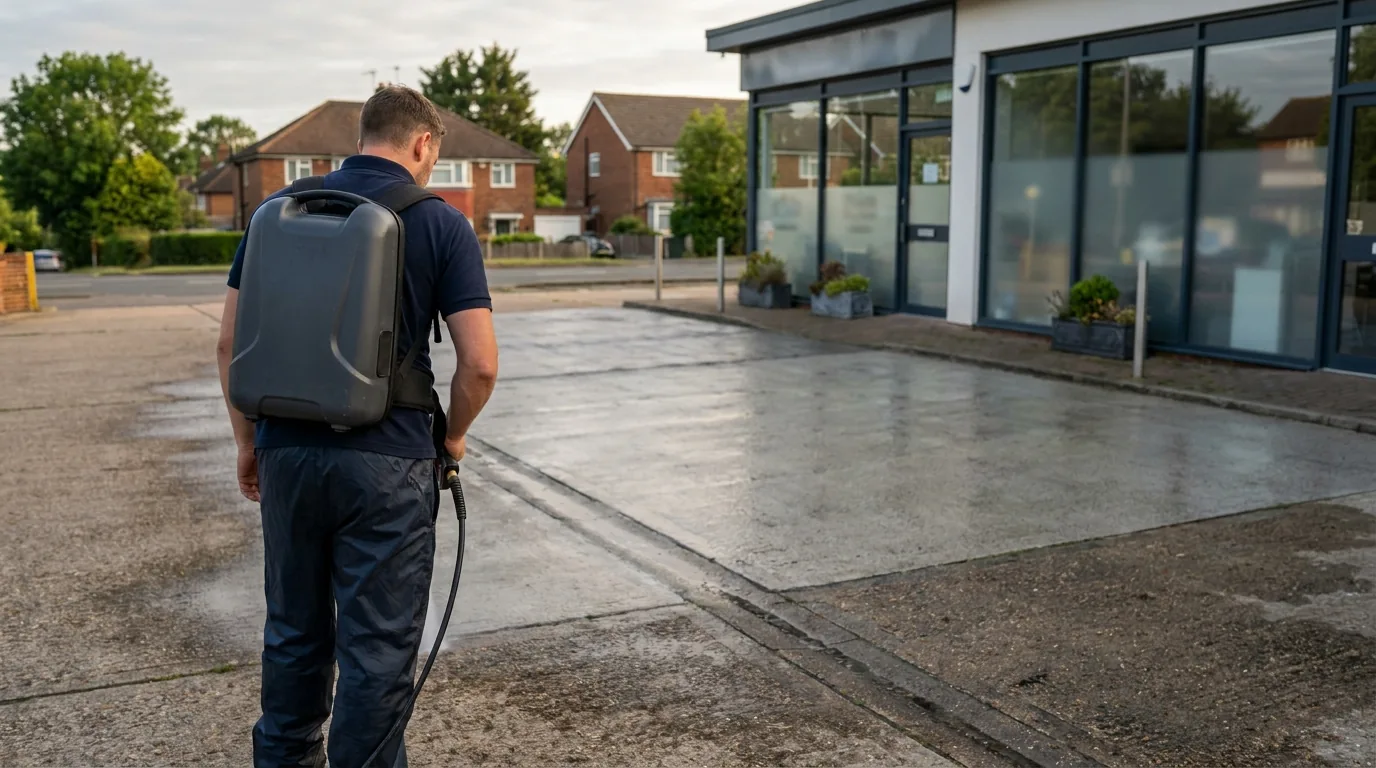
- Pre-treat with biocide — Lithofin Algex or equivalent, dilute per manufacturer datasheet, 24–48 hr dwell.
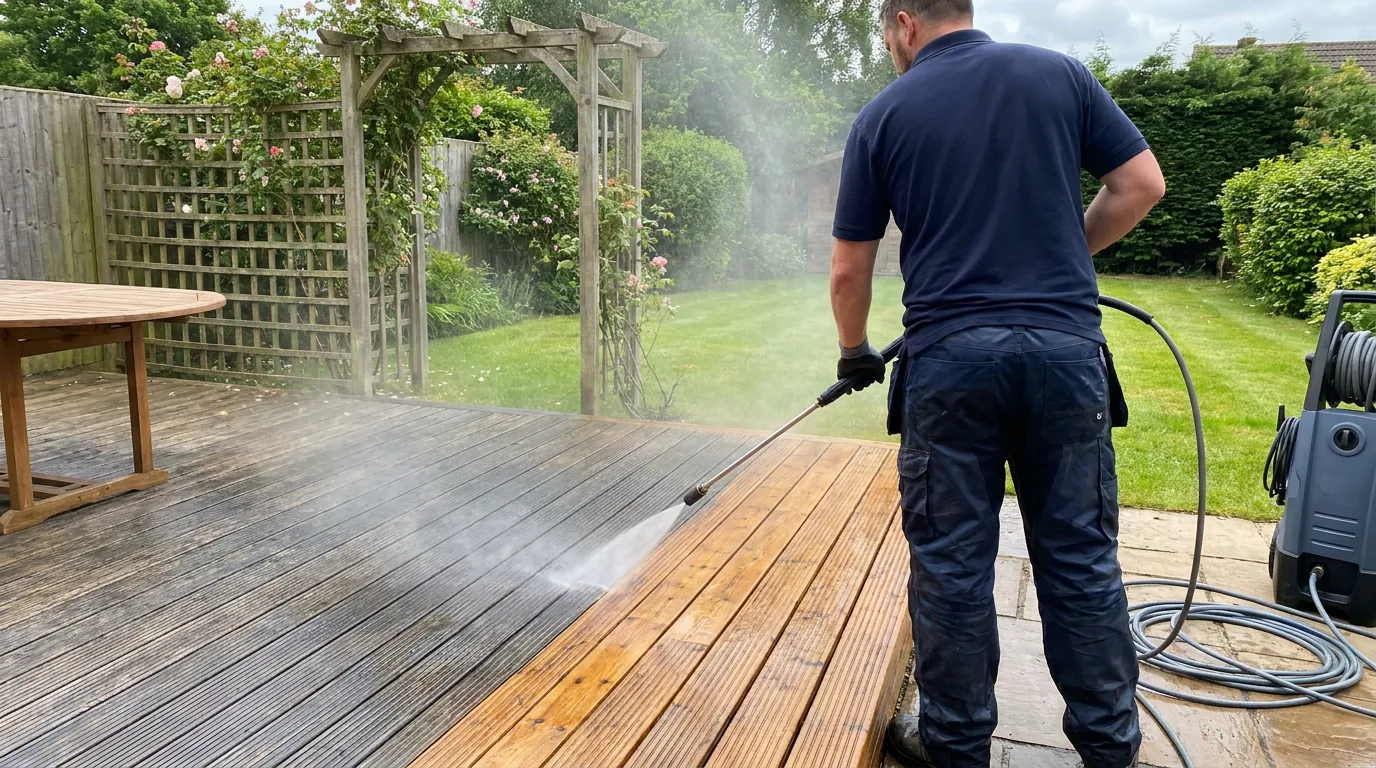
- Surface-clean at medium pressure — 30° oblique angle, 200 mm minimum, never turbo nozzle (Marshalls compliance).
- Re-sand the joints — kiln-dried sand, dry day, swept and vibrated where access allows.
- Walk the drive again with the customer — we reshoot anything that hasn’t come up. If the result isn’t right, we redo it free.
Pressure washing across SM7 — what we cover
Banstead sits on top of the North Downs, eight miles north of Redhill across the chalk. The SM7 (and bordering KT20) housing stock skews substantial: large detached homes in Kingswood and Tadworth, premium properties along the Banstead-Chipstead corridor, plus the older village fabric around Banstead High Street and Nork. We cover Reigate (RH2), Redhill (RH1), Epsom (KT17), Leatherhead (KT22) and the rest of Surrey within 20 miles. Full list of areas here. Or call 01737 652 515 — Patrick will walk through your SM7 drive in five minutes.
Helpful guides for Banstead homeowners
Driveway cost guide · Indian sandstone guide · Block paving costs · Kerb appeal & property value · Moss removal · How often to clean
Sources
Every claim about chalk geology, rainfall, biocide cadence, slip-risk thresholds, paving warranty and SUDS policy on this page is sourced. We cite primary data (Met Office, BGS, Reigate & Banstead Borough Council) plus manufacturer guidance (Marshalls, Lithofin) and the BS standard governing block-paving construction. We do not cite competitor pressure-washing blogs.
- Met Office — Wisley (Surrey) Location Long-Term Averages 1991–2020. Closest station to Banstead (SM7). Annual rainfall 648.41 mm; ~43% below the UK 1,147 mm mean. metoffice.gov.uk — Wisley averages. Accessed 21 May 2026.
- British Geological Survey (BGS) — Chalk Group lithostratigraphy (White Chalk Subgroup, Upper Cretaceous), governing the North Downs ridge between Banstead and Tadworth. Highly permeable; karst solution features possible at depth. bgs.ac.uk — Chalk Group lexicon. Accessed 21 May 2026.
- Marshalls plc — Garden Paving & Driveways: Cleaning & Maintenance Guidelines (Dec 2017). “No more than medium pressure… lance held at an oblique angle… at least 200 mm (8″) from the surface.” Re-sand if joints are washed out. marshalls.co.uk — cleaning guidelines (PDF). Accessed 21 May 2026.
- Lithofin AG — Algex Special Cleaner product page and technical information. Manufacturer-specified reapplication interval is annual, preferably in spring, for ongoing algae/biofilm control on stone surfaces. lithofin.com — Algex. Accessed 21 May 2026.
- UK Slip Resistance Group / HSE — Introduction to the Pendulum Tester. HSE-endorsed slip-risk method using BS 7976 Parts 1–3. Widely adopted thresholds: PTV ≥36 low risk, 25–35 moderate, ≤24 high. ukslipresistance.org.uk — pendulum tester. Accessed 21 May 2026.
- Reigate & Banstead Borough Council — Local Plan and Development Management Plan, including drainage and SUDS policies governing replacement front-garden paving. reigate-banstead.gov.uk — Local Plan. Accessed 21 May 2026.
- BSI — BS 7533-101:2021 “Pavements constructed with clay, concrete or natural stone paving units — Code of practice for the structural design of pavements using modular paving units.” Treats jointing material as part of the structural load-transfer system. bsigroup.com — BS 7533-101:2021. Accessed 21 May 2026.