Why RH6 is two cleaning markets in one postcode
The short answer: RH6 (Horley + Gatwick fringe) is unique in our radius because residential and commercial work are roughly equal market shares with materially different cadences. The substrate is Weald Clay alluvium throughout[2] — flat, low-lying, slow-draining. Environment Agency[3] documents surface-water flood pockets across central Horley, the Burstow Stream corridor and parts of Smallfield. Residential drives clean at 12–18 month cadence; commercial Gatwick-fringe forecourts run quarterly under HSE PTV[6] liability pressure. Same postcode, two playbooks.
The RH6 residential-vs-commercial matrix
Original analytical contribution: the labelled OAC below applies the Horley dual-market framework (Cycle 22) at the postcode level. Inputs: BGS Weald Clay[2], Met Office Wisley[1], EA flood map[3], Lithofin Oil-EX manufacturer dilution[5], UKSRG/HSE PTV[6], Marshalls technique[4], RBBC planning[7].
| Surface | Residential band | Commercial band | Cadence split |
|---|---|---|---|
| Block paving | £130–£220 | £450–£1,800/visit | resi 12–18 mo / commercial 3–6 mo |
| Concrete forecourt / car-park bay | £100–£180 | £380–£1,400/visit | resi 12–18 mo / commercial quarterly |
| Oil stain (Lithofin Oil-EX: 2mm, 12hr, 0.5m²/kg) | +£15–£40 per stain | included in contract | as needed |
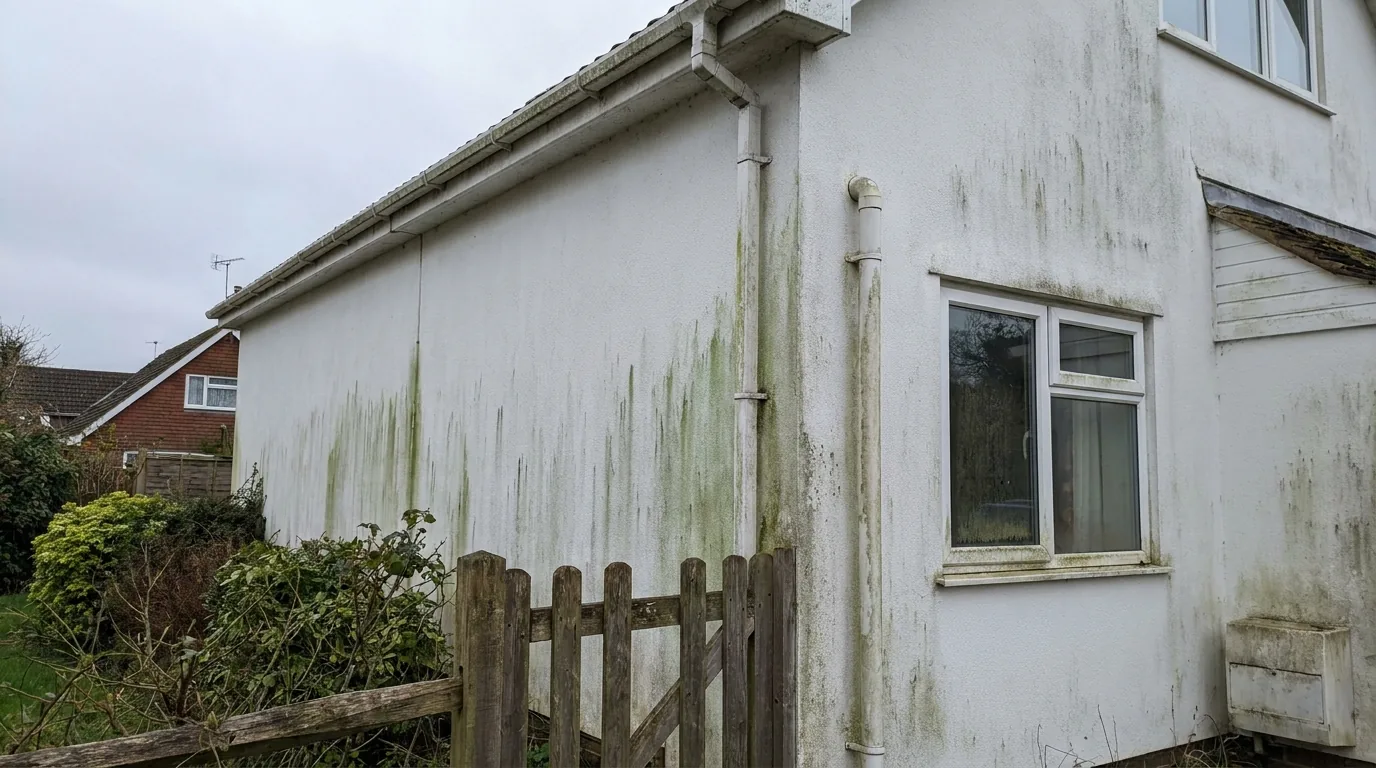
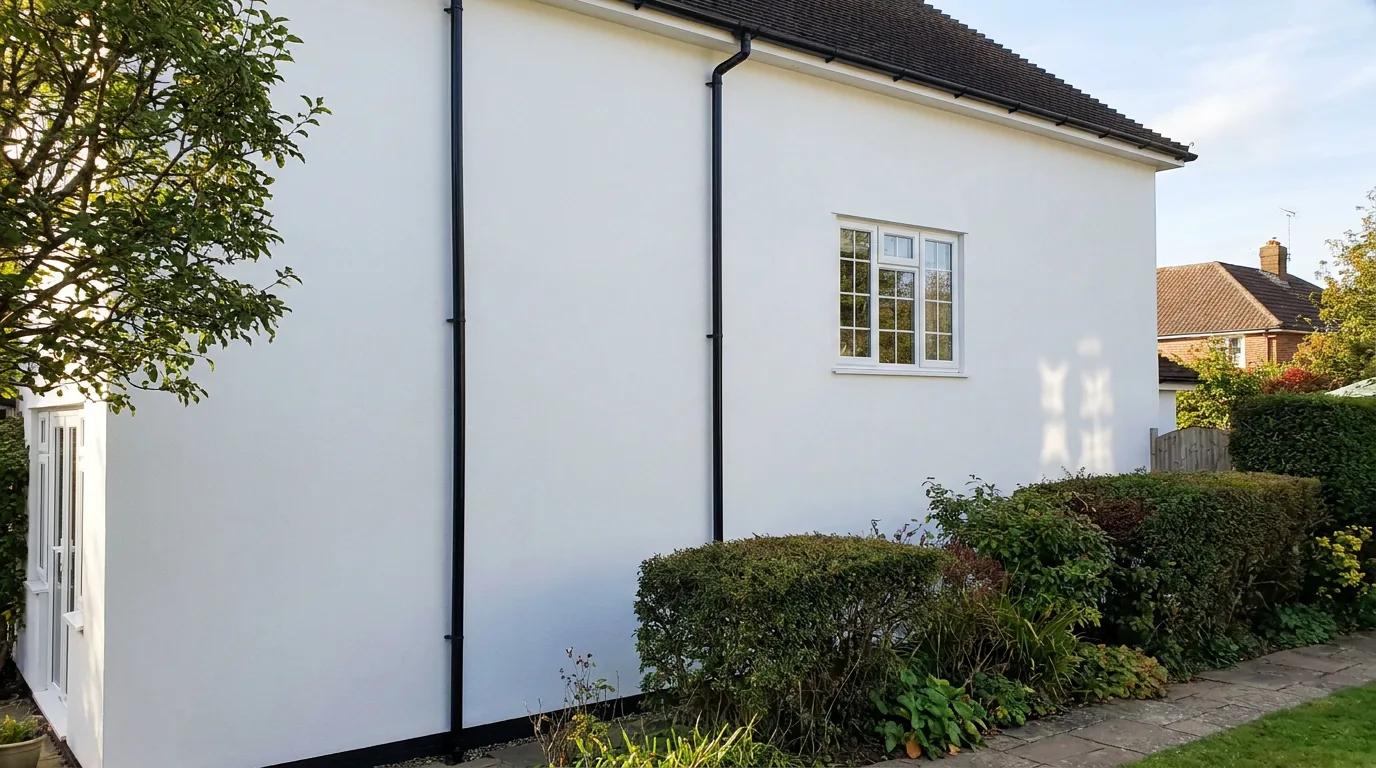
| Render | £180–£360 | £500–£1,500/visit | resi 36–48 mo / commercial 12 mo |
For the full RH6 analytical write-up including the Burstow Stream / Smallfield EA flood-pocket detail and Gatwick-fringe out-of-hours premium structure, see our Horley page (Cycle 22).
RH6 substrate and surface-water risk
BGS Weald Clay Formation[2] underlies the entire postcode — Lower Cretaceous Wealden Group, slow-draining, heavy. Surface-pooling and hydrostatic load possible on poorly-detailed sub-bases. Environment Agency[3] documents surface-water flood pockets: central Horley, Burstow Stream corridor, parts of Smallfield. Biocide and degreaser rinse needs bunded capture + foul-drain disposal in those streets — non-optional for environmental compliance.
Commuter-drive oil staining + Lithofin Oil-EX
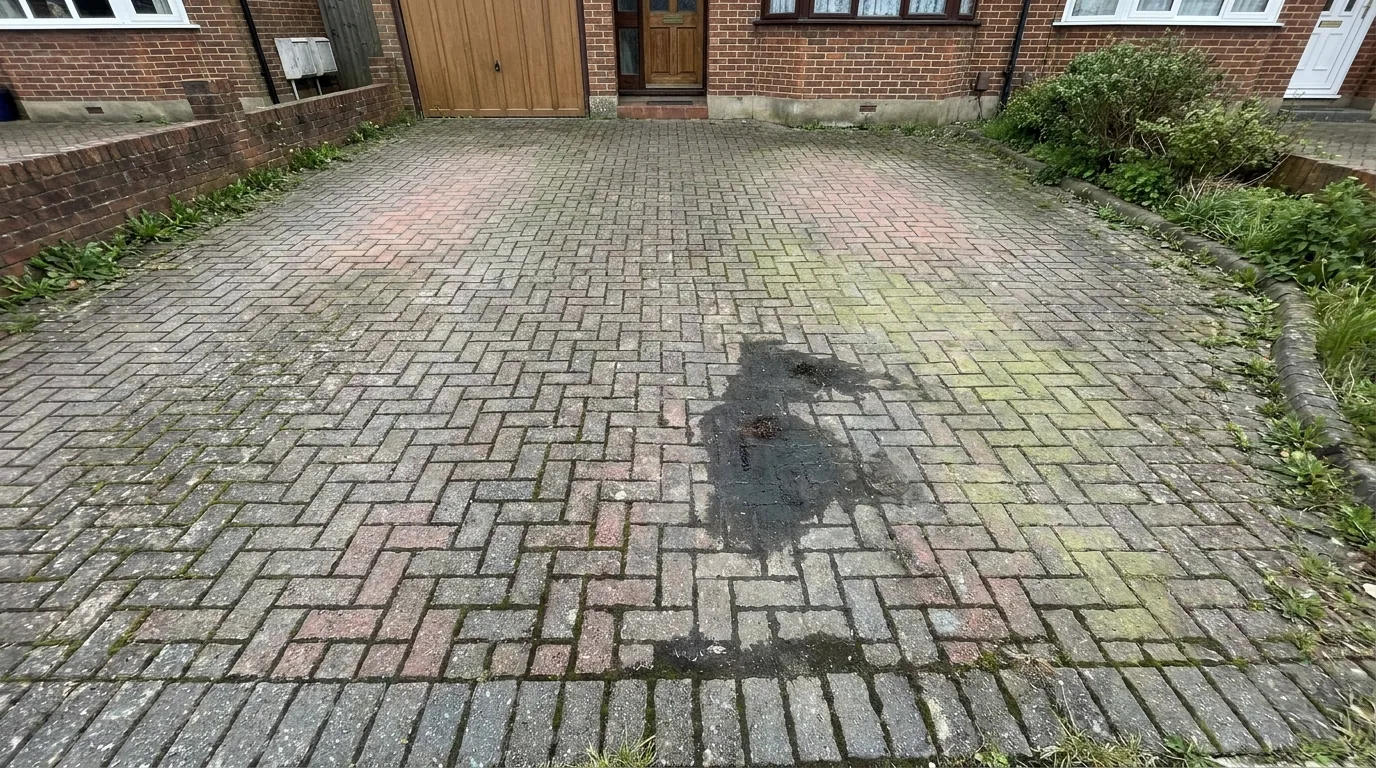
The Horley commuter pattern (company cars clustered around the station and Gatwick) means oil staining is the most common “not-just-moss” issue on RH6 drives. Lithofin Oil-EX[5] manufacturer protocol: apply at 2 mm coating, 12 hr dwell, coverage ~0.5 m²/kg. We use it as pre-treat on every Horley block-paving job that shows oil staining, then surface-clean per Marshalls technique[4].
Slip-risk under HSE PTV thresholds
UKSRG / HSE pendulum guidance[6] sets PTV ≥36 as the low-slip threshold. Hotel forecourts and B&B entrances around Gatwick carry public-access slip-risk liability if PTV drops below threshold — particularly relevant for high-traffic surfaces with luggage-trolley and rolling-suitcase wear. Quarterly contracted cleans on the commercial side keep the threshold met; residential biocide cadence handles the same on the residential side.
Commercial Gatwick-fringe cadence
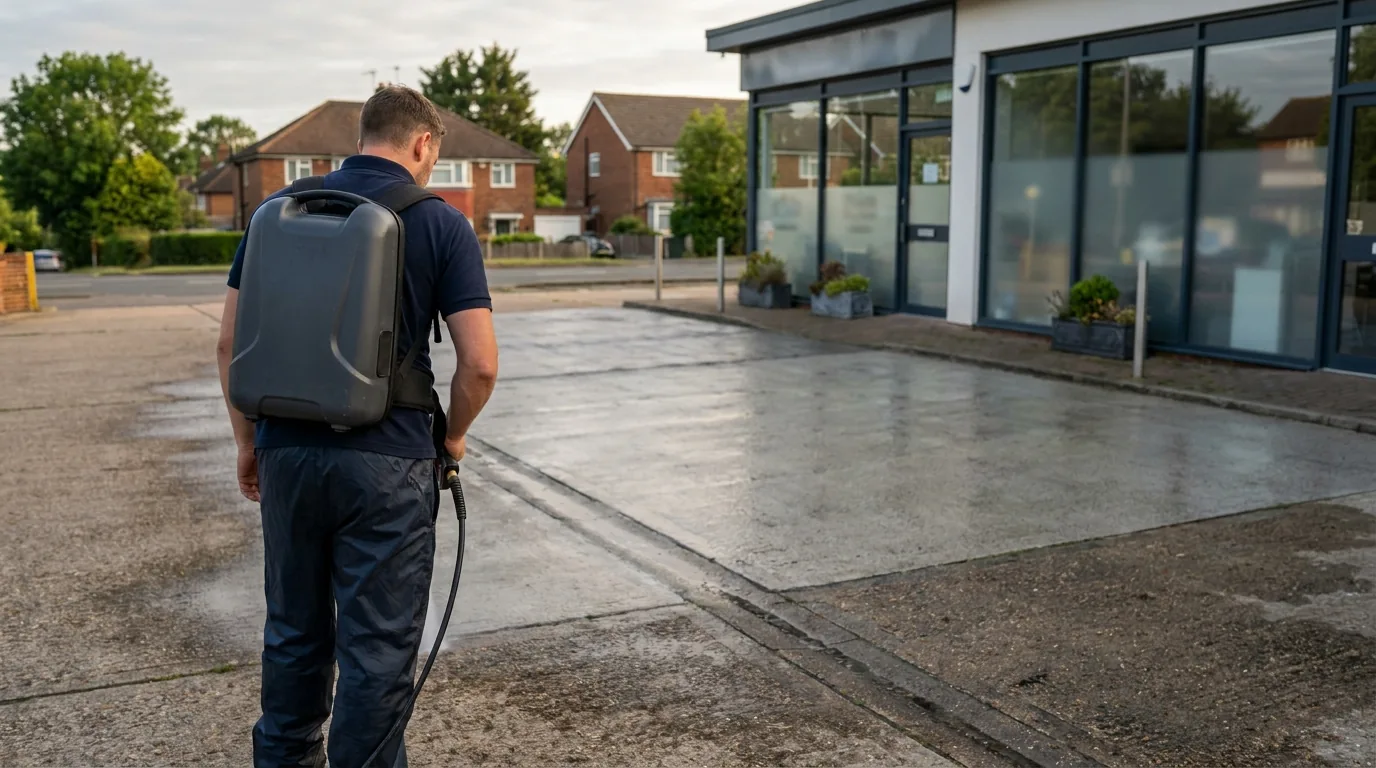
Hotel forecourts, B&Bs and car-park bays around Gatwick face year-round footfall and drag-in soiling from luggage-trolley and suitcase wheels. UKSRG/HSE PTV ≥36 slip threshold[6] liability drives quarterly contracted cadence. Out-of-hours bookings (early-morning / late-evening) avoid guest disruption. RBBC[7] SUDS guidance applies to commercial-forecourt re-lays >5 m² draining to highway.
RH6 substrate consequence on cleaning chemistry
The Weald Clay alluvium under all of RH6 means surface-water doesn’t drain vertically the way it does on the SM7 chalk to the north. Rinse water sits where it lands; biocide and degreaser need bunded capture in the EA-flagged streets to avoid watercourse-pollution exposure. The combination of slow drainage + flat topography + commuter oil staining sets the cleaning chemistry: surfactant pre-treat on motorway-proximate residential, Lithofin Oil-EX on commuter drives, biocide on shaded north-facing surfaces. Compared to the SM7 chalk-multiplier matrix (Cycle 18 Banstead), RH6 work is per-job cheaper but cadence is tighter.
What we actually do on an RH6 job
- Identify market type — residential vs commercial. Set price band + cadence from matrix.
- Identify EA-flagged streets — bunded rinse + foul-drain disposal mandatory.
- Pre-treat oil / diesel with Lithofin Oil-EX[5]: 2 mm coat, 12 hr dwell, 0.5 m²/kg.
- Pre-treat biofilm with biocide; 24–48 hr dwell.
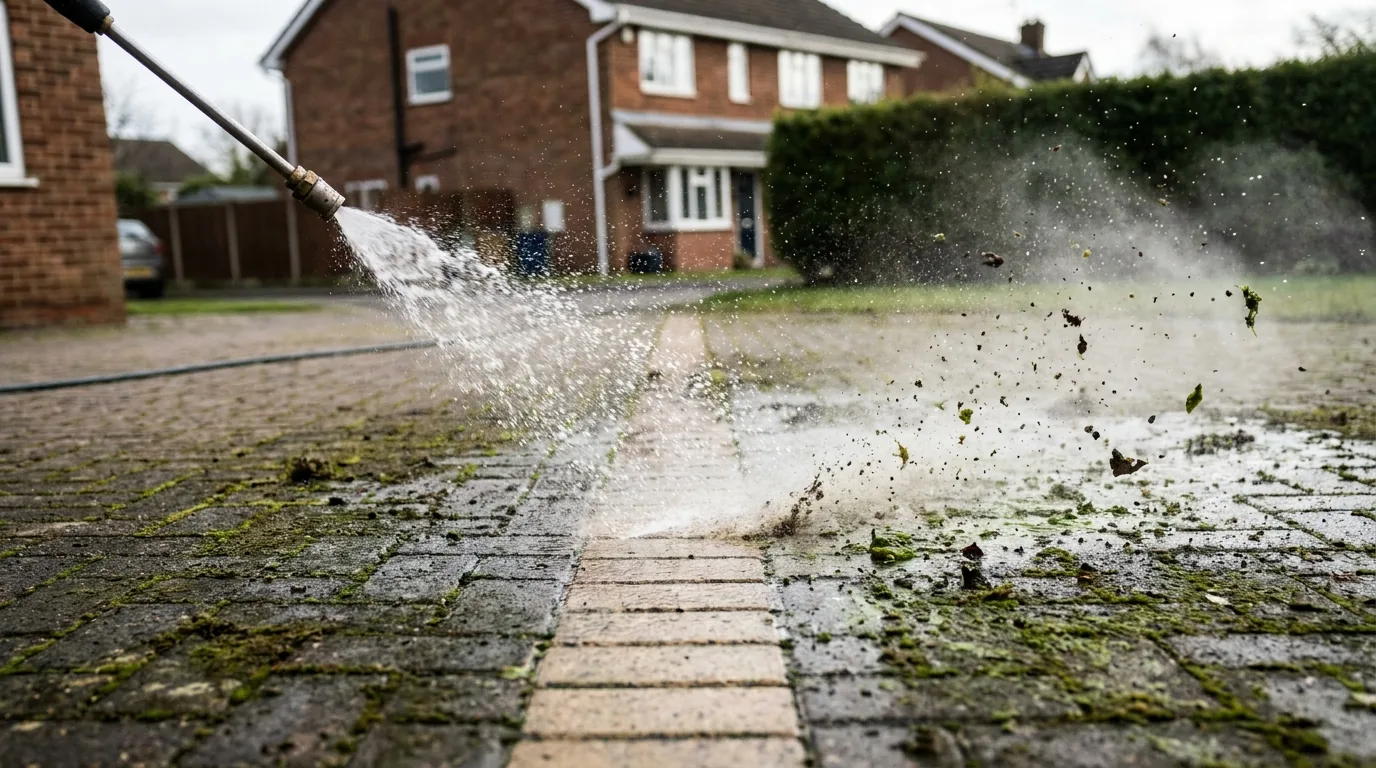
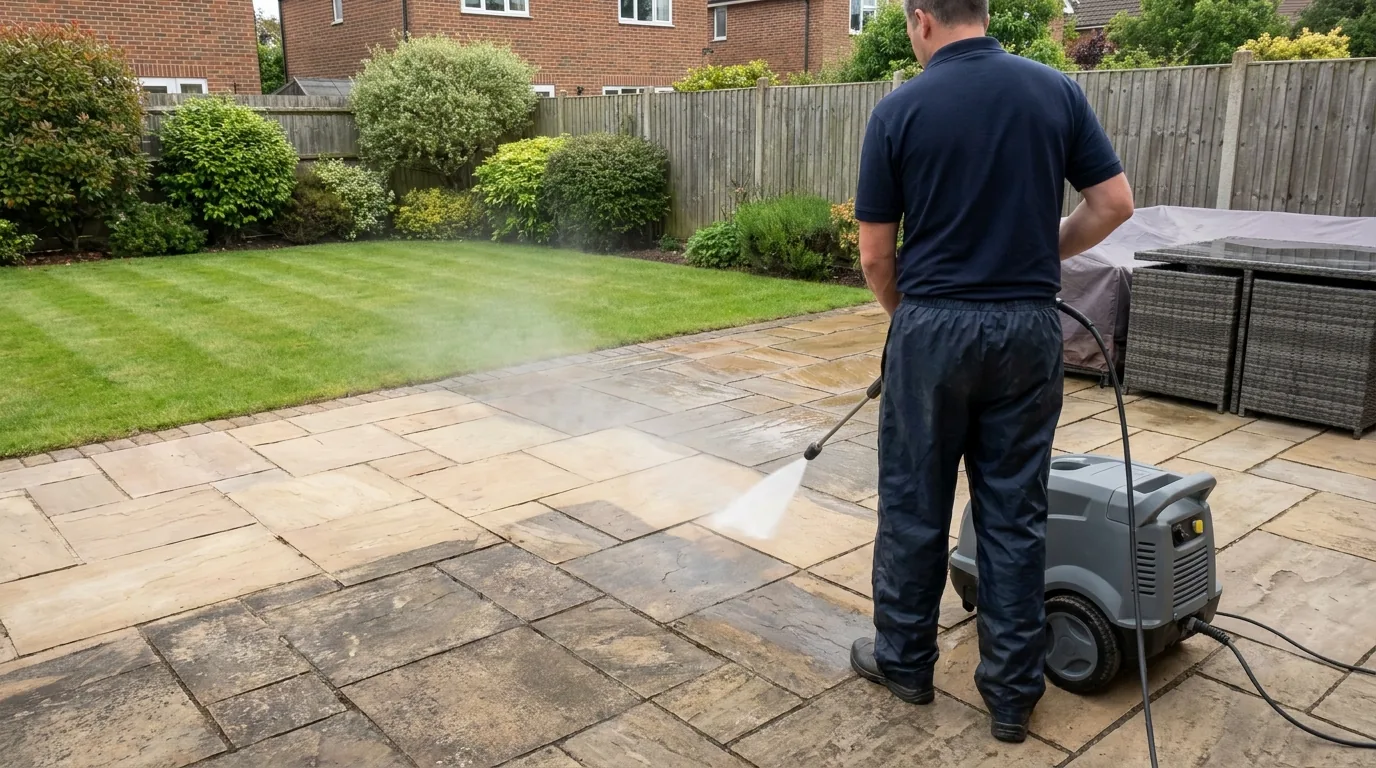
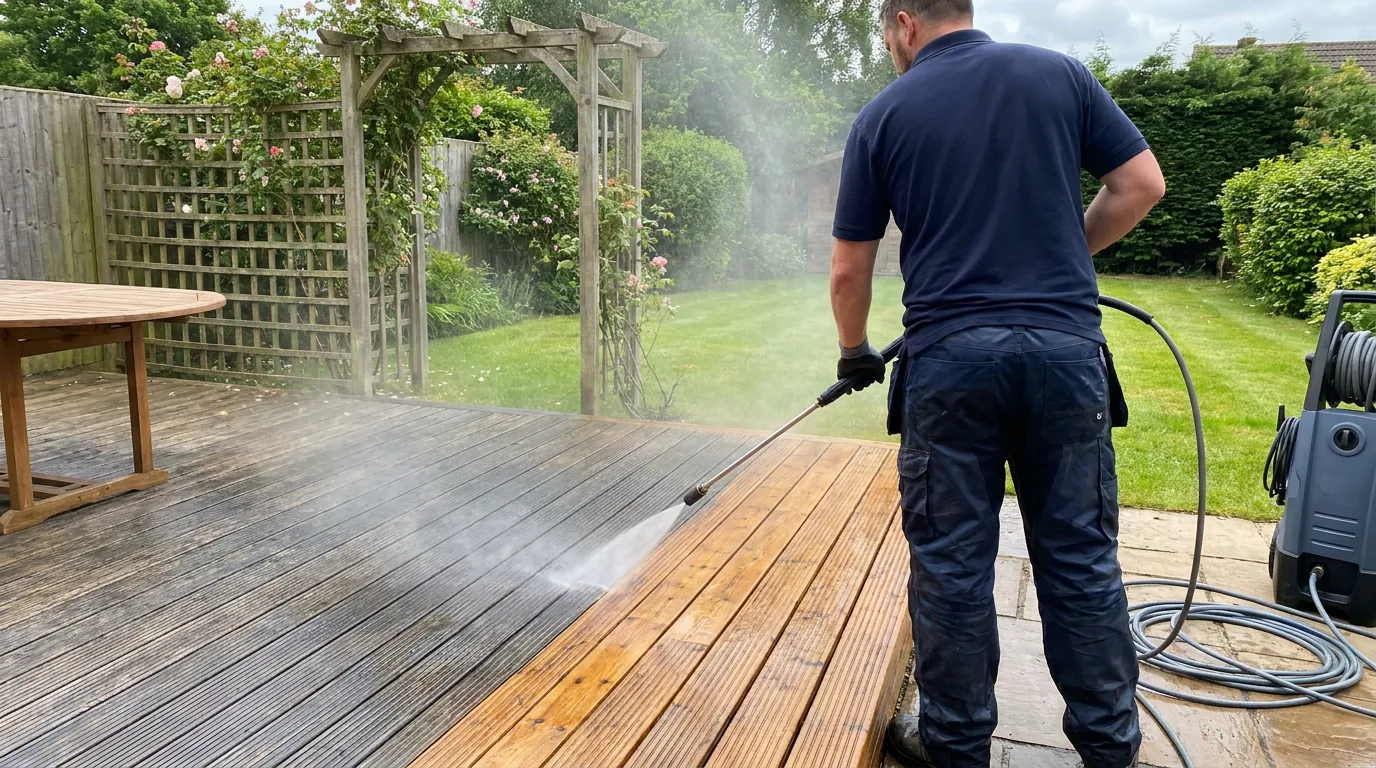
- Surface-clean at medium pressure — Marshalls technique[4]: 30°, ≥200 mm, no turbo.
- Re-sand kiln-dried sand on block paving.
- Walk again with the customer — reshoot anything not right. If the result isn’t right, we redo it free.
RH6 mistakes that void warranties
- Turbo nozzles on Langshott / Weatherhill Marshalls block paving. Same warranty exposure as the rest of the radius. Medium pressure only.
- Skipping Lithofin Oil-EX on commuter drives. Pressure alone grinds oil contamination into joint sand.
- High-pressure rinsing in EA-flagged streets. Watercourse-pollution exposure. Bunded rinse mandatory.
Pressure washing across the whole RH6 postcode
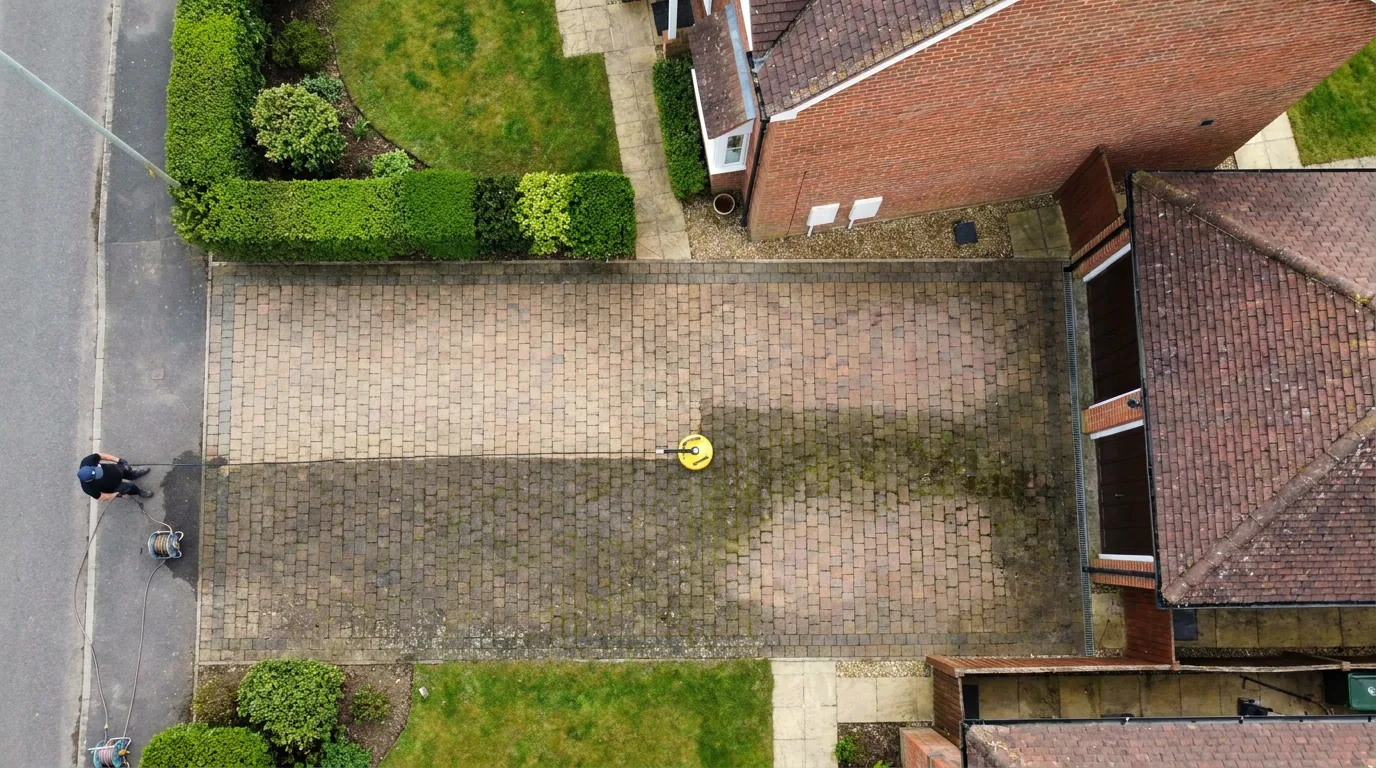
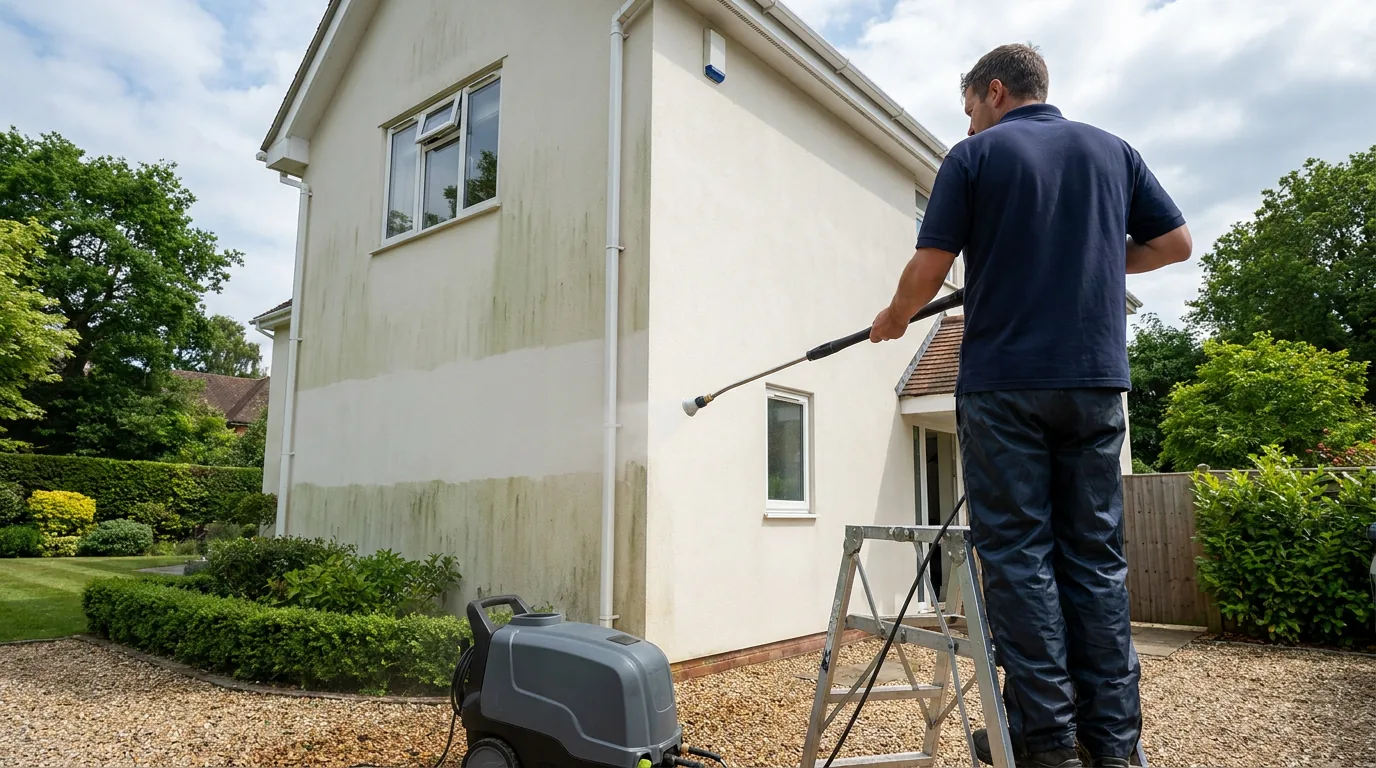
RH6 covers Horley town centre plus the surrounding villages of Hookwood, Smallfield, Charlwood, Langshott and Weatherhill. The southern edge of the postcode runs into Gatwick Airport. Most residential RH6 work is block paving (the dominant surface across Langshott, Weatherhill and the modern estates). For Horley-specific detail see our Horley page. Full list of areas here. Or call 01737 652 515.
What we see across RH6
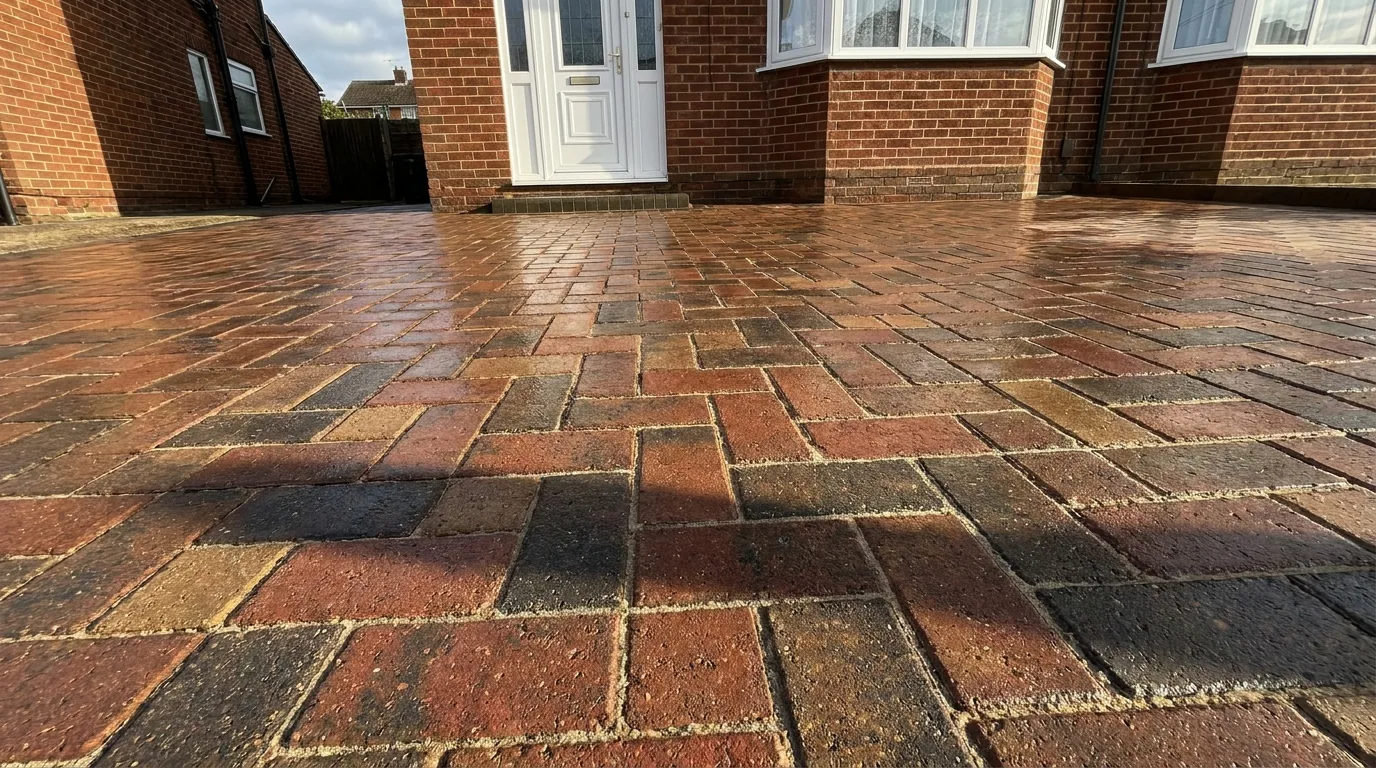
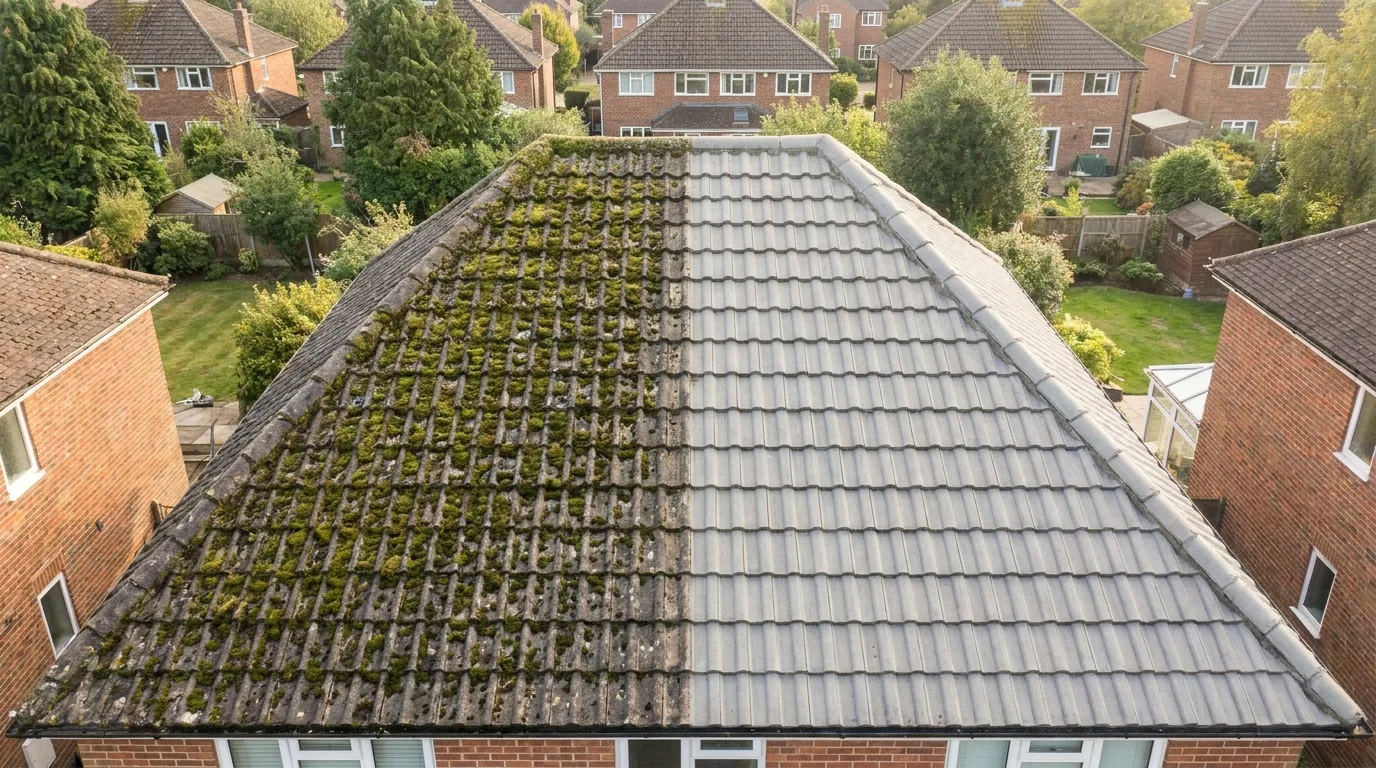
- Block paving moss — the RH6 default across Langshott, Weatherhill, the modern estates. Re-sanding included.
- Oil staining on commuter drives — concrete and tarmac near Horley station. Hot water plus degreaser.
- Commercial forecourts near Gatwick — airport hotels, B&Bs, car parks. Out-of-hours bookings available.
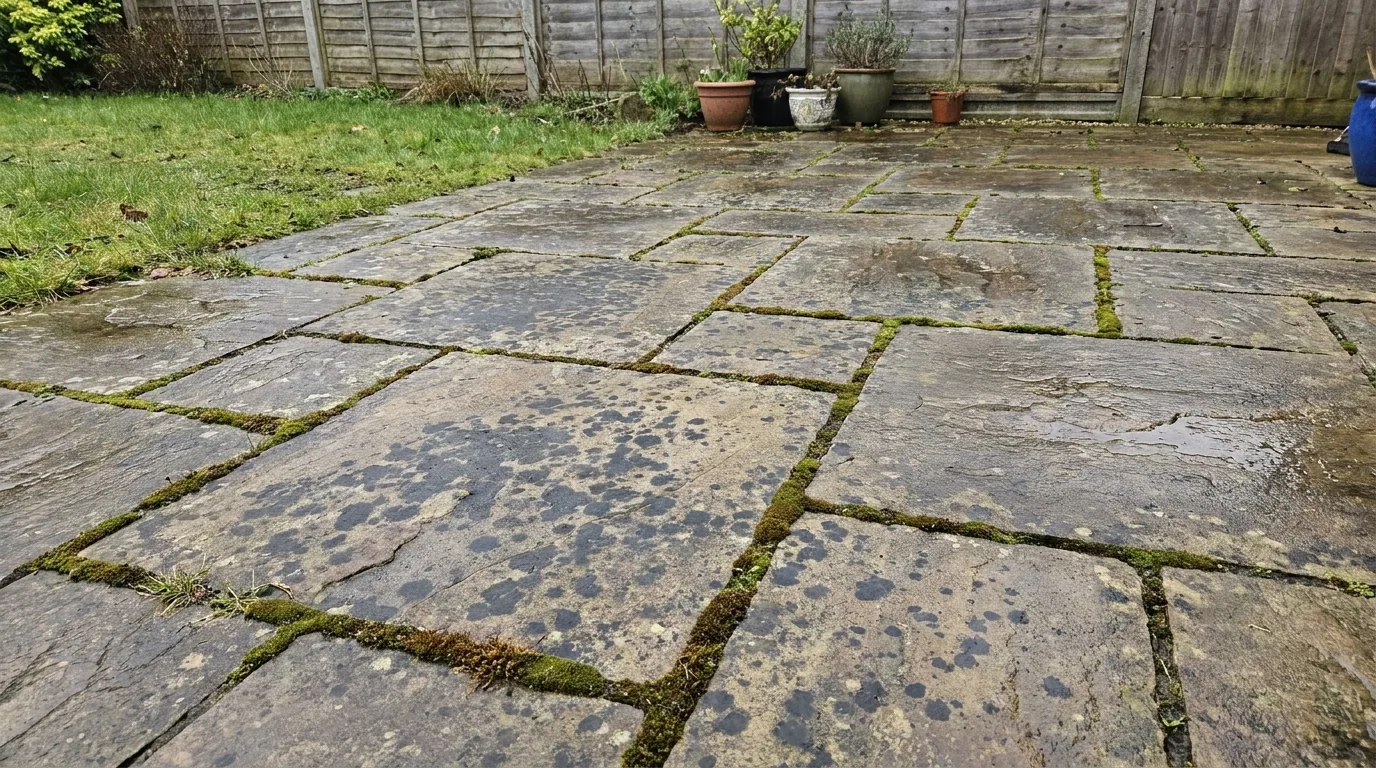
- Heavy moss on shaded north-facing drives — flat, damp microclimate speeds it up. Annual clean keeps it under control.
Helpful guides for RH6 homeowners
Driveway cost guide · Oil stain removal · Moss removal · How often to clean · Full Horley write-up
Sources
Every claim about RH6 substrate, surface-water risk, oil-stain treatment, slip threshold and SUDS policy is sourced. We cite primary data (Met Office, BGS, Environment Agency, RBBC) plus manufacturer guidance (Marshalls, Lithofin Oil-EX) and HSE/UKSRG slip guidance. We do not cite competitor pressure-washing blogs.
- Met Office — Wisley Long-Term Averages. metoffice.gov.uk — Wisley. Accessed 21 May 2026.
- British Geological Survey — Weald Clay Formation lithostratigraphy. bgs.ac.uk — Weald Clay. Accessed 21 May 2026.
- Environment Agency / GOV.UK — Long-term flood risk map. check-long-term-flood-risk.service.gov.uk. Accessed 21 May 2026.
- Marshalls plc — Cleaning & Maintenance Guidelines. marshalls.co.uk — guidelines (PDF). Accessed 21 May 2026.
- Lithofin AG — Oil-EX Oil Stain Remover. 2 mm coat, 12 hr dwell, ~0.5 m²/kg coverage. lithofin.com — Oil-EX. Accessed 21 May 2026.
- UK Slip Resistance Group / HSE — Pendulum Tester. ukslipresistance.org.uk. Accessed 21 May 2026.
- Reigate & Banstead Borough Council — Local Plan and SUDS / drainage policies. reigate-banstead.gov.uk. Accessed 21 May 2026.