UK Driveway Types Compared: Complete 2026 Guide

Block paving, tarmac, resin, concrete, gravel, stone — every UK driveway material compared on cost, lifespan, maintenance, and cleaning.

Last updated: April 2026

Key Facts: UK Driveway Types 2026
  • Block paving is the most popular UK driveway surface (£90–£130/m² installed)
  • Gravel is the cheapest option (£15–£40/m² installed)
  • Natural stone lasts the longest (30–60+ years)
  • Resin bound is the fastest-growing choice — permeable, no planning permission needed
  • Impermeable surfaces over 5m² require planning permission (since 2008)

The quick answer: There are 10 main driveway types used across the UK, ranging from £15/m² for gravel to £250/m² for premium natural stone. The best choice depends on your budget, how much maintenance you're willing to do, whether you need planning permission, and how long you want it to last. This guide compares every option side by side so you can make an informed decision.

Choosing a driveway is a significant investment — most homeowners spend £2,000–£10,000 on a new surface, and it needs to last 15–30 years or more. Get it wrong and you're looking at premature cracking, constant weeding, drainage problems, or a surface that looks tired within a few years. Get it right and your driveway adds genuine value to your home, requires minimal upkeep, and looks good for decades.

Quick Comparison: All 10 UK Driveway Types

This table gives you a snapshot of every major driveway material available in the UK. Use it to narrow down your options before reading the detailed sections below.

Driveway Type Cost/m² Lifespan Maintenance Permeable? Best For
Block paving £90–£130 20–30 years Medium Optional Versatility, kerb appeal
Tarmac £60–£90 15–25 years Low No Budget, quick install
Concrete £70–£120 20–30 years Low No Durability, modern look
Pattern imprinted concrete £80–£130 15–25 years Medium No Decorative on a budget
Resin bound £60–£100 15–25 years Low Yes Low maintenance, modern
Resin bonded £40–£70 8–15 years Medium No Budget decorative overlay
Gravel £15–£40 5–15 years High Yes Lowest cost, security
Natural stone £130–£250 30–60+ years Low–Medium Optional Premium kerb appeal
Cobblestones £120–£200 25–50+ years Low Optional Period properties, character
Clay pavers £100–£160 25–50+ years Medium Optional Colour retention, warmth

Note on costs: All prices are per m² including installation, sub-base preparation, and VAT for 2026. Actual prices vary by region, access difficulty, and contractor. Driveways in the South East (including Surrey) tend to be at the higher end of these ranges due to higher labour costs.

1. Block Paving

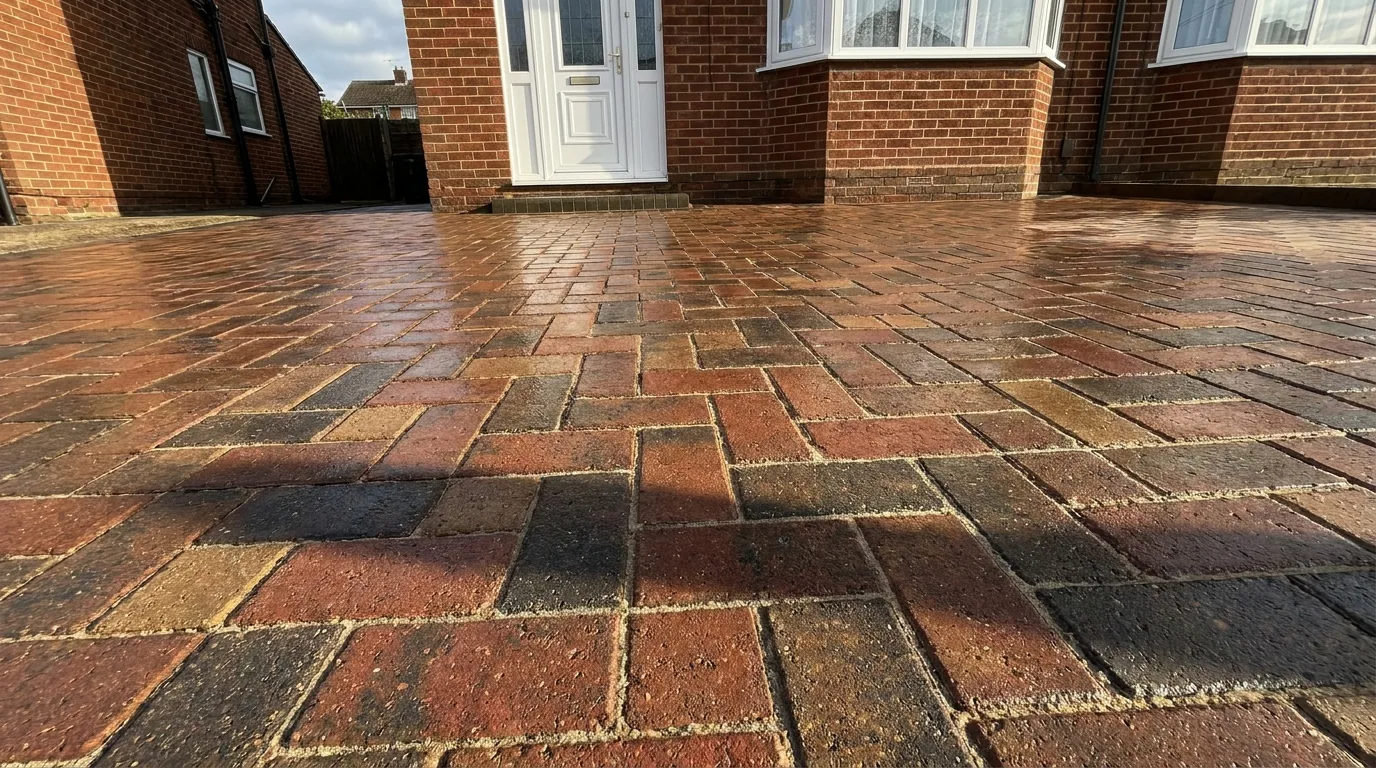
Block paving is the UK's most popular driveway surface, found on an estimated 40% of driveways nationwide. Individual concrete or clay blocks are laid in interlocking patterns on a compacted sand and aggregate sub-base, creating a surface that is both attractive and practical.

Cost: £90–£130 per m². A typical 40m² driveway costs £3,600–£5,200 fully installed. Premium blocks, complex patterns (herringbone costs more than stretcher bond), and edging details push prices toward the higher end. Expect to add 10–15% for dropped kerb installation if you don't already have one.

Lifespan: 20–30 years with proper maintenance. The blocks themselves can last much longer — it's the jointing sand and sub-base that deteriorate first. Block paving in the Reigate and Redhill area tends to perform well due to relatively stable Surrey ground conditions.

Maintenance: Medium. Block paving requires regular attention to stay looking its best. Weeds grow through the joints, moss develops in shaded areas, and the sand between blocks washes out over time and needs topping up. Sealing every 3–5 years significantly reduces maintenance by preventing weed growth and stabilising the sand. Professional cleaning costs £3–£8 per m².

Cleaning method: Block paving cleaning with a pressure washer and rotary surface cleaner gives excellent results. Always re-sand joints after cleaning. See our block paving cleaning cost guide for full pricing.

Pros:

Cons:

2. Tarmac (Asphalt)

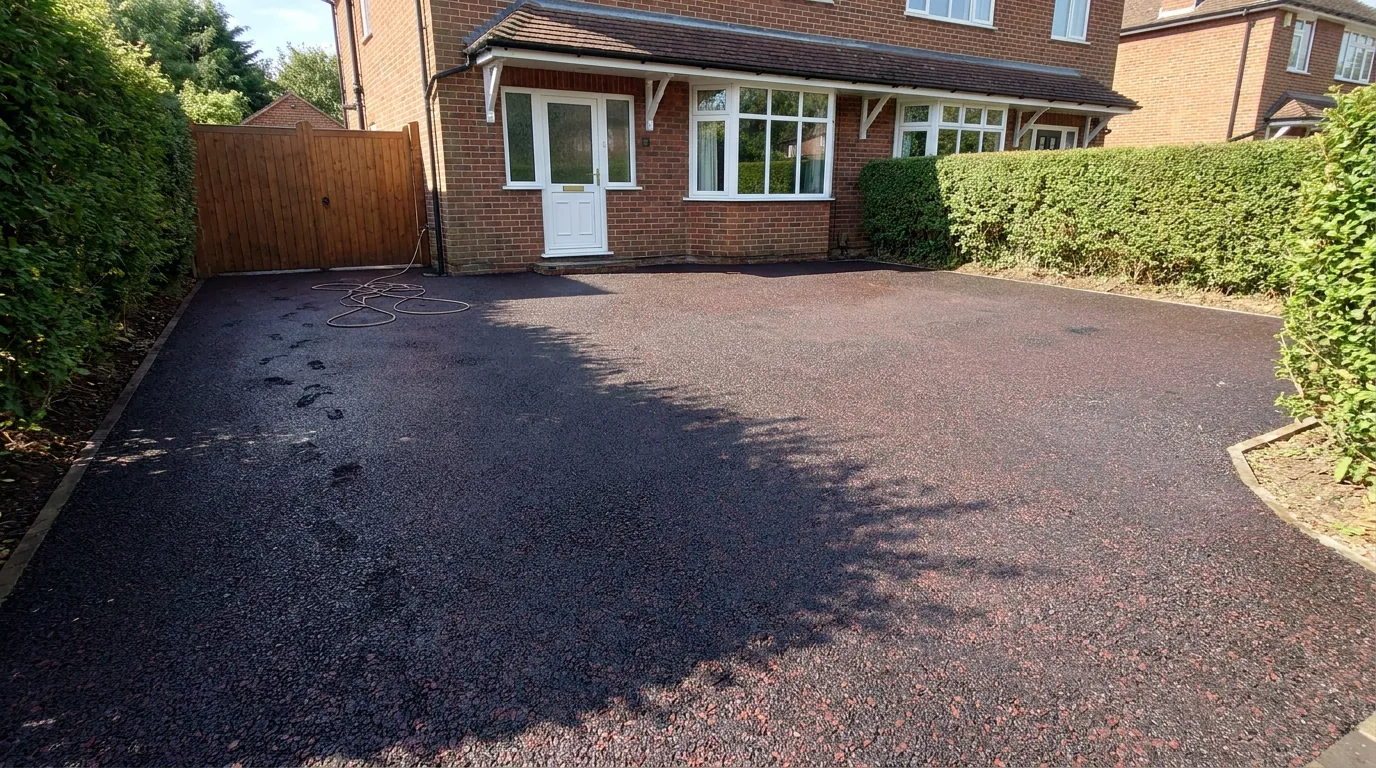
Tarmac — technically asphalt — is the second most common driveway surface in the UK. It's a mixture of aggregate stones and bitumen binder, machine-laid in a hot state and compacted with a roller. The result is a smooth, continuous surface with no joints or gaps.

Cost: £60–£90 per m². A 40m² tarmac driveway costs £2,400–£3,600 installed. This makes it one of the most affordable hard-surface options. Red or coloured tarmac costs 15–25% more than standard black.

Lifespan: 15–25 years. Tarmac degrades through UV exposure (which turns it grey and brittle) and through penetration of water into cracks. Periodic sealing extends its life significantly.

Maintenance: Low. Tarmac requires very little day-to-day maintenance. Occasional sweeping and an annual wash keep it looking presentable. Seal-coating every 3–5 years (£8–£15/m²) prevents UV degradation and water penetration, which is the main cause of potholes and crumbling.

Cleaning method: Low-to-medium pressure washing only. High pressure can strip the aggregate from the surface. See our tarmac driveway cleaning guide for safe methods. Professional cleaning costs £2–£5 per m².

Pros:

Cons:

3. Concrete

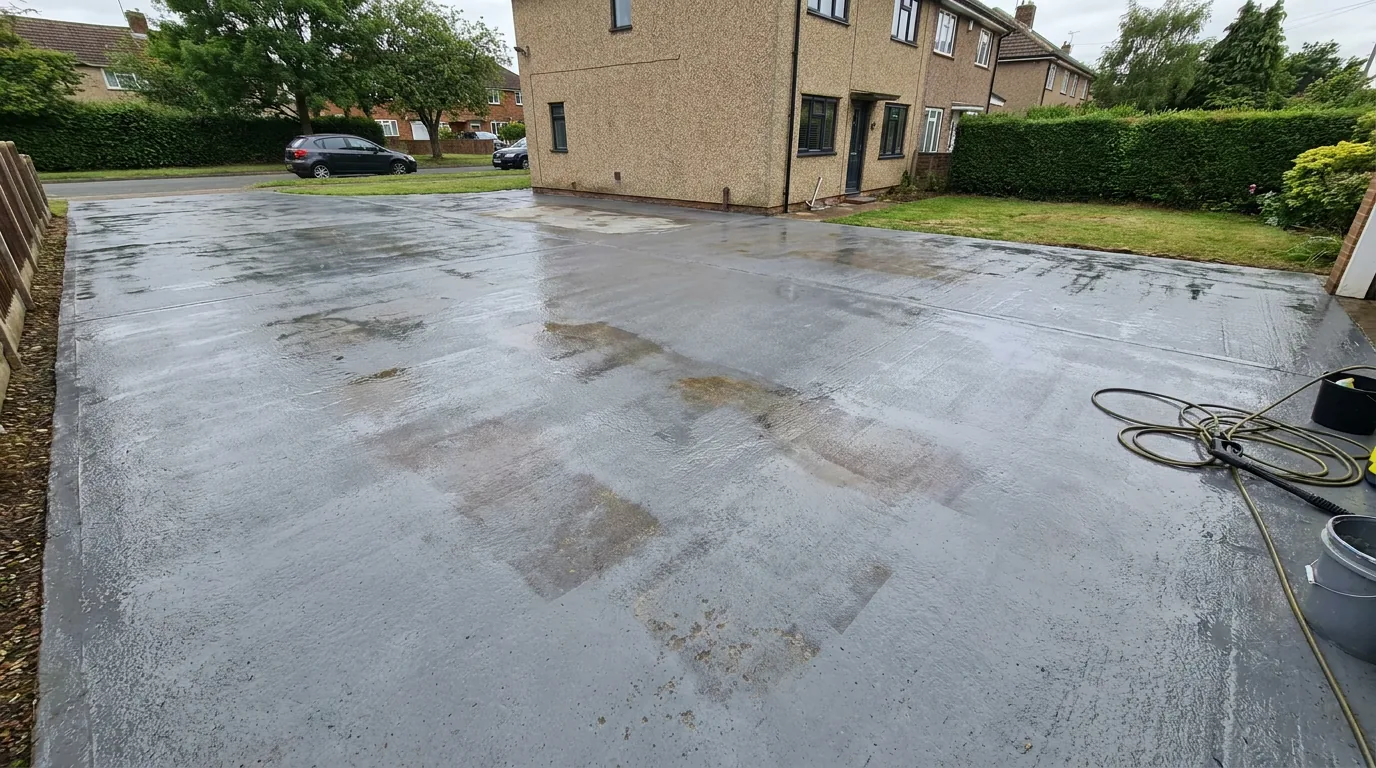
Poured concrete produces a clean, modern driveway with a continuous surface and no joints (apart from control joints cut every 3–4 metres to manage cracking). It's the third most common driveway material in the UK and is particularly popular for contemporary home designs.

Cost: £70–£120 per m². A 40m² concrete driveway costs £2,800–£4,800. Exposed aggregate finishes (where the surface layer is washed away to reveal decorative stones) cost toward the upper end. Plain brushed concrete is the cheapest option.

Lifespan: 20–30 years with proper installation. Concrete's main enemy is ground movement — poorly prepared sub-bases lead to cracking, which is expensive to repair. Freeze-thaw cycles in cold winters can also cause surface spalling. See our concrete driveway cleaning guide for maintenance advice.

Maintenance: Low. Concrete needs little maintenance beyond periodic cleaning. Sealing every 3–5 years prevents staining and reduces algae growth. Unlike block paving, there are no joints for weeds to grow through. However, oil and tyre marks show up clearly on light-coloured concrete.

Cleaning method: Pressure washing at medium-to-high pressure with a surface cleaner. Concrete is one of the most durable surfaces for pressure washing and responds extremely well. Professional cleaning costs £3–£6 per m².

Pros:

Cons:

4. Pattern Imprinted Concrete (Stamped Concrete)

Pattern imprinted concrete (PIC) starts as a standard poured concrete slab, which is then stamped with a pattern and coloured to resemble block paving, natural stone, or brick. It gives the appearance of a premium surface at a lower cost than the real material.

Cost: £80–£130 per m². A 40m² PIC driveway costs £3,200–£5,200. The price varies depending on the complexity of the pattern, the number of colours used, and whether borders or contrasting edging are included.

Lifespan: 15–25 years. PIC relies heavily on its sealant layer for both appearance and protection. The sealant needs reapplying every 3–5 years, and if this is neglected, the colour fades rapidly, the surface becomes porous, and freeze-thaw damage accelerates.

Maintenance: Medium. Regular resealing is essential — without it, PIC deteriorates much faster than plain concrete. The sealed surface can become slippery when wet unless an anti-slip additive is included. Weed growth is minimal as there are no joints, but algae develops on neglected surfaces.

Cleaning method: Gentle pressure washing followed by resealing. Avoid aggressive cleaning that strips the sealant. Professional cleaning and resealing costs £10–£20 per m².

Pros:

Cons:

5. Resin Bound

Resin bound surfacing is the fastest-growing driveway material in the UK. Natural aggregate stones are mixed with clear UV-stable resin and hand-trowelled onto a prepared base to create a smooth, permeable, seamless surface. It's become extremely popular in Surrey and the South East for both new driveways and overlays on existing concrete.

Cost: £60–£100 per m². A 40m² resin bound driveway costs £2,400–£4,000. This assumes an existing concrete or tarmac base is in suitable condition for overlay — if a new sub-base is needed, add £30–£50 per m².

Lifespan: 15–25 years when installed by an approved contractor using UV-stable resin. Cheaper installations using inferior resin can yellow within 2–3 years and begin shedding stones. Always check that the contractor is RESIN bound approved (not just resin bonded — they are different products).

Maintenance: Low. Resin bound surfaces are the lowest maintenance driveway option. The smooth, sealed surface resists weed growth, doesn't develop moss in joints (there are no joints), and only needs an annual wash to stay looking fresh. Avoid using harsh chemicals, de-icing salt, or pointed tools on the surface. See our resin driveway cleaning guide.

Cleaning method: Gentle pressure washing with a wide fan nozzle or a garden hose with mild detergent. Never use a turbo nozzle or rotary surface cleaner on resin bound — the concentrated force can dislodge stones. Professional cleaning costs £3–£6 per m².

Pros:

Cons:

6. Resin Bonded

Resin bonded surfacing is often confused with resin bound, but they are fundamentally different products. With resin bonded, a layer of resin adhesive is applied to an existing hard surface, and loose aggregate stones are scattered onto the wet resin and pressed in. The result resembles resin bound but the stones sit on top of the surface rather than being fully encapsulated.

Cost: £40–£70 per m². A 40m² resin bonded driveway costs £1,600–£2,800. It's significantly cheaper than resin bound because the process is faster and uses less resin. However, the lower cost reflects a shorter lifespan and less durable finish.

Lifespan: 8–15 years. Resin bonded surfaces shed aggregate stones over time, especially in high-traffic areas and where vehicles turn. The bond between the resin and the stones is weaker than in resin bound because the stones are only attached on one side.

Maintenance: Medium. Loose stones need sweeping back and the surface needs occasional patching where stones have shed. It's not permeable (the stones sit on a sealed surface), so it does need planning permission over 5m².

Cleaning method: Very gentle pressure washing only. The surface-mounted stones are vulnerable to dislodging under pressure. A garden hose and soft brush are often the safest option. Professional cleaning costs £3–£5 per m².

Pros:

Cons:

7. Gravel

Gravel is the simplest and cheapest driveway option in the UK. Angular stones (typically 10–20mm) are spread over a compacted sub-base to a depth of 40–50mm. Modern installations often use honeycomb grid stabilisers to prevent stones from spreading and reduce the maintenance burden.

Cost: £15–£40 per m². A 40m² gravel driveway costs £600–£1,600. With grid stabilisers, the cost rises to £30–£55 per m² (£1,200–£2,200 for 40m²). Even at the higher end, gravel remains significantly cheaper than any other option.

Lifespan: 5–15 years before needing significant replenishment. The gravel itself lasts indefinitely, but it migrates, compacts, and thins over time. Annual top-ups of fresh gravel are needed to maintain a consistent appearance and depth. Grid stabilisers extend the effective lifespan considerably.

Maintenance: High. Gravel driveways need regular raking to redistribute stones, weeding (gravel is one of the worst surfaces for weed growth), and periodic topping up. Leaves and debris are difficult to remove without displacing the gravel. Snow clearing is problematic — shovels and snowploughs displace the stones.

Cleaning method: Gravel driveways cannot be pressure washed — the water displaces the stones. Weed control is the main maintenance task, using weed membrane beneath the gravel and spot-treatment with weedkiller. Professional maintenance (raking, weeding, topping up) costs £100–£300 per visit.

Pros:

Cons:

8. Natural Stone

Natural stone is the premium driveway choice in the UK. Materials include Indian sandstone, granite setts, limestone, York stone, and slate, all cut into slabs or setts and laid on a prepared base. Properties across the Reigate and Dorking areas frequently feature natural stone driveways that complement period architecture.

Cost: £130–£250 per m². A 40m² natural stone driveway costs £5,200–£10,000. Indian sandstone is at the lower end (£130–£160/m²), granite and York stone at the upper end (£180–£250/m²). The cost reflects both the material price and the skilled labour required for precise installation.

Lifespan: 30–60+ years. Natural stone is exceptionally durable and actually improves in appearance with age as it develops a natural patina. Granite is virtually indestructible. Indian sandstone and limestone are softer and more susceptible to frost damage but still outlast most man-made alternatives.

Maintenance: Low to medium. Natural stone doesn't need sealing (though sealing can make cleaning easier). Joints need occasional re-pointing, and algae/moss develop on the surface in shaded, damp areas. The main maintenance task is periodic driveway cleaning to remove biological growth.

Cleaning method: Medium-pressure washing with a surface cleaner. Most natural stones handle pressure washing well, but softer stones (limestone, some sandstones) need lower pressure settings. Professional cleaning costs £4–£8 per m². See our driveway cleaning cost guide for detailed pricing.

Pros:

Cons:

9. Cobblestones

Cobblestones — small, naturally rounded stones or hand-cut granite/basalt setts — create a characterful, traditional driveway that suits period and cottage-style properties. They're also popular for borders and feature areas on modern driveways.

Cost: £120–£200 per m². A 40m² cobblestone driveway costs £4,800–£8,000. Reclaimed cobblestones cost more due to their age and character but are highly sought after for heritage properties. New granite setts are more consistent in size and cheaper to lay.

Lifespan: 25–50+ years. Cobblestones are incredibly hard-wearing. Many cobbled streets in UK towns and cities are over 100 years old and still in regular use. The stones themselves are virtually indestructible — maintenance is focused on re-pointing the joints.

Maintenance: Low. Cobblestones need very little maintenance once installed. Joints may need re-pointing every 10–15 years, and moss grows readily in the textured surface and deep joints. Regular cleaning removes biological growth and keeps the natural stone colour visible.

Cleaning method: Medium-to-high pressure washing. Cobblestones are extremely durable and can handle aggressive cleaning without damage. The deep, wide joints may need manual attention with a stiff brush. Professional cleaning costs £5–£10 per m².

Pros:

Cons:

10. Clay Pavers

Clay pavers are similar in shape and size to concrete block paving but made from fired clay, like bricks. They offer superior colour retention — unlike concrete blocks that fade over time, clay pavers maintain their rich, warm colours for decades because the colour runs through the entire block.

Cost: £100–£160 per m². A 40m² clay paver driveway costs £4,000–£6,400. The premium over concrete block paving (£90–£130/m²) reflects the higher material cost and the fact that clay pavers are thinner and require more precise laying.

Lifespan: 25–50+ years. Clay pavers outlast concrete blocks significantly because they don't suffer from surface weathering, efflorescence (white salt deposits), or colour fade. The fired clay surface is denser and more resistant to freeze-thaw cycles than concrete.

Maintenance: Medium. Similar to concrete block paving — joints need weeding, kiln-dried sand needs topping up, and the surface benefits from periodic cleaning. However, clay pavers don't suffer from the colour fade that makes older concrete block paving look tired.

Cleaning method: Pressure washing with a rotary surface cleaner, identical to concrete block paving cleaning. Clay pavers are extremely durable and handle pressure washing without any risk of surface damage. Re-sand joints after cleaning. Professional cleaning costs £3–£8 per m².

Pros:

Cons:

Planning Permission: Which Surfaces Need It?

Since 2008, regulations in England require planning permission for any new or replacement driveway over 5m² that uses an impermeable surface. This was introduced to reduce surface water flooding — paving over front gardens with impermeable materials increases flood risk by preventing rainwater from soaking into the ground.

Surface Type Permeable? Planning Permission Needed (>5m²)? Notes
Block paving (standard) No Yes Unless draining to lawn/border
Block paving (permeable) Yes No Wider joints, open-graded aggregate base
Tarmac No Yes Porous tarmac options exist but are uncommon
Concrete No Yes Pervious concrete is available but specialist
Pattern imprinted concrete No Yes Sealed surface prevents drainage
Resin bound Yes No SuDS compliant — major selling point
Resin bonded No Yes Stones sit on sealed surface
Gravel Yes No Naturally draining — no restrictions
Natural stone (on mortar bed) No Yes Unless laid on permeable base with open joints
Cobblestones Partial Depends Wide joints may provide sufficient drainage
Clay pavers Optional Depends Same rules as block paving

Important: You can avoid planning permission for any impermeable surface by ensuring the driveway drains into a permeable area (like a lawn or planted border) rather than onto the road. Many contractors design driveways with a slight fall toward a planted strip specifically for this purpose.

These regulations apply in England. Scotland, Wales, and Northern Ireland have different rules — check with your local planning authority before starting work.

Cleaning and Maintenance Comparison

Your driveway will need cleaning at some point regardless of the material. The frequency, method, and cost vary significantly between surfaces. Here's how they compare:

Surface Recommended Method Frequency Cost/Clean Pressure Safe?
Block paving Pressure wash + re-sand Every 1–2 years £120–£320 Yes
Tarmac Low-pressure wash Every 2–3 years £80–£200 Caution
Concrete Pressure wash + seal Every 1–3 years £120–£300 Yes
Pattern imprinted concrete Gentle wash + reseal Every 3–5 years £400–£800 Caution
Resin bound Low-pressure or hose Annually £120–£240 Caution
Resin bonded Hose + soft brush Every 6–12 months £120–£200 No
Gravel Rake + weed Monthly £100–£300/visit No
Natural stone Medium-pressure wash Every 1–2 years £160–£400 Yes (most types)
Cobblestones High-pressure wash Every 1–3 years £200–£400 Yes
Clay pavers Pressure wash + re-sand Every 1–2 years £120–£320 Yes

Want to know exactly what professional driveway cleaning costs? See our detailed driveway cleaning cost UK guide or use our instant cost calculator for a personalised estimate.

Which Driveway Is Best for Your Property?

With 10 options to choose from, the best driveway for you depends on four key factors: your budget, your property style, how much maintenance you want to do, and whether you need planning permission.

Best for Tight Budgets

If you're looking to spend as little as possible, gravel is the clear winner at £15–£40/m². If you want a hard surface, tarmac (£60–£90/m²) offers the best value. Both are quick to install and don't require planning permission (gravel is naturally permeable; tarmac needs to drain to a permeable area).

Best for Low Maintenance

Resin bound is the lowest-maintenance option available. No weeding, no re-sanding, no sealing — just an annual wash. Tarmac is the second-best option for those who want to lay it and forget it, with only occasional sealing needed.

Best for Kerb Appeal

Natural stone delivers the highest kerb appeal and adds the most value to your property. Block paving is the most versatile — with hundreds of colours and patterns, it suits virtually any property style. Clay pavers offer a warm, premium look with exceptional colour retention. For more on how your driveway affects property value, see our kerb appeal and property value guide.

Best for Period Properties

Cobblestones and natural stone suit Victorian, Georgian, and cottage-style homes. Reclaimed cobblestones are particularly prized for their authenticity. Clay pavers also complement older properties with their warm, traditional appearance.

Best for Modern Properties

Resin bound with a contemporary aggregate blend gives a sleek, modern finish. Concrete with an exposed aggregate or polished finish also suits modern architectural styles. Both offer clean lines and minimal visual clutter.

Best for Avoiding Planning Permission

If you don't want the hassle of a planning application, choose a permeable surface: resin bound, gravel, or permeable block paving. All three are exempt from the 5m² impermeable surface rule regardless of driveway size.

Get Your Free Quote

Free, no-obligation quote · Response within 2 hours · 100% satisfaction guaranteed · Or call 01737 652 515

Frequently Asked Questions

What is the cheapest type of driveway in the UK?

Gravel is the cheapest at £15–£40 per m² installed. A typical 40m² gravel driveway costs £600–£1,600. It requires minimal groundwork and is naturally permeable, so no planning permission is needed. However, it requires regular raking, weeding, and topping up — making it the highest-maintenance option long term.

What is the most popular driveway surface in the UK?

Block paving is the most popular, found on roughly 40% of UK driveways. It costs £90–£130 per m² and offers excellent versatility — hundreds of colours, patterns, and finishes are available. Individual blocks can be lifted and replaced if damaged, and permeable options are available to avoid planning permission.

Do I need planning permission for a new driveway?

If your driveway exceeds 5m² and uses an impermeable surface (standard tarmac, concrete, non-permeable block paving), you need planning permission under 2008 regulations. Permeable surfaces — gravel, resin bound, and permeable block paving — are exempt. You can also avoid the requirement by ensuring drainage goes to a permeable area like a lawn.

Which driveway surface lasts the longest?

Natural stone lasts 30–60+ years, making it the longest-lasting option. Cobblestones and clay pavers also offer exceptional longevity at 25–50+ years. Block paving lasts 20–30 years, tarmac 15–25 years, and gravel needs significant replenishment every 5–15 years.

What is the best low-maintenance driveway?

Resin bound is the lowest-maintenance driveway option. The smooth, seamless surface resists weed growth, doesn't develop moss in joints, and only needs an annual wash. Tarmac is also very low maintenance — occasional sealing every 3–5 years is all it needs.

Is resin bound better than block paving?

Both have advantages. Resin bound is lower maintenance, naturally permeable (no planning permission), and weed-resistant. Block paving offers more design flexibility, is easier to repair (individual blocks can be replaced), and suits more property styles. Resin bound costs slightly less per m² but requires a solid sub-base.

How much does it cost to replace a driveway in the UK?

For a typical 40m² driveway: gravel costs £600–£1,600, tarmac £2,400–£3,600, concrete £2,800–£4,800, block paving £3,600–£5,200, resin bound £2,400–£4,000, and natural stone £5,200–£10,000. Prices include excavation and full installation. South East prices tend toward the upper end.

Can you pressure wash all types of driveway?

No. Pressure washing is safe for block paving, concrete, natural stone, cobblestones, and clay pavers. Use caution on tarmac (can strip the surface) and resin bound/bonded (can dislodge stones). Gravel cannot be pressure washed at all. Always use the correct pressure and nozzle, or hire a professional driveway cleaning service.

Need Your Driveway Cleaned?

Whatever type of driveway you have, we clean it. Block paving, tarmac, concrete, resin, natural stone — we use the right method and pressure for every surface. Get a free, no-obligation quote today.

Get Your Free Quote

Get Your Free Driveway Cleaning Quote

We provide professional driveway cleaning for all surface types across Surrey. Whether you have block paving that needs re-sanding, tarmac that needs gentle washing, or natural stone that needs careful restoration, we use the correct equipment and technique for your specific surface.

We serve Redhill, Reigate, Horley, Dorking, Banstead, Crawley, and all areas within a 20-mile radius of RH1. Call us on 01737 652 515 for advice on the best cleaning approach for your driveway type.

Get Free Quote Try Cost Calculator

Related guides: Driveway Cleaning Cost UK | Block Paving Cleaning Cost | Concrete Driveway Cleaning | Tarmac Driveway Cleaning | Resin Driveway Cleaning | Kerb Appeal & Property Value

Get Free Quote Call 01737 652515