- Pressure: 2,500–3,000 PSI for standard cleaning
- Professional cost: £3–£5 per m² (£90–£250 for a typical drive)
- Sealing: extra £2–£5/m² DIY, £4–£8/m² professionally
- Oil stains: pre-treat with degreaser, scrub, pressure wash, repeat for old stains
- Clean every 12–18 months; sealed surfaces last 18–24 months
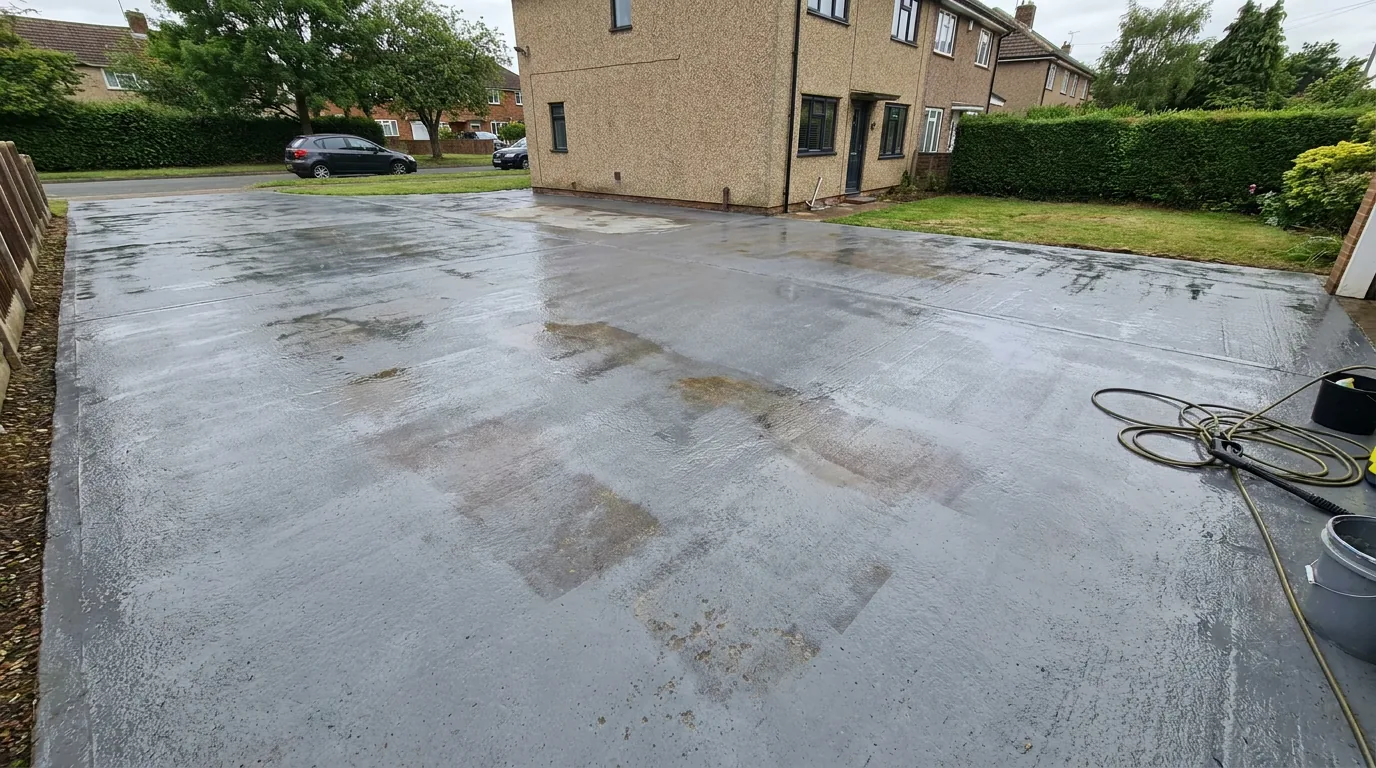
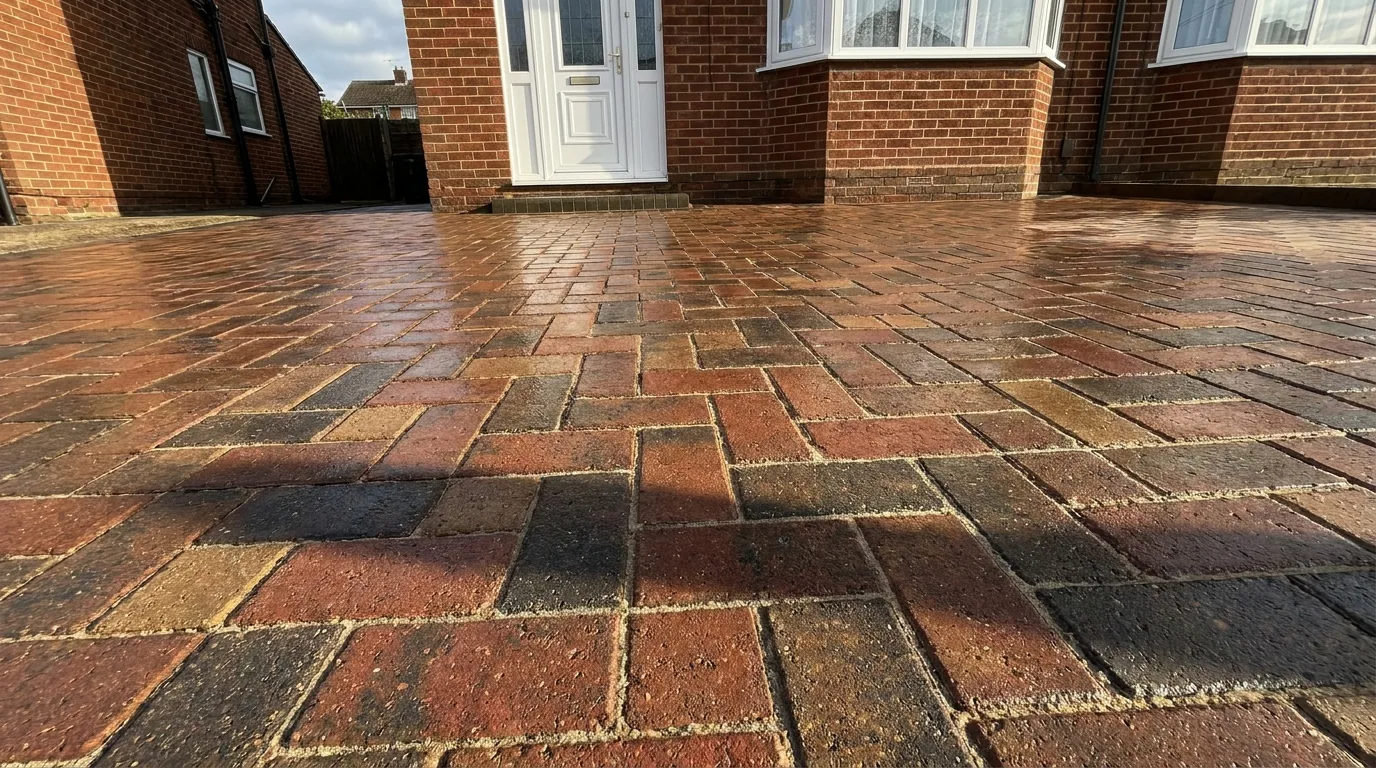
The quick answer: clean a concrete drive by pre-treating stains with a degreaser, applying biocide to kill moss and algae, then pressure washing at 2,500–3,000 PSI using a rotary surface cleaner. Concrete is one of the most durable driveway surfaces and handles high pressure well, so the process is faster and more forgiving than most. Seal afterwards for long-lasting protection.
Concrete is the most common hard surface in UK homes. Tough, long-lasting, relatively affordable. The good news for cleaning is that it withstands much higher pressure than tarmac, block paving, or natural stone. This guide covers everything from a basic wash to stubborn oil stain removal, sealing, and what to expect from a professional.
What is the best way to clean a concrete driveway?
Best results combine chemical pre-treatment with mechanical cleaning. The same process professional cleaners use, and what works best for DIY too.
Step 1 — clear and pre-treat
Move all vehicles, plant pots, and loose items. Sweep the whole surface to clear leaves, dirt, and debris. Then pre-treat:
- Oil stains: apply a concrete degreaser, scrub with a stiff brush, leave 15–30 minutes.
- Moss and algae: apply biocide or diluted bleach (1:5 ratio). Leave 20–30 minutes to kill at the root.
- Rust stains: oxalic-acid-based remover, leave per the instructions.
Step 2 — pressure wash
Concrete handles high pressure, so this is where most of the cleaning happens:
- Pressure: 2,500–3,000 PSI standard. Up to 3,500 PSI for heavy soiling.
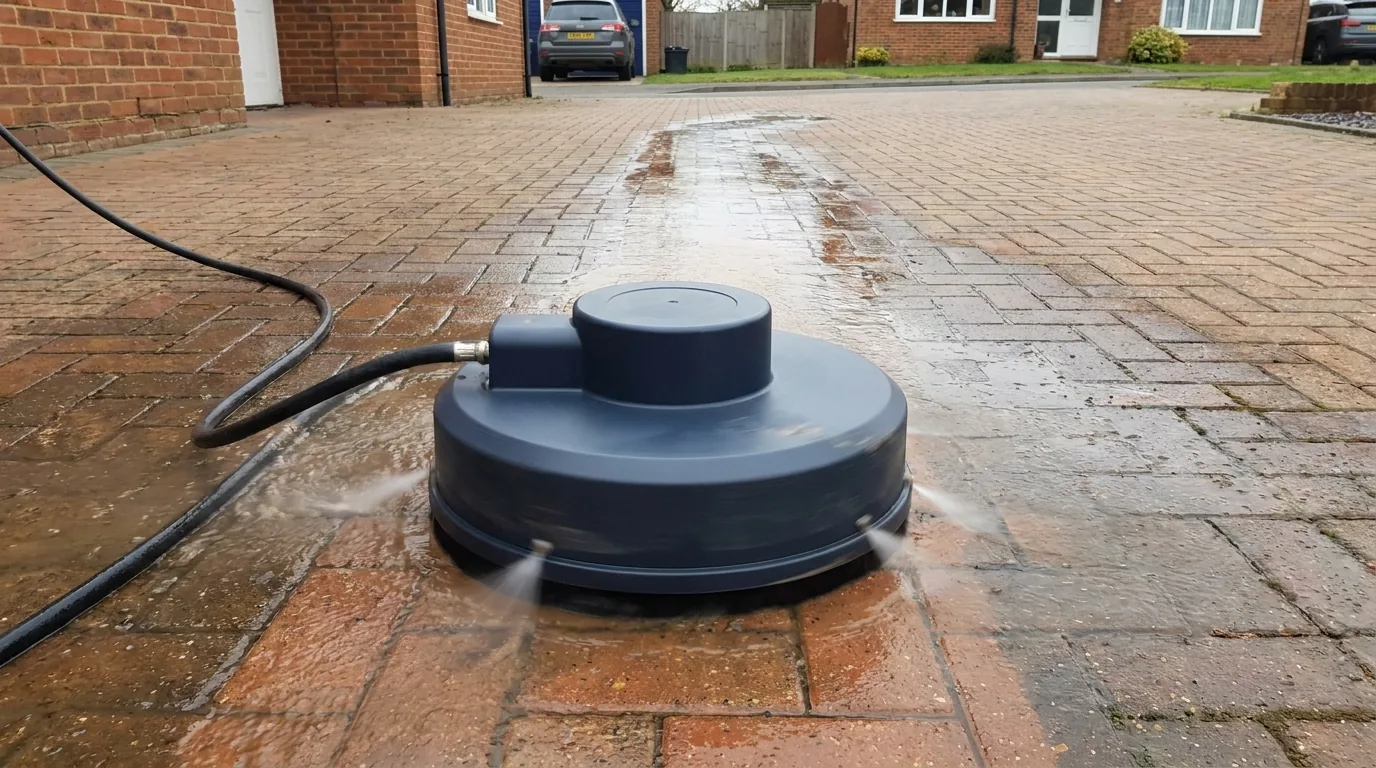
- Nozzle: rotary surface cleaner gives the most even finish. 15° or 25° fan as alternatives.
- Technique: overlapping passes. Start from the highest point and work downhill so dirty water drains away.
- Distance: 15–30 cm from the surface.
A rotary surface cleaner is strongly recommended for large areas — faster, no streaking, professional finish. Hire from any tool shop for £30–£50/day.
Step 3 — rinse and inspect
Rinse the whole drive with clean water to remove residual chemicals and loosened dirt. Check for stubborn stains. Old oil may need a second hit — more degreaser, scrub, rinse again.
Step 4 — seal (optional but worthwhile)
Once dry (24–48 hours), apply a concrete sealant. Optional, but it significantly extends the time before the next deep clean.
How do you remove oil stains from concrete?
Oil is the number-one complaint from concrete drive owners. Concrete is porous — oil soaks in and gets harder to remove the longer it sits. Methods by stain age.
Light stains (days to weeks old)
- Washing-up liquid directly on the stain
- Stiff bristle or wire brush, scrub vigorously
- Rinse with hot water, repeat if needed
- For better results, use a proper concrete degreaser from a DIY store
Medium stains (weeks to months old)
- Commercial concrete degreaser (Screwfix, B&Q, Toolstation)
- Scrub with a wire brush, leave 30 minutes
- Pressure wash at 2,500+ PSI
- Repeat — each application draws more oil out
Deep, set-in stains (months to years old)
Old oil that’s fully penetrated needs a poultice:
- Mix cat litter (or diatomaceous earth) with a strong degreaser into a thick paste
- Apply 1 cm layer over the stain
- Cover with plastic sheeting and tape down the edges
- Leave 24–48 hours — the poultice draws oil out
- Remove, scrub, pressure wash
- 2–3 applications for very deep stains
For the full stain removal guide including rust, paint, and tyre marks, see how to remove oil stains from a driveway.
How much does professional concrete cleaning cost?
Concrete is one of the cheapest drives to have professionally cleaned because it handles high pressure and cleans quickly.
| Driveway size | Clean only | Clean + seal |
|---|---|---|
| Small (20–30 m²) | £60–£120 | £130–£260 |
| Medium (30–50 m²) | £90–£200 | £200–£420 |
| Large (50–80 m²) | £150–£320 | £320–£650 |
| Extra large (80+ m²) | £250–£500 | £500–£900+ |
Surrey and the South East sit at the upper end. Oil-stain pre-treatment may add £20–£50 depending on severity. For a full breakdown by region, see the driveway cleaning cost UK guide.
Should you seal a concrete driveway?
Not strictly necessary, but it’s the single best thing you can do to protect concrete and reduce future maintenance.
- Stain resistance: oil, fuel, and other liquids bead on the surface instead of soaking in
- Freeze-thaw protection: stops water penetrating, reduces frost damage and cracking
- Easier cleaning: sealed concrete resists dirt adhesion
- UV protection: prevents surface chalking and colour fading
- Weed prevention: fills micro-pores where moss and weeds take root
Types of concrete sealant
- Penetrating sealers: soak in, protect from within. Invisible, natural appearance. Best for most residential drives. 5–10 years.
- Film-forming sealers: visible coating on top. Matt or gloss. More visible protection but can be slippery when wet. 1–3 years.
- Acrylic sealers: mid-range, good UV resistance, easy to apply. 2–5 years.
For full sealing details and costs, see the driveway cleaning & sealing cost guide.
Concrete driveway maintenance schedule
Regular maintenance keeps the drive looking good and prevents the buildup that makes deep cleaning necessary.
- Weekly: quick sweep for leaves and debris (2 minutes)
- Monthly: spot-clean any new oil stains or spills immediately
- Every 3–6 months: check for and treat early moss or algae growth
- Annually: deep clean with pressure washer or professional service
- Every 3–5 years: reseal the surface (if previously sealed)
- As needed: fill any cracks with concrete filler to stop water ingress and weeds
This is for an average UK concrete drive. Drives under trees, in heavy shade, or in damp microclimates (common in the Mole Valley around Dorking) need more frequent attention.
DIY vs professional — which works better for concrete?
Concrete is the most DIY-friendly drive surface because it’s extremely durable and hard to damage with a pressure washer. That said, professional cleaning still has advantages.
| Factor | DIY | Professional |
|---|---|---|
| Cost (40 m² drive) | £50–£100 (hire + chemicals) | £120–£200 |
| Time | 4–6 hours | 2–3 hours |
| Finish quality | Good (with surface cleaner) | Excellent |
| Oil stain removal | Moderate | Very good (industrial products) |
| Damage risk | Very low | Minimal |
Concrete is one of the few surfaces where DIY is genuinely viable. The main wins from professional cleaning are speed, convenience, and access to commercial-grade degreasers for stubborn stains. More detail in the DIY vs professional guide.
Common mistakes when cleaning concrete
Concrete is forgiving, but these still ruin results:
- Skipping pre-treatment: pressure washing alone won’t remove oil or kill moss at the root.
- Using a turbo nozzle carelessly: too close and it etches circular patterns. 20 cm minimum distance.
- Cleaning in direct sun: hot concrete causes chemicals to evaporate too quickly. Overcast or shade is better.
- Not rinsing thoroughly: chemical residue discolours concrete over time. Always finish with a clean-water rinse.
- Sealing wet concrete: apply only when dry (24–48 hours after washing). Trapped moisture causes peeling and white hazing.
For the full damage-prevention guide on every surface, see can pressure washing damage a driveway.
Areas we cover
We professionally clean concrete drives across Surrey within 20 miles of Redhill (RH1) — Redhill, Reigate, Horley, Dorking, Banstead, Epsom, Crawley, and all 15+ areas. Whether it’s a standard clean or heavy oil stain removal, we’ve got the kit and the experience.
Original analysis and sources
Original analytical contribution: Concrete is the most forgiving UK driveway surface for cleaning — the Karcher K7's 180 bar at the correct Marshalls 200mm standoff[3][5] is well within the safe envelope. The risk move is aggressive nozzle + close standoff which strips the cement laitance layer and exposes aggregate. Post-clean wet-PTV ≥36 per HSE[4] remains the acceptance test.
Key sourced claims in this guide: Surrey rainfall baseline 648 mm/yr per Met Office Wisley[1], annual biocide cadence per Lithofin Algex manufacturer guidance[2], medium-pressure / 30° oblique / ≥200 mm-standoff technique per Marshalls[3], HSE-endorsed slip-risk methodology[4], and PTV ≥36 low-slip threshold from UKSRG pendulum-test guidance[5].
Sources
Every numeric claim, technique parameter, and safety threshold in this guide is sourced from a manufacturer technical bulletin, BS standard, or .gov.uk reference. We cite the bodies whose data and rules actually govern UK pressure-washing outcomes — not the unsourced ranges repeated across competitor blogs.
- Met Office — Wisley (Surrey) Location Long-Term Averages 1991–2020. Closest Met Office station to RH1. Annual rainfall 648.41 mm; Surrey is ~43% drier than the UK national mean of ~1,147 mm. metoffice.gov.uk — Wisley averages. Accessed 21 May 2026.
- Lithofin — ALGEX Special Cleaner product page. Manufacturer guidance: spray annually, preferably in spring. 6–12 month residual activity. lithofin.com — ALGEX. Accessed 21 May 2026.
- Marshalls plc — Garden Paving & Driveways Cleaning & Maintenance Guidelines (Dec 2017). Technique: medium pressure, 30° lance, 200mm minimum standoff. marshalls.co.uk — cleaning guidelines (PDF). Accessed 21 May 2026.
- Health and Safety Executive (HSE) — Slips and trips at work. HSE-preferred slip-risk methodology; PTV ≥36 wet-acceptance threshold. hse.gov.uk — slips and trips. Accessed 21 May 2026.
- UK Slip Resistance Group — Introduction to the Pendulum Tester (BS 7976: Parts 1-3). PTV ≥36 = low slip risk threshold for outdoor pedestrian surfaces. ukslipresistance.org.uk — pendulum tester. Accessed 21 May 2026.
- Kärcher — K7 consumer pressure washer manufacturer datasheet. 180 bar (~2,610 PSI), 600 L/hr. kaercher.com — K7 product page. Accessed 21 May 2026.
- BSI — BS 7533-101:2021 Code of practice for modular paving units. Treats jointing material as load-transfer system. bsigroup.com — BS 7533-101:2021. Accessed 21 May 2026.
- Resiblock Ltd — Block Paving Sealer Product Data Sheets. Manufacturer-stated lifespan up to 5 years. resiblock.com — technical data sheets. Accessed 21 May 2026.
- UK Government (gov.uk) — National Living Wage rates from April 2026: £12.71/hr (age 21+). The legal floor for valuing UK labour and DIY time. gov.uk/national-minimum-wage-rates. Accessed 21 May 2026.
- Thames Water — 2026/27 Charges. Combined water + wastewater rate £4.21/m³. thameswater.co.uk — bill value. Accessed 21 May 2026.