Roof moss removal costs £400 to £1,500 for most UK homes in 2026, or £8 to £16 per square metre depending on method. Surrey and the South East run 15 to 20 per cent above the national average, around £600 to £900 for a semi. Same Day Jet Wash de-mosses roofs across Redhill and Reigate from £15 per square metre.
The price gap between quotes is nearly always the method, not the moss. A cheap pressure wash and a proper scrape-and-treat are different jobs with different lifespans, and this guide puts the numbers side by side so you can compare quotes properly. Our own rates are on the pricing page, or try the cost calculator for an instant estimate.
Get a price for your roof
Free, no obligation. Redhill, Reigate and 20 miles around.
Call 01737 652 515Patrick answers 7 days a week
Free, no obligation · callback within 2 hours
Roof cleaning cost summary (UK 2026)
These are the published national figures, checked in July 2026, from two independent cost guides[1][2]. Our own Surrey rates sit inside them.
| Job | Typical price |
|---|---|
| Most UK homes, moss removal all in[1] | £400–£1,500 |
| Semi-detached, scrape + biocide[1] | £550–£900 |
| Manual scrape only, 3-bed semi[2] | £300–£500 |
| Large home with garage or conservatory[2] | £700–£1,000 |
| Scaffolding, where access demands it[2] | +£250–£900 |
Note the manual-scrape-only figure. £300 to £500 looks tempting next to £550 to £900, but a scrape without biocide leaves the spores alive in the tile laps and the moss walks straight back. It is half a job, the same way washing block paving without re-sanding is half a job.
Roof moss removal cost by method, and how long each lasts
This is the column most cost guides leave out, and it is the one that decides whether a quote is good value. A cheap method you repeat every year costs more than a dearer one you repeat every three.
| Method | Per m²[1] | Typical semi[1] | How long it lasts[1] |
|---|---|---|---|
| Hand scrape + biocide | £8–£15 | £550–£900 | 2–3 years |
| Soft wash | £12–£16 | £650–£1,050 | 2–3 years |
| Pressure washing | £5–£12 | £380–£700 | 6–12 months, plus damage risk |
| Biocide top-up on a treated roof | n/a | £150–£300 | Keeps a clean roof clean |
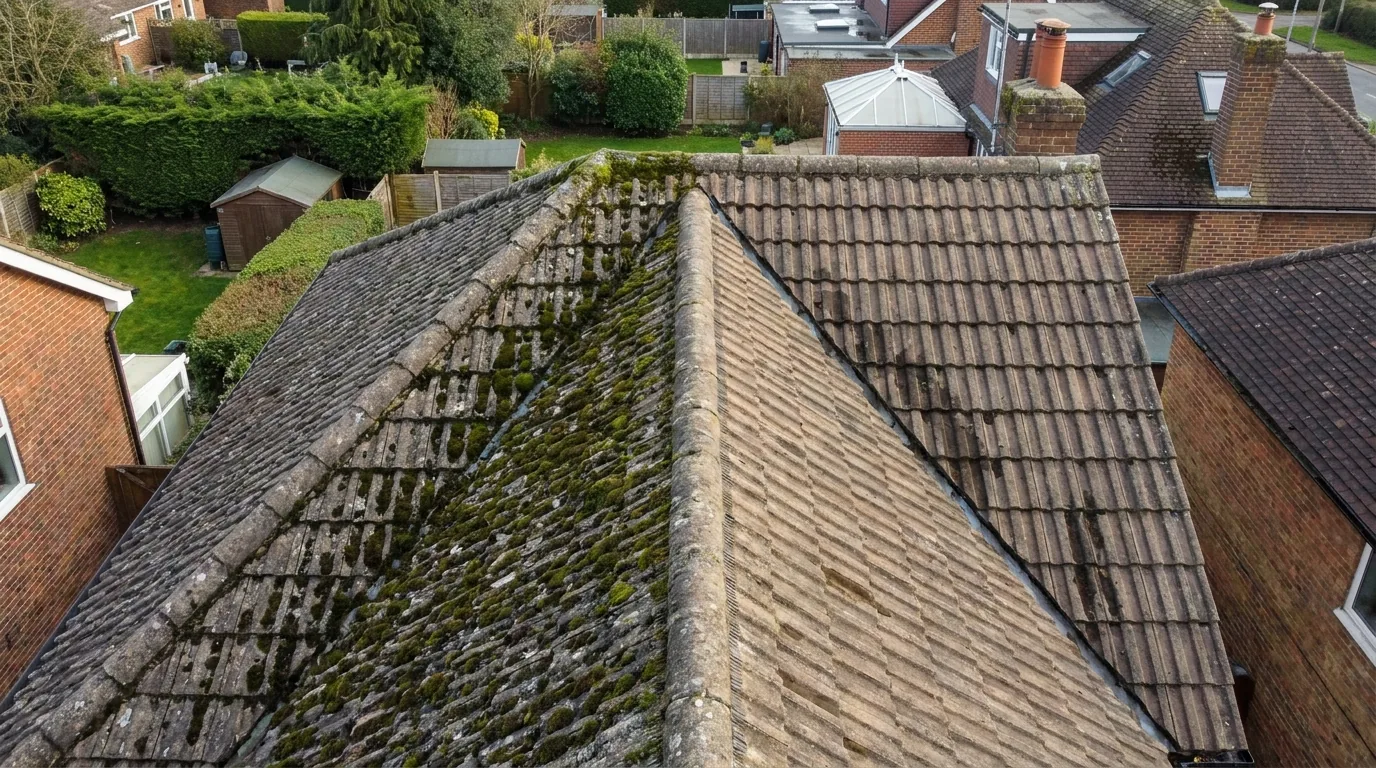
Hand scrape + biocide is the standard proper job. The moss comes off with scrapers and brushes, the debris is bagged or cleared from the gutters, then a biocide goes on to kill the spores sitting in the tile laps. Gentle on the tiles, and the treatment is what buys you the 2–3 years.
Soft washing gets you a similar lifespan by a different route: a cleaning solution applied at low pressure, left to dwell, and rinsed gently or left to weather off. It suits roofs where heavy scraping is a bad idea and it is the approach we use on delicate surfaces. The soft washing roof guide covers the process step by step.
Pressure washing is the cheapest line on the table and the one we keep being asked about. It works out the most expensive per year of clean roof, because the moss is back inside 12 months and you carry the damage risk on top. More on that below.
Biocide-only makes sense as a top-up. On a roof that was properly cleaned a couple of years ago, a fresh application at £150–£300[1] resets the clock without paying for a full clean. It is not a substitute for removal on a roof already carpeted in moss, the dead growth stays put and looks worse before it weathers off.
Roof moss removal prices in Surrey
The South East runs 15 to 20 per cent above the national average for this work, and the published Surrey figure for a semi is £600–£900[1]. Within our patch the town matters less than the roof: access, pitch, size and how thick the moss sits move the price, not the postcode. These are our guide ranges, anchored to that published Surrey row and our from-£15/m² rate on the pricing page.
| Town | Semi, scrape + biocide | Detached |
|---|---|---|
| Redhill | £600–£900 | £900–£1,500 |
| Reigate | £600–£900 | £900–£1,500 |
| Dorking | £600–£900 | £900–£1,500 |
| Crawley | £600–£900 | £900–£1,500 |
Detached ranges reflect the published national ceiling of £1,500 for larger homes[1][2]. Period properties around Reigate Hill and the Dorking side often have multiple roof sections, dormers and valleys, and each one needs doing properly, which is why they land at the top of the range. Our roof cleaning service covers all of it, moss removal, biocide treatment and gutter clear-out included.
No-obligation quote in minutes. Call 01737 652515 (tap to call) or get an instant price with our cost calculator. Same-day and next-day slots across Redhill, Reigate and Surrey.
Why roof cleaning quotes vary so much
Get three quotes for the same roof and you can see a spread of £500 or more. That is not one firm ripping you off, it is usually five things:
- Method. The biggest one. A pressure wash at £5–£12/m² and a scrape-and-treat at £8–£15/m²[1] are different jobs. Make sure every quote names its method before you compare prices.
- Access. A bungalow reachable from a tower is cheap to set up. A three-storey townhouse needing full scaffold adds £250–£900[2] before anyone touches a tile.
- Roof size, not house size. A modest house with a complicated roof, hips, valleys, dormers, an extension, can carry more roof area than a bigger house with two plain slopes.
- Biocide included or not. Some low quotes quietly leave the treatment out. The moss returns within the year and the cheap quote turns out dear.
- What happens to the moss. Clearing the gutters and grounds of the scraped-off moss takes real time. Quotes that skip it leave you a mess.
What a proper roof cleaning quote includes
Before you book anyone, ours included, check the quote covers:
- The method, in writing. Scrape and biocide, soft wash, or pressure wash, named on the quote.
- Access arrangements. Who supplies towers or scaffold, and whether it is inside the price or on top.
- Biocide treatment. Included, or an extra? What product, and does it come with any regrowth expectation?
- Gutter and downpipe clear-out. De-mossing fills gutters. The gutter cleaning guide covers what a proper clear involves.
- Debris removal. Moss off the roof, off the drive, off the flower beds, in bags and gone.
- Insurance. Public liability cover for working at height over your property.
- What happens if they find broken tiles. Cracked or slipped tiles turn up under moss. Agree up front how replacements get priced, per tile, before work starts, not after.
Extra costs to watch for
Scaffolding is the big one: anything from £250 for a basic tower to £900 for full scaffolding[2], and some firms quote it separately to make the headline price look better. Always ask whether access is in the number.
Tile replacement. Moss hides cracked and slipped tiles, and a scrape uncovers them. That is a roofer's job, not a cleaner's, so agree how it gets handled before anyone is up there.
Gutter clear-out afterwards. The most commonly skipped line. A de-mossed roof sheds debris into the gutters for weeks, and blocked gutters cause the damp problems the roof clean was meant to prevent. We include the clear-out; standalone gutter cleaning starts at £75 if you only need that.
Why pressure washing a roof is usually a mistake
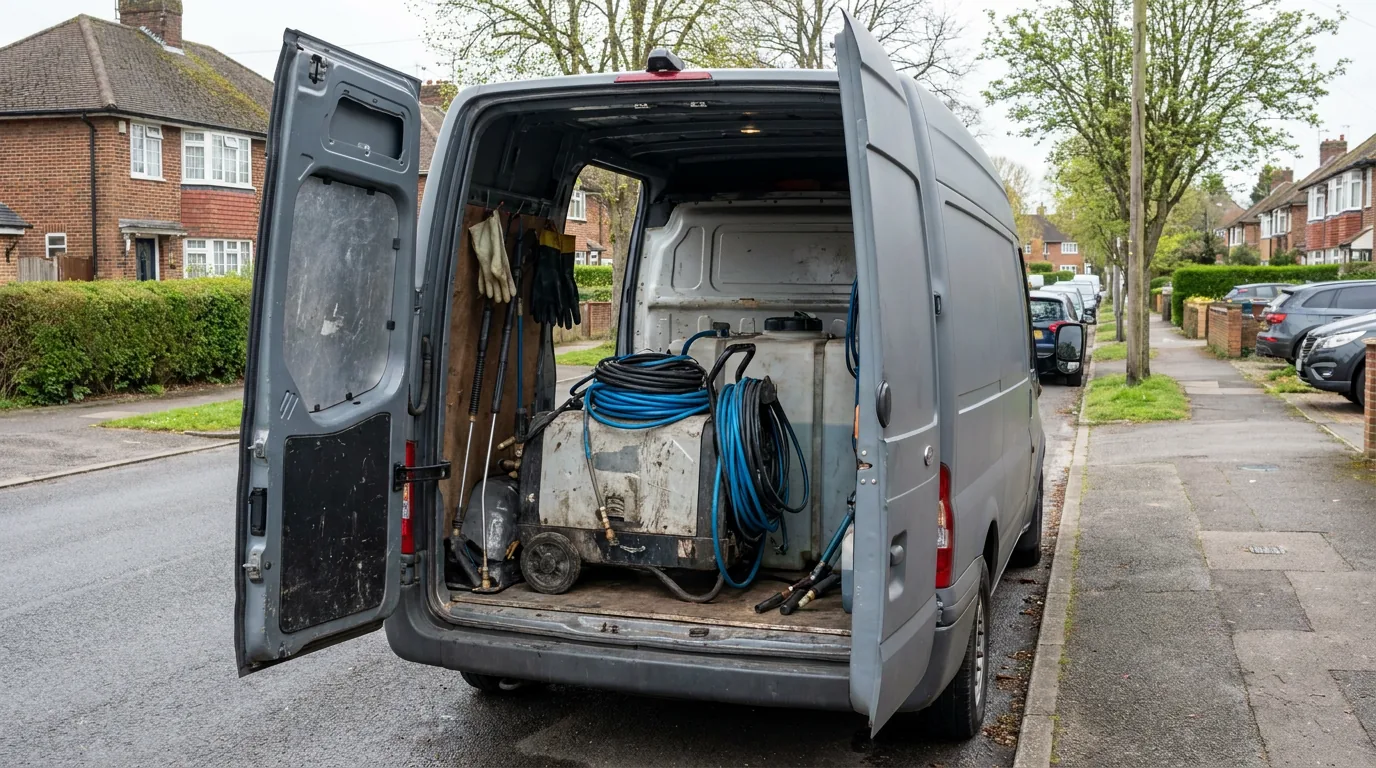
Straight answer: we own pressure washers and we still would not put one on most roofs.
Marley, one of the UK's biggest tile manufacturers, says pressure washing a roof "can cause a lot of problems and is not recommended by most roofing professionals", it can damage the tile surface, flood the roof with unwanted water and debris, and lift tiles when applied from below[3]. Their advice is careful scraping and, where needed, a moss-killing wash, which is exactly the scrape-and-biocide job priced above.
The economics back that up. Pressure washing only clears the surface growth, so it lasts 6–12 months against 2–3 years for scrape-and-treat[1]. You pay less per visit and more per year, and every visit carries the damage risk again. The does roof cleaning damage tiles guide goes deeper on what high pressure actually does to concrete and clay tiles.
One more honest point from Marley's own guidance: light moss is not harming your tiles[3]. If the growth is thin, the gutters are clear and nothing is leaking, you can leave it alone. Thick carpets of moss, blocked valleys and clumps dropping into the gutters are when cleaning earns its money. Our how often to clean a roof guide helps you judge which side of the line you are on.
Already had your roof pressure washed? Don't panic, but get it looked at. A biocide treatment slows the regrowth on stripped tiles. Get a free assessment or call 01737 652 515.
Stopping the moss coming back
Two options actually work, and both cost a fraction of a full re-clean.
Biocide re-treatment. A fresh application every 2–3 years, at £150–£300[1], kills new growth before it establishes. On a north-facing or tree-shaded roof, this is the difference between a roof that stays clean and one that needs the full job again by year three.
Copper strips. Fixed near the ridge, copper releases ions in rainwater that inhibit moss growth down the slope. The material is cheap enough, a 20-metre roll of 50mm copper fixing strip runs about £99[4], plus fitting while access is already up. Being straight with you: the effect is strongest in the first metres below the strip and fades further down the slope, so on a deep roof it helps the ridge line more than the eaves. Worth adding while the scaffold is up, not worth scaffolding for on its own.
And trim overhanging branches if you have them. Shade and leaf litter feed moss faster than anything else, and no treatment out-runs a big tree dropping on the roof all year.
Best time of year for roof moss removal
Late summer into autumn is our pick. The roof is dry, which makes scraping cleaner and safer, and a biocide applied before winter has the whole wet season to work on the spores before the spring growth push. It also gets the moss out of the gutters before the leaves come down, one scaffold visit, roof and gutters both sorted.
Spring works too. The only season to avoid is deep winter: frosty tiles are dangerous to work on and the weather windows are short. If you are timing a clean around selling a house, the roof cleaning before selling guide covers whether it is worth doing at all.
DIY vs professional roof moss removal
We are happy to tell people to DIY a patio. A roof is different, and it is not about protecting our work, it is about the height.
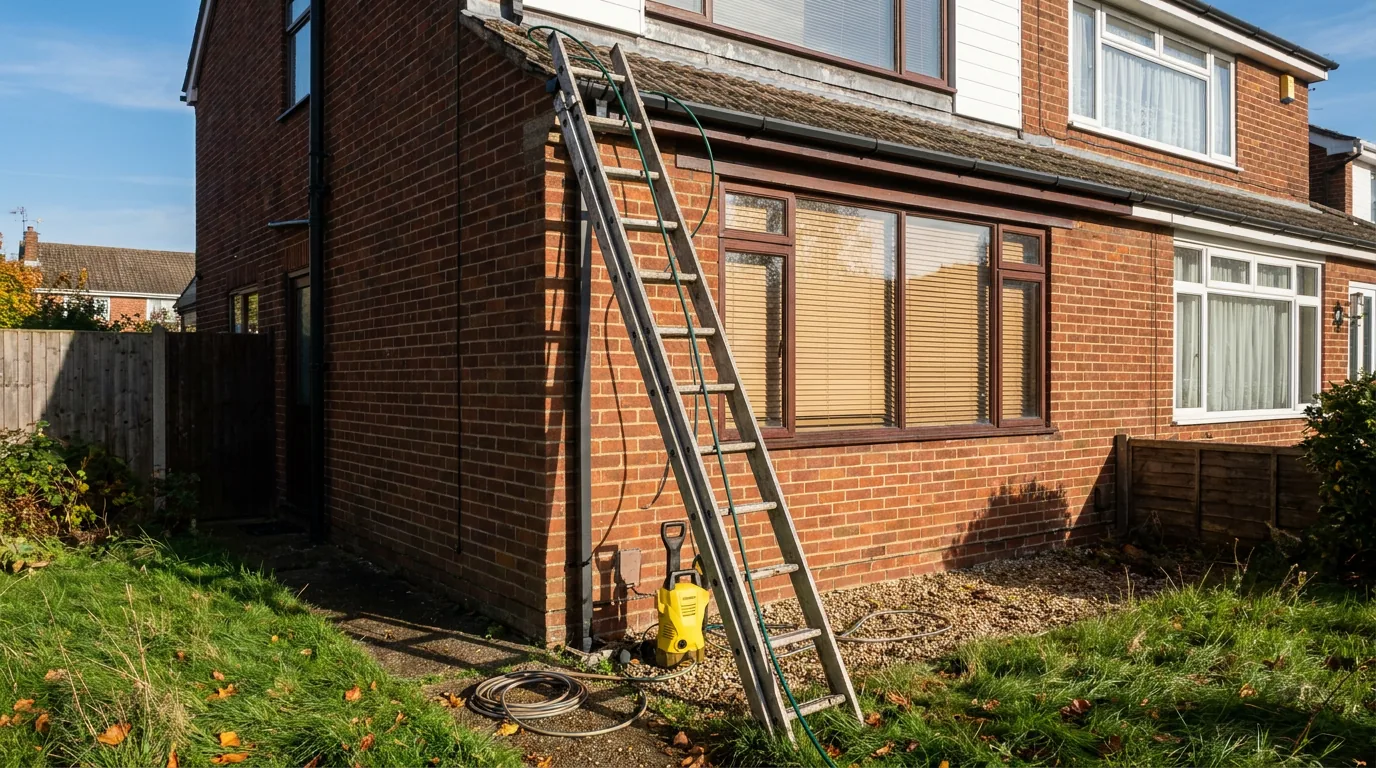
The HSE's Work at Height Regulations exist because falls from height are consistently among the most serious accidents in this country, and they apply to a homeowner's mate on a ladder just as much as to us[5]. A mossy roof is slippery even when it looks dry, tiles crack underfoot, and a ladder leaned on a plastic gutter is not access, it is a gamble.
Then there is the maths. By the time you have hired a tower, bought scrapers and biocide, and given up two weekends, you have spent a decent share of the £550–£900 a professional charges[1], without the insurance, without the gutter clear-out, and with the risk kept for yourself. Roof work is the one job on this site where we will simply say: don't.
If the budget will not stretch this year, leave the moss alone rather than half-do it from a ladder. Marley's guidance backs that as a legitimate option for light growth[3].
Get a roof cleaning quote
We de-moss and treat roofs across Redhill, Reigate, Horley, Dorking, Banstead, Crawley and everywhere within 20 miles of RH1. Scrape and biocide as standard, gutters cleared afterwards, debris bagged and gone, and the price we quote is the price you pay.
Not sure whether your roof actually needs it? Send a photo or give us a bell on 01737 652 515 and we will tell you straight, even if the answer is "leave it another year".
Get My Free Quote Try Cost Calculator
Sources
Every price and technique claim in this guide is sourced from a named cost guide, manufacturer guidance page, supplier listing or HSE reference, each one fetched and checked on 2 July 2026, not recycled from unsourced competitor blogs.
- Alliance Roofing, Roof Moss Removal Cost UK (2026 Prices). Overall £400–£1,500; hand scrape + biocide £8–£15/m² lasting 2–3 years; soft wash £12–£16/m²; pressure washing £5–£12/m² lasting 6–12 months; semi-detached £550–£900; Surrey semi £600–£900; South East 15–20% above national average; biocide treatment £150–£300. alliance-roofing.co.uk, roof moss removal cost. Accessed 2 July 2026.
- PriceYourJob, Roof Moss Removal Cost (updated 29 August 2025). Manual removal for a 3-bed semi £300–£500; large home £700–£1,000; ~£200/day labour; full clean and treatment £600–£1,500; scaffolding £250 (tower) to £900 (full scaffold). priceyourjob.co.uk, roof moss removal cost. Accessed 2 July 2026.
- Marley, How do I remove moss or lichen from my roof? Manufacturer guidance: pressure washing "can cause a lot of problems and is not recommended by most roofing professionals"; low to moderate moss is a natural part of roof ageing and not harmful to tiles; careful scraping and moss-killing wash are the accepted methods. marley.co.uk, moss and lichen removal. Accessed 2 July 2026.
- Roofing-Tools.com, Copper Fixing Strip for moss prevention, 20m × 50mm × 0.6mm roll, £99.17. roofing-tools.com, copper fixing strip. Accessed 2 July 2026.
- Health and Safety Executive (HSE), Work at height guidance, including the Work at Height Regulations 2005 and safe use of ladders. hse.gov.uk, work at height. Accessed 2 July 2026.