Horley is harder on rooflines than most of RH1
Right — here's the thing about Horley rooflines. You're sitting in a flat, low-lying, damp pocket right on the edge of Gatwick, and that's a tougher combination for white uPVC than the airier ground up on Reigate Hill. The damp microclimate keeps green algae happy on shaded boards, and the airport corridor — the A23, the M23 spur, the constant traffic into the terminals — lays down a grimy grey film on top of it. So even a tidy Horley semi with a clean drive can end up with a streaky, tired-looking roofline within a year or two. Cleaning it back to near-white costs a fraction of replacing the boards, and because we're already at roofline it's almost always done in the same visit as your gutters.
What we clean on a Horley house
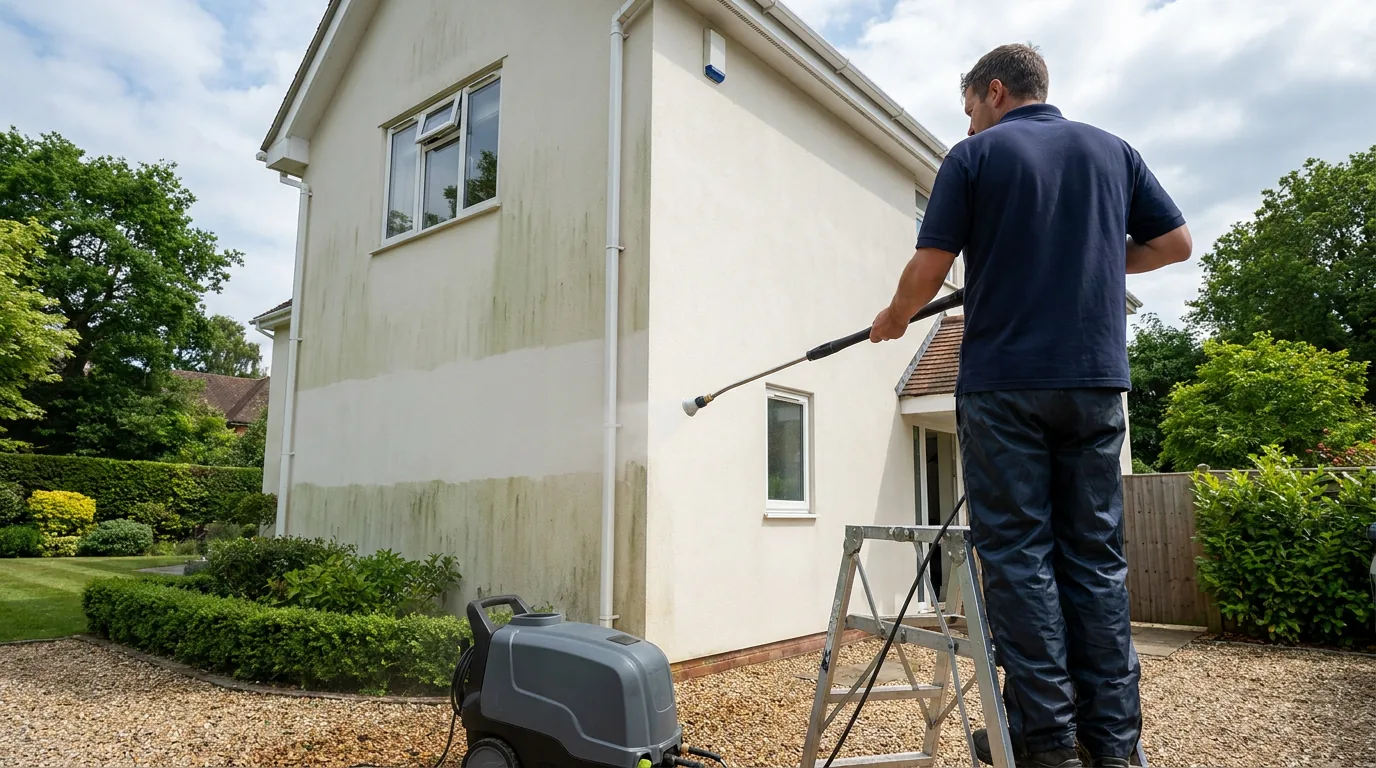
A proper roofline clean isn't a quick wipe of the front boards. It's the fascia (the vertical board your gutter is bolted to), the soffit underneath, the gutter exterior, and any uPVC or cladding on the walls — each treated with the method that suits it.
- uPVC, aluminium and timber fascias & soffits soft-washed back to near-white
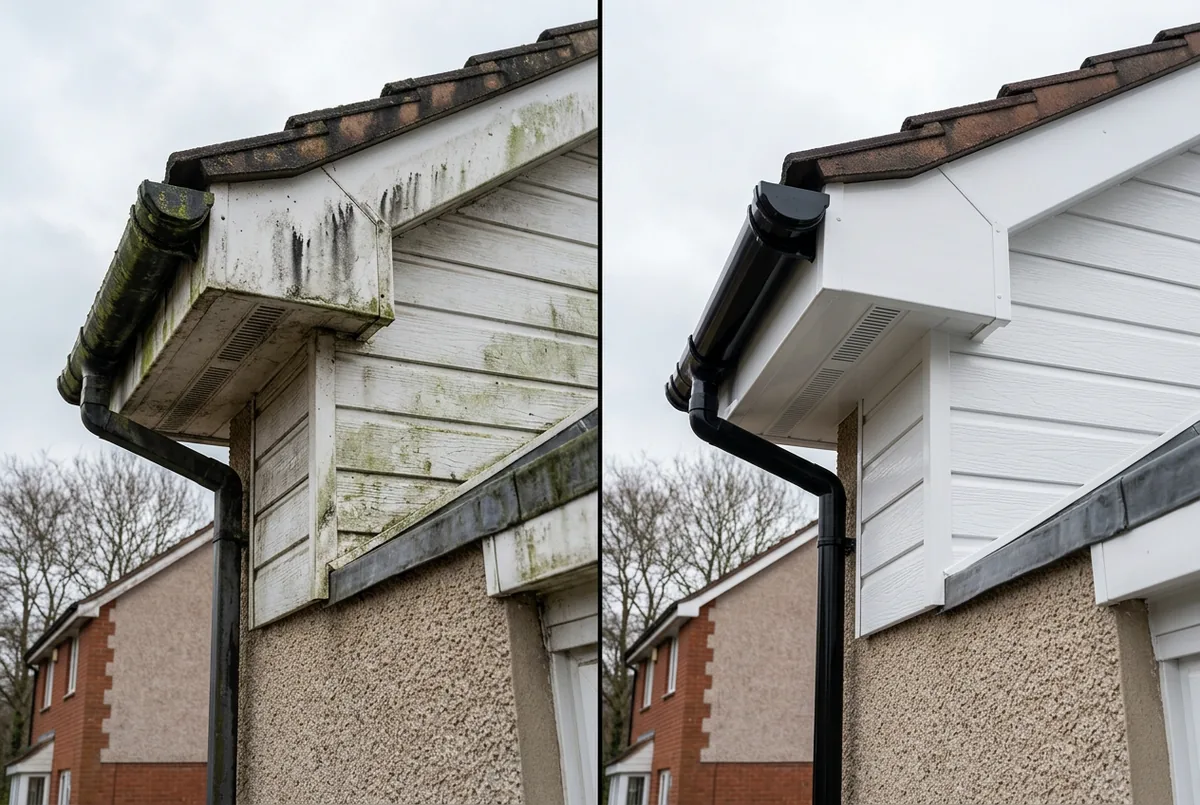
- Black drip-streak ("tide line") and green algae removal with a dilute biocide / soft-wash solution
- Gatwick-corridor traffic film grimed off the boards, not just smeared around
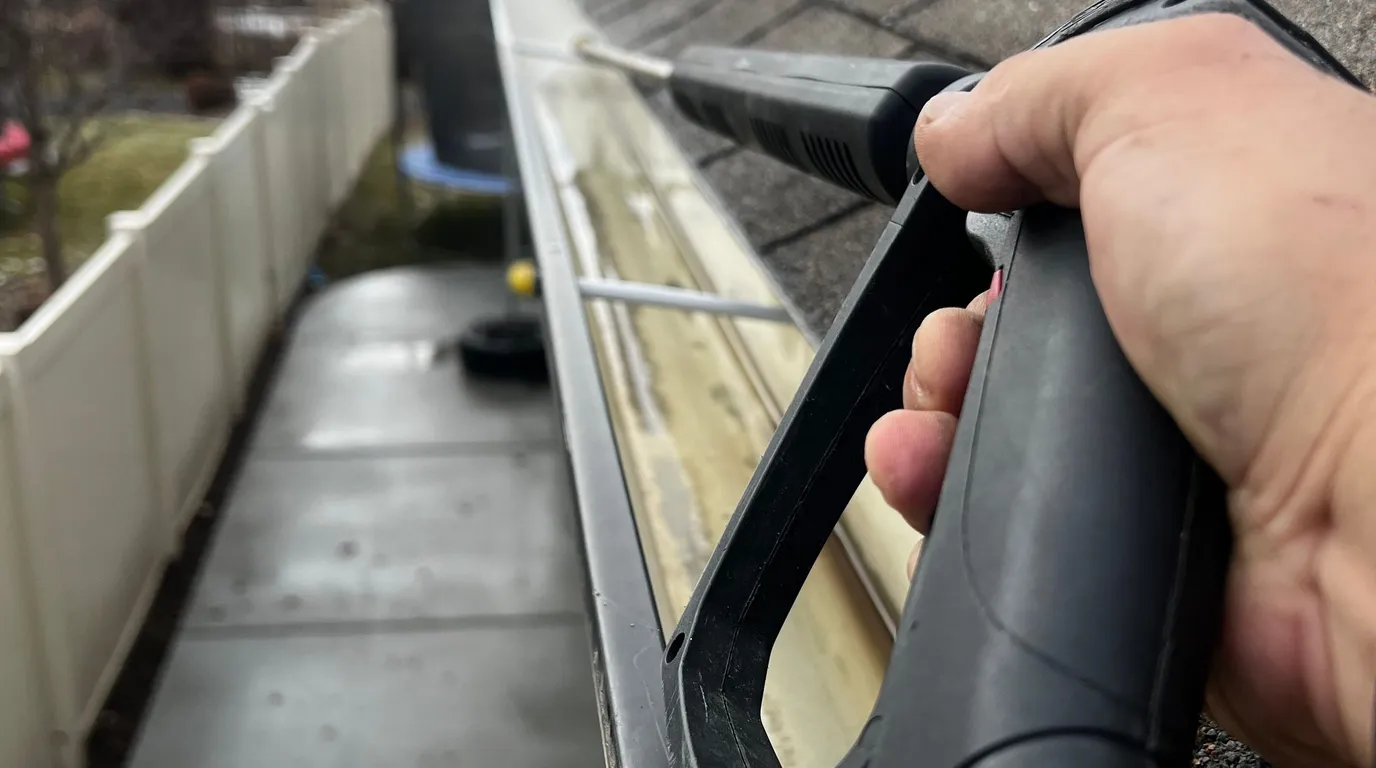
- Gutter exterior washed in the same pass (we're already at roofline)
- Soffit ventilation slots cleared so the roof space can still breathe in the damp RH6 air
- uPVC, composite and timber-look cladding & weatherboarding soft-washed (never high-pressure)
- Optional anti-green biocide treatment to slow the regrowth that Horley's damp brings on fast
The RH6 streets we know well
We're ten minutes down the A23 from Redhill, so we cover all of RH6 with no travel charge. The housing stock varies a lot, and so do the rooflines:
- Horley town centre and around the station — terraced and semi-detached uPVC fascias, often north-facing and shaded, which is exactly where the black streaking shows up worst.
- Langshott and Weatherhill estates — newer detached and semi-detached homes with longer rooflines and more elevations, so more board to clean and a higher band.
- Hookwood and Smallfield — bungalows and lower properties out toward the villages; simpler single-storey rooflines, usually the cheaper end.
- Charlwood and the Gatwick-edge lanes — a mix of older and rural properties, often tree-lined, where leaf litter and shade speed the algae up.
Why your fascias go black and green in Horley
The short answer: those black streaks aren't dirt you can scrub off — they're living algae and rainwater "tide lines" dripping off the lip of the gutter, worst on the north-facing and tree-lined elevations that Horley has plenty of. The flat, damp RH6 microclimate keeps the boards wetter for longer, and the Gatwick traffic corridor adds a layer of grey film on top. That's why a £40 tub of bleach and a sponge from the shed doesn't really fix it — it lightens the surface for a fortnight, then the algae's back, because the spores are still alive in the grain. A proper biocide soft-wash kills it at the root and the boards stay clean far longer. Right chemistry beats brute force every time on uPVC.
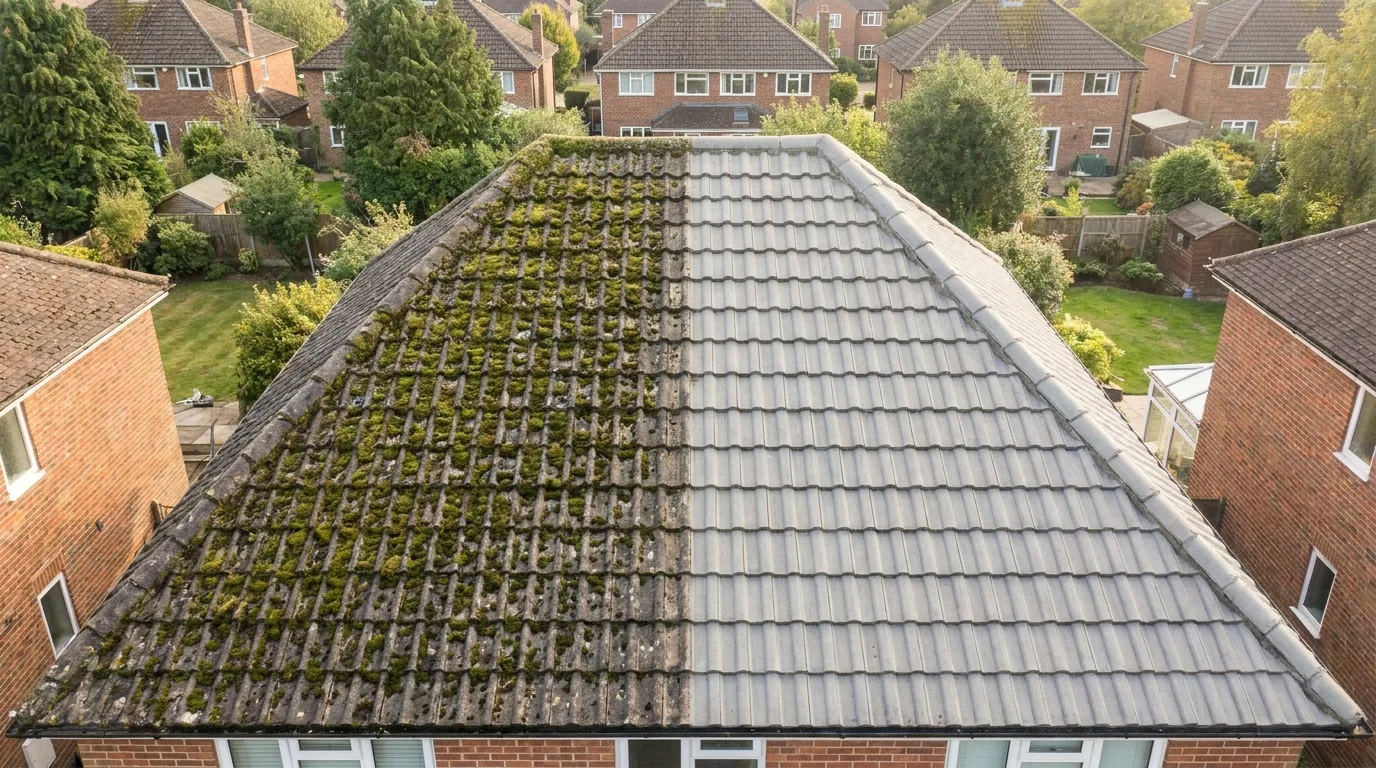
Before & after
Why we never high-pressure uPVC or cladding
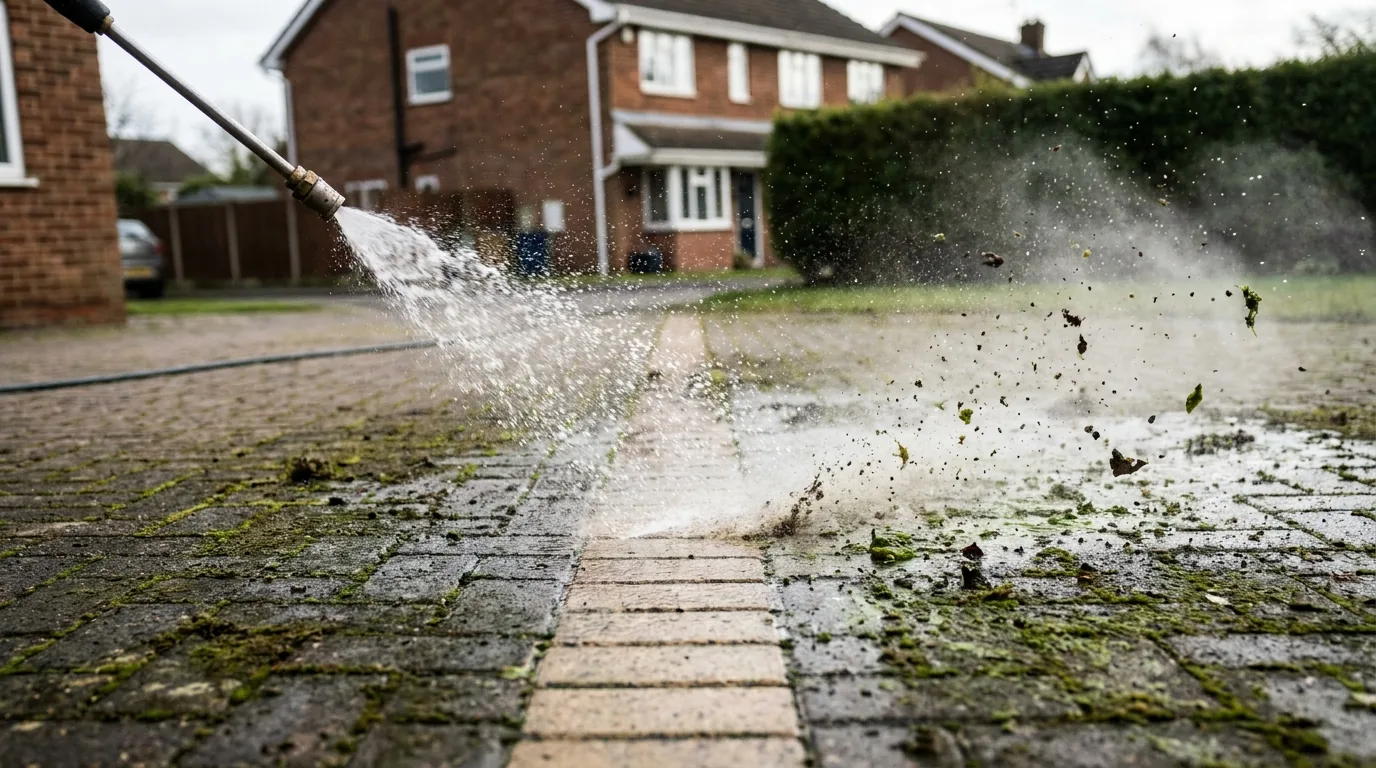
Soft washing is a low-pressure cleaning method — typically under about 100 psi — that uses a dilute biocide to kill algae and lift grime, rather than relying on the mechanical force of a high-pressure jet. That distinction matters here: uPVC, composite and aluminium boards must not be high-pressure washed. Too much pressure cracks panels, lifts paint, breaches the seals and can force water behind the boards into the roof void — and on a damp Horley property the last thing you want is more water finding its way into the roof timbers. It's one of the most common ways a DIY job ends up costing more than it saved. We use that controlled soft-wash and water-fed-pole method instead, plus no abrasive pads or neat bleach, which scratch and dull uPVC and rot the rubber seals over time.
Gatwick-edge B&Bs, guest houses and light-commercial cladding
Horley's the only stretch of our patch where a fair chunk of the work isn't houses at all — it's the airport-fringe stuff. The smaller Gatwick B&Bs, guest houses, the odd parade and light-commercial frontage along the approach roads all carry uPVC or composite cladding, and a streaky grey frontage is a bad first impression when half your guests are dragging suitcases past it at 5am. We soft-wash cladding the same way as a house roofline — low-pressure biocide, never a jet wash — and we can work early or out-of-hours so we don't clash with check-in. Cladding and facade soft-washing is a bigger job than a domestic roofline and typically starts around £300 per elevation across UK cost guides[4]; if you run an airport-side place, ask for a combined frontage price. (Bigger forecourts and car parks fall under our commercial pressure washing side.)
Done from the ground — no ladders, no scaffold cost
For most two- and three-storey Horley homes we clean entirely from the ground with a water-fed pole. No ladders leaning on your guttering (a common cause of fascia and gutter damage in the first place), no scaffold hire, and a safer, tidier job. Genuinely awkward or very high rooflines — the odd three-storey townhouse or a tricky conservatory angle — may need a scaffold tower or cherry picker; if yours does, we tell you up front and price it in (typically an extra £100–£200), never spring it on you on the day.
A cheap kerb-appeal win before selling near Gatwick
If you're selling or letting in Horley — and plenty round here do, given the commuter and airport pull — the roofline is one of the first things a buyer's eye lands on in the listing photos. Pairing a fascia, soffit and cladding clean with a driveway clean gives the whole exterior a refresh for far less than most people expect. It's a strong, cheap win on the photos and the first impression at the door.
How often should a Horley roofline be done?
Once a year is ideal for most homes, or twice a year if you're under trees out in Charlwood or Smallfield, or close to the busiest Gatwick roads — roughly the same schedule as your gutters, which is another reason the two get done together. Horley's damp tends to bring the algae back a touch faster than the drier, higher parts of Surrey, so an optional anti-green treatment after cleaning earns its keep here.
Why a local crew matters
We're based ten minutes up the A23 in Redhill, not an hour away with a travel charge bolted on. That means same-day or next-day slots open up easily for RH6, no fuel surcharge, and a crew that already knows which Horley streets shade up and streak worst. You shouldn't have to chase a tradesman either — quote up front, callback within 2 hours, show up when we said, and redo it free if it's not right.
Areas we cover around Horley
Every postcode in RH6 — Horley town centre, the wider Horley area, Hookwood, Smallfield, Charlwood, Langshott, Weatherhill and the Gatwick-edge streets — plus the rest of Surrey within 20 miles of Redhill (RH1), including Redhill, Reigate, Crawley, Dorking and Banstead. See the main fascia, soffit & cladding cleaning page for the full method, or all 15+ areas we cover.
Useful guides & tools
Want to dig in before you book? Try the cost calculator for a rough figure, read the fascia & soffit cleaning cost guide, or get a fixed free quote for your RH6 property.