Why a tidy house can still look neglected
The short answer: over a year or two the white uPVC boards along your roofline collect green algae, lichen, traffic film and those tell-tale black "tide-line" streaks where rainwater runs off the roof and drips off the gutter lip. Even with a clean drive and tidy garden, a streaky grey-green roofline makes the whole house look tired. A fascia, soffit and cladding clean restores it to near-white — without the four-figure cost of replacing the boards. Because we are already at roofline, it is almost always done in the same visit as your gutters, with one access setup.
What we clean for the price
A proper roofline clean is more than a quick wipe of the front boards. It is the fascia (the vertical board your gutter is bolted to), the soffit underneath, the gutter exterior, and any uPVC or cladding on the walls — all treated with the method that suits each surface.
- uPVC, aluminium and timber fascias & soffits soft-washed back to near-white
- Black drip-streak ("tide line") and green algae removal with a dilute biocide / soft-wash solution
- Gutter exterior washed in the same pass (we are already at roofline)
- Soffit ventilation slots cleared so the roof space can still breathe
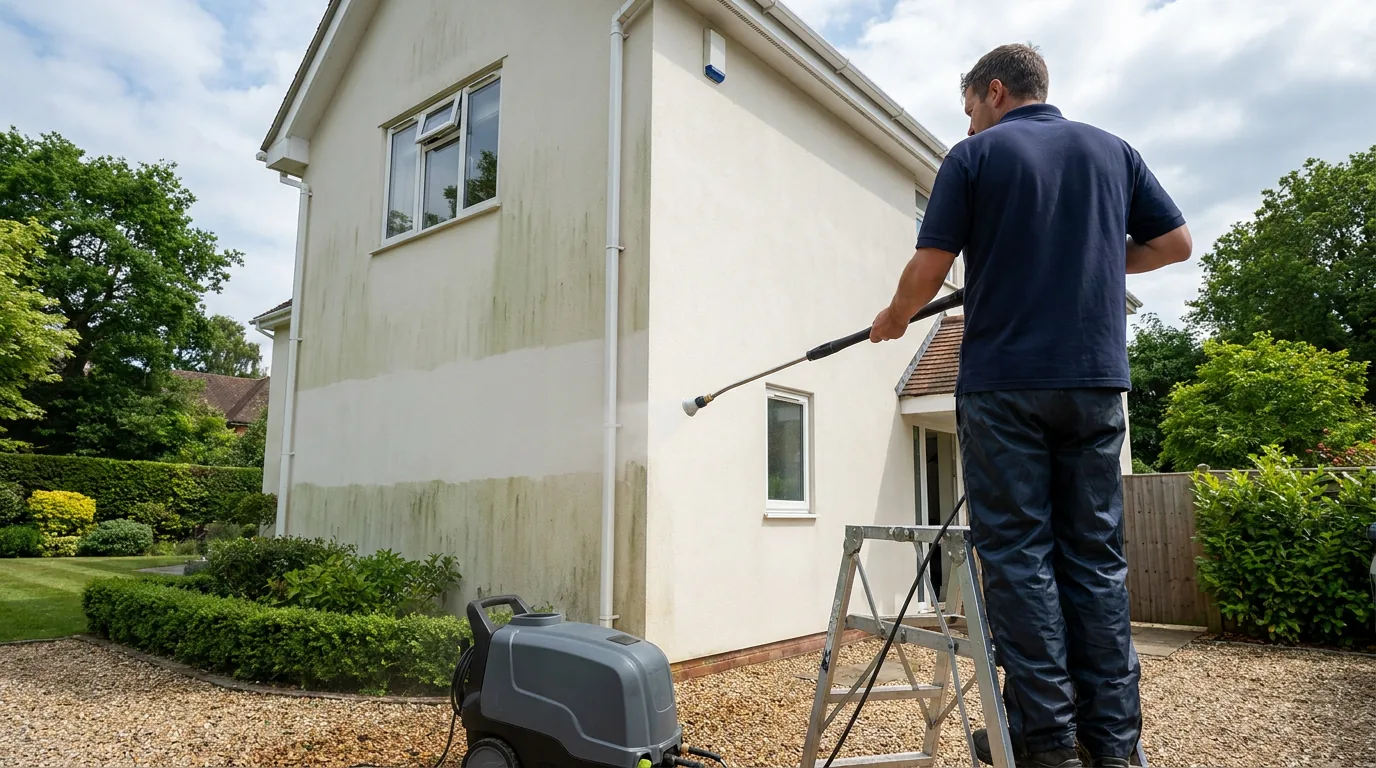
- uPVC, composite and timber-look cladding & weatherboarding soft-washed (never high-pressure)
- Pure-water rinse and microfibre wipe-down for a spot-free, streak-free finish
- Optional anti-green biocide treatment to slow regrowth between visits
Bundle-and-save: gutters + fascia + soffit + cladding
This service is nearly always sold with gutter clearing, and for good reason. We turn up once, set up access once, and do the whole roofline together — clearing the gutters, washing the gutter exterior, and cleaning the fascias, soffits and any cladding. A freshly cleared gutter next to a streaky fascia looks half-done, so doing them together both looks right and works out cheaper than separate visits. See our gutter cleaning page for the clearing side, or just ask for the combined price.
Why we never high-pressure uPVC or cladding
uPVC, composite and aluminium boards must not be high-pressure washed. Excess pressure cracks panels, lifts paint, breaches the seals and can force water behind the boards and into the roof void. It is one of the most common ways a DIY job ends up costing more than it saved. We use a controlled soft-wash and water-fed-pole method instead: a dilute biocide does the work of killing and lifting the algae, and purified water rinses it clean. We also avoid abrasive pads and neat bleach, which scratch and dull uPVC and degrade the rubber seals over time.
Why fascias go black and green
The short answer: the streaking is living algae and rainwater run-off tide-lines off the gutter lip, not removable grime — worst on north-facing, shaded and tree-lined elevations, where Surrey's leafy roads and traffic film grey the boards within one to two years. It responds to a biocide soft-wash, not scrubbing.
The black streaks are not dirt you can scrub off — they are algae and rainwater run-off "tide lines" dripping off the lip of the gutter, worst on north-facing, shaded and tree-lined elevations. Surrey's leafy roads (oak, sycamore, lime) and the traffic film off busy roads and the Gatwick corridor grey the boards faster than you would expect, often within one to two years. They respond to a biocide soft-wash rather than scrubbing, which is why the right chemistry matters more than brute force. There is a maintenance angle too: algae-clogged soffit ventilation slots restrict roof-space airflow and trap moisture, which over time can lead to damp and warped roof timbers — so a clean is partly looking after the roof, not just the look of it.
Done from the ground — no ladders, no scaffold cost
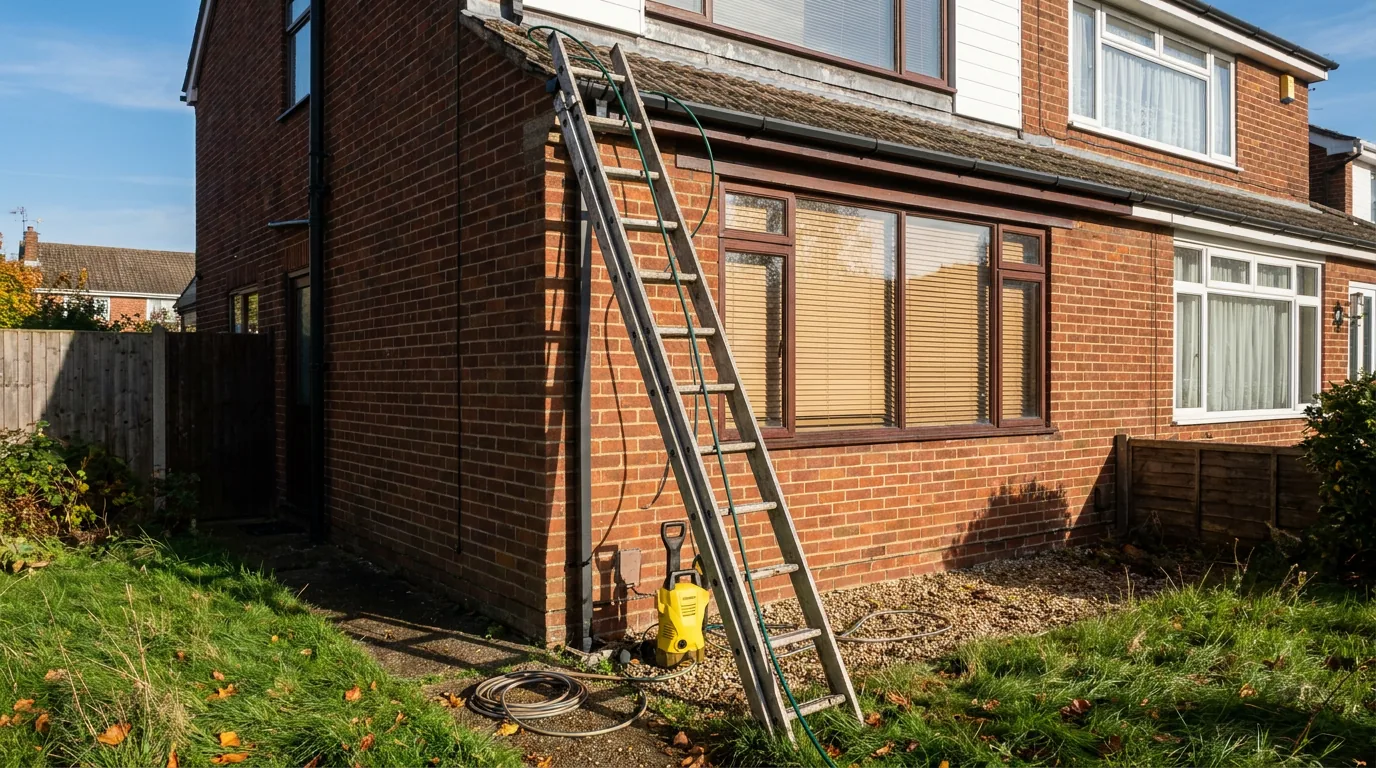
For most two- and three-storey homes we clean entirely from the ground with a water-fed pole. That means no ladders leaning against your guttering (a common cause of gutter and fascia damage in the first place), no scaffold hire, and a safer, tidier job. Working along a roofline carries a real fall risk, so reach-and-wash removes most of that. Genuinely awkward or very high rooflines, conservatories or tricky angles may need a scaffold tower or cherry picker — if yours does, we will tell you up front and price it in (typically an extra £100–£200), never spring it on you on the day.
Cleaning vs replacing
Replacement fascias and soffits run well into four figures once you add labour and access. A clean restores most boards to near-white for a fraction of that, which is why a clean is almost always the value play unless the boards are physically failing. If yours genuinely need replacing rather than cleaning, we will say so — we would rather point you to a roofer than take money for a job that won't last.
A kerb-appeal win before selling or letting
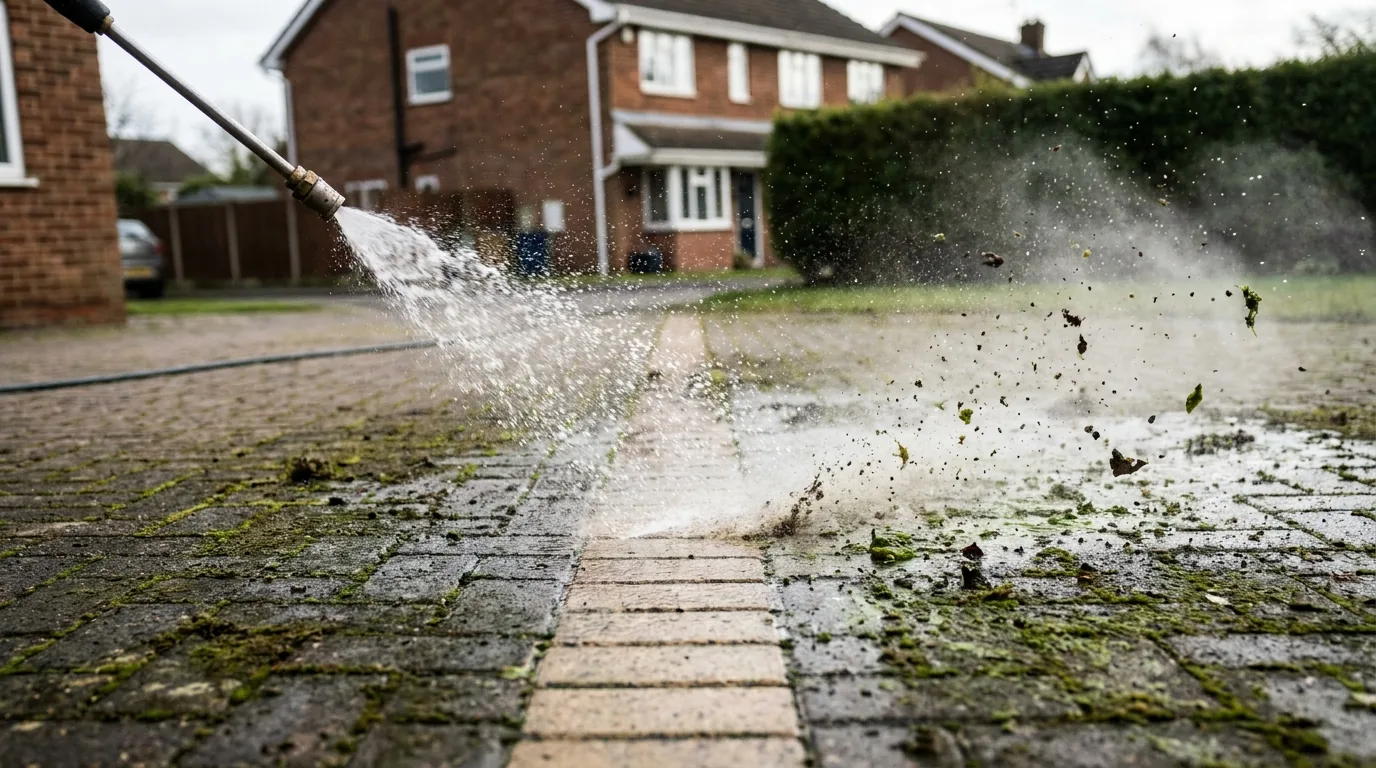
If you are putting a house on the market or preparing it for a tenant, the roofline is one of the first things a buyer's eye lands on. Pairing a fascia, soffit and cladding clean with a driveway clean or render clean gives the whole exterior a refresh for far less than most people expect — a strong, cheap win on the photos and the first impression.
How often should it be done?
Once a year is ideal for most homes, or twice a year if you are near trees or get heavy rain — roughly the same schedule as your gutters, which is another reason the two are done together. An optional anti-green biocide treatment after cleaning slows the algae coming back and stretches the interval.
Areas we cover
Across all of Surrey within 20 miles of Redhill (RH1), covering RH1–RH11, CR3, SM7 and KT17–KT24. That includes Redhill, Reigate, Crawley, Horley and the Gatwick area, Dorking, Banstead, and the rest of all 15+ areas.
Useful guides
Want to dig deeper before you book? Fascia & soffit cleaning cost guide · How to get rid of black streaks on fascias · How often should you clean fascias, soffits & gutters?