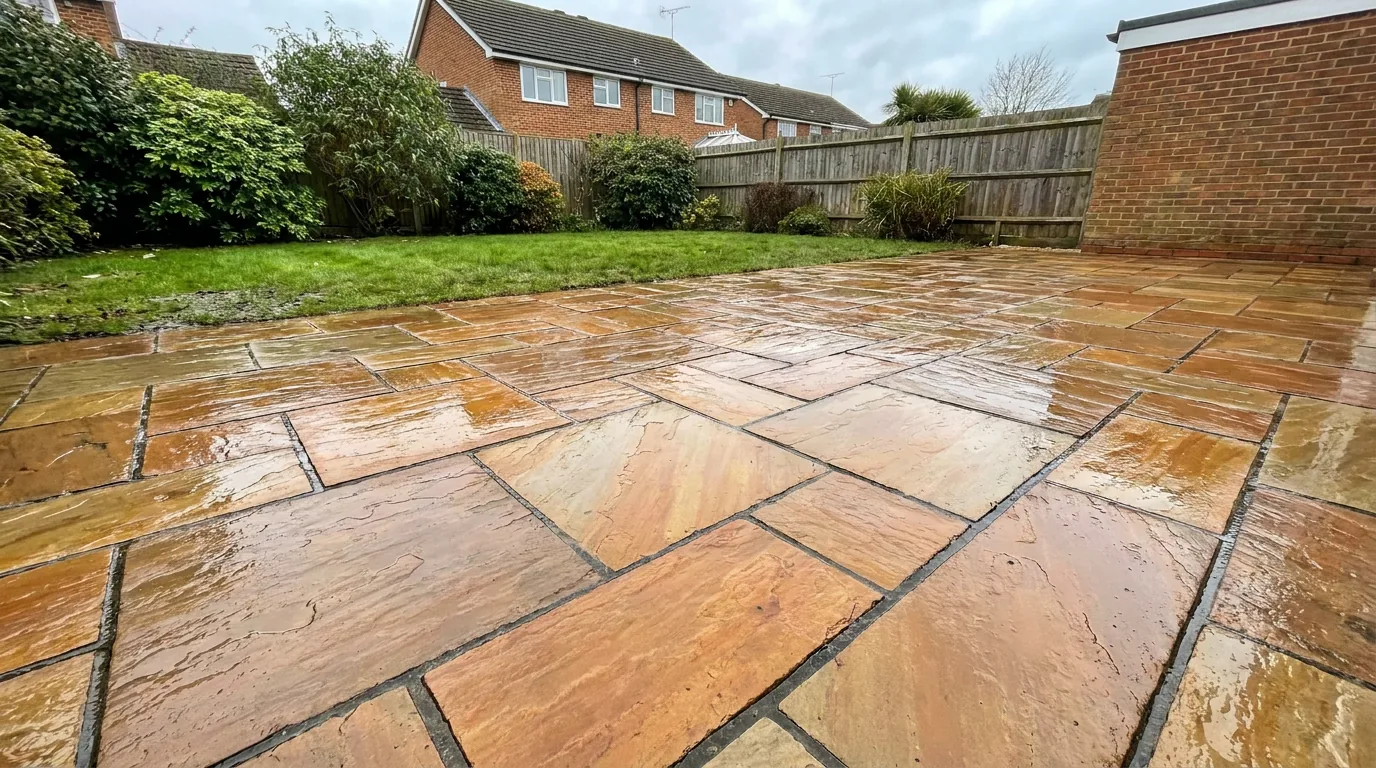
The quick answer: Most fresh stains can be removed with household products and elbow grease. Older stains need commercial products or professional treatment. Oil, rust, algae, and paint are the most common. The table below shows difficulty, costs, and whether DIY is realistic for each stain type.
Stains ruin the appearance of your driveway or patio. Some are easy to fix, others need professional help. This guide covers every common stain type you'll encounter on UK driveways and patios, with realistic methods and costs.
Stain Removal Comparison Table
| Stain Type | Difficulty | Best Method | Estimated Cost | DIY vs Pro |
|---|---|---|---|---|
| Oil (fresh) | Easy | Cat litter + washing up liquid | £5-10 (materials) | DIY recommended |
| Oil (old) | Hard | Degreaser or poultice | £15-30 DIY, £20-50 pro | Pro for stubborn stains |
| Rust | Medium | Oxalic acid or rust remover | £10-20 DIY, £15-30 pro | DIY if small area |
| Algae | Easy | Algae killer + scrubbing | £8-15 DIY, £50-150 pro (full clean) | DIY recommended |
| Moss | Medium | Scrape + moss killer | £10-20 DIY, £50-150 pro | DIY for light growth |
| Paint (fresh) | Medium | Blot + paint thinner | £8-15 (materials) | DIY recommended |
| Paint (dried) | Hard | Paint stripper or sandblasting | £15-30 DIY, £50-100 pro | Pro for large areas |
| Tire marks | Medium | Degreaser + scrubbing | £10-15 DIY, £15-25 pro | DIY if fresh |
| Chewing gum | Easy | Freeze + scrape | £5 (ice/freezer spray) | DIY recommended |
| Bird droppings | Easy | Soak + scrub with detergent | £0-5 (household products) | DIY recommended |
| Leaf stains (tannin) | Medium | Oxygen bleach or oxalic acid | £10-15 DIY, £20-40 pro | DIY for small areas |
| Grease/BBQ fat | Medium | Degreaser + hot water | £10-15 DIY, £20-30 pro | DIY if caught early |
| Concrete stains (efflorescence) | Easy | Brush off or vinegar solution | £0-5 (household items) | DIY recommended |
Professional treatment is most cost-effective when done alongside a full driveway clean (£150-400 for typical driveway).
Stubborn Stains?
We remove all stain types with professional hot water pressure washing and industrial-strength treatments throughout Surrey. Get My Free Quote
Based in Surrey? Spring is our busiest season — get a free quote before slots fill up.
Or call 01737 652 515
How Do You Remove Oil Stains from Driveways?
Oil stains are the most common driveway problem. Fresh stains (within 24 hours) can be removed with household products. Old stains need stronger treatment.
Fresh Oil Stains (Within 24 Hours)
- Absorb immediately: Cover with cat litter (clay type), sawdust, or baking soda. Leave 30 minutes to several hours.
- Apply washing up liquid: Squirt generously (Fairy or similar) on remaining stain.
- Scrub with hot water: Pour hot water over stain and scrub vigorously with stiff brush.
- Rinse and repeat: Multiple applications usually needed for complete removal.
Old Oil Stains (More Than 24 Hours)
Method 1: Commercial Degreaser
- Products: Oil Vanish, Everbuild Oil Stain Remover, Thompsons Oil and Drive Stain Remover
- Apply generously, leave 15-30 minutes, scrub, rinse with pressure washer
- Repeat 2-3 times for stubborn stains
- Cost: £10-20 per bottle (treats multiple stains)
Method 2: Poultice Treatment
- Mix cat litter or diatomaceous earth with acetone to make paste
- Spread 1cm thick over stain, cover with plastic
- Leave 24-48 hours, scrape off, repeat if needed
- Best for deep, old stains
See our dedicated oil stain removal guide for detailed instructions and prevention tips.
What Removes Rust Stains from Block Paving?
Rust stains come from metal garden furniture, plant pots, tools, or buried metal in the surface. They're orange-brown and penetrate quickly.
DIY Rust Removal
- Identify the source: Remove metal object causing staining
- Apply rust remover: Use oxalic acid (wood bleach) or phosphoric acid-based products
- Leave 15-20 minutes: Acid breaks down iron oxide
- Scrub thoroughly: Stiff brush or pressure washer
- Rinse completely: Neutralise acid with water
Products that work:
- Bar Keepers Friend (oxalic acid) - £3-5
- HG Rust Stain Remover - £8-12
- Everbuild Brick Acid (concrete only, test first) - £8-15
- For natural stone: specialist stone-safe rust removers only
Warning: Never use brick acid on block paving or natural stone - it can damage the surface. Always test on inconspicuous area first.
How Do You Remove Algae and Moss from Driveways?
Algae (green slime) and moss (fuzzy green growth) thrive in shaded, damp areas. They make surfaces slippery and dangerous. See our full moss removal guide.
Algae Removal
- Apply algae killer: Benzalkonium chloride or sodium hypochlorite products
- Leave 15-30 minutes: Kills algae at root level
- Scrub surface: Stiff brush to remove dead algae
- Rinse thoroughly: Pressure washer or strong hose
- Cost: £10-20 per 5L (treats large area)
Moss Removal
- Scrape off moss: Use stiff brush, scraper, or pressure washer at 3000 PSI
- Apply moss killer: Prevents regrowth for 6-12 months
- Improve drainage: Moss loves standing water
- Annual treatment: Prevents recurrence in problem areas
Prevention: Apply biocide treatment annually, especially in shaded areas. Improve drainage to reduce damp conditions.
Can You Remove Paint Stains from Driveways?
Paint stains depend on type (emulsion vs gloss) and how long they've been there. Fresh paint is much easier to remove.
Fresh Paint (Still Wet)
- Blot immediately: Absorb as much as possible with rags or kitchen paper
- Apply solvent: Paint thinner for gloss, water for emulsion
- Scrub: Work from outside towards centre
- Rinse thoroughly: Remove all paint and solvent residue
Dried Paint
- Paint stripper: Gel type for best results - £8-15 per bottle
- Apply generously: Cover entire stain, leave 20-30 minutes
- Scrape: Use plastic scraper (metal can damage surface)
- Scrub residue: Stiff brush with hot water
- Multiple applications: Usually needed for complete removal
For large spills or spray paint: Professional sandblasting or chemical stripping is often more cost-effective than DIY. Costs £50-100 for typical driveway paint stain.
What's the Best Way to Remove Tire Marks from Driveways?
Tire marks are rubber deposits from sharp turns or spinning wheels. They're particularly common on light-coloured surfaces and near garage entrances.
Fresh Tire Marks
- Hot water and washing up liquid with vigorous scrubbing
- Nylon brush (stiff but won't scratch surface)
- Usually removes 80-90% of mark
Older Tire Marks
- Degreasers: Same products as oil stains work well
- Specialist tire mark removers: Citrus-based solvents - £10-15
- Pressure washing: 3000+ PSI lifts rubber from surface
- Persistence: Multiple treatments may be needed
For concrete driveways: Very stubborn marks may need light sandblasting. Professional treatment costs £15-25 per mark.
How Do You Remove Chewing Gum from Driveways?
Chewing gum is sticky and spreads if you try to scrub it. Freezing is the best approach.
DIY Gum Removal
- Freeze the gum: Ice cubes in plastic bag or freezer spray, 2-3 minutes
- Wait until brittle: Gum should crack when touched
- Scrape carefully: Plastic scraper or putty knife
- Remove residue: WD-40 or cooking oil breaks down remaining stickiness
- Clean area: Washing up liquid and water removes oil
For multiple gum spots: Professional steam treatment is most efficient. Costs £30-50 for typical driveway with several spots.
How Do You Remove Leaf Stains and Tannin?
Autumn leaves left on driveways stain the surface brown. The tannin in leaves penetrates porous surfaces quickly.
Tannin Stain Removal
- Oxygen bleach: Oxiclean or similar - £8-12 per tub
- Mix with hot water: Follow product instructions
- Apply to stain: Leave 30 minutes
- Scrub thoroughly: Stiff brush
- Rinse well: Pressure washer removes oxidised tannin
For stubborn leaf stains: Oxalic acid (wood bleach) is more effective but harsher. Always test on small area first.
Prevention: Sweep leaves regularly in autumn. Daily sweeping prevents tannin penetration.
When Should You Call a Professional?
DIY stain removal has limits. Call a professional when:
- Multiple DIY attempts have failed: Wasting more time and money
- Stain is very old (years): Deep penetration needs industrial equipment
- Large area affected: Multiple stains or full driveway coverage
- Valuable surface: Natural stone, expensive block paving
- You're unsure what caused stain: Wrong treatment can make it worse
- Preparing for sealing: Must be completely clean
Our professional driveway cleaning service includes stain treatment throughout Surrey. We use hot water pressure washers (up to 150°C), industrial degreasers, and specialist equipment not available to homeowners.
Professional Stain Removal
Hot water pressure washing, industrial treatments, guaranteed results. Serving Redhill, Reigate, and all Surrey areas. Get My Free Quote
Stain Prevention Tips
Prevention is easier and cheaper than removal:
1. Seal Your Driveway
Sealing block paving creates a protective barrier. Oil, rust, and organic stains can't penetrate sealed surfaces. Costs £3-8 per sqm, lasts 2-3 years. See our block paving sealing guide.
2. Act Immediately on Spills
Keep cat litter, rags, and washing up liquid in the garage. The moment you see a spill, cover it. Five minutes of action saves hours of scrubbing.
3. Use Protection Under Metal Objects
Place plastic mats or rubber feet under plant pots, garden furniture, and BBQs. Prevents rust rings and grease stains.
4. Fix Vehicle Leaks
A £50 gasket replacement is cheaper than repeated driveway cleaning. Use drip trays under vehicles that leak.
5. Regular Maintenance
Annual pressure washing removes surface dirt before it becomes staining. Apply biocide treatment for algae/moss prevention.
Stain Removal by Surface Type
Block Paving
Moderately porous. Most stains removable with appropriate products. Don't use brick acid - damages surface. Standard degreasers and algae killers are safe. Sealed block paving resists staining.
Concrete
Very porous. Absorbs stains quickly. Old stains often leave shadows. Brick acid safe on concrete but test first. Sealing recommended to prevent future staining.
Tarmac/Asphalt
Oil-based surface. Solvents that dissolve oil can soften tarmac. Use gentle degreasers only. Avoid strong acids and solvents. Professional treatment recommended for stubborn stains.
Natural Stone (Sandstone, Limestone, Granite)
Varies widely by type. Use only pH-neutral or stone-safe products. Acids can etch and permanently damage. Professional treatment strongly recommended for valuable stone.
What Doesn't Work
Save time and money by avoiding these ineffective methods:
- WD-40 for oil stains: Adds more oil to the stain
- Bleach for oil: Doesn't break down oil, may discolour surface
- Cold water pressure washing alone: Oil and tire marks repel water
- Petrol/gasoline: Dangerous, ineffective, damages surfaces
- Wire brushes on block paving: Damages surface texture
- Acids on natural stone: Permanent etching and damage
Professional Treatment Costs
Typical professional stain removal costs (Surrey, 2026):
- Single oil stain (up to 30cm): £10-20
- Single oil stain (30-60cm): £20-30
- Large oil stain (60cm+): £30-50
- Rust stain treatment: £15-30 per stain
- Paint stain removal: £50-100 (depends on size)
- Full driveway algae/moss treatment: £50-150
- Multiple stains with full clean: Usually discounted when done together
Most cost-effective to treat stains during a full driveway clean (£150-400 typical cost).
Or call 01737 652 515
Ready to Get Your Exact Price?
Now you know what it takes to remove stubborn stains from your surfaces, get a personalised estimate for your property. No obligation, no phone calls — just fill in a quick form and we'll respond within 2 hours.
Get My Free QuoteGet Professional Help
Struggling with stubborn stains? We provide comprehensive stain removal throughout Surrey using professional equipment and industrial-strength treatments. We'll give you an honest assessment of what's achievable for your specific stains.
Related guides: Remove Oil Stains | Moss Removal | Driveway Cleaning Costs | Block Paving Sealing | Prepare Your Driveway
Original analysis and sources
Original analytical contribution: Stain removal is a sequenced-protocol problem, not a product-choice one. The cited 4-step gate model: contaminant-specific pre-treatment (Lithofin Algex[2] for biological, Lithofin OIL-EX paste for hydrocarbon), dwell time (12hr+ for OIL-EX, 2–7 days for Algex), Marshalls-compliant rinse[3], then HSE wet-PTV ≥36 acceptance test[4].
Key sourced claims in this guide: Surrey rainfall baseline 648 mm/yr per Met Office Wisley[1], annual biocide cadence per Lithofin Algex manufacturer guidance[2], medium-pressure / 30° oblique / ≥200 mm-standoff technique per Marshalls[3], HSE-endorsed slip-risk methodology[4], and PTV ≥36 low-slip threshold from UKSRG pendulum-test guidance[5].
Sources
Every numeric claim, technique parameter, and safety threshold in this guide is sourced from a manufacturer technical bulletin, BS standard, or .gov.uk reference. We cite the bodies whose data and rules actually govern UK pressure-washing outcomes — not the unsourced ranges repeated across competitor blogs.
- Met Office — Wisley (Surrey) Location Long-Term Averages 1991–2020. Closest Met Office station to RH1. Annual rainfall 648.41 mm; Surrey is ~43% drier than the UK national mean of ~1,147 mm. metoffice.gov.uk — Wisley averages. Accessed 21 May 2026.
- Lithofin — ALGEX Special Cleaner product page. Manufacturer guidance: spray annually, preferably in spring. 6–12 month residual activity. lithofin.com — ALGEX. Accessed 21 May 2026.
- Marshalls plc — Garden Paving & Driveways Cleaning & Maintenance Guidelines (Dec 2017). Technique: medium pressure, 30° lance, 200mm minimum standoff. marshalls.co.uk — cleaning guidelines (PDF). Accessed 21 May 2026.
- Health and Safety Executive (HSE) — Slips and trips at work. HSE-preferred slip-risk methodology; PTV ≥36 wet-acceptance threshold. hse.gov.uk — slips and trips. Accessed 21 May 2026.
- UK Slip Resistance Group — Introduction to the Pendulum Tester (BS 7976: Parts 1-3). PTV ≥36 = low slip risk threshold for outdoor pedestrian surfaces. ukslipresistance.org.uk — pendulum tester. Accessed 21 May 2026.
- Kärcher — K7 consumer pressure washer manufacturer datasheet. 180 bar (~2,610 PSI), 600 L/hr. kaercher.com — K7 product page. Accessed 21 May 2026.
- BSI — BS 7533-101:2021 Code of practice for modular paving units. Treats jointing material as load-transfer system. bsigroup.com — BS 7533-101:2021. Accessed 21 May 2026.
- Resiblock Ltd — Block Paving Sealer Product Data Sheets. Manufacturer-stated lifespan up to 5 years. resiblock.com — technical data sheets. Accessed 21 May 2026.
- UK Government (gov.uk) — National Living Wage rates from April 2026: £12.71/hr (age 21+). The legal floor for valuing UK labour and DIY time. gov.uk/national-minimum-wage-rates. Accessed 21 May 2026.
- Thames Water — 2026/27 Charges. Combined water + wastewater rate £4.21/m³. thameswater.co.uk — bill value. Accessed 21 May 2026.