Gutter cleaning costs £70 to £150 for most UK homes in 2026, with a three-bed semi typically £85 to £120 and Surrey at the upper end. Same Day Jet Wash clears gutters across Redhill, Reigate and the RH postcodes from £75, with prices confirmed before any work starts.
If your gutters haven’t been touched since spring, get booked in before the October rush rather than ringing round in the middle of it.
- Most UK homes: £70–£150; UK average about £125 (MyJobQuote)
- 3-bed semi: £85–£120 typical; with us it’s usually £75–£100
- Per metre £3–£6 · hourly rate £18–£30
- Scaffold jobs (rare): £375–£425 all in
- Clean twice a year: late autumn + spring
- Autumn is peak season, published autumn prices run £80–£150 vs £50–£100 in summer
Get a price for your gutters
Free, no obligation. Redhill, Reigate and 20 miles around.
Call 01737 652 515Patrick answers 7 days a week
Free, no obligation · callback within 2 hours
Gutters are the one job on the house that punishes you for ignoring it. The clean itself is cheap. The damp patch on the landing wall two winters later is not. This guide sets out what gutter cleaning actually costs in 2026, what pushes the price up, what the add-ons run to, and when to book so you’re not queuing behind half of Surrey in November.
Gutter cleaning cost by property type
According to Same Day Jet Wash’s July 2026 review of published UK prices, the big cost guides broadly agree. MyJobQuote puts the UK average at about £125 with a normal range of £75–£200. Checkatrade runs from £50–£120 for a small terrace up to £165–£300 for a three-storey townhouse. Pureseal says most jobs land between £60 and £120. Put those together and you get the table below.
| Property | Typical price (2026) | Why |
|---|---|---|
| Flat (per unit) | £40–£70 | Short gutter run, shared access |
| Bungalow | £60–£80 | Low, easy reach |
| 2-bed terrace | £55–£90 | 10–20m of gutter, front and back only |
| End of terrace | £75–£95 | Extra flank run vs mid-terrace |
| 3-bed semi | £85–£120 | The standard UK job, 45–90 min |
| 4-bed detached | £120–£150 | 40–60m of guttering, all four sides |
| 3-storey house | £165–£300 | Long-reach poles or access kit |
Two other ways firms price it: per metre of accessible gutter at £3–£6 (Pureseal’s published rate), or by time at £18–£30 an hour across the MyJobQuote and Checkatrade figures. If a quote is miles outside those bands in either direction, ask why. Our own rates start at £75 per visit, downpipe flush included, and the gutter cleaning service page has the full breakdown.
What the price should include
Whoever you book, a proper gutter clean at these prices should cover the lot, not just the runs you can see from the street:
- Every gutter run cleared, front, back and any flank or garage runs
- Downpipes flushed through and proven flowing, not just glanced at
- A quick check for loose brackets, failed joints and sagging runs while the kit is up
- All the debris bagged and taken away, not left on the lawn
- Photo or camera evidence of the finished gutters, because you can’t see up there yourself
If a cheap quote quietly drops the downpipes or the evidence, it isn’t a cheap quote, it’s half a job.
What affects the price
Four things move a gutter quote, and none of them is a mystery:
- Height. A two-storey house is the standard job. Third storeys and dormers need longer poles, and the price steps up with the reach. That’s why Checkatrade’s three-storey figure is roughly double its terrace figure.
- Access. A conservatory or flat-roof extension sitting under the gutter run is the classic one, you can’t stand a ladder on it and poles have to work over the top of it. Locked side gates, parked cars and steep banks all add time too.
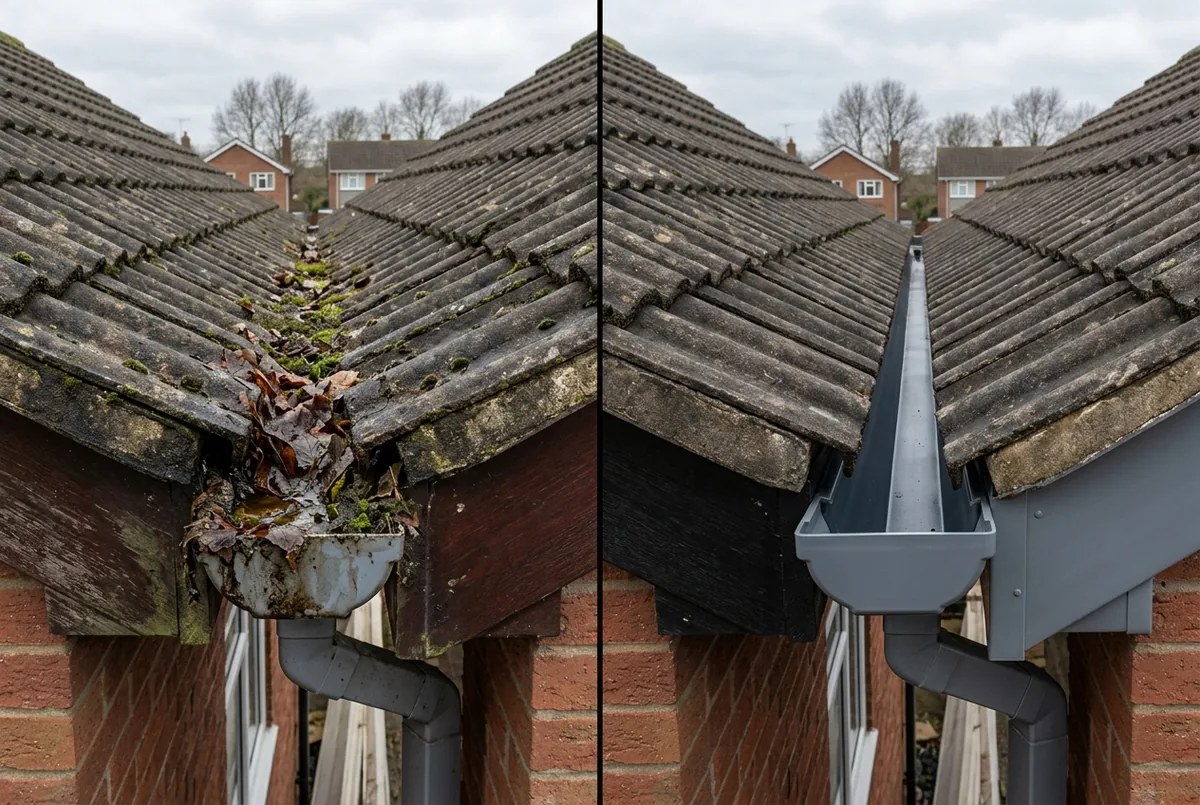
- How blocked they are. A gutter with a season of loose leaves is quick. A gutter with years of compacted moss, silt and grass growing out of it is a different job, the vac has to chew through it run by run.
- Scaffold, in the worst case. If gutters genuinely can’t be reached by pole or ladder, MyJobQuote prices scaffold-assisted cleans at £375 for a terrace up to £425 for a detached. That’s rare on normal housing, so treat any casual “you’ll need scaffold” line with suspicion and get a second opinion.
Season matters as well. Pureseal’s seasonal pricing guide shows autumn cleans at £80–£150 against £50–£100 in summer, purely because that’s when everyone wants one. More on timing below.
Vacuum vs ladder: which one you’re paying for
Most professional gutter cleaning is now done with a vacuum system: carbon-fibre poles from ground level, a camera on the end so you can see the gutter before and after, and no one leaving the ground. It handles almost everything including most three-storey work, which is exactly why scaffold quotes should be the exception. Ladder cleans still have a place on low bungalows and single runs, and some firms do them properly with the right footing and insurance.
What you’re paying for is the same either way: every run cleared, downpipes flushed and proven flowing, and some evidence it’s actually been done. Ask for camera or photo proof, a gutter looks identical from the ground whether it’s empty or full. The full comparison is in our gutter vacuum vs ladder guide, including the questions to ask before you book either.
On timing, a standard semi is 45 to 90 minutes of work: poles up, runs vacuumed in order, downpipes flushed, photos taken, mess bagged. Anyone quoting a full day for a two-storey semi is either expecting a jungle up there or padding the job, and anyone promising fifteen minutes isn’t doing the downpipes.
Gutter cleaning prices in Surrey and the RH postcodes
MyJobQuote notes labour runs higher in London and the South East than the national figures, so expect Surrey quotes at the top of the UK ranges above. Our own pricing across the RH postcodes starts at £75 per visit regardless of town, with most three-bed semis at £75–£100.
| Town | Typical 3-bed semi | Worth knowing |
|---|---|---|
| Redhill | £75–£100 | Terraces and semis, mostly reachable from the ground |
| Reigate | £75–£100 | Heavy tree cover near the Downs fills gutters faster |
| Horley | From £75 | Newer estates, uniform gutter runs, quick jobs |
| Dorking | From £75 | Mature gardens mean more leaf debris than average |
| Caterham | From £75 | Some taller period stock, priced on reach |
| Oxted | From £75 | Wooded plots, twice-a-year cleans earn their keep |
Dedicated booking pages: gutter cleaning in Redhill and gutter cleaning in Reigate. For everywhere else within 20 miles of RH1, request a quote and we’ll confirm the price before any work starts.
Add-on costs
The clean is only half the conversation. These are the extras that come up, with the published 2026 figures:
| Add-on | Typical cost | Source |
|---|---|---|
| Downpipe unblocking | £10–£30 per pipe | Pureseal |
| Fascia & soffit wash | £40–£100+ | Pureseal |
| Minor repairs (re-sealing joints, clips) | £20–£50 | Pureseal |
| Typical gutter repair | ~£215 | MyJobQuote |
| Downpipe replacement | ~£150 | MyJobQuote |
| Full gutter replacement | ~£650 | MyJobQuote |
| Concrete (Finlock) gutter replacement | ~£2,400 | MyJobQuote |
The fascia and soffit wash is worth doing at the same visit since the kit is already up, our guide on how often to clean fascias, soffits and gutters covers the sensible rhythm. Bundling a gutter clean with a driveway or roof job on the same visit usually works out cheaper than two separate call-outs, so mention it when you book. The cost calculator gives instant estimates for the pressure-washing side.
What blocked gutters actually cost you
Look at that add-on table again and you can see the whole argument for cleaning. An £85 clean sits next to a £215 repair, a £650 replacement, and £2,400 if you’ve got failed concrete gutters. The gap between maintaining and replacing is the most expensive gap in this guide.
The damage doesn’t stop at the gutter either. A blocked run sends every downpour straight over the edge and down the brickwork, and a wall that gets soaked all winter ends up damp on the inside. We’ve covered the mechanics in can blocked gutters cause damp and what to do the day you spot water sheeting over the edge in blocked gutter overflowing. Insurers generally treat gutter clearing as routine maintenance too, so gradual damage from a gutter you never cleaned is a hard claim to win.
Not sure whether yours are actually blocked? The giveaways are in signs you need your gutters cleaned: overflow in rain, sagging runs, grass sprouting at roof level, green staining under the gutter line.
Gutter guards: worth it?
Honest answer: only sometimes. Professionally fitted mesh runs roughly £200–£420 for a typical 25–35m semi, and the maths only works in two cases, a property under heavy tree canopy that needs three or four cleans a year, or a high, awkward roof where every clean is dear. For an average semi with no overhanging trees, guards rarely beat just paying for an annual clean. And they don’t stop fine silt washing into the downpipes, so a guarded gutter still needs looking at. The full cost-benefit sums are in are gutter guards worth it.
How often, and when to book
Twice a year for most homes, and the trade is unanimous on the calendar. Fantastic Gardeners puts it at once or twice a year around autumn or spring; Pureseal’s seasonal guide names October–November and May–June as the best windows. Late autumn matters most because that’s when the leaf fall that causes blockages has just finished, clear the gutters then and they go into winter empty.
Here’s the practical bit: autumn is also the busiest period of the year for every gutter firm in the country, and Pureseal’s published autumn prices (£80–£150) sit well above its summer ones (£50–£100). Diaries fill fast once the leaves start coming down. Book before October and you get the slot, the calmer price and gutters that are actually clear when the November rain arrives. Our autumn gutter cleaning checklist covers the whole pre-winter routine, and how often should gutters be cleaned goes deeper on frequency for tree-heavy plots.
DIY safety reality check
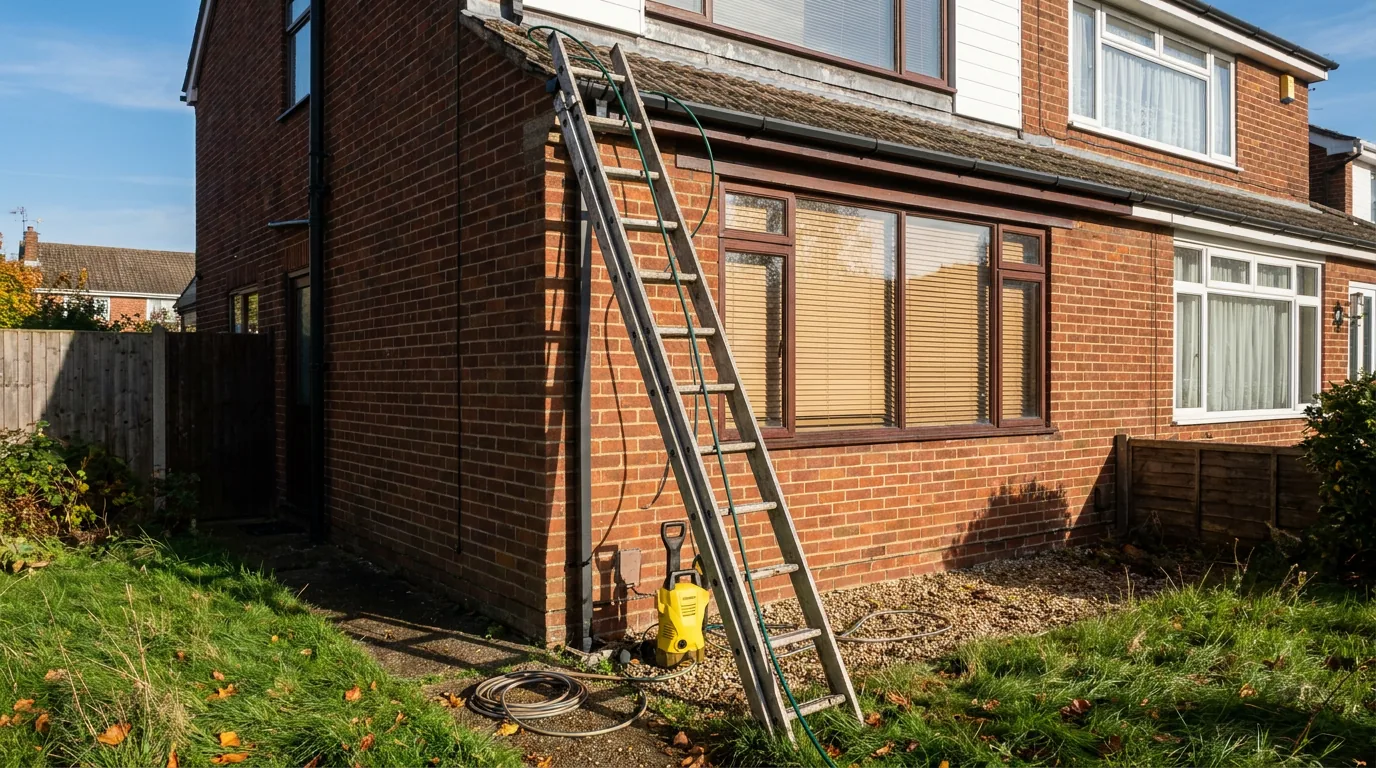
You can clean your own gutters. The question is whether it’s worth doing off a ladder to save £85. HSE’s work-related fatal injury statistics recorded 50 deaths from falls from height in 2023/24, the single biggest cause of workplace deaths that year, and those are trained people on managed sites, not homeowners on a borrowed ladder over a conservatory. Professional vacuum cleaning exists precisely so nobody has to be up there. If you do go the DIY route, stay off the roof, keep the ladder on solid ground with someone footing it, and never lean out past your belt buckle. Or give us a bell and keep both feet on the ground.
Ready to book? See the gutter cleaning service page or get a free quote, we confirm the price before any work starts and call back within 2 hours.
Areas we cover
We work right across Surrey within 20 miles of Redhill (RH1), Redhill, Reigate, Horley, Dorking, Banstead, Epsom, Crawley, and all 15+ areas.
Sources
Every price range in this guide comes from a published UK cost guide or an official statistics body, checked on 2 July 2026. Where our own rates appear, they match our published pricing page.
- MyJobQuote, Gutter Cleaning Cost Guide (UK Prices 2026). UK average ~£125; range £75–£200; terrace £75, semi £100, detached £150, 3-storey £180; hourly £18–£25; scaffold-assisted jobs £375–£425; gutter repair ~£215; replacement ~£650; concrete gutter replacement ~£2,400. myjobquote.co.uk, gutter cleaning cost. Accessed 2 July 2026.
- Checkatrade, How Much Does Gutter Cleaning Cost in 2026? Small terrace £50–£120 up to £165–£300 for a large 3-storey townhouse; hourly rate £20–£30; scaffolding required above 3m for safe access. checkatrade.com, gutter cleaning cost guide. Accessed 2 July 2026.
- Pureseal Services, How Much Do People Charge to Clean Gutters in the UK? Most jobs £60–£120; £3–£6 per metre; 3-bed semi £60–£120; downpipe unblocking £10–£30 per pipe; fascia/soffit wash £40–£100+; minor repairs £20–£50. puresealservices.co.uk, gutter price breakdown. Accessed 2 July 2026.
- Pureseal Services, The Best Month for Gutter Cleaning: A Complete UK Seasonal Guide. Best months May–June and October–November; autumn prices £80–£150 vs summer £50–£100 due to demand. puresealservices.co.uk, seasonal guide. Accessed 2 July 2026.
- Fantastic Gardeners, When Is the Best Time to Clean Your Gutters and Why. Clean once or twice a year, around autumn or spring; autumn leaf fall is the main blockage driver. fantasticgardeners.co.uk, best time to clean gutters. Accessed 2 July 2026.
- Health and Safety Executive (HSE), Work-related fatal injuries in Great Britain. 50 worker deaths from falls from height in 2023/24, the most common cause of fatal injury that year. hse.gov.uk, fatal injury statistics. Accessed 2 July 2026.