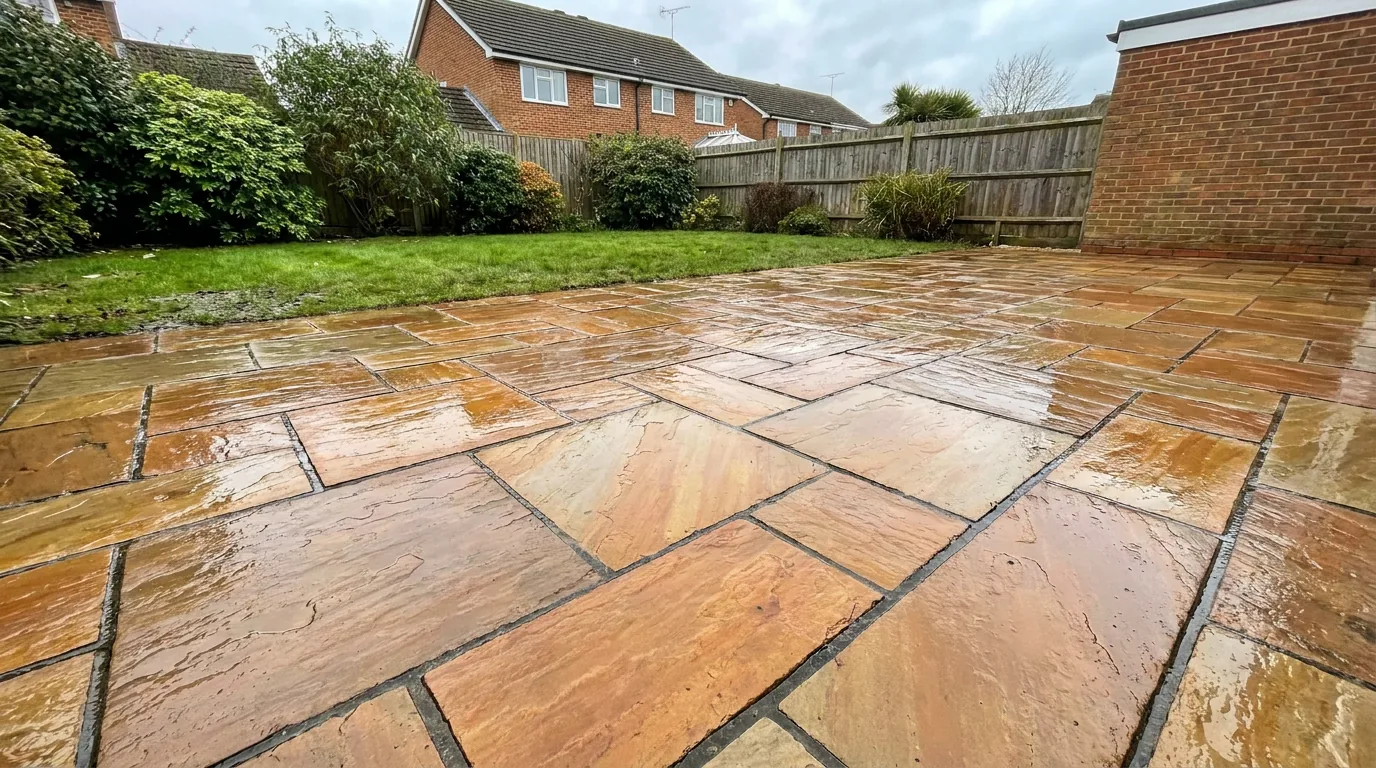
The biggest misconception is that pressure washing will damage your driveway, deck, or siding. The truth is that when done correctly with proper techniques and equipment, pressure washing is completely safe and highly effective. Professional pressure washers use appropriate PSI levels for each surface type and maintain proper nozzle distance to clean thoroughly without causing damage. The key is matching pressure to surface material.
Pressure washing is surrounded by misconceptions that prevent homeowners from maintaining their properties effectively. From concerns about surface damage to misunderstandings about costs and techniques, these myths can lead to neglected maintenance or costly mistakes. This comprehensive guide debunks 12 common pressure washing myths with expert insights and factual information.
1. Will Pressure Washing Damage My Driveway?
MYTH: Many homeowners fear that pressure washing will etch, crack, or damage their concrete driveway.
The Truth: When done correctly with proper techniques and equipment, pressure washing will not damage your driveway. Professional pressure washers use appropriate PSI levels (typically 3000-4000 PSI for concrete) and maintain proper nozzle distance (12-18 inches) to clean effectively without causing etching or surface damage.
The key factors that prevent damage include:
- Matching PSI to surface material: Concrete can handle 3000-4000 PSI, while softer surfaces like brick pavers require 1500-2000 PSI
- Proper nozzle selection: Using 25° or 40° nozzles instead of 0° "red tip" nozzles that concentrate pressure into a pinpoint
- Consistent distance: Maintaining 12-18 inches from the surface prevents concentrated pressure damage
- Overlapping passes: Systematic cleaning patterns ensure even cleaning without streaks or etching
- Surface assessment: Inspecting for existing cracks or damage before pressure washing
Proper pressure washing techniques actually help preserve concrete by removing contaminants that cause deterioration over time. DIY pressure washing with rental equipment and inexperience is where most damage occurs, not professional services. For more detail, see our guide on whether pressure washing can damage a driveway.
Based in Surrey? Spring is our busiest season — get a free quote before slots fill up.
Or call 01737 652 515
2. Are All Pressure Washing Services the Same?
MYTH: If you need pressure washing done, any service provider will deliver the same results.
The Truth: No, pressure washing services vary significantly in quality, equipment, expertise, and results. The difference between a budget service and a professional operation can mean the difference between a thorough, damage-free cleaning and costly property damage.
Key differences include:
- Equipment quality: Professional services use commercial-grade pressure washers with adjustable pressure (1000-4000+ PSI), multiple nozzle options, surface cleaners, and hot water capabilities. Budget services often use consumer-grade equipment with limited adjustability
- Technical expertise: Professionals understand which surfaces require soft washing (low pressure with specialised chemicals) vs high pressure, how to handle delicate materials, and how to remove specific stains without damage
- Cleaning solutions: Professional services use commercial-grade cleaners, mildewcides, and degreasers specifically formulated for different surfaces and stain types. Generic solutions or pure water pressure often leave stains behind
- Insurance and guarantees: Reputable services carry liability insurance and offer satisfaction guarantees. Budget operations may have no insurance, leaving you liable for any damage
- Surface preparation and finishing: Professionals pre-treat surfaces, apply appropriate cleaning solutions, rinse thoroughly, and recommend sealing. Budget services may skip these critical steps
The quality difference becomes immediately apparent in results: professional cleaning removes stains at the root, prevents quick regrowth, and can last 2-3 times longer than budget services.
3. Can You Pressure Wash in Any Weather?
MYTH: You can pressure wash your property regardless of temperature, season, or weather conditions.
The Truth: No, weather conditions significantly impact pressure washing effectiveness and safety. Ideal pressure washing conditions are 10-20°C with no rain forecast for 24-48 hours after cleaning.
Weather considerations include:
- Cold weather (below 5°C): Water can freeze in hoses and pumps, causing equipment damage. Surfaces may not dry properly, leading to ice formation. Cleaning solutions become less effective in cold temperatures
- Hot weather (above 25°C): Cleaning solutions evaporate too quickly, reducing effectiveness. Surfaces dry too fast, leaving streaks and residue
- Rainy conditions: Rain within 24 hours washes away cleaning solutions before they can work. Wet surfaces dilute cleaning solutions, reducing effectiveness. Rain can wash away fresh sealants before they cure
- Windy conditions: Strong winds blow cleaning solution spray onto windows, vehicles, and landscaping. Wind makes it difficult to control spray patterns
Spring (March-May) and autumn (September-October) provide optimal pressure washing conditions in most UK climates, with moderate temperatures and lower humidity that allow proper drying. For more detail, read our best time for patio cleaning guide.
4. Is DIY Pressure Washing Always Cheaper?
MYTH: Renting a pressure washer and doing it yourself always saves money compared to hiring professionals.
The Truth: Not necessarily. While rental equipment seems cheaper upfront (£50-100/day), hidden costs often make DIY pressure washing more expensive than expected, especially when factoring in time, risk, and results quality.
Hidden DIY costs include:
- Equipment rental: £50-100/day plus fuel surcharges and cleaning fees. Multi-day jobs require multiple rental periods
- Cleaning solutions: £30-100 for degreasers, mildewcides, and specialised cleaners
- Safety equipment: £40-80 for safety glasses, gloves, protective clothing, and hearing protection
- Time investment: 2-4x longer than professionals due to learning curve, inefficient equipment, and lack of experience
- Damage risk: Surface damage from improper technique can cost £500-5000+ to repair. Even minor etching or paint damage requires professional correction
- Inferior results: Need to re-rent equipment and repeat the job, doubling costs, or pay professionals to redo work correctly
For small, simple jobs (deck cleaning, patio furniture), DIY can save money. For large jobs (whole house, driveway, multi-surface), professional services typically provide better value with guaranteed results and no damage risk. Compare your options in our DIY vs professional pressure washing guide.
5. Is Higher PSI Always Better for Pressure Washing?
MYTH: The highest PSI pressure washer will clean any surface better and faster.
The Truth: No, higher PSI is not always better and can cause serious, irreversible damage to many surfaces. Professional pressure washing is about matching PSI to surface material and condition, not using maximum pressure.
Appropriate PSI levels by surface:
- Wood decks and fences: 500-1200 PSI (higher pressure splinters wood, raises grain, and damages finish)
- Vinyl and aluminium siding: 1300-1600 PSI (higher pressure dents, cracks, or forces water behind siding)
- Brick and masonry: 1500-2500 PSI (excessive pressure erodes mortar joints)
- Concrete and pavers: 3000-4000 PSI (lower pressure may not remove deep stains effectively)
- Vehicles and outdoor furniture: 1200-1900 PSI (higher pressure damages paint and finishes)
- Windows and glass: 500-1000 PSI (higher pressure cracks glass)
Damage from excessive PSI includes etching and pitting in concrete, splintering in wood, denting in vinyl siding, paint removal, erosion of mortar joints, and forcing water behind siding causing mould and rot.
Professional results come from the combination of appropriate PSI, correct nozzle selection, proper technique, and effective cleaning solutions working together. This is why soft washing (low pressure with specialised chemicals) has become the preferred method for many surfaces.
6. Does Pressure Washing Use More Water Than a Garden Hose?
MYTH: Pressure washers waste more water than traditional cleaning methods with a garden hose.
The Truth: No, pressure washing typically uses 50-70% less water than traditional garden hose cleaning while achieving superior results. The key is efficiency: high pressure means you spend less time cleaning each area, resulting in significantly less total water consumption.
Water usage comparison:
- Garden hose: 20-40 litres per minute at low pressure. Cleaning an average driveway takes 60-90 minutes = 1,200-3,600 litres used
- Pressure washer: 8-15 litres per minute at high pressure. Same driveway takes 20-30 minutes = 160-450 litres used
- Savings: 70-87% less water for comparable or superior cleaning results
High pressure removes dirt in a single pass, while garden hoses require repeated scrubbing and rinsing, multiplying water use. Professional surface cleaner attachments contain spray within a housing, preventing overspray waste and improving coverage efficiency.
7. Do You Need to Seal After Pressure Washing?
MYTH: Once you pressure wash a surface, the job is complete and no additional steps are needed.
The Truth: Sealing after pressure washing is highly recommended for most porous surfaces. Pressure washing opens pores in concrete, wood, masonry, and pavers, making them vulnerable to moisture penetration, staining, mould growth, and accelerated weather damage. Applying appropriate sealant within 24-72 hours after cleaning protects your investment and extends results.
Benefits of post-cleaning sealing:
- Protection: Sealants create a protective barrier against water, oil, chemicals, UV rays, and stains
- Longevity: Sealed surfaces stay cleaner 2-3x longer, reducing maintenance frequency and costs
- Prevention: Blocks moisture that causes mould, mildew, efflorescence, and freeze-thaw damage
- Enhancement: Brings out natural colours in pavers, stone, and concrete while providing attractive finish options
- Easier cleaning: Future dirt and stains sit on the surface rather than penetrating, making cleaning faster and simpler
Surfaces that benefit most from sealing include concrete driveways and patios, block paving, natural stone, and wood decks and fences. Timing is critical: seal within 24-72 hours after pressure washing, once the surface is completely dry. Learn more in our driveway cleaning and sealing cost guide.
8. Does Pressure Washing Remove All Stains Permanently?
MYTH: Pressure washing can remove any stain from any surface and the results will be permanent.
The Truth: No, while pressure washing removes most surface stains effectively, some deep-set stains may require additional treatment, and no cleaning results are truly "permanent" without proper maintenance and sealing.
Stain removal capabilities:
- Easily removed: Dirt, mud, dust, pollen, light mildew, algae, general grime, fresh oil spots (surface level)
- Usually removed with treatment: Heavy mould, set-in algae, tannin stains, efflorescence, light rust, tyre marks
- Difficult or permanent: Deep oil stains (penetrated 6+ months), certain rust stains, old paint spills, battery acid stains, some chemical stains
Realistic expectations matter: professional pressure washers assess stains before beginning work and communicate which stains will remove completely, which will lighten, and which may be permanent. Regular cleaning (annually for most surfaces), proper sealing, and addressing issues quickly helps maintain stain-free surfaces. See our oil stain removal guide for specific techniques.
9. Can You Pressure Wash Any Surface?
MYTH: If it's outside, you can pressure wash it safely.
The Truth: No, some surfaces should never be pressure washed or require specialised soft washing techniques (low pressure with cleaning chemicals). Using high pressure on inappropriate surfaces causes immediate, costly damage.
Surfaces that should NOT be pressure washed:
- Old or damaged mortar joints: High pressure erodes mortar, creating water infiltration and structural issues
- Asphalt shingles: Pressure removes protective granules, shortening roof lifespan by years
- Damaged or rotting wood: Pressure exacerbates existing damage, splintering and further weakening the wood
- Electrical components: Outlets, fixtures, meters, AC units can short circuit or suffer water damage
- Windows at close range: Direct pressure cracks glass and forces water past seals
- Painted surfaces with loose paint: Pressure removes paint, requiring costly repainting
- Stained wood finishes: High pressure removes stain unevenly, creating blotchy appearance requiring refinishing
- Delicate landscaping: Direct spray damages plants, erodes soil, and spreads mulch
Many delicate surfaces benefit from soft washing — low pressure (under 500 PSI) combined with specialised cleaning chemicals that do the work instead of pressure. Professional assessment is crucial: experienced pressure washing companies evaluate surface condition, material type, and existing damage before selecting appropriate cleaning methods.
10. Is Hot Water Unnecessary for Pressure Washing?
MYTH: Cold water pressure washers work just as well as hot water units for all cleaning applications.
The Truth: Hot water is essential for many pressure washing applications and provides dramatically superior results for grease, oil, organic matter, and sanitisation needs. While cold water works for basic dirt and mildew, hot water (80-95°C) cleans 40-50% faster and more thoroughly for challenging jobs.
Hot water advantages:
- Grease and oil removal: Hot water emulsifies fats and oils, breaking molecular bonds that cold water cannot touch. Essential for commercial kitchens, automotive areas, and garage floors
- Organic stain removal: Food residue, gum, tree sap, tannins, and biological matter dissolve much faster in hot water
- Sanitisation: Hot water (75°C+) kills bacteria, viruses, and pathogens, important for food service and healthcare applications
- Faster cleaning: Hot water reduces cleaning time by 40-50%, saving labour costs on large jobs
- Better chemical performance: Cleaning solutions work more effectively at higher temperatures, allowing lower chemical concentrations
When cold water is sufficient: light residential cleaning (dust, pollen, dirt), mildew and algae removal (when combined with appropriate chemicals), general maintenance cleaning, and painted surfaces (hot water can soften some paints).
11. Is Pressure Washing Only for Aesthetics?
MYTH: Pressure washing is purely cosmetic and only matters for appearance.
The Truth: No, pressure washing provides critical maintenance and health benefits that extend far beyond appearance. Regular pressure washing is preventive maintenance that protects your property investment, prevents health hazards, and extends surface lifespan by 30-50%.
Health and safety benefits:
- Mould and mildew removal: Black mould, mildew, and algae growth on siding, decks, and walkways cause respiratory issues, allergies, and health problems for occupants
- Slip hazard elimination: Algae and moss on walkways, driveways, and decks create dangerous slippery surfaces. Removing these prevents fall injuries
- Pest prevention: Removing organic debris, cobwebs, and nesting materials eliminates pest harborage areas
- Allergen reduction: Removing pollen, dust, and organic matter reduces outdoor allergen exposure
Structural protection benefits:
- Wood rot prevention: Removing mould, mildew, and moisture-trapping debris stops wood decay before it starts
- Concrete preservation: Removing contaminants prevents chemical damage, freeze-thaw damage, and surface deterioration
- Paint longevity: Removing mildew and dirt before repainting ensures proper adhesion and extends paint lifespan by years
Clean exteriors also increase property value by 5-10%, and pre-sale pressure washing provides excellent ROI through faster sales and higher offers. Learn more about the value in our is pressure washing worth it guide.
12. Do Professional Results Last the Same as DIY?
MYTH: If you pressure wash your property yourself or hire professionals, the results will last equally long.
The Truth: No, professional pressure washing results typically last 2-3 times longer than DIY efforts due to superior equipment, proper techniques, effective cleaning solutions, and post-cleaning protection.
Why professional results last longer:
- Commercial equipment quality: Professional-grade pressure washers deliver consistent pressure, include hot water options for deep cleaning, and have surface cleaner attachments that clean more thoroughly than wands alone
- Proper cleaning solutions: Professionals use commercial-grade mildewcides that kill mould and algae at the root level, not just surface cleaning. This prevents regrowth for 12-24 months vs 3-6 months with DIY
- Complete cleaning: Professionals clean more thoroughly with overlapping passes, appropriate dwell time for chemicals, and attention to detail in corners, edges, and hard-to-reach areas
- Post-cleaning protection: Professional services typically offer sealing options that protect against future staining and growth, extending clean appearance by 2-3x
Longevity comparison:
- DIY cleaning: Typically lasts 4-8 months before significant regrowth becomes visible again
- Professional cleaning: Typically lasts 12-24 months before cleaning is needed again
- Professional with sealing: Can last 24-36 months with minimal maintenance
The difference becomes especially apparent in problem areas: north-facing walls, shaded areas, and surfaces near vegetation. DIY cleaning sees regrowth within weeks in these areas, while professional treatment with proper mildewcides keeps growth away for months. Compare your options in our DIY vs professional pressure washing guide.
Pressure Washing Myths vs Facts
| Common myth | The truth |
|---|---|
| Pressure washing always damages driveways | Correct PSI and technique cleans safely; damage comes from misuse, not pressure washing itself |
| Higher PSI is always better | Wrong PSI for the surface causes etching; flow rate and chemistry matter more than raw pressure |
| All pressure washing services are the same | Equipment, mildewcide use, surface-cleaner attachments and operator training drive 2–3x differences in results |
| You can pressure wash in any weather | Below 5°C, frost forecasts within 48 hrs and heavy rain reduce effectiveness and risk damage |
| DIY is always cheaper than hiring a pro | Hire fees, chemicals, time and shorter-lasting results often make pro work better value per year |
| Pressure washing uses far more water than a hose | Pressure washers typically use 30–50% less water for the same area, due to higher cleaning efficiency |
| Any surface can be pressure washed | Old tarmac, soft sandstone and damaged render need very low pressure or alternative methods |
Got a question we haven't covered? Get a free quote and we'll give honest advice for your property.
Frequently Asked Questions
Will pressure washing damage my driveway?
When done correctly with proper techniques and equipment, pressure washing will not damage your driveway. Professional pressure washers use appropriate PSI levels (typically 3000-4000 PSI for concrete) and maintain proper nozzle distance (12-18 inches) to clean effectively without causing etching or surface damage. The key is matching pressure to surface material and condition.
Are all pressure washing services the same?
No, pressure washing services vary significantly in quality, equipment, expertise, and results. Professional services use commercial-grade equipment with adjustable pressure, multiple nozzle options, surface cleaners, and specialised cleaning solutions. They understand which surfaces require soft washing vs high pressure and carry proper insurance.
Is DIY pressure washing always cheaper?
Not necessarily. While rental equipment seems cheaper upfront (£50-100/day), hidden costs add up: rental fees, fuel, cleaning solutions, potential surface damage from inexperience, time investment, and safety equipment. For large or complex jobs, professional services often provide better value.
Is higher PSI always better?
No. Different surfaces require different pressures: wood decks need 500-1200 PSI, brick and masonry 1500-2500 PSI, concrete 3000-4000 PSI. Using excessive pressure can etch concrete, splinter wood, dent metal, and damage paint. Professional results come from matching PSI to the surface.
Does pressure washing use more water than a hose?
No. Pressure washers use 8-15 litres per minute at high pressure compared to 20-40 litres per minute from a garden hose. Because pressure washers clean faster, total water consumption is 50-70% less.
Do professional results last the same as DIY?
No. Professional pressure washing results typically last 12-24 months compared to 4-8 months for DIY. Professionals use commercial-grade mildewcides, clean more thoroughly, and offer sealing that extends results to 24-36 months.
Or call 01737 652 515
Ready to Get Your Exact Price?
Now you know the truth behind common pressure washing myths, get a personalised estimate for your property. No obligation, no phone calls — just fill in a quick form and we'll respond within 2 hours.
Get My Free QuoteGet Professional Pressure Washing
Now you know the truth behind these common myths, you can make an informed decision about your property. Professional pressure washing is safe, effective, and long-lasting when done by experienced operators with the right equipment.
We provide free, no-obligation quotes for pressure washing throughout Surrey. Our team uses commercial-grade equipment and surface-specific techniques to deliver exceptional results without damage.
Related guides: Can Pressure Washing Damage a Driveway? | DIY vs Professional | Is Pressure Washing Worth It? | Driveway Cleaning & Sealing Cost | Before & After Expectations | 50 Pressure Washing Questions Answered | Best Pressure Washers UK 2026
Original analysis and sources
Original analytical contribution: The most common UK pressure-washing myths — 'higher PSI always cleans better', 'sealing always extends paving life', 'every UK drive needs annual cleaning' — fail when tested against the manufacturer datasheets and gov data we cite. Surrey's 648mm/yr[1], Marshalls' nozzle-and-standoff focus[3], and Resiblock's conditional 5-year lifespan[7] each refute one of the dominant myths.
Key sourced claims in this guide: Surrey rainfall baseline 648 mm/yr per Met Office Wisley[1], annual biocide cadence per Lithofin Algex manufacturer guidance[2], medium-pressure / 30° oblique / ≥200 mm-standoff technique per Marshalls[3], HSE-endorsed slip-risk methodology[4], and PTV ≥36 low-slip threshold from UKSRG pendulum-test guidance[5].
Sources
Every numeric claim, technique parameter, and safety threshold in this guide is sourced from a manufacturer technical bulletin, BS standard, or .gov.uk reference. We cite the bodies whose data and rules actually govern UK pressure-washing outcomes — not the unsourced ranges repeated across competitor blogs.
- Met Office — Wisley (Surrey) Location Long-Term Averages 1991–2020. Closest Met Office station to RH1. Annual rainfall 648.41 mm; Surrey is ~43% drier than the UK national mean of ~1,147 mm. metoffice.gov.uk — Wisley averages. Accessed 21 May 2026.
- Lithofin — ALGEX Special Cleaner product page. Manufacturer guidance: spray annually, preferably in spring. 6–12 month residual activity. lithofin.com — ALGEX. Accessed 21 May 2026.
- Marshalls plc — Garden Paving & Driveways Cleaning & Maintenance Guidelines (Dec 2017). Technique: medium pressure, 30° lance, 200mm minimum standoff. marshalls.co.uk — cleaning guidelines (PDF). Accessed 21 May 2026.
- Health and Safety Executive (HSE) — Slips and trips at work. HSE-preferred slip-risk methodology; PTV ≥36 wet-acceptance threshold. hse.gov.uk — slips and trips. Accessed 21 May 2026.
- UK Slip Resistance Group — Introduction to the Pendulum Tester (BS 7976: Parts 1-3). PTV ≥36 = low slip risk threshold for outdoor pedestrian surfaces. ukslipresistance.org.uk — pendulum tester. Accessed 21 May 2026.
- Kärcher — K7 consumer pressure washer manufacturer datasheet. 180 bar (~2,610 PSI), 600 L/hr. kaercher.com — K7 product page. Accessed 21 May 2026.
- BSI — BS 7533-101:2021 Code of practice for modular paving units. Treats jointing material as load-transfer system. bsigroup.com — BS 7533-101:2021. Accessed 21 May 2026.
- Resiblock Ltd — Block Paving Sealer Product Data Sheets. Manufacturer-stated lifespan up to 5 years. resiblock.com — technical data sheets. Accessed 21 May 2026.
- UK Government (gov.uk) — National Living Wage rates from April 2026: £12.71/hr (age 21+). The legal floor for valuing UK labour and DIY time. gov.uk/national-minimum-wage-rates. Accessed 21 May 2026.
- Thames Water — 2026/27 Charges. Combined water + wastewater rate £4.21/m³. thameswater.co.uk — bill value. Accessed 21 May 2026.